ADVERTISEMENT

Icelanders race to repair damage after volcano damage

Published Feb 10, 2024 01:06 am
AFP ICELAND VOLCANO.webp
Thursday's volcanic eruption in Iceland © Sophie RAMIS, Sylvie HUSSON, Jean-Michel CORNU / AFP

REYKJAVIK, Iceland– Icelanders were working Friday to get hot water supplies fixed in thousands of houses a day after a third volcanic eruption in two months, as experts said the eruption seemed to be ending.

Repairs on the network -- which is also a source of heating -- went on overnight in temperatures as low as minus 14 degrees Celsius (6.8 degrees Fahrenheit), utility company HS Orka said.

The lava flow that destroyed the pipes the previous day had made it difficult for the repair teams to gain access, it added on its website.

Experts at the Icelandic Meteorological Office (IMO) however said Friday that volcanic activity was significantly down from the previous day's eruption.

"No eruptive activity was observed in a drone-flight over the eruptive site carried out at noon (GMT) today," the IMO said in a statement.

"This suggests that the eruption is ending. Volcanic tremor is no longer being detected on seismic sensors," it added.

An estimated 15 million cubic metres of lava flowed out in the first seven hours of the eruption, early Thursday, it said.


- Hot-water heating cut -


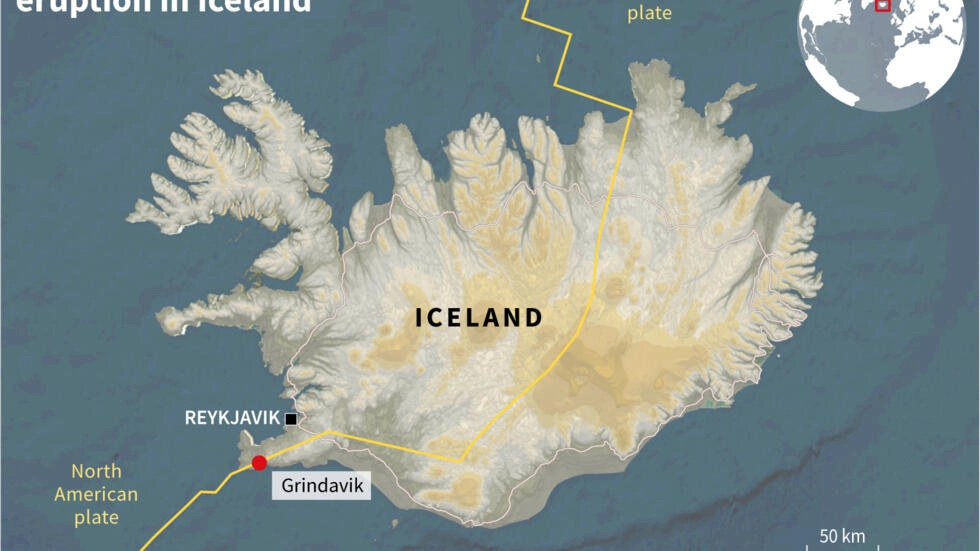
The lava spewed out from a new volcanic fissure on Iceland's Reykjanes peninsula in the country's southwest.

It cut the supply of hot water, which is also used to heat houses, in the southern part of the peninsula, known as Sudurnes, home to some 28,000 inhabitants.

Dramatic images showed lava flowing over a road leading to Iceland's famed Blue Lagoon geothermal spa, which had been evacuated, and the flow also crossed over a key water pipe.

"The plan is to fix the problem hopefully in the next few hours," Hjordis Gudmundsdottir, spokeswoman for Iceland's Department of Civil Protection and Emergency Management, told AFP Friday.

"It will take a few hours to put the hot water back in the system."

In the meantime, schools, public pools and sport facilities in the region were closed on Friday, she added.

Electricity is still working, but the authorities are urging people in the region to limit consumption.

This was the third eruption since December, in the same area as two previous ones, on December 18 and the second on January 14, near the fishing village of Grindavik.

The 4,000 residents of Grindavik had to be evacuated on November 11 after hundreds of earthquakes damaged buildings and opened up huge cracks in roads, shrouding the village's future in doubt.

The eruptions were some 40 kilometres southwest of the capital Reykjavik.

Related Tags

WORLDNEWS
ADVERTISEMENT
.most-popular .layout-ratio{ padding-bottom: 79.13%; } @media (min-width: 768px) and (max-width: 1024px) { .widget-title { font-size: 15px !important; } }

{{ articles_filter_1561_widget.title }}

.most-popular .layout-ratio{ padding-bottom: 79.13%; } @media (min-width: 768px) and (max-width: 1024px) { .widget-title { font-size: 15px !important; } }

{{ articles_filter_1562_widget.title }}

.most-popular .layout-ratio{ padding-bottom: 79.13%; } @media (min-width: 768px) and (max-width: 1024px) { .widget-title { font-size: 15px !important; } }

{{ articles_filter_1563_widget.title }}

{{ articles_filter_1564_widget.title }}

.mb-article-details { position: relative; } .mb-article-details .article-body-preview, .mb-article-details .article-body-summary{ font-size: 17px; line-height: 30px; font-family: "Libre Caslon Text", serif; color: #000; } .mb-article-details .article-body-preview iframe , .mb-article-details .article-body-summary iframe{ width: 100%; margin: auto; } .read-more-background { background: linear-gradient(180deg, color(display-p3 1.000 1.000 1.000 / 0) 13.75%, color(display-p3 1.000 1.000 1.000 / 0.8) 30.79%, color(display-p3 1.000 1.000 1.000) 72.5%); position: absolute; height: 200px; width: 100%; bottom: 0; display: flex; justify-content: center; align-items: center; padding: 0; } .read-more-background a{ color: #000; } .read-more-btn { padding: 17px 45px; font-family: Inter; font-weight: 700; font-size: 18px; line-height: 16px; text-align: center; vertical-align: middle; border: 1px solid black; background-color: white; } .hidden { display: none; }
function initializeAllSwipers() { // Get all hidden inputs with cms_article_id document.querySelectorAll('[id^="cms_article_id_"]').forEach(function (input) { const cmsArticleId = input.value; const articleSelector = '#article-' + cmsArticleId + ' .body_images'; const swiperElement = document.querySelector(articleSelector); if (swiperElement && !swiperElement.classList.contains('swiper-initialized')) { new Swiper(articleSelector, { loop: true, pagination: false, navigation: { nextEl: '#article-' + cmsArticleId + ' .swiper-button-next', prevEl: '#article-' + cmsArticleId + ' .swiper-button-prev', }, }); } }); } setTimeout(initializeAllSwipers, 3000); const intersectionObserver = new IntersectionObserver( (entries) => { entries.forEach((entry) => { if (entry.isIntersecting) { const newUrl = entry.target.getAttribute("data-url"); if (newUrl) { history.pushState(null, null, newUrl); let article = entry.target; // Extract metadata const author = article.querySelector('.author-section').textContent.replace('By', '').trim(); const section = article.querySelector('.section-info ').textContent.replace(' ', ' '); const title = article.querySelector('.article-title h1').textContent; // Parse URL for Chartbeat path format const parsedUrl = new URL(newUrl, window.location.origin); const cleanUrl = parsedUrl.host + parsedUrl.pathname; // Update Chartbeat configuration if (typeof window._sf_async_config !== 'undefined') { window._sf_async_config.path = cleanUrl; window._sf_async_config.sections = section; window._sf_async_config.authors = author; } // Track virtual page view with Chartbeat if (typeof pSUPERFLY !== 'undefined' && typeof pSUPERFLY.virtualPage === 'function') { try { pSUPERFLY.virtualPage({ path: cleanUrl, title: title, sections: section, authors: author }); } catch (error) { console.error('ping error', error); } } // Optional: Update document title if (title && title !== document.title) { document.title = title; } } } }); }, { threshold: 0.1 } ); function showArticleBody(button) { const article = button.closest("article"); const summary = article.querySelector(".article-body-summary"); const body = article.querySelector(".article-body-preview"); const readMoreSection = article.querySelector(".read-more-background"); // Hide summary and read-more section summary.style.display = "none"; readMoreSection.style.display = "none"; // Show the full article body body.classList.remove("hidden"); } document.addEventListener("DOMContentLoaded", () => { let loadCount = 0; // Track how many times articles are loaded const offset = [1, 2, 3, 4, 5, 6, 7, 8, 9, 10]; // Offset values const currentUrl = window.location.pathname.substring(1); let isLoading = false; // Prevent multiple calls if (!currentUrl) { console.log("Current URL is invalid."); return; } const sentinel = document.getElementById("load-more-sentinel"); if (!sentinel) { console.log("Sentinel element not found."); return; } function isSentinelVisible() { const rect = sentinel.getBoundingClientRect(); return ( rect.top < window.innerHeight && rect.bottom >= 0 ); } function onScroll() { if (isLoading) return; if (isSentinelVisible()) { if (loadCount >= offset.length) { console.log("Maximum load attempts reached."); window.removeEventListener("scroll", onScroll); return; } isLoading = true; const currentOffset = offset[loadCount]; window.loadMoreItems().then(() => { let article = document.querySelector('#widget_1690 > div:nth-last-of-type(2) article'); intersectionObserver.observe(article) loadCount++; }).catch(error => { console.error("Error loading more items:", error); }).finally(() => { isLoading = false; }); } } window.addEventListener("scroll", onScroll); });

Sign up by email to receive news.