ADVERTISEMENT

5 SVD deacons ordained priests

Published Feb 9, 2024 04:05 pm

WORD ALIVE

bel san luis.jpeg

Five deacons of the Society of the Divine Word (SVD) were ordained priests on Feb. 10, 2024 at the Divine Word Seminary Holy Spirit Chapel, Tagaytay City.

The SVD ordinands of the Lumen Class 2024 are: Rev. Edbelwin Jiah Manda assigned in the Philippine North; Rev. Carlo Salidaga, Papua New Guinea (PNG), Rev. Godfrey Bondoc, Colombia; Rev. Arjie Ducayag, Japan;  Rev. Karl Cabanalan, Mozambique.

All the best!
 

* * *
Reaching out to lepers and the sick

Once a jeepney was passing in front of a leprosarium. Two patients, already cured but still bearing physical deformities, boarded. There was an uneasy silence as they wedged themselves in front right beside the driver.                

After a few minutes, the two asked to stop and alight. The one on the left reached out her hand to pay the fare. The driver, who was afraid to touch the hand and coins, fearing contamination, said: “Hindi na bale. Libre na po ang pamasahe ninyo.” (Never mind. Your fare is free).”

The patient was so grateful that she pulled the driver’s hand and kissed it! The driver almost fainted.
 

* * *
That amusing story shows how leprosy is dreaded still today. During the time of Christ, lepers were most pitiful. They were not only segregated as social outcasts to be shunned but also considered their sickness as a punishment from God. 
 

* * *                  
The leper in this Sixth Sunday’s gospel (Mk 1, 40-45) reveals how desperate he had become by openly entering a town in order to seek Jesus' help. He approached Jesus and cried out: "Lord, if you will, you can heal me." 

Jesus stretched out his hand and said: "I do will it. Be cured." And the leper was instantly cured. Note that Jesus was "moved to pity," rather than by fear of the man’s sickness.
 

* * *
Today, thanks to the advances of medical science, leprosy is now curable and does not bear the moral stigma it once had. Nowadays we seldom meet lepers but we do have modern-day lepers.               

They are those who are considered as social outcasts or shunned by people in society. We have the women of ill-repute, the prisoners, the squatters living in makeshift houses, tribal people often looked down upon and whose rights, especially on their ancestral lands, are cheated.
 

* * *                  
What is our attitude towards them? What is the Christian response? 

In a meeting about a project of doing apostolate with prisoners in a provincial jail, one young man stood up and said: "Why undertake this project? Isn't it only fair that they are put behind bars to suffer for the consequences of their crime"? Someone from the group responded: "We live by another kind of standard.

“The standard  is the spirit of love and compassion as shown by the Lord’s treatment of the poor leper and underprivileged. 
We cannot do miracles like what Jesus did but we can show compassion in any way we can. Compassion comes from the heart. Christ praises the poor widow who dropped two small copper coins, equivalent to a few centavos. in the temple treasury (Mk 12,43). Jesus added, “Although very poor, she put all she had to live on." 
 

* * *
On Feb. 11, the feast of Our Lady of Lourdes, let us pray to the Lady who has healed miraculously millions of the sick since Feb. 11, 1858, especially those with cancer, AIDS, leukemia, renal failure, and others. 
 

* * *
Light quips: One time I asked a doctor, “Do you believe in the saying ‘God heals, the doctor collects the fee?’” He laughed and said: “Father, there’s some truth to that because if God does not will the cure, we doctors cannot do anything.”
 

* * *                  
“We cannot help everyone but everyone can help someone.”
 

* * *   
AIDS has different meanings for inventive Filipinos. For students, it means “Acute Insanity Due to Studies” and for the perennially broke (palaging kinakapos), it means “Acute Income Deficiency Syndrome.”
 

Related Tags

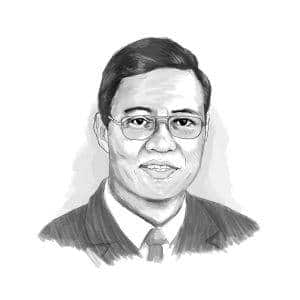
Fr. Bel San Luis SVD WORD ALIVE
ADVERTISEMENT
.most-popular .layout-ratio{ padding-bottom: 79.13%; } @media (min-width: 768px) and (max-width: 1024px) { .widget-title { font-size: 15px !important; } }

{{ articles_filter_1561_widget.title }}

.most-popular .layout-ratio{ padding-bottom: 79.13%; } @media (min-width: 768px) and (max-width: 1024px) { .widget-title { font-size: 15px !important; } }

{{ articles_filter_1562_widget.title }}

.most-popular .layout-ratio{ padding-bottom: 79.13%; } @media (min-width: 768px) and (max-width: 1024px) { .widget-title { font-size: 15px !important; } }

{{ articles_filter_1563_widget.title }}

{{ articles_filter_1564_widget.title }}

.mb-article-details { position: relative; } .mb-article-details .article-body-preview, .mb-article-details .article-body-summary{ font-size: 17px; line-height: 30px; font-family: "Libre Caslon Text", serif; color: #000; } .mb-article-details .article-body-preview iframe , .mb-article-details .article-body-summary iframe{ width: 100%; margin: auto; } .read-more-background { background: linear-gradient(180deg, color(display-p3 1.000 1.000 1.000 / 0) 13.75%, color(display-p3 1.000 1.000 1.000 / 0.8) 30.79%, color(display-p3 1.000 1.000 1.000) 72.5%); position: absolute; height: 200px; width: 100%; bottom: 0; display: flex; justify-content: center; align-items: center; padding: 0; } .read-more-background a{ color: #000; } .read-more-btn { padding: 17px 45px; font-family: Inter; font-weight: 700; font-size: 18px; line-height: 16px; text-align: center; vertical-align: middle; border: 1px solid black; background-color: white; } .hidden { display: none; }
function initializeAllSwipers() { // Get all hidden inputs with cms_article_id document.querySelectorAll('[id^="cms_article_id_"]').forEach(function (input) { const cmsArticleId = input.value; const articleSelector = '#article-' + cmsArticleId + ' .body_images'; const swiperElement = document.querySelector(articleSelector); if (swiperElement && !swiperElement.classList.contains('swiper-initialized')) { new Swiper(articleSelector, { loop: true, pagination: false, navigation: { nextEl: '#article-' + cmsArticleId + ' .swiper-button-next', prevEl: '#article-' + cmsArticleId + ' .swiper-button-prev', }, }); } }); } setTimeout(initializeAllSwipers, 3000); const intersectionObserver = new IntersectionObserver( (entries) => { entries.forEach((entry) => { if (entry.isIntersecting) { const newUrl = entry.target.getAttribute("data-url"); if (newUrl) { history.pushState(null, null, newUrl); let article = entry.target; // Extract metadata const author = article.querySelector('.author-section').textContent.replace('By', '').trim(); const section = article.querySelector('.section-info ').textContent.replace(' ', ' '); const title = article.querySelector('.article-title h1').textContent; // Parse URL for Chartbeat path format const parsedUrl = new URL(newUrl, window.location.origin); const cleanUrl = parsedUrl.host + parsedUrl.pathname; // Update Chartbeat configuration if (typeof window._sf_async_config !== 'undefined') { window._sf_async_config.path = cleanUrl; window._sf_async_config.sections = section; window._sf_async_config.authors = author; } // Track virtual page view with Chartbeat if (typeof pSUPERFLY !== 'undefined' && typeof pSUPERFLY.virtualPage === 'function') { try { pSUPERFLY.virtualPage({ path: cleanUrl, title: title, sections: section, authors: author }); } catch (error) { console.error('ping error', error); } } // Optional: Update document title if (title && title !== document.title) { document.title = title; } } } }); }, { threshold: 0.1 } ); function showArticleBody(button) { const article = button.closest("article"); const summary = article.querySelector(".article-body-summary"); const body = article.querySelector(".article-body-preview"); const readMoreSection = article.querySelector(".read-more-background"); // Hide summary and read-more section summary.style.display = "none"; readMoreSection.style.display = "none"; // Show the full article body body.classList.remove("hidden"); } document.addEventListener("DOMContentLoaded", () => { let loadCount = 0; // Track how many times articles are loaded const offset = [1, 2, 3, 4, 5, 6, 7, 8, 9, 10]; // Offset values const currentUrl = window.location.pathname.substring(1); let isLoading = false; // Prevent multiple calls if (!currentUrl) { console.log("Current URL is invalid."); return; } const sentinel = document.getElementById("load-more-sentinel"); if (!sentinel) { console.log("Sentinel element not found."); return; } function isSentinelVisible() { const rect = sentinel.getBoundingClientRect(); return ( rect.top < window.innerHeight && rect.bottom >= 0 ); } function onScroll() { if (isLoading) return; if (isSentinelVisible()) { if (loadCount >= offset.length) { console.log("Maximum load attempts reached."); window.removeEventListener("scroll", onScroll); return; } isLoading = true; const currentOffset = offset[loadCount]; window.loadMoreItems().then(() => { let article = document.querySelector('#widget_1690 > div:nth-last-of-type(2) article'); intersectionObserver.observe(article) loadCount++; }).catch(error => { console.error("Error loading more items:", error); }).finally(() => { isLoading = false; }); } } window.addEventListener("scroll", onScroll); });

Sign up by email to receive news.