






 Philippines
National
Senate not falling into deadline 'trap' when discussing Cha-cha eco provisions
Philippines
National
Senate not falling into deadline 'trap' when discussing Cha-cha eco provisions
Senate not falling into deadline 'trap' when discussing Cha-cha eco provisions


The Senate will not succumb to pressure of a deadline when discussing the proposed economic provisions that are raised under Resolution of Both Houses No. 6, senators assured on Monday, February 5.
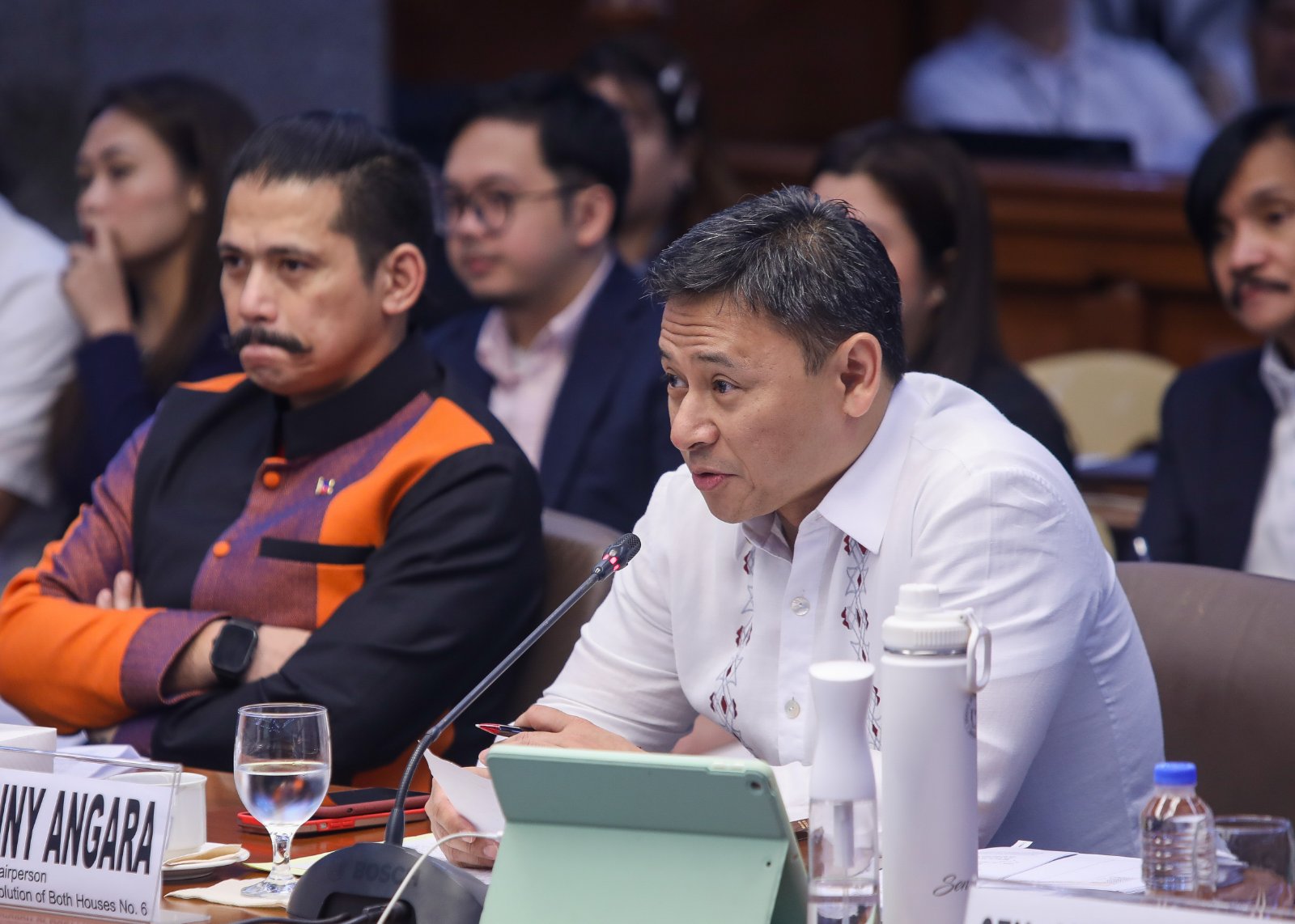 Sen. Sonny Angara, chairperson of the subcommittee of the Committee on Constitutional Amendments and Revision of Codes, commences Monday, February 5, 2024 the public hearing on Resolution of Both Houses No. 6 proposing amendments to certain economic provisions of the 1987 Constitution. (Senate PRIB Photo)
“We just like to put on record that the Senate is working very hard to listen to the clamor of certain sectors to look at and revisit the 1987 Constitution. But we will not be falling into a trap on any deadline. Because to discuss such an important matter needs time, it needs study,” Senate President Juan Miguel “Migz” Zubiri said during the initial hearing of the Senate subcommittee tackling the RBH No. 6.
“It cannot be rushed like any regular bill that is just approved without thinking. So we, ladies and gentlemen here in the Senate, will make sure that we deliberate this as much as possible, and come up with the best outcome for our people,” Zubiri added.
The Senate chief, then, gave Sen. Juan Edgardo “Sonny” Angara the upper hand to come up with a timeline in wrapping up discussions on RBH No. 6 which seeks to propose amendments to what were deemed restrictive economic provisions of the 1987 Constitution.
“If you feel it necessary that we must discuss this with all members of society not only our learned luminaries here as well as different sectors that will be affected by proposed amendments to our Constitution,” Zubiri said turning to Angara, who chairs the subcommittee.
“Again, let us not listen to the noise. Let us be above the fray. The Senate as an institution should be statesmen and women that will always look at the best possible outcome for our country, not for our localities, but for our country. Therefore, let us filter out the noise and focus on the work at hand,” the Senate leader stressed.
Angara agreed with the need to thread carefully on the matter saying that while he is open to exploring the possibilities of Charter change as a means to attract more foreign investment, he doubts it would create miracles for the country’s economy.
“So by all means, let’s explore the possibilities. But it’s not a going to be a miracle that after amending the Constitution, there would be an influx of investors knocking on our door,” Angara pointed out.
Angara noted that the typical barriers cited by foreign investors in doing business in the Philippines include the cost of doing business, red tape and the quality of infrastructure, among others.
“Any proposal to change even a part should be studied in a rigorous and exhaustive matter,” he said.
“We will do this in a right manner, we will discuss it, debate it, and not just sign it,” he added.
“I just wish to reiterate my colleagues’ stand that this (Charter change) is not something that needs to be rushed given its importance, especially since it is the most important or highest law in the country, the Constitution itself,” Angara said.