

ADVERTISEMENT

Geopolitics should not hamper global efforts vs climate change, pressing issues—Marcos

Published Feb 29, 2024 04:40 am

President Marcos called for multilateral action to counter several pressing global issues at present, stressing that geopolitics should not prevent them from doing so.
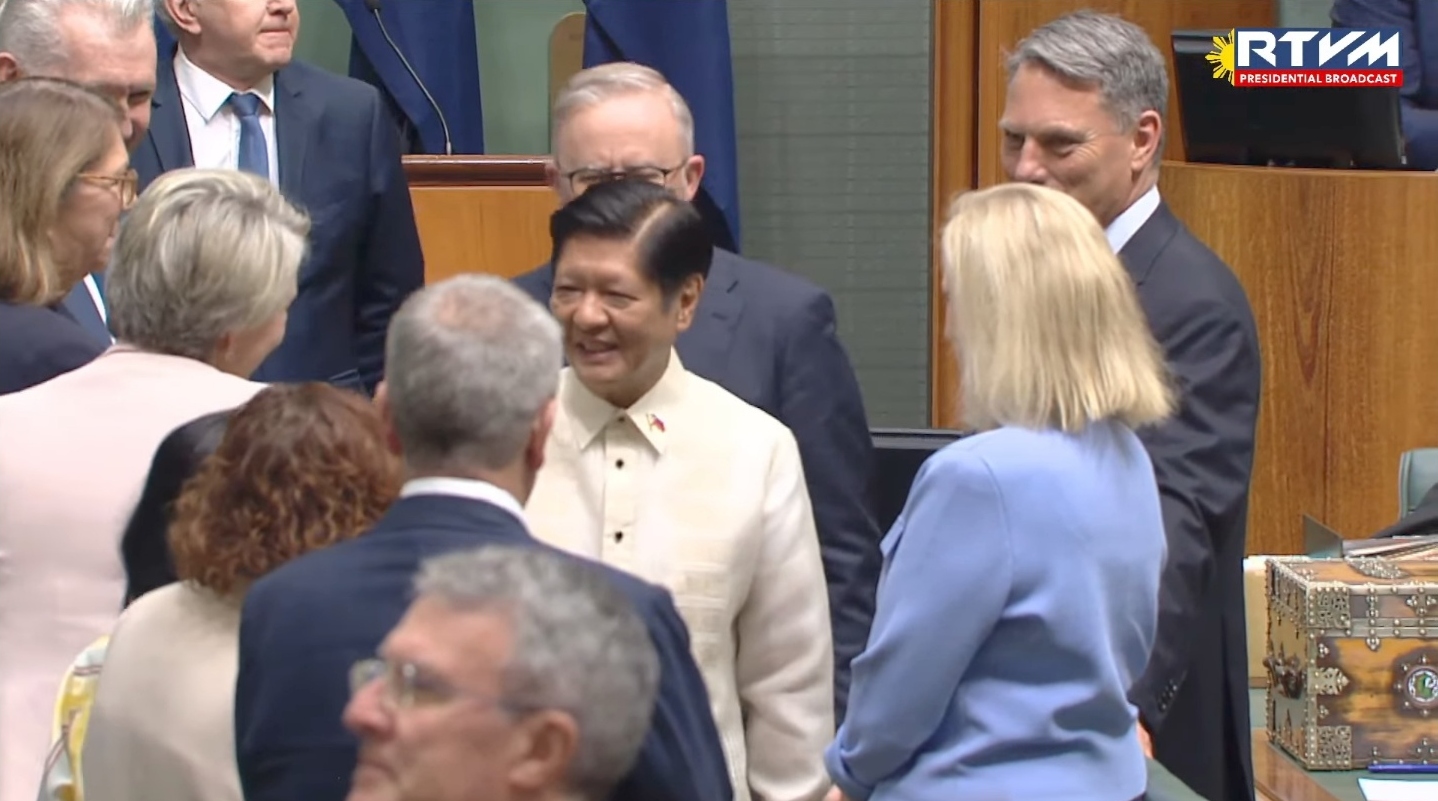
BBM AUS Parliament.pngSpeaking before the Australian Parliament on Thursday, Feb. 29, Marcos pitched the need for multilateral solutions to address critical global issues like climate change.

"We cannot allow geopolitics to paralyze global governance," he said in his speech.

"Now, more than ever, we need multilateralism to work.  This is particularly important, given the scope of global cooperation needed to address our most pressing vulnerability – one that threatens the very survival of our peoples, one that threatens our very future," he added, referring to climate change.

He stressed that the Philippines has accepted its part in this "collective responsibility" by committing to accelerate "just, affordable, sustainable, and inclusive energy transition towards carbon neutrality."

The country, he cited, has the potential to be a net carbon sink, absorbing more carbon dioxide than it emits, yet it is one of the most climate-vulnerable countries in the world, ranking first in the 2023 World Risk Index.

"This glaring disproportion between our share of responsibility and our vulnerability reflects an injustice that must be corrected. Developed countries must do more. And they must do it now," he stressed.

Before the Australian Parliament, Marcos committed to fulfilling the region’s promise as a global engine of growth.

He also recognized Australia as a "permanent stakeholder in the future of Asia and a reliable supporter of ASEAN (Association of Southeast Asian Nations) Centrality."

"In Australia we see a natural partner in our efforts to defend, to preserve, to uphold our open, inclusive, and rules-based international order, to ensure that it remains governed by international law and informed by the principles of equity and justice," he stated.

"In Australia we see a lifelong friend with whom we have endured joint sacrifices, reveled in our shared victories, and now pursue common aspirations," he added.

On the same fora, the President also reiterated his stance over maritime territory threats, saying the Philippines will never give up an inch of its territory to any foreign power.

He emphasized that the protection of the South China Sea as a "vital, critical global artery" is crucial to the preservation of regional peace and global peace, he called upon Australia to come together to face the challenges confronting the region.

READ MORE: Marcos: Philippines will not yield its territory over foreign power

Related Tags

Australian Parliament Multilateralism geopolitics President Marcos Climate change
ADVERTISEMENT
.most-popular .layout-ratio{ padding-bottom: 79.13%; } @media (min-width: 768px) and (max-width: 1024px) { .widget-title { font-size: 15px !important; } }

{{ articles_filter_1561_widget.title }}

.most-popular .layout-ratio{ padding-bottom: 79.13%; } @media (min-width: 768px) and (max-width: 1024px) { .widget-title { font-size: 15px !important; } }

{{ articles_filter_1562_widget.title }}

.most-popular .layout-ratio{ padding-bottom: 79.13%; } @media (min-width: 768px) and (max-width: 1024px) { .widget-title { font-size: 15px !important; } }

{{ articles_filter_1563_widget.title }}

{{ articles_filter_1564_widget.title }}

.mb-article-details { position: relative; } .mb-article-details .article-body-preview, .mb-article-details .article-body-summary{ font-size: 17px; line-height: 30px; font-family: "Libre Caslon Text", serif; color: #000; } .mb-article-details .article-body-preview iframe , .mb-article-details .article-body-summary iframe{ width: 100%; margin: auto; } .read-more-background { background: linear-gradient(180deg, color(display-p3 1.000 1.000 1.000 / 0) 13.75%, color(display-p3 1.000 1.000 1.000 / 0.8) 30.79%, color(display-p3 1.000 1.000 1.000) 72.5%); position: absolute; height: 200px; width: 100%; bottom: 0; display: flex; justify-content: center; align-items: center; padding: 0; } .read-more-background a{ color: #000; } .read-more-btn { padding: 17px 45px; font-family: Inter; font-weight: 700; font-size: 18px; line-height: 16px; text-align: center; vertical-align: middle; border: 1px solid black; background-color: white; } .hidden { display: none; }
function initializeAllSwipers() { // Get all hidden inputs with cms_article_id document.querySelectorAll('[id^="cms_article_id_"]').forEach(function (input) { const cmsArticleId = input.value; const articleSelector = '#article-' + cmsArticleId + ' .body_images'; const swiperElement = document.querySelector(articleSelector); if (swiperElement && !swiperElement.classList.contains('swiper-initialized')) { new Swiper(articleSelector, { loop: true, pagination: false, navigation: { nextEl: '#article-' + cmsArticleId + ' .swiper-button-next', prevEl: '#article-' + cmsArticleId + ' .swiper-button-prev', }, }); } }); } setTimeout(initializeAllSwipers, 3000); const intersectionObserver = new IntersectionObserver( (entries) => { entries.forEach((entry) => { if (entry.isIntersecting) { const newUrl = entry.target.getAttribute("data-url"); if (newUrl) { history.pushState(null, null, newUrl); let article = entry.target; // Extract metadata const author = article.querySelector('.author-section').textContent.replace('By', '').trim(); const section = article.querySelector('.section-info ').textContent.replace(' ', ' '); const title = article.querySelector('.article-title h1').textContent; // Parse URL for Chartbeat path format const parsedUrl = new URL(newUrl, window.location.origin); const cleanUrl = parsedUrl.host + parsedUrl.pathname; // Update Chartbeat configuration if (typeof window._sf_async_config !== 'undefined') { window._sf_async_config.path = cleanUrl; window._sf_async_config.sections = section; window._sf_async_config.authors = author; } // Track virtual page view with Chartbeat if (typeof pSUPERFLY !== 'undefined' && typeof pSUPERFLY.virtualPage === 'function') { try { pSUPERFLY.virtualPage({ path: cleanUrl, title: title, sections: section, authors: author }); } catch (error) { console.error('ping error', error); } } // Optional: Update document title if (title && title !== document.title) { document.title = title; } } } }); }, { threshold: 0.1 } ); function showArticleBody(button) { const article = button.closest("article"); const summary = article.querySelector(".article-body-summary"); const body = article.querySelector(".article-body-preview"); const readMoreSection = article.querySelector(".read-more-background"); // Hide summary and read-more section summary.style.display = "none"; readMoreSection.style.display = "none"; // Show the full article body body.classList.remove("hidden"); } document.addEventListener("DOMContentLoaded", () => { let loadCount = 0; // Track how many times articles are loaded const offset = [1, 2, 3, 4, 5, 6, 7, 8, 9, 10]; // Offset values const currentUrl = window.location.pathname.substring(1); let isLoading = false; // Prevent multiple calls if (!currentUrl) { console.log("Current URL is invalid."); return; } const sentinel = document.getElementById("load-more-sentinel"); if (!sentinel) { console.log("Sentinel element not found."); return; } function isSentinelVisible() { const rect = sentinel.getBoundingClientRect(); return ( rect.top < window.innerHeight && rect.bottom >= 0 ); } function onScroll() { if (isLoading) return; if (isSentinelVisible()) { if (loadCount >= offset.length) { console.log("Maximum load attempts reached."); window.removeEventListener("scroll", onScroll); return; } isLoading = true; const currentOffset = offset[loadCount]; window.loadMoreItems().then(() => { let article = document.querySelector('#widget_1690 > div:nth-last-of-type(2) article'); intersectionObserver.observe(article) loadCount++; }).catch(error => { console.error("Error loading more items:", error); }).finally(() => { isLoading = false; }); } } window.addEventListener("scroll", onScroll); });

Sign up by email to receive news.