ADVERTISEMENT

Navy confirms China's jamming of Philippine ships' signal in West PH Sea

Published Feb 27, 2024 05:16 am
commodore roy Vincent trinidad.jpg
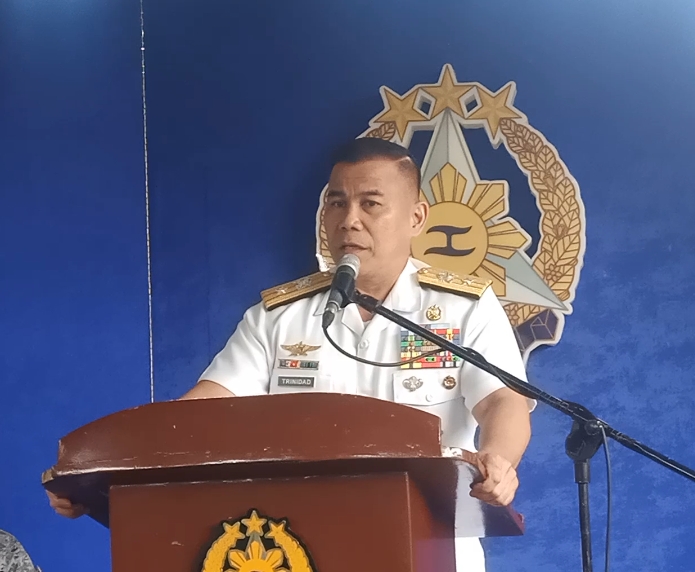
Commodore Roy Vincent Trinidad, Philippine Navy spokesperson for West Philippine Sea, speaks to the media at Camp Aguinaldo in Quezon City on February 27, 2024. (Photo by Martin Sadongdong / MANILA BULLETIN)

The Philippine Navy (PN) confirmed that China has been intentionally intercepting the communications signal of Philippine ships in the West Philippine Sea (WPS) and it has actually been ongoing for several years already.

Commodore Roy Vincent Trinidad, PN spokesperson for West Philippine Sea, said there has been an increase in the incidents of electronic interference or jamming by China not only for the equipment of the Philippine ships but also for their land-based communications equipment. 

"The activities of China in the West Philippine Sea [have] been going on for quite some time now when it comes to interference on our electronic capabilities," Trinidad said. 

"It’s been ongoing for the past three or four years, maybe even earlier," he added.

The interferences, according to Trinidad, were usually monitored during preparation stages for the resupply missions in the features occupied by the Philippines in the West Philippine Sea including Ayungin (Second Thomas) Shoal and Pagasa (Thitu) Island.

However, the signal jamming only has minimal effects on the operations of the navy as they are easily resolved. The recorded interferences were also not exclusively attributed by the navy to China as it also includes parties from other countries.

“Minimal naman ang effect niya (It only has minimal effect) because the interferences on the electronic equipment do not reach the stage that they will interfere with the navigation. These are more on communications so radio transmissions, and on land, cellphones. But on the overall impact, they do not cause a significant impact," Trinidad said.

He noted that certain protocols are observed by the navy to ensure that their communications are safe.

Over the weekend, the Philippine Coast Guard (PCG) accused the China Coast Guard (CCG) of intercepting the automatic identification system (AIS) signal of BRP Datu Sanday, a Bureau of Fisheries and Aquatic Resources (BFAR) vessel, while it was delivering fuel assistance to Filipino fishermen in Bajo de Masinloc (BDM) last February 22.

For the navy, Trinidad said it was not specifically the AIS that were intercepted by China but the ships’ ability to communicate with other ships or to land-based personnel through radio.

“It’s not on the AIS but on the communications on the ships and on land. There are times that interference or the ability to communicate is affected, which is not a normal shortcoming in our communication. But we know there is a deliberate attempt to prevent them from communicating, ship to ship or on land," he noted.

The navy expressed confidence that no state secret was compromised even with the monitored interference from China.

While the navy also has the capability to intercept the electronic equipment of other navies, the military is not keen on imitating China’s offensive strategy.

“We are more focused on defense,” said Armed Forces of the Philippines (AFP) spokesperson Col. Francel Margareth Padilla.

Related Tags

SIGNAL JAMMING PH-China West Philippine Sea Philippine Navy
ADVERTISEMENT
.most-popular .layout-ratio{ padding-bottom: 79.13%; } @media (min-width: 768px) and (max-width: 1024px) { .widget-title { font-size: 15px !important; } }

{{ articles_filter_1561_widget.title }}

.most-popular .layout-ratio{ padding-bottom: 79.13%; } @media (min-width: 768px) and (max-width: 1024px) { .widget-title { font-size: 15px !important; } }

{{ articles_filter_1562_widget.title }}

.most-popular .layout-ratio{ padding-bottom: 79.13%; } @media (min-width: 768px) and (max-width: 1024px) { .widget-title { font-size: 15px !important; } }

{{ articles_filter_1563_widget.title }}

{{ articles_filter_1564_widget.title }}

.mb-article-details { position: relative; } .mb-article-details .article-body-preview, .mb-article-details .article-body-summary{ font-size: 17px; line-height: 30px; font-family: "Libre Caslon Text", serif; color: #000; } .mb-article-details .article-body-preview iframe , .mb-article-details .article-body-summary iframe{ width: 100%; margin: auto; } .read-more-background { background: linear-gradient(180deg, color(display-p3 1.000 1.000 1.000 / 0) 13.75%, color(display-p3 1.000 1.000 1.000 / 0.8) 30.79%, color(display-p3 1.000 1.000 1.000) 72.5%); position: absolute; height: 200px; width: 100%; bottom: 0; display: flex; justify-content: center; align-items: center; padding: 0; } .read-more-background a{ color: #000; } .read-more-btn { padding: 17px 45px; font-family: Inter; font-weight: 700; font-size: 18px; line-height: 16px; text-align: center; vertical-align: middle; border: 1px solid black; background-color: white; } .hidden { display: none; }
function initializeAllSwipers() { // Get all hidden inputs with cms_article_id document.querySelectorAll('[id^="cms_article_id_"]').forEach(function (input) { const cmsArticleId = input.value; const articleSelector = '#article-' + cmsArticleId + ' .body_images'; const swiperElement = document.querySelector(articleSelector); if (swiperElement && !swiperElement.classList.contains('swiper-initialized')) { new Swiper(articleSelector, { loop: true, pagination: false, navigation: { nextEl: '#article-' + cmsArticleId + ' .swiper-button-next', prevEl: '#article-' + cmsArticleId + ' .swiper-button-prev', }, }); } }); } setTimeout(initializeAllSwipers, 3000); const intersectionObserver = new IntersectionObserver( (entries) => { entries.forEach((entry) => { if (entry.isIntersecting) { const newUrl = entry.target.getAttribute("data-url"); if (newUrl) { history.pushState(null, null, newUrl); let article = entry.target; // Extract metadata const author = article.querySelector('.author-section').textContent.replace('By', '').trim(); const section = article.querySelector('.section-info ').textContent.replace(' ', ' '); const title = article.querySelector('.article-title h1').textContent; // Parse URL for Chartbeat path format const parsedUrl = new URL(newUrl, window.location.origin); const cleanUrl = parsedUrl.host + parsedUrl.pathname; // Update Chartbeat configuration if (typeof window._sf_async_config !== 'undefined') { window._sf_async_config.path = cleanUrl; window._sf_async_config.sections = section; window._sf_async_config.authors = author; } // Track virtual page view with Chartbeat if (typeof pSUPERFLY !== 'undefined' && typeof pSUPERFLY.virtualPage === 'function') { try { pSUPERFLY.virtualPage({ path: cleanUrl, title: title, sections: section, authors: author }); } catch (error) { console.error('ping error', error); } } // Optional: Update document title if (title && title !== document.title) { document.title = title; } } } }); }, { threshold: 0.1 } ); function showArticleBody(button) { const article = button.closest("article"); const summary = article.querySelector(".article-body-summary"); const body = article.querySelector(".article-body-preview"); const readMoreSection = article.querySelector(".read-more-background"); // Hide summary and read-more section summary.style.display = "none"; readMoreSection.style.display = "none"; // Show the full article body body.classList.remove("hidden"); } document.addEventListener("DOMContentLoaded", () => { let loadCount = 0; // Track how many times articles are loaded const offset = [1, 2, 3, 4, 5, 6, 7, 8, 9, 10]; // Offset values const currentUrl = window.location.pathname.substring(1); let isLoading = false; // Prevent multiple calls if (!currentUrl) { console.log("Current URL is invalid."); return; } const sentinel = document.getElementById("load-more-sentinel"); if (!sentinel) { console.log("Sentinel element not found."); return; } function isSentinelVisible() { const rect = sentinel.getBoundingClientRect(); return ( rect.top < window.innerHeight && rect.bottom >= 0 ); } function onScroll() { if (isLoading) return; if (isSentinelVisible()) { if (loadCount >= offset.length) { console.log("Maximum load attempts reached."); window.removeEventListener("scroll", onScroll); return; } isLoading = true; const currentOffset = offset[loadCount]; window.loadMoreItems().then(() => { let article = document.querySelector('#widget_1690 > div:nth-last-of-type(2) article'); intersectionObserver.observe(article) loadCount++; }).catch(error => { console.error("Error loading more items:", error); }).finally(() => { isLoading = false; }); } } window.addEventListener("scroll", onScroll); });

Sign up by email to receive news.