

ADVERTISEMENT

El Niño will gradually weaken, but severe effects to continue — PAGASA

Published Feb 27, 2024 07:38 am

The Philippine Atmospheric, Geophysical, and Astronomical Services Administration (PAGASA) said on Feb. 27 that the strong El Niño will start to gradually weaken after reaching its “peak” or “mature stage.”
FB_IMG_1709018611768.jpg
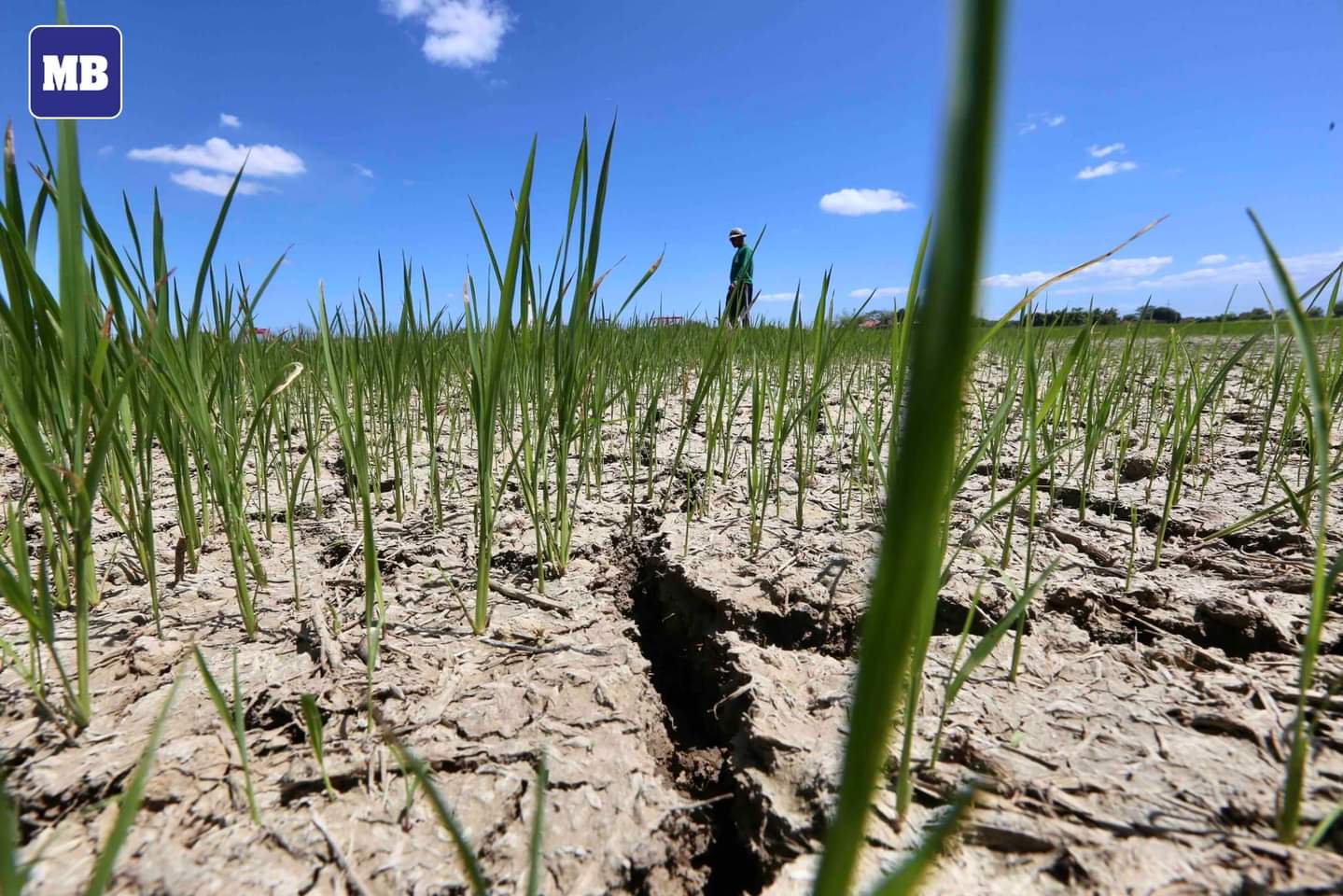
On Monday, February 26, 33-year-old farmer Raymond Dela Cruz inspected a section of the dried rice field along the Pulilan-Baliuag bypass route.Following the height of the El Niño phenomenon in February, 24 provinces started to face drought.  (Mark Balmores)

PAGASA-Climatology and Agrometeorology Division Officer-in-Charge Ana Liza Solis said the country is experiencing a strong and mature El Niño, indicating that the peak has been reached.

"Na-reach na po iyong peak ng pag-init ng temperatura ng dagat, so meaning it will start to weaken or to decay (The peak of the warming of temperature in the Pacific Ocean was reached, so it means that El Niño will start to weaken or to decay)," Solis said during the PAGASA’s Climate Forum on Tuesday.

"But then ang nakikita po natin, kapag nag-de-decay ang El Niño o magwi-weaken, doon pa lang nating mararanasan iyong tinatawag na tindi ng impact (But then, what we see when El Niño decays or weakens, that is time when we experience the severity of its impact)," she added.

Effects

In March to April, “generally below” (41 to 80 percent) to “way below-normal” rainfall (less than or 40 percent) may occur in the watershed areas, including Angat watershed.

"Ito po ang kailangan nating imonitor at very critical lalong lalo na sa ating Angat watershed na despite magkakaroon ng forecast ng near-normal rainfall condition, but still the probability geared towards the below-normal rainfall condition (This is what we need to monitor, as it is very critical particularly in Angat watershed that despite there will be forecast for near-normal rainfall condition, but still the probability geared towards the below-normal rainfall condition)," Solis said.

Solis added that from March to July, “way below to below-normal rainfall” will be felt, while in May, “near-normal” rainfall (81 to 120 percent) will be experienced but with low probability, as below-normal rainfall is still expected in the selected dams.

In the May-June-July period, La Mesa watershed, Lake Lanao, Lake Buhi, and Malinao watershed may still have the possibility for below-normal rainfall conditions, while the rest of the watershed will have near-normal rainfall conditions.

Rainfall forecast

Solis said way below-normal to below-normal rainfall conditions will be experienced in most parts of the country in March.

"In terms of probability, we are highly confident enough that models will be able to predict a way below to below-normal rainfall condition in the month of March," Solis said.

Meanwhile, in April, way below to  below-normal conditions with chances of near-normal rainfall condition will be expected in Luzon and southeastern Mindanao, but the probability suggested that there will be a high chance for the below to near-normal rainfall condition to occur.

In May to August, generally below to near-normal rainfall conditions will be felt in most parts of the country of which in Luzon, probability said that below-normal rainfall conditions will likely be experienced.

In Visayas, Solis said there will be higher chances for the above-normal rainfall condition in June and August, while below-normal has higher probability in July.

In Mindanao, based on the probability forecast,  below-normal rainfall condition will be expected in May, while above-normal (more than 120 percent) rainfall condition in June to August.

Related Tags

PAGASA El Niño phenomenon
ADVERTISEMENT
.most-popular .layout-ratio{ padding-bottom: 79.13%; } @media (min-width: 768px) and (max-width: 1024px) { .widget-title { font-size: 15px !important; } }

{{ articles_filter_1561_widget.title }}

.most-popular .layout-ratio{ padding-bottom: 79.13%; } @media (min-width: 768px) and (max-width: 1024px) { .widget-title { font-size: 15px !important; } }

{{ articles_filter_1562_widget.title }}

.most-popular .layout-ratio{ padding-bottom: 79.13%; } @media (min-width: 768px) and (max-width: 1024px) { .widget-title { font-size: 15px !important; } }

{{ articles_filter_1563_widget.title }}

{{ articles_filter_1564_widget.title }}

.mb-article-details { position: relative; } .mb-article-details .article-body-preview, .mb-article-details .article-body-summary{ font-size: 17px; line-height: 30px; font-family: "Libre Caslon Text", serif; color: #000; } .mb-article-details .article-body-preview iframe , .mb-article-details .article-body-summary iframe{ width: 100%; margin: auto; } .read-more-background { background: linear-gradient(180deg, color(display-p3 1.000 1.000 1.000 / 0) 13.75%, color(display-p3 1.000 1.000 1.000 / 0.8) 30.79%, color(display-p3 1.000 1.000 1.000) 72.5%); position: absolute; height: 200px; width: 100%; bottom: 0; display: flex; justify-content: center; align-items: center; padding: 0; } .read-more-background a{ color: #000; } .read-more-btn { padding: 17px 45px; font-family: Inter; font-weight: 700; font-size: 18px; line-height: 16px; text-align: center; vertical-align: middle; border: 1px solid black; background-color: white; } .hidden { display: none; }
function initializeAllSwipers() { // Get all hidden inputs with cms_article_id document.querySelectorAll('[id^="cms_article_id_"]').forEach(function (input) { const cmsArticleId = input.value; const articleSelector = '#article-' + cmsArticleId + ' .body_images'; const swiperElement = document.querySelector(articleSelector); if (swiperElement && !swiperElement.classList.contains('swiper-initialized')) { new Swiper(articleSelector, { loop: true, pagination: false, navigation: { nextEl: '#article-' + cmsArticleId + ' .swiper-button-next', prevEl: '#article-' + cmsArticleId + ' .swiper-button-prev', }, }); } }); } setTimeout(initializeAllSwipers, 3000); const intersectionObserver = new IntersectionObserver( (entries) => { entries.forEach((entry) => { if (entry.isIntersecting) { const newUrl = entry.target.getAttribute("data-url"); if (newUrl) { history.pushState(null, null, newUrl); let article = entry.target; // Extract metadata const author = article.querySelector('.author-section').textContent.replace('By', '').trim(); const section = article.querySelector('.section-info ').textContent.replace(' ', ' '); const title = article.querySelector('.article-title h1').textContent; // Parse URL for Chartbeat path format const parsedUrl = new URL(newUrl, window.location.origin); const cleanUrl = parsedUrl.host + parsedUrl.pathname; // Update Chartbeat configuration if (typeof window._sf_async_config !== 'undefined') { window._sf_async_config.path = cleanUrl; window._sf_async_config.sections = section; window._sf_async_config.authors = author; } // Track virtual page view with Chartbeat if (typeof pSUPERFLY !== 'undefined' && typeof pSUPERFLY.virtualPage === 'function') { try { pSUPERFLY.virtualPage({ path: cleanUrl, title: title, sections: section, authors: author }); } catch (error) { console.error('ping error', error); } } // Optional: Update document title if (title && title !== document.title) { document.title = title; } } } }); }, { threshold: 0.1 } ); function showArticleBody(button) { const article = button.closest("article"); const summary = article.querySelector(".article-body-summary"); const body = article.querySelector(".article-body-preview"); const readMoreSection = article.querySelector(".read-more-background"); // Hide summary and read-more section summary.style.display = "none"; readMoreSection.style.display = "none"; // Show the full article body body.classList.remove("hidden"); } document.addEventListener("DOMContentLoaded", () => { let loadCount = 0; // Track how many times articles are loaded const offset = [1, 2, 3, 4, 5, 6, 7, 8, 9, 10]; // Offset values const currentUrl = window.location.pathname.substring(1); let isLoading = false; // Prevent multiple calls if (!currentUrl) { console.log("Current URL is invalid."); return; } const sentinel = document.getElementById("load-more-sentinel"); if (!sentinel) { console.log("Sentinel element not found."); return; } function isSentinelVisible() { const rect = sentinel.getBoundingClientRect(); return ( rect.top < window.innerHeight && rect.bottom >= 0 ); } function onScroll() { if (isLoading) return; if (isSentinelVisible()) { if (loadCount >= offset.length) { console.log("Maximum load attempts reached."); window.removeEventListener("scroll", onScroll); return; } isLoading = true; const currentOffset = offset[loadCount]; window.loadMoreItems().then(() => { let article = document.querySelector('#widget_1690 > div:nth-last-of-type(2) article'); intersectionObserver.observe(article) loadCount++; }).catch(error => { console.error("Error loading more items:", error); }).finally(() => { isLoading = false; }); } } window.addEventListener("scroll", onScroll); });

Sign up by email to receive news.