






 Philippines
National
Constitution framer Azcuna favors revision; RBH 7 debates move forward
Philippines
National
Constitution framer Azcuna favors revision; RBH 7 debates move forward
Constitution framer Azcuna favors revision; RBH 7 debates move forward


At A Glance
- Former Supreme Court (SC) Associate Justice Adolf Azcuna set himself apart from his fellow framers of the 1987 Constitution by taking a pro-Charter change (Cha-cha) stance.
- On Wednesday, the discussion on RBH No.7 will shift to the proposed changes to Article XII.
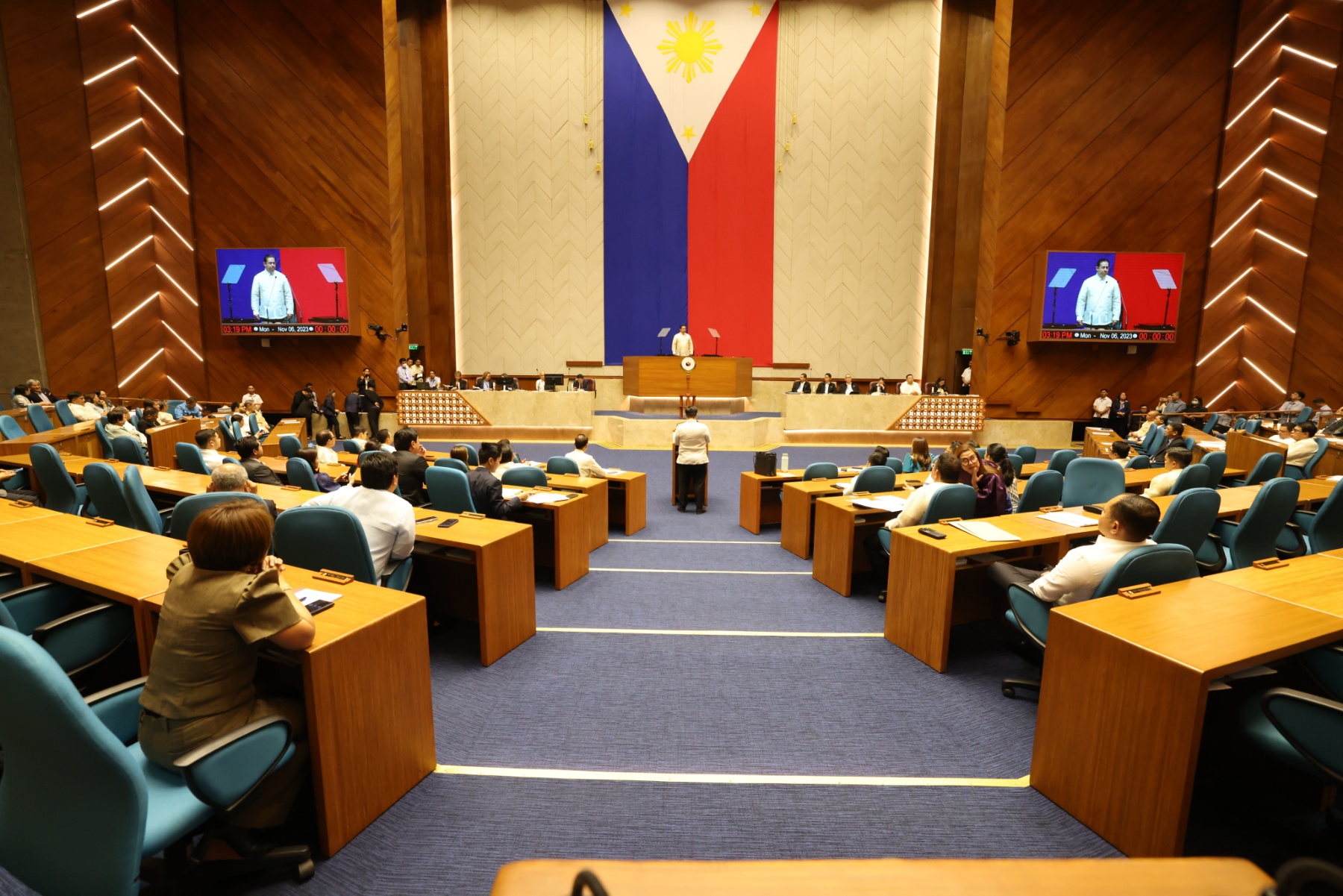 The House plenary. (Speaker’s office)
Former Supreme Court (SC) Associate Justice Adolf Azcuna set himself apart from his fellow framers of the 1987 Constitution by taking a pro-Charter change (Cha-cha) stance.
Azcuna took part in the second day of deliberations on Resolution of Both Houses (RBH) No.7, which is being tackled by the House of Representatives as a Committee of the Whole.
“I hope that with this, we can finally amend the Constitution so that it will be responsive to the fast-changing economic condition of the day,” Azcuna, the vice chairman of the legislative committee of the constitutional commission that drafted the Charter in 1986, said during the discussions Tuesday, Feb. 27.
He said the current proposal to amend Articles XII, XIV, and XVI of the 1987 Constitution lifts the economic restrictions on public utilities, education, and advertisement.
Azcuna said there is an existing safeguard against the Senate and the House (Congress) from adding other proposed amendments, particularly those that are political in nature.
He said the same safeguard limits Congress to the proposed changes in the specified economic provisions.
“[The Constitutional amendment] is limited by the very form of their proposed resolution, which is in the form of a joint resolution of both Houses, and it is subjected to the cardinal rule of one subject matter only that must be expressed in that title. So political matters are not covered because they are not in the subject matter stated in the title. So that is the safeguard,” he said.
Best solution
Meanwhile, rhe framer said adding the phrase “unless otherwise provided by law” to the Articles XII, XIV, and XVI makes the amendment “changeable by legislation".
“It does not do any other thing. It makes it changeable by legislation. This is to me the best solution to the economic provisions’ restriction because economic provisions should be flexible and they should not be cast in stone and 37 years is casting in stone," he said.
"The economic provisions must be responsive to changing economic conditions. Therefore, I believe that we should change the provisions to make them flexible by legislation by simply adding an amendment unless otherwise provided by law,” he explained.
Aczcuna's positive take on the "unless otherwise provided by law" insertion--which Cha-cha proponents in the House have been eagerly wanting to accomplish--came a day after former SC Chief Justice Reynato Puno warned the solons about such amendment to the Constitution.
According to Puno, adding the phrase as a catch-all for future amendments via legislation could lead to a "constitutional challenge".
Deliberations move forward
At around 8 p.m. Tuesday, the Committee of the Whole terminated the debates on the general provisions of RBH No.7. Deputy Majority Leader Iloilo 1st district Rep. Janette Garin made the motion to terminate, which was promptly carried after nobody objected to it.
A good chunk of the discussions during the past two days revolved around the procedure that the House would follow in passing RBH No.7, and how the Senate--the other legislative chamber--plays into it.
Mandaluyong City lone district Rep. Neptali Gonzales III, the majority leader of the committee, hammered home that the measure will be handled like a "normal bill".
On Wednesday, the discussion will shift to the proposed changes to Article XII.
The Committee of the Whole, which is composed of the entire 300-plus strong House, plans to hold plenary debates on RBH No.7 three times a week.