






 Philippines
National
Our goal is the economy, Romualdez reiterates during high-stakes Cha-cha deliberation
Philippines
National
Our goal is the economy, Romualdez reiterates during high-stakes Cha-cha deliberation
Our goal is the economy, Romualdez reiterates during high-stakes Cha-cha deliberation


At A Glance
- For the nth time--and perhaps on the most important platform--Speaker Martin Romualdez clarified that the House of Representatives' motivation for amending the 1987 Constitution is rooted in the economical and not the political.
- Romualdez had been designated as the chairman of Committee on the Whole, which began discussions on Resolution of Both Houses (RBH) No.7 on Monday, Feb. 26.
- Lifted from the Senate's own RBH No.6, RBH No.7 proposes amendments to Articles XII, XIV and XVI, focusing on the national patrimony, economy, education and general provisions of the existing Charter.
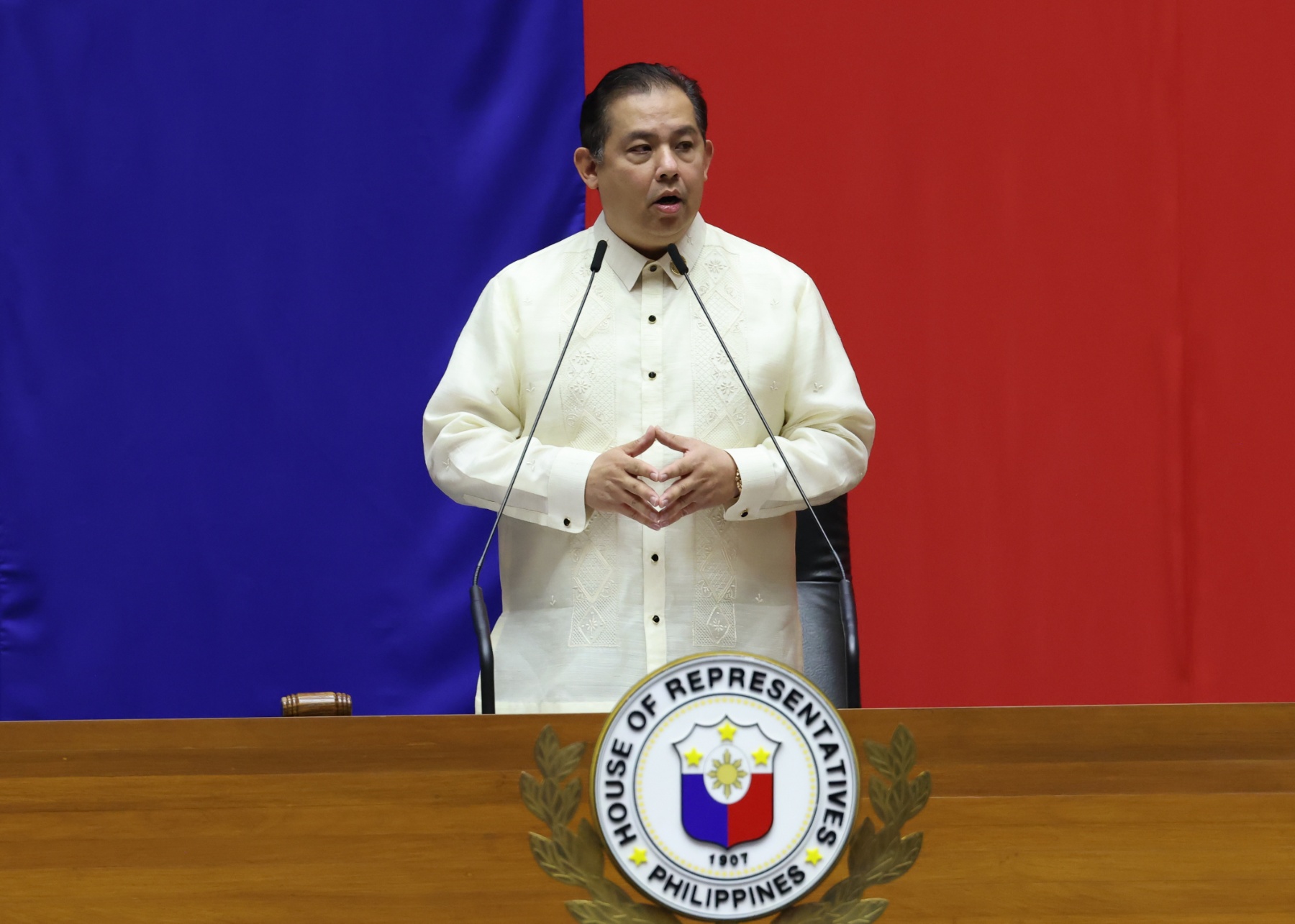 House Speaker Martin Romualdez (Speaker’s office)
For the nth time--and perhaps on the most important platform--Speaker Martin Romualdez clarified that the House of Representatives' motivation for amending the 1987 Constitution is rooted in the economical and not the political.
“Malinaw po sa ating lahat ang misyon natin ngayon: Baguhin ang ilang economic provisions na pumipigil sa pagpasok ng mga negosyo mula sa ibang bansa. Mga negosyong lilikha ng trabaho at magpapasigla ng ating ekonomiya,” Romualdez said in a speech in plenary on Monday, Feb. 26.
(Our mission today is clear to all: To amend a few economic provisions that have been preventing foreign businesses from entering the country. These are businesses that will generate jobs and energize the economy.)
"Ito lamang ang pakay natin. Ekonomiya, hindi pulitika (This is our goal. It's the economy, not politics),” said Romualdez, who had been designated as the chairman of Committee on the Whole.
Monday marked the first day that the 300-plus strong House--acting as a Committee of the Whole--held deliberations on its Charter change (Cha-cha) measure, Resolution of Both Houses (RBH) No.7.
In this regard, there were a lot of eyeballs stuck to Monday's proceedings in the House--with arguably some of these coming from the Senate.
Lifted from the Senate's own RBH No.6, RBH No.7 proposes amendments to Articles XII, XIV and XVI, focusing on the national patrimony, economy, education and general provisions of the existing Charter.
Of the two legislative chambers, it's the House that has historically been eager to lift the supposed restrictive economic provisions of the Constitution. Attempts at Cha-cha in the Senate are few and far in between during the past 37 years.
The House aims to have RBH No.7 approved by next month, even as the Committee of the Whole is expected to facilitate exhaustive discussions on the measure by the entire chamber. The Senate, on the other hand, is eyeing an October 2024 passage--something that's considered "too late" by Cha-cha proponents.
Speaker Romualdez rued that while he and other House members pushing for the amendment of the Charter’s economic provisions, they were accused of being opposed to “these essential reforms".
“Categorically, we are denying this unfounded and baseless accusation. Wala po tayong hinangad sa kapulungang ito kundi ang kabutihan ng Sambayanang Pilipino. And we work night and day to make this happen,” said the Leyte 1st district congressman.
(We've never wished for anything in this chamber but the good of the Filipino people.)
“Now, to dispel doubts that the efforts of the House of Representatives in pushing for the amendment of the economic provisions of the Constitution is politically-motivated, we are adopting all the three proposed amendments of the Senate version of [RBH] No. 6, in toto,” he said ,referring to Articles XII, XIV and XVI.
“This should assure the public that Congress is only touching on the economic provisions that need to adapt with the changing times. There is absolutely nothing in RBH No.7 that hovers on any political provision of the Constitution,” Romualdez reiterated.