






 Philippines
National
'In high demand': Taylor Swift course attracts about 300 prospective enrollees, says UP prof
Philippines
National
'In high demand': Taylor Swift course attracts about 300 prospective enrollees, says UP prof
'In high demand': Taylor Swift course attracts about 300 prospective enrollees, says UP prof
By Sonny Daanoy


The newly introduced “Celebrity Studies: Taylor Swift in Focus” is in high demand, with a professor at the University of the Philippines Diliman (UPD) saying on Friday, Feb. 23, that 300 students have already expressed an interest in enrolling in the elective class.
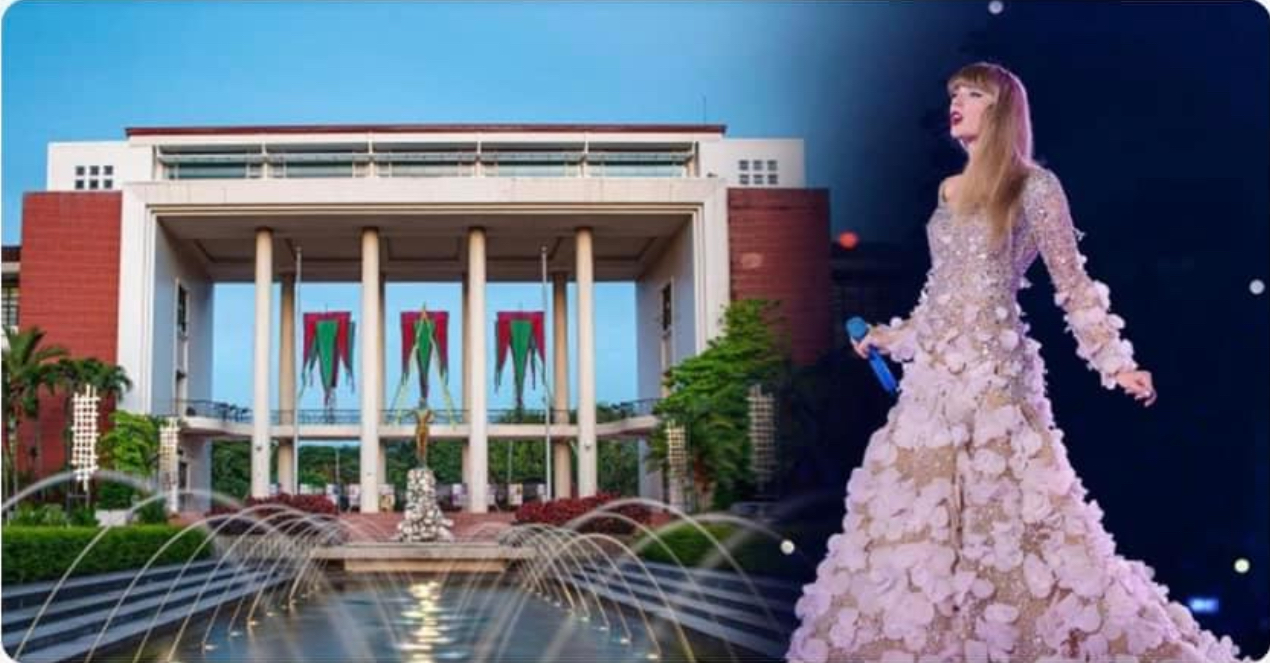
“The demand for it is as high as 300 students who wanted to enlist in the course,” UPD associate professor Cherish Brillon said in an interview on ANC’s Headstart.
Brillon, who proposed the Taylor Swift elective to the UPD Broadcast Communication Department, said there are an additional 25 slots available for non-broadcasting students.
“Initially, we opened just one section for Broadcast Communication students only because the subject is offered under the Broadcast Communication curriculum,” she said.
“Two days before the enrollment ended, we decided to open another class of 25 students who are not Broadcast Communication students so we decided to make it more—in a way democratized or open to all courses in UP Diliman,” she added.
Moreover, the UP professor also shared how her idea was approved by the department.
“And when I pitched it (Taylor Swift course idea) to the Department of Broadcast Communication, they were very supportive actually, so they understood why this is something that has to be offered,” Brillon said.
The presence of a “highly celebrity-saturated environment,” adds excitement to her idea, leading to the notion that “you know what, maybe it’s really good to have a separate celebrity study subject.”
“For the first offering we decided to do Taylor Swift, but there will be other celebrities in succeeding semesters who will be part of this area of disciplines in our field,” she added.
Political aspect part of an elective course
On Jan. 23, UPD highlighted that the Taylor Swift course encompasses interests in political economy, gender, and popular culture, among other issues.
“Using Taylor Swift as an example situates the course in a transnational media ecology/environment that’s vastly different from what has been previously studied,” Brillon said.
READ: