






 Philippines
National
Economic Cha-cha answer to PH's limited foreign investments, says House-based expert
Philippines
National
Economic Cha-cha answer to PH's limited foreign investments, says House-based expert
Economic Cha-cha answer to PH's limited foreign investments, says House-based expert


At A Glance
- An expert from the House of Representatives research department said the only way the Philippines can attract foreign investments is through the amendment of certain "restrictive" economic provisions found in the 1987 Constitution.
- The Congressional Policy and Budget Research Department (CPBRD) serves as a think tank in the House.
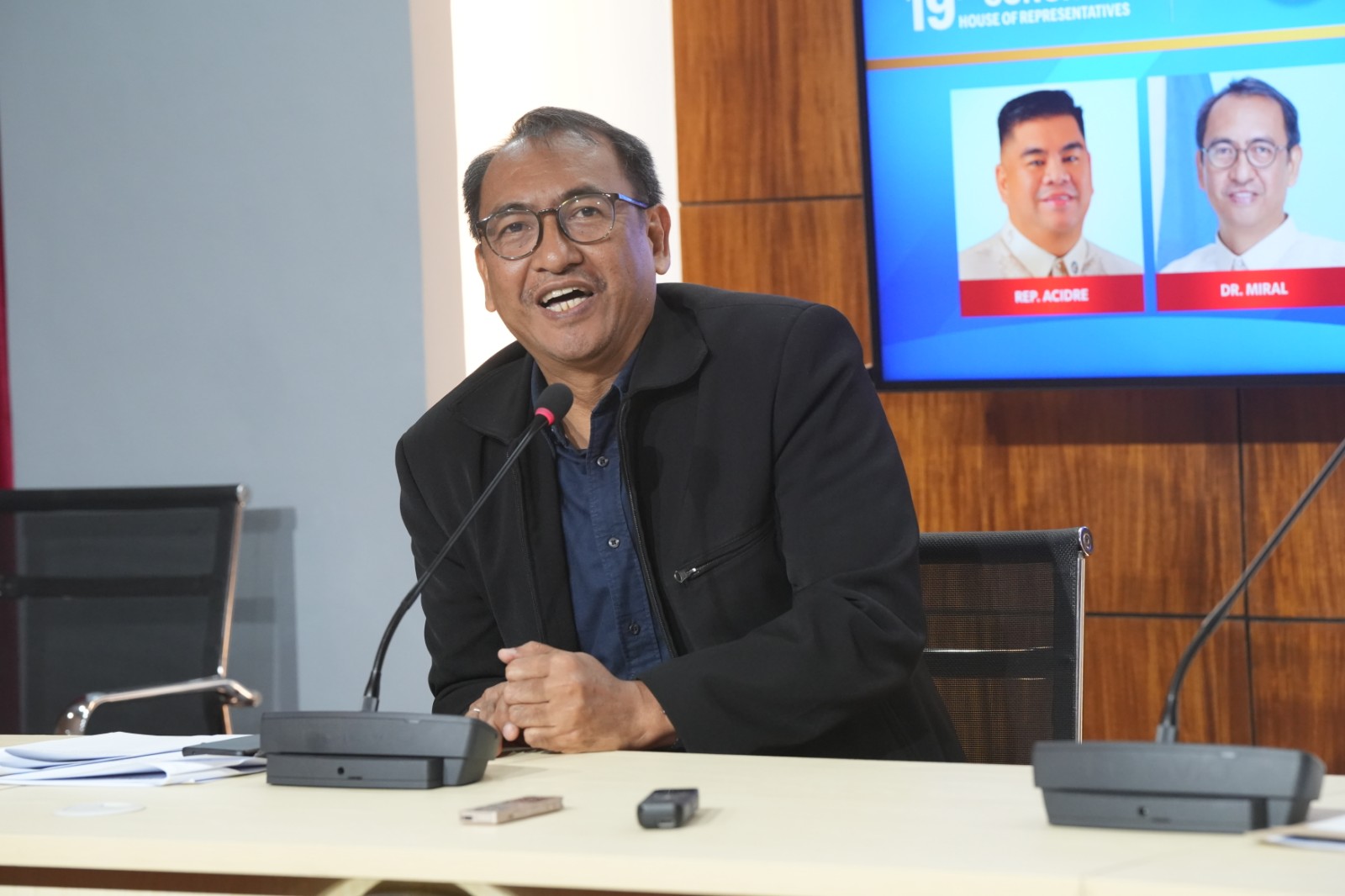
Congressional Policy and Budget Research Department (CPBRD) Deputy Secretary General Dr. Romulo Emmanuel Miral Jr. (PPAB)
An expert from the House of Representatives research department said the only way the Philippines can attract foreign investments is through the amendment of certain “restrictive” economic provisions found in the 1987 Constitution.
According to Dr. Romulo Emmanuel Miral Jr., Deputy Secretary General of the Congressional Policy and Budget Research Department (CPBRD), legislative efforts to entice foreign investors are not the solution given that the root of the issue lies in the country’s most basic law.
“We tried means of relaxing [foreign ownership restrictions] like the passage of the Public Service Act. What we did is really some sort of sidestepping, not directly addressing it, but sidestepping it to relax it,” Miral said in a press briefing on Thursday, Feb. 22.
The CPBRD chief noted that Republic Act (RA) No. 11659 or the Public Service Act–which aims to remove the 40 percent foreign nationality ownership restriction—remains inoperative because of a pending Supreme Court (SC) petition questioning its constitutionality.
"So until now, I don't know if there are investors willing to invest here knowing that there is still a case pending in the [SC], and we don't know when it will be resolved," said Miral.
Tingog Party-list Rep. Jude Acidre agreed with this sentiment and emphasized the need to erase doubt from foreign investors by removing the provisions that were deemed restrictive.
He said this will only happen if Charter change (Cha-cha) is pursued.
"The long-term solution really is to clarify, to provide sufficient, stable, and stronger foundation for our economic policies by incorporating the appropriate provisions in the Constitution," the lawmaker shared.
During a recent roundtable discussion organized by the CPBRD, top economists similarly advocated for economic Cha-cha to put the country to a similar standing, in terms of legal framework, with neighboring countries in the Association of Southeast Asian Nations (ASEAN).
Former finance secretary Margarito Teves noted that the Philippines is the most restrictive when it comes to foreign investments in the entire ASEAN.
The House of Representatives and the Senate are currently discussing proposed amendments to the 37-year-old Charter, with the Resolution of Both Houses (RBH) No. 7 of the former and RBH No. 6 of the latter.
Both chambers of Congress aim to reassess the 60-40 equity rule on foreign ownership, which has long been recognized as a “significant barrier” to foreign direct investment into the country.