ADVERTISEMENT

UN agencies warn of 'explosion' in Gaza child deaths

Published Feb 20, 2024 01:53 am


EXPLOSION PHOTO.jpg

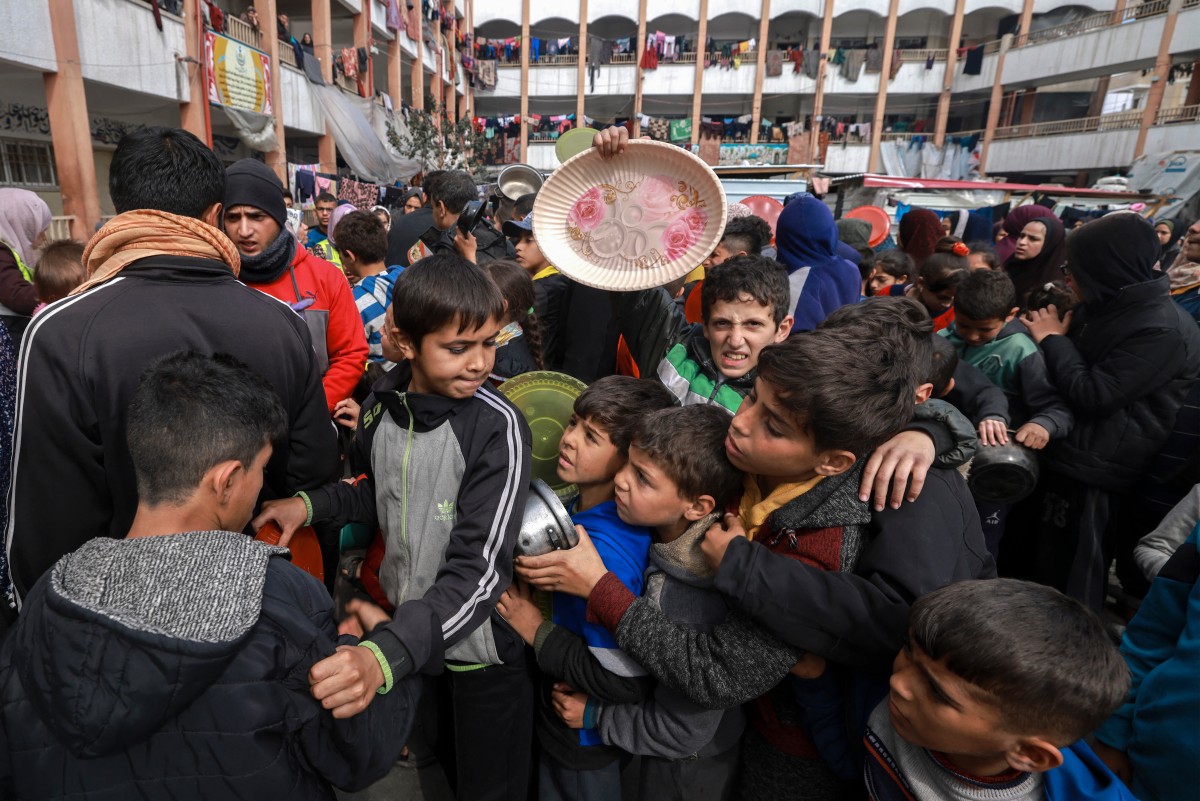
HUNGRY CHILDREN – Displaced Palestinian children gather to receive food at a government school in Rafah in the southern Gaza Strip on February 19, 2024, amid the ongoing battles between Israel and the militant group Hamas. (AFP)


GENEVA, Switzerland -- An alarming lack of food, surging malnutrition and the rampant spread of disease could spark an explosion in child deaths in Gaza, the United Nations warned Monday.

Twenty weeks into Israel's war against Hamas in the Gaza Strip, UN agencies warned that food and safe water had become "incredibly scarce" in the Palestinian territory, adding that virtually all young children had infectious illnesses.

"The Gaza Strip is poised to witness an explosion in preventable child deaths which would compound the already unbearable level of child deaths in Gaza," said Ted Chaiban, deputy head of humanitarian action at the UN children's agency UNICEF.

At least 90 percent of children under five in Gaza are affected by one or more infectious diseases, according to a joint assessment by the UN agencies for children, food and health.

Seventy percent had had diarrhea in the two weeks prior to the assessment, marking a 23-fold increase compared to the 2022 baseline.

"Hunger and disease are a deadly combination," World Health Organization emergencies director Mike Ryan said in a statement.

"Hungry, weakened and deeply traumatized children are more likely to get sick, and children who are sick, especially with diarrhea, cannot absorb nutrients well," he said.

"It's dangerous, and tragic, and happening before our eyes."

Hamas's October 7 attack on southern Israel resulted in the deaths of about 1,160 people in Israel, mostly civilians, according to an AFP tally of Israeli official figures.

Israel's assault on Gaza has killed more than 29,000 people, mostly women and children, according to the Hamas-run territory's health ministry.

Since the start of the war, Gaza has been plunged into a nutrition crisis, with outside aid severely restricted.

The UN assessment indicated that more than 15 percent of children under the age of two in northern Gaza -- one in six -- were acutely malnourished, while three percent were suffering from life-threatening severe wasting.

"As the data were collected in January, the situation is likely to be even graver today," the UN agencies warned.

In southern Gaza, five percent of children under two were acutely malnourished, according to the assessment.

Before the war, only 0.8 percent of children under five in Gaza were considered acutely malnourished, the UN agencies pointed out.

"Such a decline in a population’s nutritional status in three months is unprecedented globally," they said.

Related Tags

WORLDNEWS
ADVERTISEMENT
.most-popular .layout-ratio{ padding-bottom: 79.13%; } @media (min-width: 768px) and (max-width: 1024px) { .widget-title { font-size: 15px !important; } }

{{ articles_filter_1561_widget.title }}

.most-popular .layout-ratio{ padding-bottom: 79.13%; } @media (min-width: 768px) and (max-width: 1024px) { .widget-title { font-size: 15px !important; } }

{{ articles_filter_1562_widget.title }}

.most-popular .layout-ratio{ padding-bottom: 79.13%; } @media (min-width: 768px) and (max-width: 1024px) { .widget-title { font-size: 15px !important; } }

{{ articles_filter_1563_widget.title }}

{{ articles_filter_1564_widget.title }}

.mb-article-details { position: relative; } .mb-article-details .article-body-preview, .mb-article-details .article-body-summary{ font-size: 17px; line-height: 30px; font-family: "Libre Caslon Text", serif; color: #000; } .mb-article-details .article-body-preview iframe , .mb-article-details .article-body-summary iframe{ width: 100%; margin: auto; } .read-more-background { background: linear-gradient(180deg, color(display-p3 1.000 1.000 1.000 / 0) 13.75%, color(display-p3 1.000 1.000 1.000 / 0.8) 30.79%, color(display-p3 1.000 1.000 1.000) 72.5%); position: absolute; height: 200px; width: 100%; bottom: 0; display: flex; justify-content: center; align-items: center; padding: 0; } .read-more-background a{ color: #000; } .read-more-btn { padding: 17px 45px; font-family: Inter; font-weight: 700; font-size: 18px; line-height: 16px; text-align: center; vertical-align: middle; border: 1px solid black; background-color: white; } .hidden { display: none; }
function initializeAllSwipers() { // Get all hidden inputs with cms_article_id document.querySelectorAll('[id^="cms_article_id_"]').forEach(function (input) { const cmsArticleId = input.value; const articleSelector = '#article-' + cmsArticleId + ' .body_images'; const swiperElement = document.querySelector(articleSelector); if (swiperElement && !swiperElement.classList.contains('swiper-initialized')) { new Swiper(articleSelector, { loop: true, pagination: false, navigation: { nextEl: '#article-' + cmsArticleId + ' .swiper-button-next', prevEl: '#article-' + cmsArticleId + ' .swiper-button-prev', }, }); } }); } setTimeout(initializeAllSwipers, 3000); const intersectionObserver = new IntersectionObserver( (entries) => { entries.forEach((entry) => { if (entry.isIntersecting) { const newUrl = entry.target.getAttribute("data-url"); if (newUrl) { history.pushState(null, null, newUrl); let article = entry.target; // Extract metadata const author = article.querySelector('.author-section').textContent.replace('By', '').trim(); const section = article.querySelector('.section-info ').textContent.replace(' ', ' '); const title = article.querySelector('.article-title h1').textContent; // Parse URL for Chartbeat path format const parsedUrl = new URL(newUrl, window.location.origin); const cleanUrl = parsedUrl.host + parsedUrl.pathname; // Update Chartbeat configuration if (typeof window._sf_async_config !== 'undefined') { window._sf_async_config.path = cleanUrl; window._sf_async_config.sections = section; window._sf_async_config.authors = author; } // Track virtual page view with Chartbeat if (typeof pSUPERFLY !== 'undefined' && typeof pSUPERFLY.virtualPage === 'function') { try { pSUPERFLY.virtualPage({ path: cleanUrl, title: title, sections: section, authors: author }); } catch (error) { console.error('ping error', error); } } // Optional: Update document title if (title && title !== document.title) { document.title = title; } } } }); }, { threshold: 0.1 } ); function showArticleBody(button) { const article = button.closest("article"); const summary = article.querySelector(".article-body-summary"); const body = article.querySelector(".article-body-preview"); const readMoreSection = article.querySelector(".read-more-background"); // Hide summary and read-more section summary.style.display = "none"; readMoreSection.style.display = "none"; // Show the full article body body.classList.remove("hidden"); } document.addEventListener("DOMContentLoaded", () => { let loadCount = 0; // Track how many times articles are loaded const offset = [1, 2, 3, 4, 5, 6, 7, 8, 9, 10]; // Offset values const currentUrl = window.location.pathname.substring(1); let isLoading = false; // Prevent multiple calls if (!currentUrl) { console.log("Current URL is invalid."); return; } const sentinel = document.getElementById("load-more-sentinel"); if (!sentinel) { console.log("Sentinel element not found."); return; } function isSentinelVisible() { const rect = sentinel.getBoundingClientRect(); return ( rect.top < window.innerHeight && rect.bottom >= 0 ); } function onScroll() { if (isLoading) return; if (isSentinelVisible()) { if (loadCount >= offset.length) { console.log("Maximum load attempts reached."); window.removeEventListener("scroll", onScroll); return; } isLoading = true; const currentOffset = offset[loadCount]; window.loadMoreItems().then(() => { let article = document.querySelector('#widget_1690 > div:nth-last-of-type(2) article'); intersectionObserver.observe(article) loadCount++; }).catch(error => { console.error("Error loading more items:", error); }).finally(() => { isLoading = false; }); } } window.addEventListener("scroll", onScroll); });

Sign up by email to receive news.