







These eagles are in love
Eight pairs of Philippine eagles receive the best Valentine gift this year—a love nest!


At A Glance
- The Philippine eagle is a monogamous species and keeps one mate for life.
By JINGGOY I. SALVADOR
Photos courtesy of PHILIPPINE EAGLE FOUNDATION
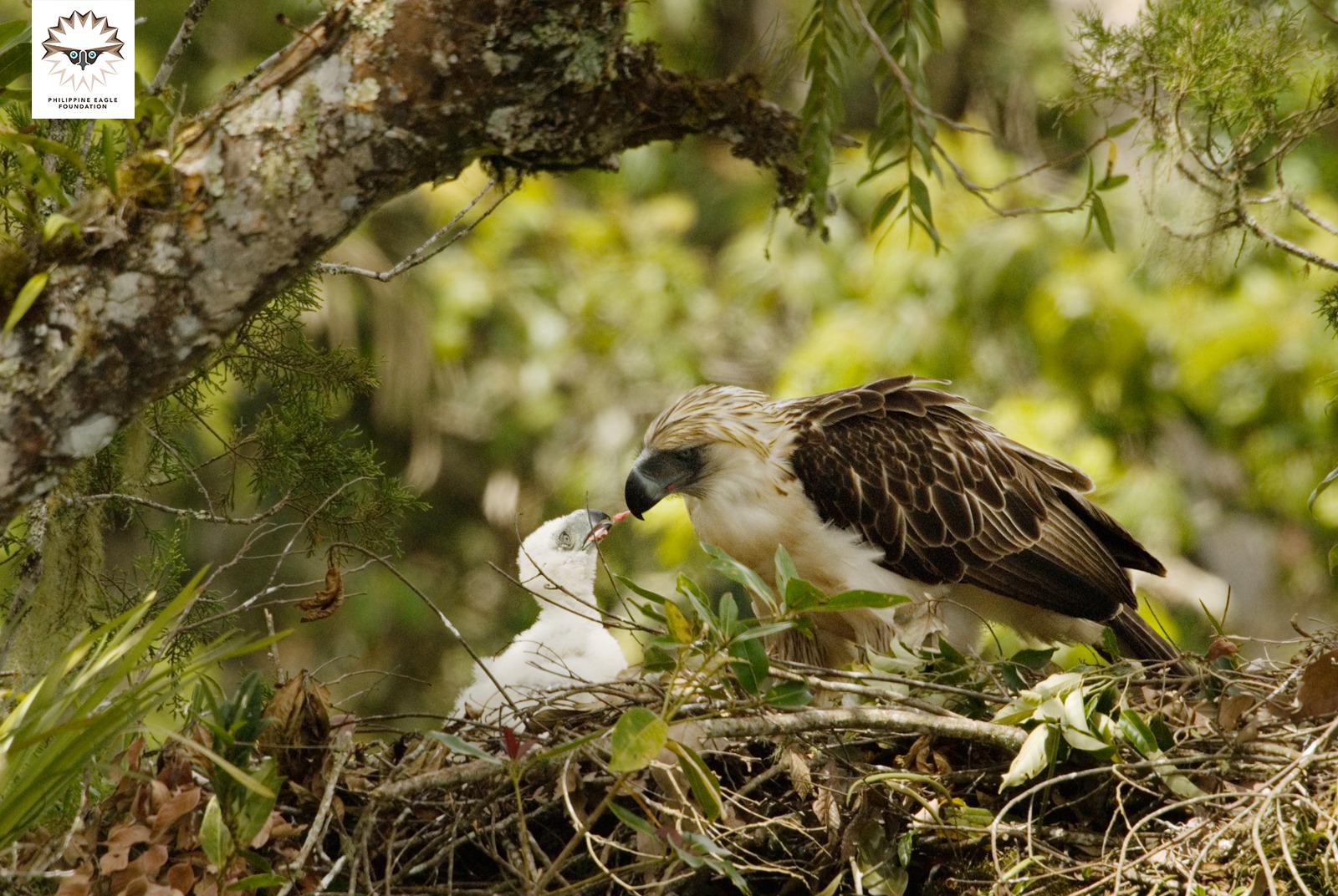
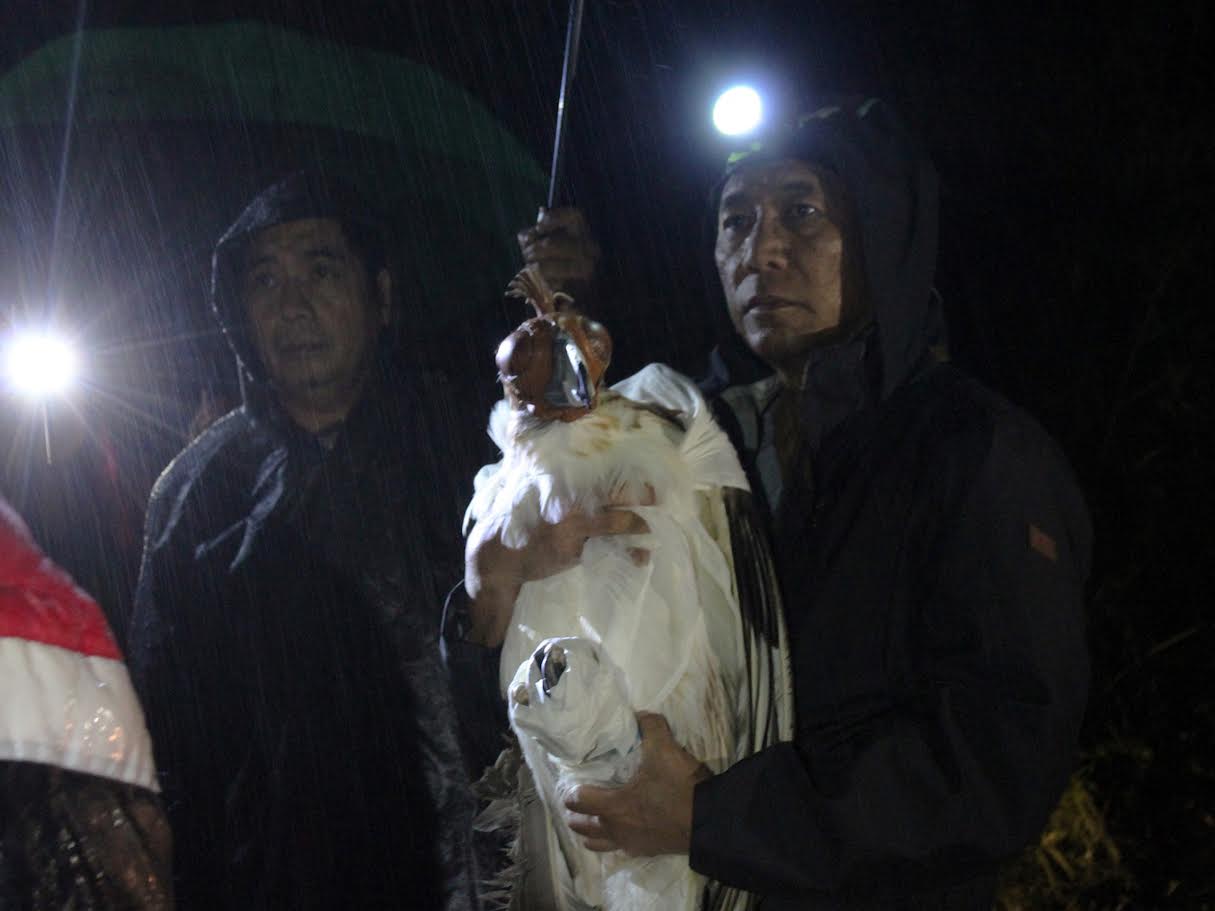
Eight pairs of Philippine eagles— natural bird pairs in breeding condition— were released and settled in their new “love nest” at the National Bird Breeding Sanctuary (NBBS) on Valentine’s Day this year. The new bird sanctuary nestles in a 105-hectare Eden Tourism Reservation Area at the foot of Mt. Apo in Davao City. This marked another significant date in the Philippine Eagle Foundation’s (PEF) calendar of historic events. The move also officially marked the facility as a no-entry zone for visitors with access limited only to PEF’s animal keepers. It was the first set of eagles relocated from the Malagos facility on the evening of Feb. 13 and released past 12 a.m. on Feb. 14 in its new breeding cages in a 13.46-hectare sanctuary. The NBBS holds a core facility of 5.2 hectares fenced in a solid perimeter wall and surrounded with a 100 to 300 meters thick natural forest buffer occupying an area of 8.16 hectares. With the land peaking at an altitude of 1,200 meters above sea level, the cool forested area replicates the mighty raptor’s nesting sites.
Currently, the PEF has in its custody a total 16 birds in breeding condition. The next phase targets to accomplish another set of aviaries by June 2024 to accommodate the next eight pairs of eagles. July is the breeding season of the birds. “The Philippine eagle natural pairs are productive. With an environment in optimal condition for breeding, we are looking forward to the birth of more eaglets in the coming days,” says Dr. Jason Ybañez, PEF director of Research and Conservation. “If we were able to breed 29 eagles in limited conditions in the Philippine Eagle Center (PEC) facility in Malagos, what more at the new bird sanctuary?”
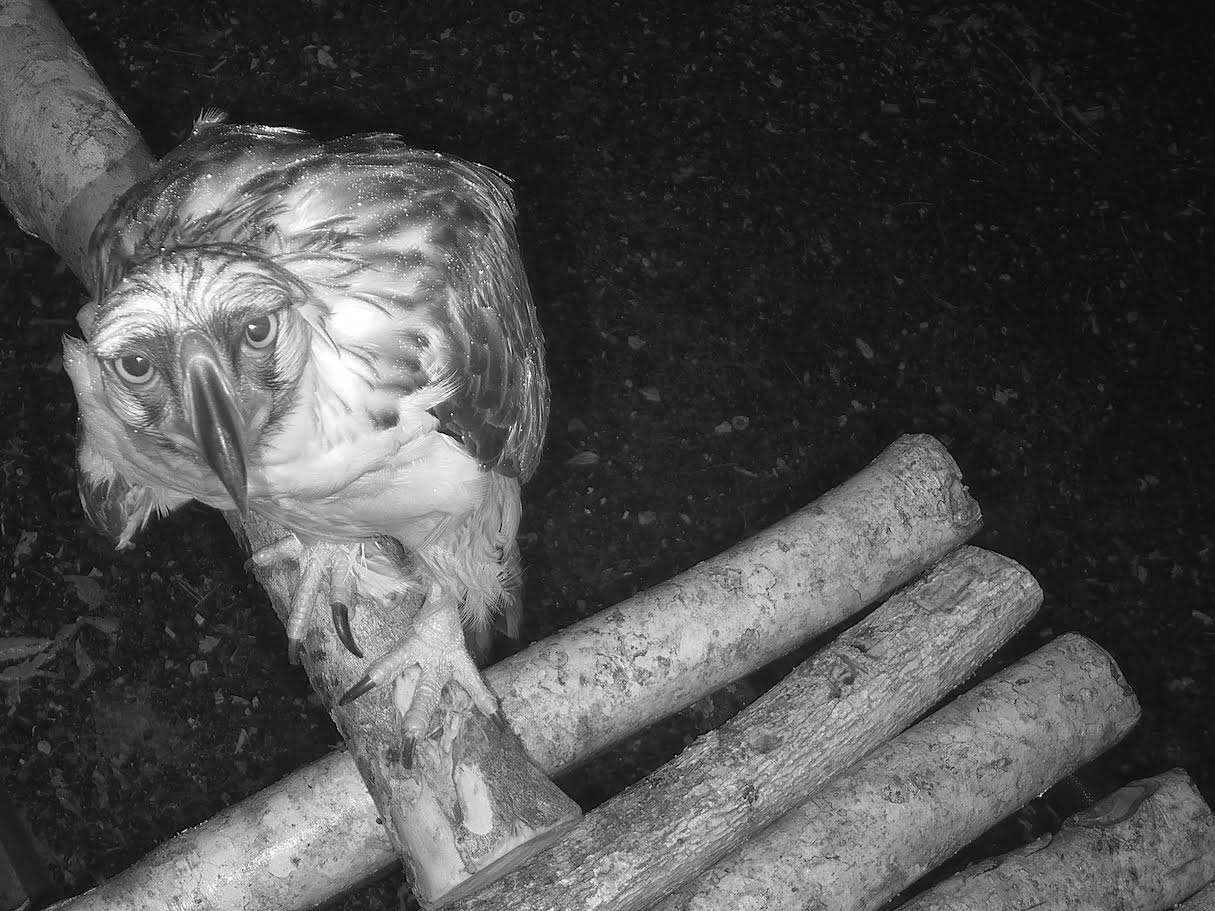
Modern technology will play a big role in the sanctuary. The breeding cages will be fitted with state-of-theart audio-visual equipment to closely monitor the birds 24/7, thanks to the aid of the Raptor Resource Project. Its executive director John Howe shares that each moment of the eagles’ lives— from mating to egg-laying and hatching, from eaglet to adulthood when it can be released to the wild— will be captured in 4K resolution video and streamed live for the world to witness. Within the facility, the monitoring via the camera minimizes human encounters, which is beneficial to the eagle’s normal way of life. Beyond it, it connects the eagles in its natural environment to the rest of the world. The live streaming is not only educational, but also increases public awareness of the PEF’s conservation efforts and invites public support to the preservation advocacy. The NBBS was formally inaugurated on Feb. 13, 2024 coinciding with the 37th year anniversary of the Philippine Eagle Foundation founded in 1987. The celebration of the two milestones was held at the PEC with the PEF team, volunteers, and guests present. There was a tone of excitement in the address of PEF executive director Dennis Salvador, who was part of the organizing team when the non-profit organization was conceived 37 years ago.
“We overcame the challenges” he said. Since then (1987), we’ve bred 29 eagles in captivity even as people believe it couldn’t be done. We found eagles in the Cordillera even if scientists believed that the species didn’t occur there. We’ve restored and protected the eagles’ forest habitat with many indigenous communities using our culturebased approach even as people thought it was unworkable. We sent two eagles to Singapore on a breeding loan agreement even though it took us over 10 years to make it happen. Today, we are moving some of our breeding birds to Eden despite the many challenges we faced. With hope this action will be their armor against Avian influenza.” Avian flu is the primary reason for the breeding eagles’ exodus to its new sanctuary in Eden. Game and poultry farms sprouting around the PEC increases the risk of exposure to highly pathogenic diseases such as Avian flu. In March 2022, threat was on PEC’s doorstep when an outbreak occurred in a town not far from the facility. It put all 32 eagles at risk of being exterminated and further endangering the species’ existence.
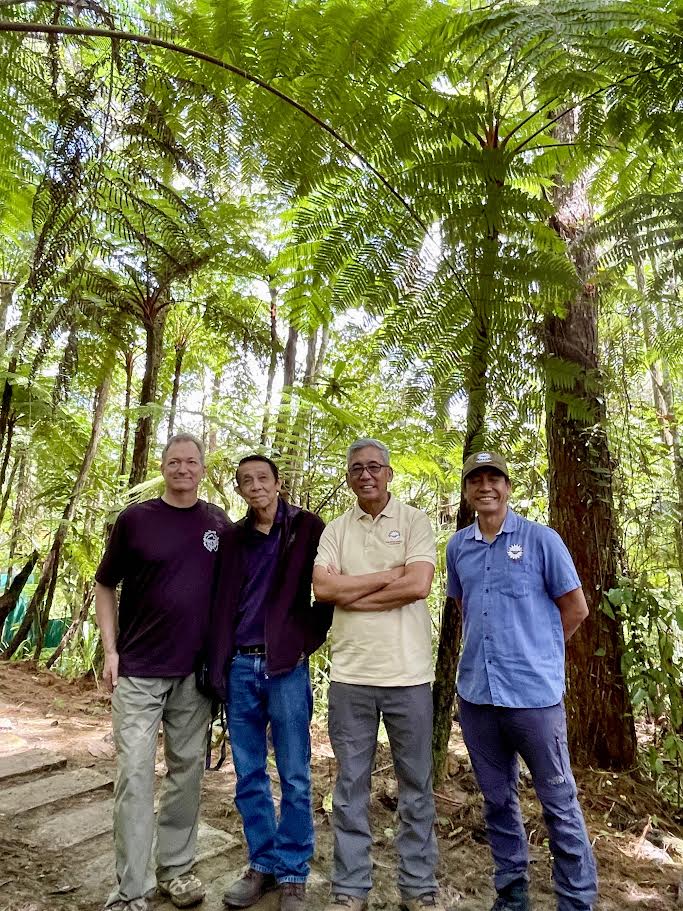
As of March 2023, a recent study shows that the general population of the Philippine eagle is at 392 pairs (left) in the wild with the Leyte population believed to be extinct. In NBBS, the PEF can explore and experiment on other breeding and rearing techniques to bolster future reintroduction and/or restocking trials, including experimental chick-rearing by natural eagle pairs. Looking back, the first significant moment for PEF happened in 1992 when the first captive bred eaglet hatched. It was aptly named Pagasa (hope). Pag-asa was the hope for the future recovery of the species— hope for our country, said Dennis Salvador. It was a monumental success in the center’s breeding and conservation efforts. The hatching of the Philippine eagle Pagkakaisa followed in the same year. Since then, the center has 29 eagles with the pair Dagitab and Brianne’s offsprings accounting for 11 eagles, and LDI (female) and Tsai producing seven offspring.
The Philippine eagle is a monogamous species and keeps one mate for life. With the bird sanctuary as a more conducive site for breeding, the PEF is looking forward to more captive bred born eagles in the future. “Guests at the PEC will still enjoy the presence of the Philippine National Bird as only the breeding birds will be moved to its new home in NBBS. The PEC will be retaining 19 birds of which 17 are retired eagles (non-breeding birds that can no longer be released) and two rescued and rehabilitated eagles that will be released in Leyte this June. The eagles in the center will serve as education ambassadors of the species,” says Jason Ybañez.
At the anniversary affair, the “37 years in the Conservation Mission” Milestone Wall was unveiled, and through a virtual tour, guests were shown the features of the NBBS. Present to welcome and personally thank the PEF’s partners in conservation were the PEF board of trustees Halifax Davao Hotel Inc. president Francis Ledesma, Filinvest Development Corp Utilities Inc. president and CEO Juan Eugenio Roxas, Insular Life Assurance Co. Ltd. president and CEO Raoul Littaua, and Philippine Airlines president and COO Capt. Stanley Ng. Expressing their commitment of support were DENR-XI with Eden LGU barangay captain Alberto Bandiola, Virgilio Sitoy, and Ancestral Domain Office of Bagobo Tagabawa Toril chairperson Matanem Jonathan Awing. Philippine Airlines, adopter of Philippine eagle Sinag (ray of light) from 2015 to present, granted an additional one million miles to the foundation, Davao Light & Power Co. will provide NBBS staff quarters and the Raptor Resource Project will donate more cameras to monitor wild Philippine eagles. The board of trustees also extended their gratitude to the everyone who helped to complete the first phase of the new sanctuary—Boeing Southeast Asia, the City Government of Davao, InLife Insular Foundation, Raptor Resource Project, PK Holdings, Maria Mitchell Association, Ulticon Builders Inc., International Association of Avian Trainers and Educators, Animal Behavior and Conservation Connections, Environmental Incentives, and Michelle Hersch Berger.