ADVERTISEMENT

Navalny mother calls on Putin to release body

Published Feb 20, 2024 02:31 pm
AFP__20240219__34JQ8H8__v1__Preview__ItalyRussiaPrisonersVigilNavalny.jpg
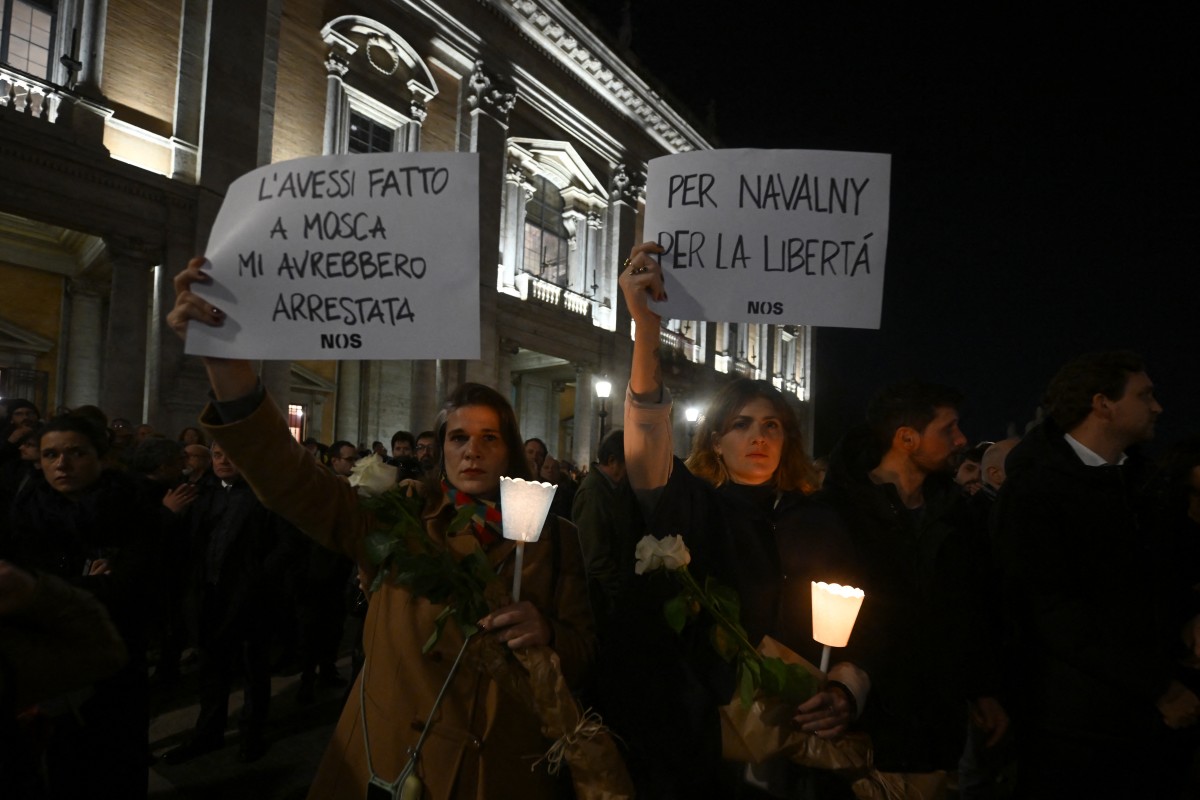
Women hold candles and posters reading 'If I had did it in Moscow they will have put me under arrest' ' for Navalny, for freedom' during a vigil in honor of Kremlin's critic Alexei Navalny following is death, on February 19, 2024 in front of Rome's city hall. Russia reported Navalny's death in an arctic prison on February 16, 2024 and his mother has been denied access to the body, enraging supporters who have accused authorities of trying to cover up Navalny's "murder". (Photo by Filippo MONTEFORTE / AFP)

MOSCOW, Russia– The mother of Alexei Navalny urged President Vladimir Putin to "immediately" release the body of her son in her first comments since his death in an Arctic prison.

His widow Yulia Navalnaya echoed the call and repeated accusations against Putin over Navalny's death -- shortly before her account on social media site X, the former Twitter, was suspended.

Navalny's mother Lyudmila Navalnaya travelled to the remote IK-3 prison colony on Saturday, the morning after his death was announced, and has since been barred from seeing his body.

"I appeal to you, Vladimir Putin, the solution to the issue depends only on you," she said in a video published by his team.

"Let me finally see my son. I demand that Alexei's body be released immediately so that I can bury him in a humane way."

She wore black and stood near the prison colony -- one of Russia's harshest -- where he spent his last weeks.

"For the fifth day, I cannot see him, they don't give me his body and I am not even told where he is."

Navalny's allies have said the mother has been barred from morgues and was on Monday told by investigators that his body could be kept for "at least two weeks."

Navalny's team also published a written letter by Lyudmila Navalnaya -- who is not a public figure -- to Putin with the demand.

The Kremlin has refused to say when the body will be handed over and Putin has been silent on the death of his main political opponent.

Its spokesman Dmitry Peskov brushed off Yulia Navalnaya's statement that Putin killed her husband as "unfounded and vulgar" on Tuesday.

"I could not give a damn how my words are commented by a press secretary of a killer," Navanaya shot back on social media.

"Give back the body of Alexei and let us bury him with dignity, do not stop people from saying their goodbyes with him," Navalnaya said.

Russia detained hundreds of mourners in the days after Navalny's death.


- 'Demonstrative revenge' -


Navalnaya announced Monday she will continue her husband's fight against the Kremlin, in a momentous turn for Russia's opposition. She also met with EU foreign ministers.

Her team said Tuesday she had called on the bloc not to recognise Russia's upcoming presidential election -- which will likely see Putin extend his rule until at least 2030.

"Do not recognise this election," Navalnaya said, according to comments published by her team on social media.

"A president who killed his main political opponent cannot be legitimate by definition," she added.

She also called on the bloc to "always see a difference between Putin and Russia."

"People running from war and dictatorship are not your enemies," she said, calling on the bloc to "help" Russians fleeing their country.

Hundreds of thousands of Russians fled the country after Putin sent troops to Ukraine.

The West has accused the Kremlin of being behind Navalny's death, which came three years into his imprisonment.

Navalny's death has shocked liberal Russians.

His imprisoned friend Ilya Yashin, serving 8.5 years for denouncing the Ukraine offensive, said in a message from prison on Tuesday he had "no doubt" Navalny was killed.

"I am sure that he (Putin) ordered the killing," he said in a message through his lawyers on social media, calling it "demonstrative revenge."

Yashin, a key figure in the Russian opposition who was not in Navalny's team but was friendly with him, was sentenced last year.

Unlike most Putin critics, he chose to stay in Russia after Moscow launched its Ukraine offensive, inspired in part by Navalny's defiant return to the country.


Related Tags

WORLDNEWS
ADVERTISEMENT
.most-popular .layout-ratio{ padding-bottom: 79.13%; } @media (min-width: 768px) and (max-width: 1024px) { .widget-title { font-size: 15px !important; } }

{{ articles_filter_1561_widget.title }}

.most-popular .layout-ratio{ padding-bottom: 79.13%; } @media (min-width: 768px) and (max-width: 1024px) { .widget-title { font-size: 15px !important; } }

{{ articles_filter_1562_widget.title }}

.most-popular .layout-ratio{ padding-bottom: 79.13%; } @media (min-width: 768px) and (max-width: 1024px) { .widget-title { font-size: 15px !important; } }

{{ articles_filter_1563_widget.title }}

{{ articles_filter_1564_widget.title }}

.mb-article-details { position: relative; } .mb-article-details .article-body-preview, .mb-article-details .article-body-summary{ font-size: 17px; line-height: 30px; font-family: "Libre Caslon Text", serif; color: #000; } .mb-article-details .article-body-preview iframe , .mb-article-details .article-body-summary iframe{ width: 100%; margin: auto; } .read-more-background { background: linear-gradient(180deg, color(display-p3 1.000 1.000 1.000 / 0) 13.75%, color(display-p3 1.000 1.000 1.000 / 0.8) 30.79%, color(display-p3 1.000 1.000 1.000) 72.5%); position: absolute; height: 200px; width: 100%; bottom: 0; display: flex; justify-content: center; align-items: center; padding: 0; } .read-more-background a{ color: #000; } .read-more-btn { padding: 17px 45px; font-family: Inter; font-weight: 700; font-size: 18px; line-height: 16px; text-align: center; vertical-align: middle; border: 1px solid black; background-color: white; } .hidden { display: none; }
function initializeAllSwipers() { // Get all hidden inputs with cms_article_id document.querySelectorAll('[id^="cms_article_id_"]').forEach(function (input) { const cmsArticleId = input.value; const articleSelector = '#article-' + cmsArticleId + ' .body_images'; const swiperElement = document.querySelector(articleSelector); if (swiperElement && !swiperElement.classList.contains('swiper-initialized')) { new Swiper(articleSelector, { loop: true, pagination: false, navigation: { nextEl: '#article-' + cmsArticleId + ' .swiper-button-next', prevEl: '#article-' + cmsArticleId + ' .swiper-button-prev', }, }); } }); } setTimeout(initializeAllSwipers, 3000); const intersectionObserver = new IntersectionObserver( (entries) => { entries.forEach((entry) => { if (entry.isIntersecting) { const newUrl = entry.target.getAttribute("data-url"); if (newUrl) { history.pushState(null, null, newUrl); let article = entry.target; // Extract metadata const author = article.querySelector('.author-section').textContent.replace('By', '').trim(); const section = article.querySelector('.section-info ').textContent.replace(' ', ' '); const title = article.querySelector('.article-title h1').textContent; // Parse URL for Chartbeat path format const parsedUrl = new URL(newUrl, window.location.origin); const cleanUrl = parsedUrl.host + parsedUrl.pathname; // Update Chartbeat configuration if (typeof window._sf_async_config !== 'undefined') { window._sf_async_config.path = cleanUrl; window._sf_async_config.sections = section; window._sf_async_config.authors = author; } // Track virtual page view with Chartbeat if (typeof pSUPERFLY !== 'undefined' && typeof pSUPERFLY.virtualPage === 'function') { try { pSUPERFLY.virtualPage({ path: cleanUrl, title: title, sections: section, authors: author }); } catch (error) { console.error('ping error', error); } } // Optional: Update document title if (title && title !== document.title) { document.title = title; } } } }); }, { threshold: 0.1 } ); function showArticleBody(button) { const article = button.closest("article"); const summary = article.querySelector(".article-body-summary"); const body = article.querySelector(".article-body-preview"); const readMoreSection = article.querySelector(".read-more-background"); // Hide summary and read-more section summary.style.display = "none"; readMoreSection.style.display = "none"; // Show the full article body body.classList.remove("hidden"); } document.addEventListener("DOMContentLoaded", () => { let loadCount = 0; // Track how many times articles are loaded const offset = [1, 2, 3, 4, 5, 6, 7, 8, 9, 10]; // Offset values const currentUrl = window.location.pathname.substring(1); let isLoading = false; // Prevent multiple calls if (!currentUrl) { console.log("Current URL is invalid."); return; } const sentinel = document.getElementById("load-more-sentinel"); if (!sentinel) { console.log("Sentinel element not found."); return; } function isSentinelVisible() { const rect = sentinel.getBoundingClientRect(); return ( rect.top < window.innerHeight && rect.bottom >= 0 ); } function onScroll() { if (isLoading) return; if (isSentinelVisible()) { if (loadCount >= offset.length) { console.log("Maximum load attempts reached."); window.removeEventListener("scroll", onScroll); return; } isLoading = true; const currentOffset = offset[loadCount]; window.loadMoreItems().then(() => { let article = document.querySelector('#widget_1690 > div:nth-last-of-type(2) article'); intersectionObserver.observe(article) loadCount++; }).catch(error => { console.error("Error loading more items:", error); }).finally(() => { isLoading = false; }); } } window.addEventListener("scroll", onScroll); });

Sign up by email to receive news.