

ADVERTISEMENT

Bill on archipelagic sea lanes to be completed before holy week - Tolentino

Published Feb 19, 2024 09:07 am

Sen. Francis Tolentino said on Monday, February 19, that the final measure on archipelagic sea lanes (ASLs) to be submitted to the Senate Plenary will be finished before the holy week in March.
viber_image_2024-02-19_15-40-05-991.jpg
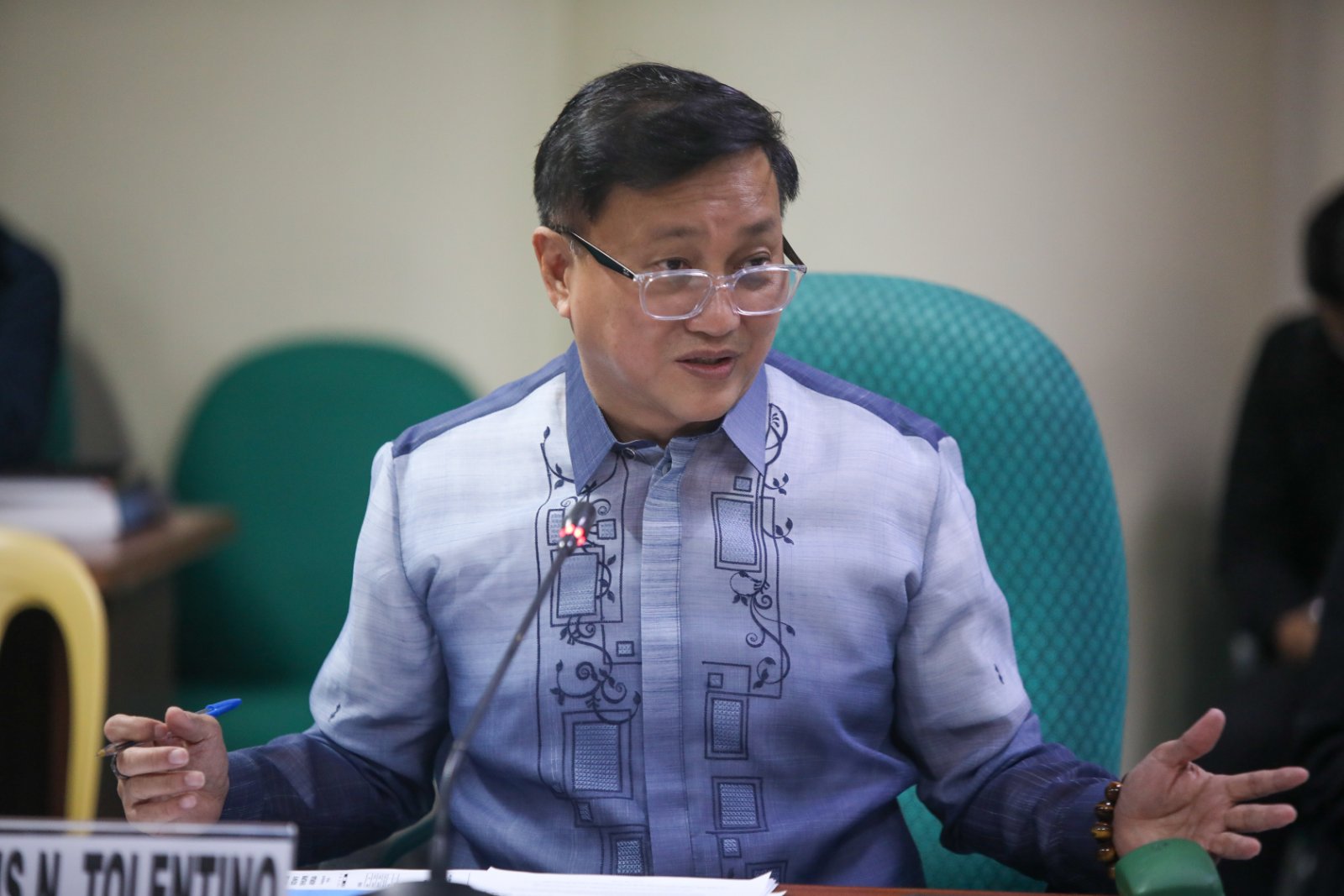
Sen. Francis Tolentino seeks guidance and wisdom from the Department of Justice (DOJ) and Philippine Ambassador to United Kingdom Teodoro Locsin Jr. on how the bill on archipelagic sea lanes should be crafted and presented before the International Maritime Organization (IMO) during Monday’s hearing, February 19, 2024, of the Special Committee on Philippine Maritime and Admiralty Zones. (Senate PRIB photo)

Wrapping up the hearing of the Senate Special Committee on Maritime and Admiralty Zones, chaired by Tolentino, he formed a technical working group (TWG) that will focus on fine-tuning the consolidated bills designating archipelagic sea lanes (ASLs) in the Philippines.

Under the United Nations Convention on the Law of the Sea (UNCLOS), an archipelagic state like the Philippines may designate ASLs for “continuous and expeditious passage of foreign ships and aircraft through or over its archipelagic waters and the adjacent territorial sea.”

The TWG formed by Tolentino, will be composed of the Department of Foreign Affairs (DFA), the Department of Justice (DOJ), the National Security Council (NSC), the National Mapping and Resource Information Authority (NAMRIA), and the Philippine Coast Guard (PCG).

“It’s about time to move forward especially with the current geopolitical climate— to form a TWG that would consolidate all the six measures including the House Bill calling for the adoption of the ASL,” Sen. Tol said during the panel’s deliberation on the bills.

Meanwhile, Philippine Ambassador to the United Kingdom Teodoro Locsin, who is also the Philippine Permanent Representative to the International Maritime Organization (IMO) affirmed the need for the ASL law.

“We are [one of] the only two serious archipelagos on the planet. As sprawling archipelagos, we are most vulnerable in this particular aspect; our major islands are the sizes of many countries; the waterways between them offer wide approaches. We can be taken piecemeal,” Locsin remarked.

While the Ambassador explained that “it will take some time” for the IMO to adopt the Philippine proposal for ASLs, he expressed strong support on starting the conduct immediately.

The ASL measures subject to refinement by the TWG propose three ASLs namely the Philippine Sea Balintang Channel WPS, Celebes Sea Sibutu Passage-Sulu Sea Cuyo East Pass Mindoro Strait WPS. and Celebes-Sea Basilan Strait Sulu Sea- Nasubata Channel Balabac Strait.

Several experts from different agencies and the academe also collectively reminded the Committee to observe the proper process in pushing for the ASL.

In the previous hearing, Tolentino stressed that once the ASL law is enacted, and eventually accepted by the International Maritime Organization (IMO), it can strengthen the position of the Philippines in the ongoing territorial disputes and aggression of adversarial countries.

Related Tags

Senator Francis Tolentino Holy Week United Nations Convention on the Law of the Sea archipelagic sea lane Special Committee on Philippine Maritime and Admiralty Zones
ADVERTISEMENT
.most-popular .layout-ratio{ padding-bottom: 79.13%; } @media (min-width: 768px) and (max-width: 1024px) { .widget-title { font-size: 15px !important; } }

{{ articles_filter_1561_widget.title }}

.most-popular .layout-ratio{ padding-bottom: 79.13%; } @media (min-width: 768px) and (max-width: 1024px) { .widget-title { font-size: 15px !important; } }

{{ articles_filter_1562_widget.title }}

.most-popular .layout-ratio{ padding-bottom: 79.13%; } @media (min-width: 768px) and (max-width: 1024px) { .widget-title { font-size: 15px !important; } }

{{ articles_filter_1563_widget.title }}

{{ articles_filter_1564_widget.title }}

.mb-article-details { position: relative; } .mb-article-details .article-body-preview, .mb-article-details .article-body-summary{ font-size: 17px; line-height: 30px; font-family: "Libre Caslon Text", serif; color: #000; } .mb-article-details .article-body-preview iframe , .mb-article-details .article-body-summary iframe{ width: 100%; margin: auto; } .read-more-background { background: linear-gradient(180deg, color(display-p3 1.000 1.000 1.000 / 0) 13.75%, color(display-p3 1.000 1.000 1.000 / 0.8) 30.79%, color(display-p3 1.000 1.000 1.000) 72.5%); position: absolute; height: 200px; width: 100%; bottom: 0; display: flex; justify-content: center; align-items: center; padding: 0; } .read-more-background a{ color: #000; } .read-more-btn { padding: 17px 45px; font-family: Inter; font-weight: 700; font-size: 18px; line-height: 16px; text-align: center; vertical-align: middle; border: 1px solid black; background-color: white; } .hidden { display: none; }
function initializeAllSwipers() { // Get all hidden inputs with cms_article_id document.querySelectorAll('[id^="cms_article_id_"]').forEach(function (input) { const cmsArticleId = input.value; const articleSelector = '#article-' + cmsArticleId + ' .body_images'; const swiperElement = document.querySelector(articleSelector); if (swiperElement && !swiperElement.classList.contains('swiper-initialized')) { new Swiper(articleSelector, { loop: true, pagination: false, navigation: { nextEl: '#article-' + cmsArticleId + ' .swiper-button-next', prevEl: '#article-' + cmsArticleId + ' .swiper-button-prev', }, }); } }); } setTimeout(initializeAllSwipers, 3000); const intersectionObserver = new IntersectionObserver( (entries) => { entries.forEach((entry) => { if (entry.isIntersecting) { const newUrl = entry.target.getAttribute("data-url"); if (newUrl) { history.pushState(null, null, newUrl); let article = entry.target; // Extract metadata const author = article.querySelector('.author-section').textContent.replace('By', '').trim(); const section = article.querySelector('.section-info ').textContent.replace(' ', ' '); const title = article.querySelector('.article-title h1').textContent; // Parse URL for Chartbeat path format const parsedUrl = new URL(newUrl, window.location.origin); const cleanUrl = parsedUrl.host + parsedUrl.pathname; // Update Chartbeat configuration if (typeof window._sf_async_config !== 'undefined') { window._sf_async_config.path = cleanUrl; window._sf_async_config.sections = section; window._sf_async_config.authors = author; } // Track virtual page view with Chartbeat if (typeof pSUPERFLY !== 'undefined' && typeof pSUPERFLY.virtualPage === 'function') { try { pSUPERFLY.virtualPage({ path: cleanUrl, title: title, sections: section, authors: author }); } catch (error) { console.error('ping error', error); } } // Optional: Update document title if (title && title !== document.title) { document.title = title; } } } }); }, { threshold: 0.1 } ); function showArticleBody(button) { const article = button.closest("article"); const summary = article.querySelector(".article-body-summary"); const body = article.querySelector(".article-body-preview"); const readMoreSection = article.querySelector(".read-more-background"); // Hide summary and read-more section summary.style.display = "none"; readMoreSection.style.display = "none"; // Show the full article body body.classList.remove("hidden"); } document.addEventListener("DOMContentLoaded", () => { let loadCount = 0; // Track how many times articles are loaded const offset = [1, 2, 3, 4, 5, 6, 7, 8, 9, 10]; // Offset values const currentUrl = window.location.pathname.substring(1); let isLoading = false; // Prevent multiple calls if (!currentUrl) { console.log("Current URL is invalid."); return; } const sentinel = document.getElementById("load-more-sentinel"); if (!sentinel) { console.log("Sentinel element not found."); return; } function isSentinelVisible() { const rect = sentinel.getBoundingClientRect(); return ( rect.top < window.innerHeight && rect.bottom >= 0 ); } function onScroll() { if (isLoading) return; if (isSentinelVisible()) { if (loadCount >= offset.length) { console.log("Maximum load attempts reached."); window.removeEventListener("scroll", onScroll); return; } isLoading = true; const currentOffset = offset[loadCount]; window.loadMoreItems().then(() => { let article = document.querySelector('#widget_1690 > div:nth-last-of-type(2) article'); intersectionObserver.observe(article) loadCount++; }).catch(error => { console.error("Error loading more items:", error); }).finally(() => { isLoading = false; }); } } window.addEventListener("scroll", onScroll); });

Sign up by email to receive news.