

ADVERTISEMENT

Ukraine withdraws from eastern city Avdiivka to 'save our people'

Published Feb 17, 2024 01:11 pm

Kyiv, Ukraine - Ukraine withdrew troops from the besieged eastern stronghold of Avdiivka to save the lives of its soldiers, President Volodymyr Zelensky said on Saturday, handing Russia its biggest symbolic victory since May.
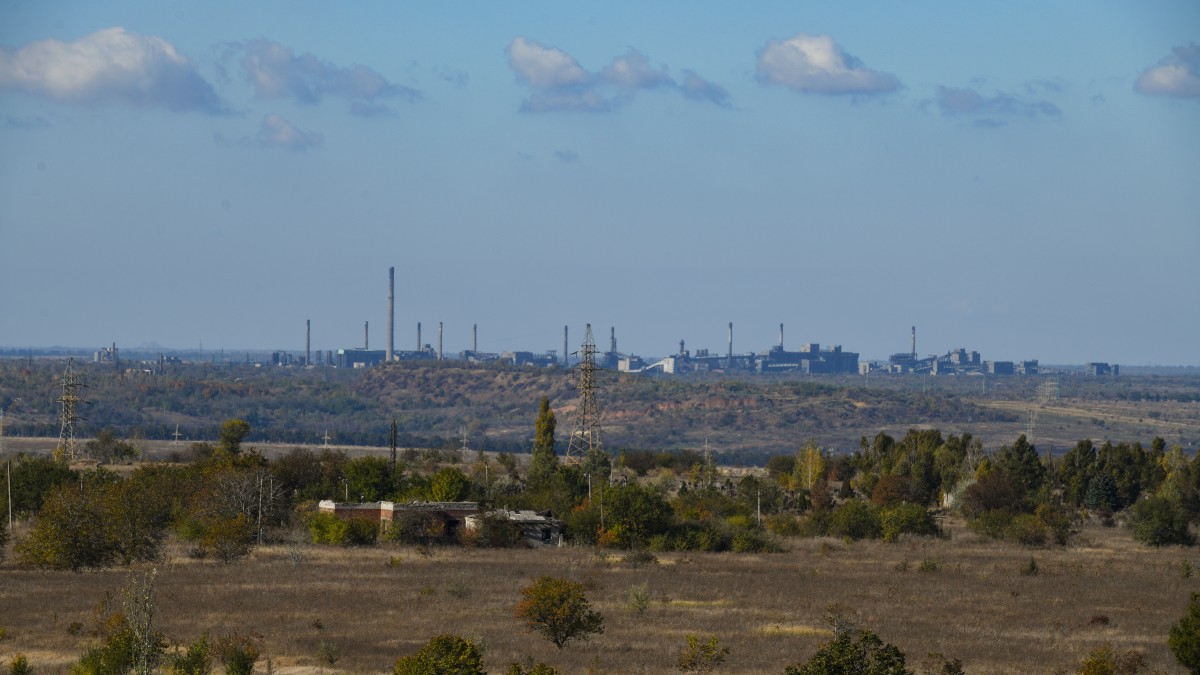
IMG_4499.jpeg

A view of the Avdiivka Coke and Chemical Plant in the frontline town of Avdiivka on October 18, 2023, amid the ongoing Russian military action in Ukraine. Ukraine withdrew troops from the besieged eastern stronghold of Avdiivka to save the lives of its soldiers, President Volodymyr Zelensky said on February 17, 2024, handing Russia its biggest symbolic victory since May. The pullback comes after Russian forces stepped up efforts to capture the eastern industrial hub in October, leading to mass casualties and destruction. (Photo by STRINGER / AFP)

The pullback comes after Russian forces stepped up efforts to capture the eastern industrial hub in October, leading to mass casualties and destruction.

Facing ammunition shortages and outnumbered on the battlefield, Ukrainian forces announced they had withdrawn in the early hours of Saturday.

"The ability to save our people is the most important task for us," Zelensky told a security conference in Munich, explaining the move.

"In order to avoid being surrounded, it was decided to withdraw to other lines. This does not mean that people retreated some kilometres and Russia captured something, it did not capture anything," he also said.

This echoed earlier statements from the newly-appointed commander-in-chief Oleksandr Syrsky, who said he "decided to withdraw our units from the city and switch to defence on more favourable lines."

"The life of military personnel is the highest value," Syrsky said.

It was Syrsky's first major decision since his appointment, at a time when Ukraine faces mounting pressures in the east because of ammunition shortages, with a $60 billion US military aid package held up in Washington.


- Captured soldiers -


Soldiers are now holding a second line of defence, commander Oleksandr Tarnavsky said.

A number of Ukrainian servicemen were captured "at the final stage of the operation, under the pressure of superior enemy forces," he added, calling on the international community to help "return our soldiers to their homeland."

A Ukrainian serviceman deployed on the eastern frontline told AFP that withdrawing was "the right decision given the lack of weapons and artillery shells, because if we don't save the lives of the soldiers, we will soon have no one left to fight".

"But if we keep losing ground, we will lose this war," he said, speaking on condition of anonymity.

Avdiivka lies in the Donetsk region of Ukraine, which the Kremlin has claimed to be part of Russia since a 2022 annexation that remains unrecognised by nearly all United Nations members.

It briefly fell in July 2014 into the hands of pro-Russian separatists, before returning to Ukrainian control and remaining so despite the invasion and its proximity to the separatist capital Donetsk.

After the failure of Kyiv's counter-offensive in the summer, Russian forces went on the attack, facing a Ukrainian army struggling to replenish its ranks and running low on ammunition.

"I am surprised that Avdiivka has held out for two years," Oleksii, a 50-year-old sergeant in the Donetsk region, told AFP on the phone.


- 'Staggering losses' -


The battle for Avdiivka, less than 10 kilometres (six miles) north of the Russian-controlled city of Donetsk, has been one of the bloodiest of the two-year war.

Many compare it to the battle for Bakhmut, in which tens of thousands of soldiers were killed.

Avdiivka had around 30,000 inhabitants before the Russian invasion. Most of the city has been since destroyed but less than 1,000 residents remain, according to local authorities.

Russian forces "destroy everything, level it to the ground," Oleksii said.

"You can't hold the city because it no longer exists," he said.

The city has important symbolic value, and Moscow hopes its capture will make Ukraine's bombing of Donetsk more difficult.

Russian forces "push us out a bit of the temporary occupied Donetsk" region, analyst Mykola Bielieskov told AFP.

But he said holding Avdiivka would grant no advantage to Russia, whose positions in the city of Donetsk "even with the ruins of Avdiivka, wouldn't be fully secured."

"I doubt that Russia, after such staggering losses, has the capacity to turn limited local successes in a major breakthrough," said Bielieskov, from the Ukraine's National Institute for Strategic Studies.

To fend off these attacks, Ukrainian officials are redoubling pleas for much-needed military aid, with Zelensky trying to rally allies in Munich.


Related Tags

world news
ADVERTISEMENT
.most-popular .layout-ratio{ padding-bottom: 79.13%; } @media (min-width: 768px) and (max-width: 1024px) { .widget-title { font-size: 15px !important; } }

{{ articles_filter_1561_widget.title }}

.most-popular .layout-ratio{ padding-bottom: 79.13%; } @media (min-width: 768px) and (max-width: 1024px) { .widget-title { font-size: 15px !important; } }

{{ articles_filter_1562_widget.title }}

.most-popular .layout-ratio{ padding-bottom: 79.13%; } @media (min-width: 768px) and (max-width: 1024px) { .widget-title { font-size: 15px !important; } }

{{ articles_filter_1563_widget.title }}

{{ articles_filter_1564_widget.title }}

.mb-article-details { position: relative; } .mb-article-details .article-body-preview, .mb-article-details .article-body-summary{ font-size: 17px; line-height: 30px; font-family: "Libre Caslon Text", serif; color: #000; } .mb-article-details .article-body-preview iframe , .mb-article-details .article-body-summary iframe{ width: 100%; margin: auto; } .read-more-background { background: linear-gradient(180deg, color(display-p3 1.000 1.000 1.000 / 0) 13.75%, color(display-p3 1.000 1.000 1.000 / 0.8) 30.79%, color(display-p3 1.000 1.000 1.000) 72.5%); position: absolute; height: 200px; width: 100%; bottom: 0; display: flex; justify-content: center; align-items: center; padding: 0; } .read-more-background a{ color: #000; } .read-more-btn { padding: 17px 45px; font-family: Inter; font-weight: 700; font-size: 18px; line-height: 16px; text-align: center; vertical-align: middle; border: 1px solid black; background-color: white; } .hidden { display: none; }
function initializeAllSwipers() { // Get all hidden inputs with cms_article_id document.querySelectorAll('[id^="cms_article_id_"]').forEach(function (input) { const cmsArticleId = input.value; const articleSelector = '#article-' + cmsArticleId + ' .body_images'; const swiperElement = document.querySelector(articleSelector); if (swiperElement && !swiperElement.classList.contains('swiper-initialized')) { new Swiper(articleSelector, { loop: true, pagination: false, navigation: { nextEl: '#article-' + cmsArticleId + ' .swiper-button-next', prevEl: '#article-' + cmsArticleId + ' .swiper-button-prev', }, }); } }); } setTimeout(initializeAllSwipers, 3000); const intersectionObserver = new IntersectionObserver( (entries) => { entries.forEach((entry) => { if (entry.isIntersecting) { const newUrl = entry.target.getAttribute("data-url"); if (newUrl) { history.pushState(null, null, newUrl); let article = entry.target; // Extract metadata const author = article.querySelector('.author-section').textContent.replace('By', '').trim(); const section = article.querySelector('.section-info ').textContent.replace(' ', ' '); const title = article.querySelector('.article-title h1').textContent; // Parse URL for Chartbeat path format const parsedUrl = new URL(newUrl, window.location.origin); const cleanUrl = parsedUrl.host + parsedUrl.pathname; // Update Chartbeat configuration if (typeof window._sf_async_config !== 'undefined') { window._sf_async_config.path = cleanUrl; window._sf_async_config.sections = section; window._sf_async_config.authors = author; } // Track virtual page view with Chartbeat if (typeof pSUPERFLY !== 'undefined' && typeof pSUPERFLY.virtualPage === 'function') { try { pSUPERFLY.virtualPage({ path: cleanUrl, title: title, sections: section, authors: author }); } catch (error) { console.error('ping error', error); } } // Optional: Update document title if (title && title !== document.title) { document.title = title; } } } }); }, { threshold: 0.1 } ); function showArticleBody(button) { const article = button.closest("article"); const summary = article.querySelector(".article-body-summary"); const body = article.querySelector(".article-body-preview"); const readMoreSection = article.querySelector(".read-more-background"); // Hide summary and read-more section summary.style.display = "none"; readMoreSection.style.display = "none"; // Show the full article body body.classList.remove("hidden"); } document.addEventListener("DOMContentLoaded", () => { let loadCount = 0; // Track how many times articles are loaded const offset = [1, 2, 3, 4, 5, 6, 7, 8, 9, 10]; // Offset values const currentUrl = window.location.pathname.substring(1); let isLoading = false; // Prevent multiple calls if (!currentUrl) { console.log("Current URL is invalid."); return; } const sentinel = document.getElementById("load-more-sentinel"); if (!sentinel) { console.log("Sentinel element not found."); return; } function isSentinelVisible() { const rect = sentinel.getBoundingClientRect(); return ( rect.top < window.innerHeight && rect.bottom >= 0 ); } function onScroll() { if (isLoading) return; if (isSentinelVisible()) { if (loadCount >= offset.length) { console.log("Maximum load attempts reached."); window.removeEventListener("scroll", onScroll); return; } isLoading = true; const currentOffset = offset[loadCount]; window.loadMoreItems().then(() => { let article = document.querySelector('#widget_1690 > div:nth-last-of-type(2) article'); intersectionObserver.observe(article) loadCount++; }).catch(error => { console.error("Error loading more items:", error); }).finally(() => { isLoading = false; }); } } window.addEventListener("scroll", onScroll); });

Sign up by email to receive news.