







South China Sea dispute not about US-China rivalry — DFA chief
By Raymund Antonio and Raymund Antonio


Foreign Affairs Secretary Enrique Manalo has spoken against a “tendency” to make the South China Sea dispute the Philippines has with Beijing as a result of the rivalry between the United States and China, diminishing the country’s legitimate rights and interests in the region.
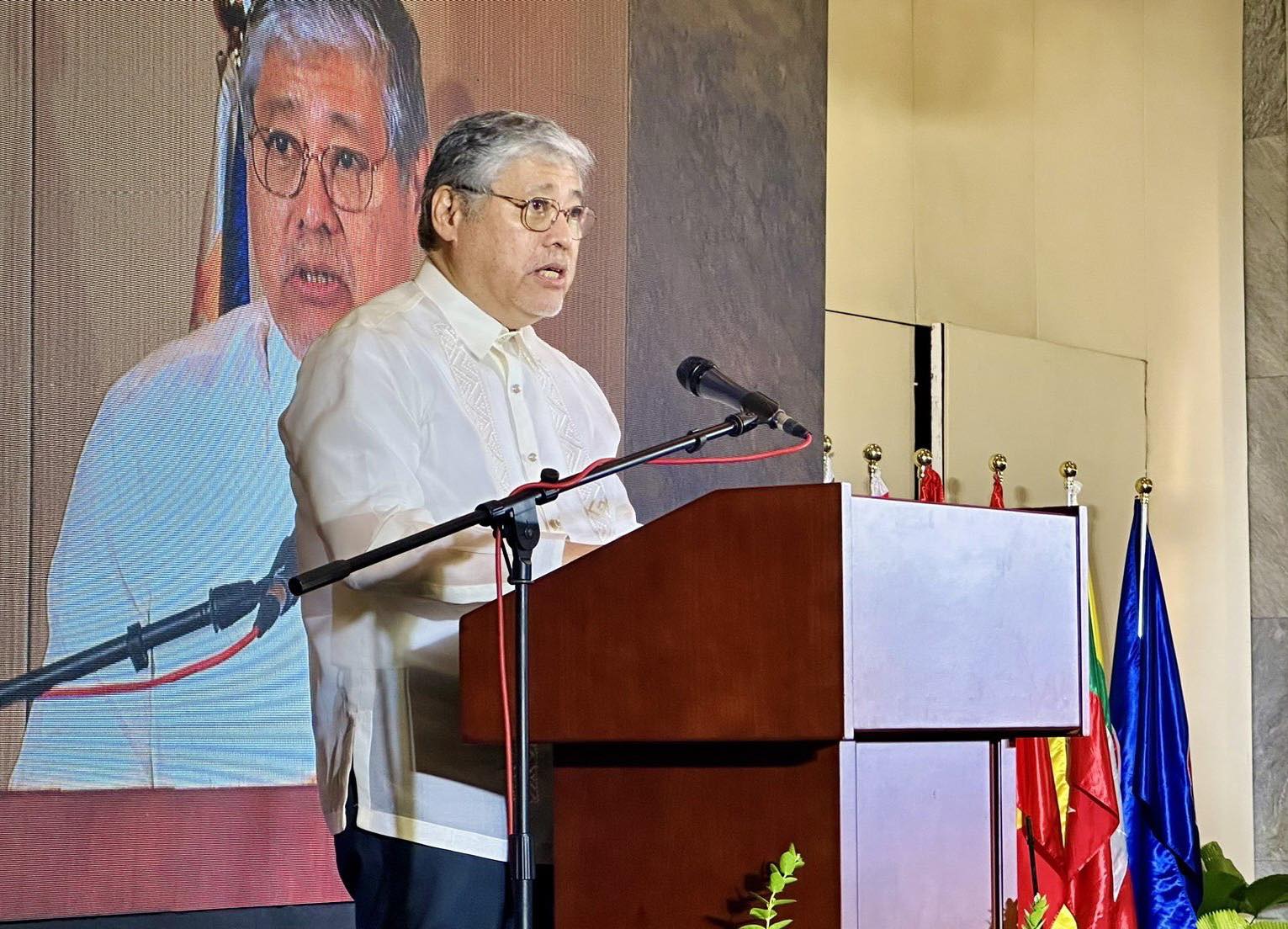 (Photo courtesy of DFA Secretary Enrique Manalo)
In his remarks for the Foreign Correspondents of the Philippines’ (FOCAP) Media Forum, the Department of Foreign Affairs (DFA) chief said that viewing the territorial dispute in the prism of such rivalry “does not help in an honest understanding of the situation.”
“Firstly, it puts distinct and legitimate rights and interests of countries such as the Philippines aside, and secondary to the interests of the rivals,” Manalo said on Thursday, Feb. 15.
“Secondly, it purposely obscures good judgment: actions that are clearly illegal in international law and against the UN (United Nations) Charter are sometimes rationalized under the pretext of this rivalry,” he added.
Manalo lamented that viewing the South China Sea dispute in the context of the perceived US-China rivalry also provides an excuse to disregard “legitimate responses to illegal actions.”
He also called out the use of the term “Cold War mentality” that China has earlier used in criticizing the Philippines’ alliance with the US.
The official described the term’s usage as “paradoxical” because “it is a paradigm long gone, and with no anchor in fact and the current situation.”
“As I have emphasized in many previous remarks, the future of the Indo Pacific, resting on abiding peace and resilience in the face of risks, is being shaped not just by one or two powers, but by many actors, each with their agency and legitimate interests and voice,” he stressed.
The DFA chief made the remarks as he underscored the Philippines’ role in protecting international order, calling the country a “vanguard” of the 1982 UN Convention on the Law of the Sea (UNCLOS), which he said is “the fundamental and only arbiter of the overlapping claims and disputes in the South China Sea.”
The country’s role in upholding these rights “can be seen as an extension of Philippine good global citizenship as a peacemaker, rule-shaper and consensus-builder, as much as it is about Philippine territorial integrity and national sovereignty.”
“With our principled rules-based approach on the South China Sea/West Philippine Sea, the Philippines is championing nothing less, and nothing more, than what is just,” Manalo stated.
He added that as a member of this treaty, the Philippines is committed to conform with what it entails.
The Philippines and China remain at odds over maritime rights in the South China Sea, with Beijing often describing Manila’s defense ties with Washington as nothing more than the superpower’s attempt to instigate conflict.
It has rejected a 2016 arbitral ruling that favors the Philippines, continuously rejecting a multilateral approach to solving the dispute and calls on the Philippines for a bilateral negotiation instead.