






 Business
Trade & Industry
DTI sees higher trade with Australia, New Zealand, Hong Kong
Business
Trade & Industry
DTI sees higher trade with Australia, New Zealand, Hong Kong
DTI sees higher trade with Australia, New Zealand, Hong Kong


The Philippines' trade relations with Australia and New Zealand, as well as Hong Kong are expected to grow as the Department of Trade and Industry (DTI) sealed amended protocols expanding the coverage of their respective free trade agreements (FTAs) with the Association of Southeast Asian Nations (ASEAN).
This developed as DTI Secretary Alfredo E. Pascual signed the Second Protocol for the Association of Southeast Asian Nations (ASEAN)-Australia-New Zealand FTA (AANZFTA) and the First Protocol for the ASEAN-Hong Kong, China FTA (AHKFTA), both on Feb. 14.
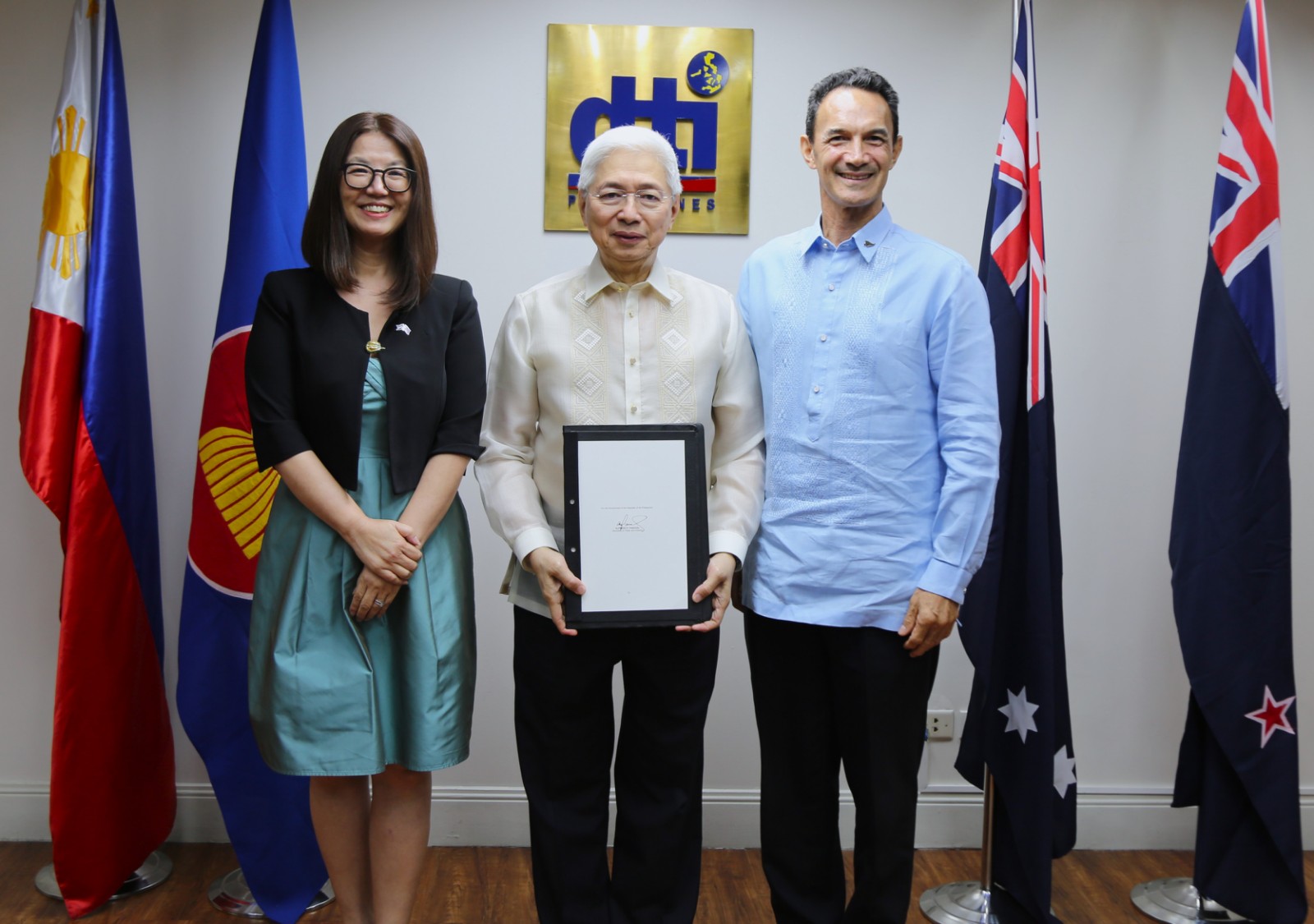
In attendance during the signing ceremony were Australian Ambassador Hae Kyong Yu, New Zealand Ambassador Peter Kell, and Hong Kong Economic & Trade Office - Jakarta (HKETO) Acting Director-General Allan Pang.
The original AANZFTA was signed in February 2009 and entered into force in the Philippines in 2010. It is the first region-to-region trade agreement for ASEAN countries and Australia and New Zealand. The First Protocol was signed in August 2014.
The upgrades include new provisions on government procurement, trade and sustainable development, micro, small, and medium enterprises (MSMEs), particularly in increasing merchandise trade, sustaining trade during times of crises, and addressing concerns regarding non-tariff measures.
The commitments also pertain to expanded market access for Philippine businesses to invest and provide services in Australia and New Zealand within the professional, education, transport, construction, banking, or tourism sectors.
Notably, the countries' also agreed to initiate measure that would allow countries to recognize the educational or professional qualifications of nationals, as well as honor the diverse learning forms accepted in the countries' institutions.
Provisions on electronic payments in the region were also added, along with consumer protection and negotiating rules for competition.

Meanwhile, the AHKFTA was established in the Philippines in 2019.
According to the First Protocol revisions, the parties involved sought to "adopt more liberal origin rules for manufacturing products such as food preparations, polystyrene, jewelry, woven fabrics, and denim," stating that traders may claim lower tariffs under the AHKFTA.
The changes made also pertained to enhanced logistics systems and trade facilitation procedures, digital technology utilization, and granting opportunities for MSMEs to reach the global market.
DTI said that the upgrades were made to maintain the effectiveness of the FTAs amid the evolving business landscape, ensuring they enshrine supply chain resilience, inclusivity, and sustainable development.
"Our goal is to foster resilience and sustainability for the long term, facilitating the flow of goods and services, and attracting investments,” said Pascual.