







Salceda's big frustration on PH economy: 'Ang sikip-sikip!'


At A Glance
- Economic-solon Albay 2nd district Rep. Joey Salceda says the Philippine economy is so tight against the entry of investments, nearly all of its neighboring countries have overtaken it.
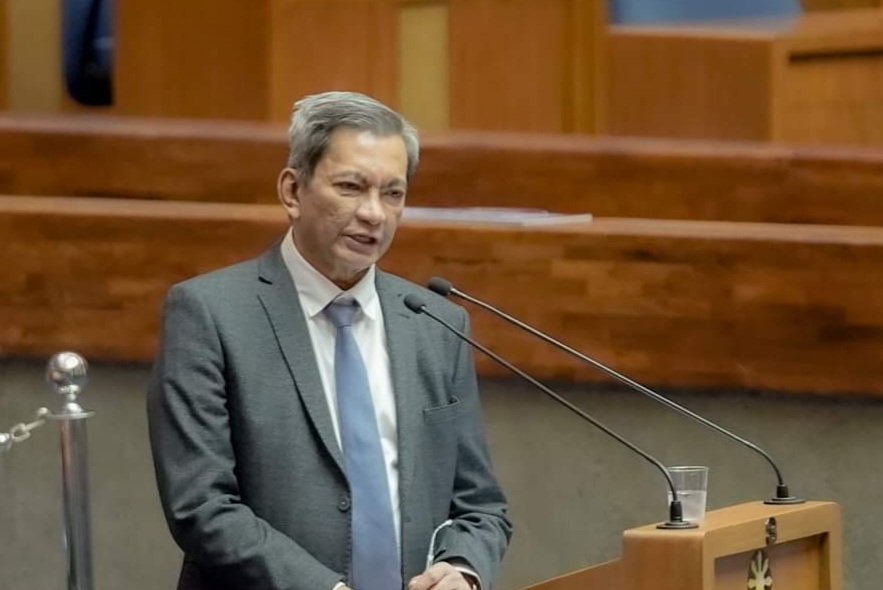 Albay 2nd district Rep. Joey Salceda (Facebook)
Economic-solon Albay 2nd district Rep. Joey Salceda says the Philippine economy is so tight against the entry of investments, nearly all of its neighboring countries have overtaken it.
"We are third most restrictive economy in the world, and all those restrictions are in the Constitution," Salceda, chairman of the House Committee on Ways and Means, said in a press briefing Monday, Feb. 12, amid the Charter change (Cha-cha) effort in Congress.
"Kasi ang problema nga ang sikip-sikip natin, hindi natin pinapapasok yung mga pwedeng magpalago ng ekonomiya para meron tayong espasyo for higher wages when productivity is rising," said the Bicolano his frustration quite evident in his vote.
(The problem is the economy is so tight, we don't allow the entry of economic amplifiers that would facilitate higher wages when productivity is rising.)
Salceda claimed that every time the Philippine Constitution would undergo revision, it was toward adding to or furthering the restrictions.
"Noong 1902, nalampasan tayo ng Malaysia. Noong 1935, nalampasan tayo ng Indonesia. Noong 1972, nalampasan tayo ng Thailand. Ngayon naman lalampasan tayo ng Vietnam--nalampasan na.
(In 1902, we were overtaken by Malaysia. In 1935, we were overtaken by Indonesia. In 1972, we were overtaken by Thailand. Now we are about to be overtaken by Vietnam--or they already have.)
"Because, we keep restricting the entry of foreign investors. Parang may takot tayo sa kanila (It's like we are afraid of them)," Salceda said.
Two areas in the existing 1987 Constitution where restrictions to foreign capital are evident have to do with foreign ownership in the media and in the education sector. The Philippines allows 40 percent foreign ownership in the education sector and zero foreign ownership in media.
Data provided by Salceda's office Monday afternoon shows that in the realm of education, Malaysia allows up to 100 percent foreign ownership; Thailand, allows up to 50 percent, above which requires government approval; Indonesia, allows up to 100 percent, if with local tie-up; Vietnam, up to 20 percent for fully private-education, up to 100 percent for pre-university private education; and Singapore, no restrictions.
Meanwhile, for foreign equity in the realm of media, Japan has no restrictions; Indonesia, allows up to 20 percent; Thailand, allows up to 25 percent; Vietnam, allowed with prior government approval through joint ventures; Malaysia, allowed subject to certain government restrictions; and Singapore, allowed with prior approval of Media Development Authority.
Salceda said while Congress has amended certain laws, the changes were insufficient to attract foreign investors because of restrictions in the Constitution. The current bid to revise the Charter intends to relax its restrictive economic provisions.
“I have repeatedly emphasized that if foreigners cannot own or have a more secure tenure over land, they will be less willing to invest heavily on capital-intensive sectors,” added the solon, one of the resident economists of the House.
Salceda pointed out that he expects vigorous debates on the issue of land ownership.
“But, my personal view as an economist is that we need to open up land to some form of foreign ownership. Our most capital-starved sector is agriculture. In 2022, it accounted for just P1.3 billion in approved foreign investments, out of a total of P242 billion in approved foreign investments during the same year,” he stressed.
Asked if the President wanted a timeline for the Senate to approve Charter reform, Salceda said, “I cannot speak for the President, but I can speak of his style based on my experience.”
He recalled that during the deliberations on the then proposed Maharlika Investment Fund (MIF), the President and the House gave him, as head of the technical working group, “unlimited leeway to listen to stakeholders and to institute safeguards and refinements to the measure'
“The President also allowed vigorous debate on the matter and did not weigh in on the details, just on the principle and the schedule. So, I think the style will be the same here. He will encourage vigorous debate on the details, but will strongly support the principle of economic amendments as well as the timeline for getting it done,” he said.