







Filipina chef commended for promoting Japanese cuisine


Filipina chef Reggie Aspiras has been commended by the Japanese ambassador in Manila for promoting in the Philippines what she has liked since her young age.
"One of your favorite things to eat is Japanese food, correct? It was one of my favorite cuisines, and still is," Aspiras said at a press conference during a commendation ceremony hosted by Japanese Ambassador Koshikawa Kazuhiko at his residence.
"I'm sure we all share the same thing."
Aspiras was honored on the night of Feb. 9 by the Japanese government for "her instrumental work in the promotion of Japanese food culture in the Philippines."
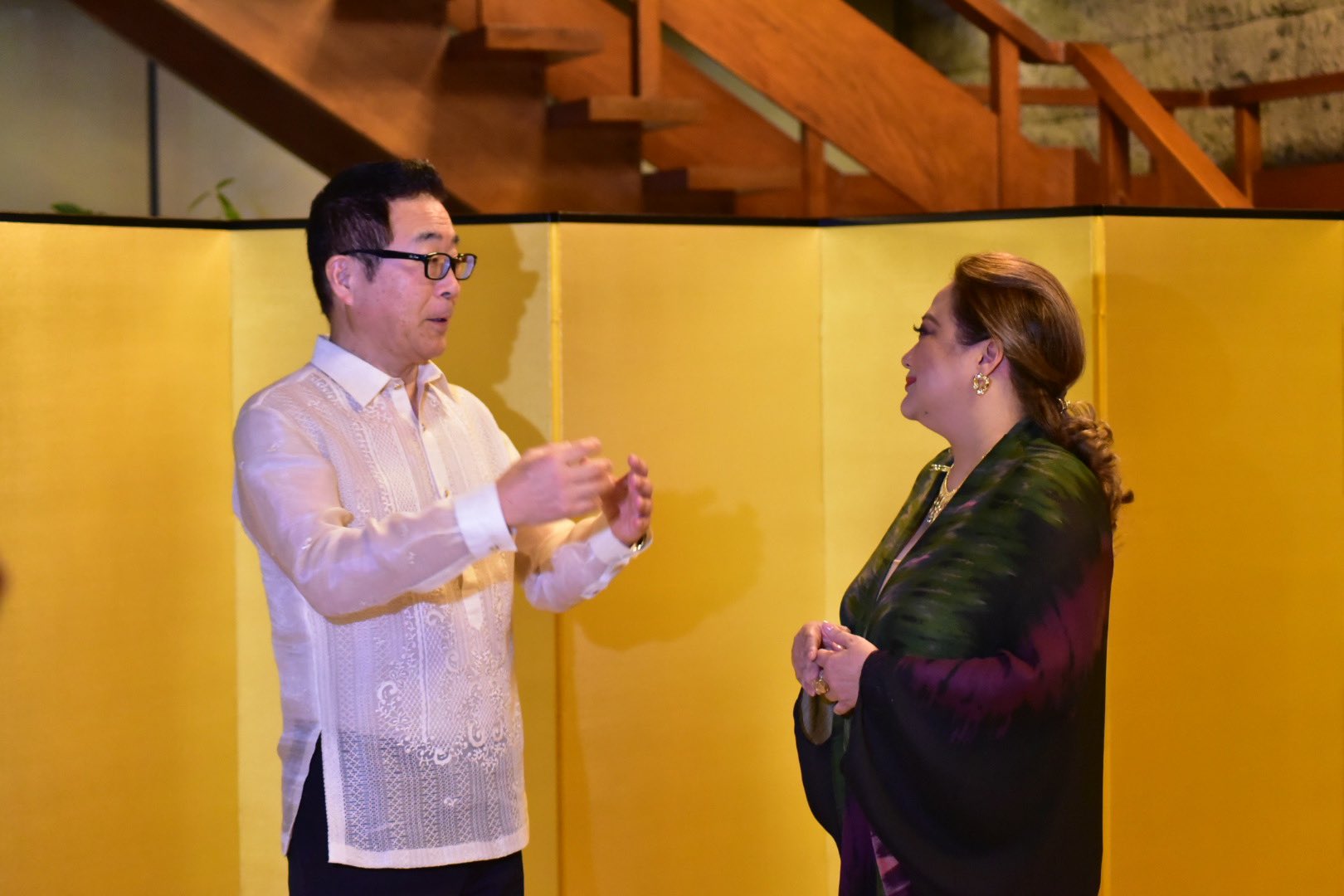
She was also commended for contributing "to the culinary exchange and deepening of mutual understanding of friendship between Japan and the Philippines," Koshikawa's commendation read.
Among works she did was serving as an interviewer in a documentary about Koshikawa's resident chef, Daisuke Suzuki; and co-writing with the latter a recipe book, the DochiSo Sarap!, that was published in Manila.
Aspiras believed "food is the best ambassador of goodwill" because "it neutralizes" as well as "it unites."
A 140-page cookbook with 30 recipes, the DochiSo Sarap! was created because Aspiras, along with Suzuki, wanted "a cookbook that you, me or anyone can pick up and try to do at home."
"When recipes from a cookbook are done in homes, and they are doable, that is one of the best ways for us to promote diplomatic relations," Aspiras said.
The chef's favorite Japanese dish is Sukiyaki. Her favorite ingredients are Dashi, a kind of soup stock; Mirin or rice wine; and Kombu, a kind of seaweed.
"Their flavors are gentle, mild, very seasonal... and it really highlights whatever is out there," Aspiras said as she described the Japanese flavors.
Japanese people are not used to strong flavors, the Japanese ambassador told the media who attended the ceremony.
Sinigang is one of his most favorite Filipino dishes. But to adjust to a Japanese palate, his chef used guava to make it less sour and sweet.
Guava Sinigang is one of the recipes included in the book published in collaboration between Aspiras and Suzuki.

To expand her knowledge in the Japanese cuisine, Aspiras is set to travel to more places in Japan, mostly those less travelled.
"Because I think that is where you really find the heart and the soul of the Japanese people: in all these places where there are no tourists, where there are locals to welcome you and invite you," she said.
With her commendation, Aspiras committed to do more in terms of promoting Japanese cuisine in the Philippines.
"As a person who works in the kitchen... it is my joy to take them [people] to try as much as there is, because it is through all these different cuisines that we get to appreciate food culture, the person," she said.
"I will continue to bring our two nations together one dish, and one bite at a time," she added.