

ADVERTISEMENT

EU reaches agreement on spending rules

Published Feb 10, 2024 01:31 pm

BRUSSELS, Belgium—The European Parliament and member states reached an agreement early Saturday on reforms to EU budgetary rules aimed at boosting investment while keeping spending under control.
AFP__20240201__34HD7MY__v1__Preview__BelgiumEuPoliticsSummitDiplomacy.jpg
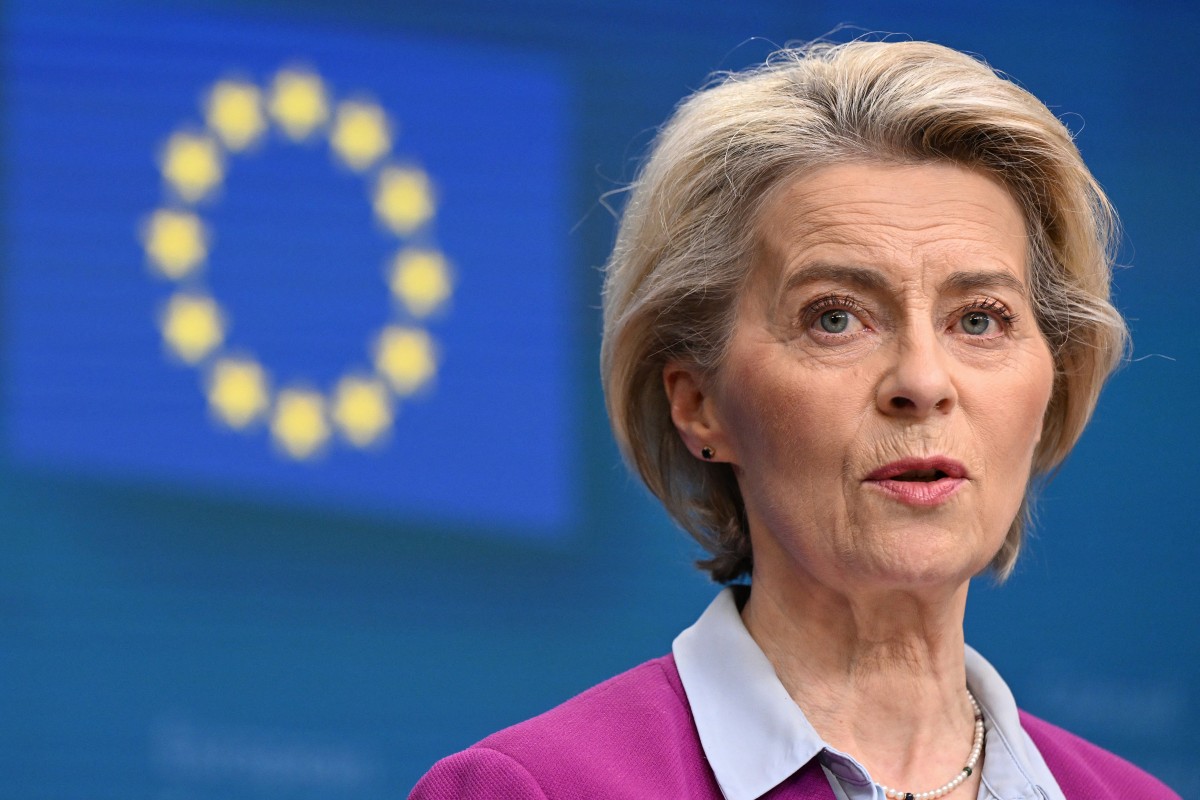
European Commission President Ursula von der Leyen

The text modernises the current rules, known as the Stability and Growth Pact, created in the late 1990s, which limit countries' debt to 60 percent of gross domestic product and public deficits to three percent.

"Deal!," the Belgian presidency of the Council of the EU said on social media platform X, formerly Twitter, after 16 hours of talks.

"I welcome the political agreement on our ambitious reform of the EU's economic governance," EU chief Ursula von der Leyen said.

"The new rules will enable EU countries to invest in their strengths while consolidating their public finances. This is our common growth path," she added.

The European Union spent two years making an intensive effort to develop reforms supported by the more frugal member states like Germany and other countries, such as France and Italy, which seek more flexibility.

After much wrangling between Berlin and Paris, the 27 member states struck a deal in December, then began talks with negotiators from the European Parliament.

The text was criticised for its great complexity and derided by left-wing officials as a tool for imposing austerity on Europe.

The negotiators finally reached an agreement early Saturday, in time for the text to be voted on in Strasbourg this spring before the parliamentary break ahead of European elections.

The reforms will be formally adopted after agreement between lawmakers and states.

The deal will allow member states to apply the new rules to their 2025 budgets.

"The new rules will help achieve balanced & sustainable public finances, structural reforms, foster investments, growth & jobs creation in the EU," the Belgian presidency said.

- Wiggle room -


The former budgetary framework was considered too drastic and was never really respected.

The rules had, however, been suspended since the coronavirus pandemic to give member states wiggle room to spend more during a period of great economic upheaval.

During the initial debates between countries, the battle was fierce over how much those old limits should be relaxed to give more room for investment.

With war raging in Europe and the EU making a green transition push, states led by France argued for allowing more space to finance these key areas, including, for example, supplying critical arms to Ukraine.

While confirming the previous limits on debt and budget deficits, the new agreement allows more flexibility in the event of excessive deficits.

The text provides looser fiscal rules more adapted to the particular situation of each state, allowing big spenders a slower route back to frugality.

The tailor-made approach means each country presents their own adjustment trajectory to ensure their debt's sustainability, giving them more time if they undertake reforms and investments and allowing a less painful return to fiscal health.

Monitoring would focus on expenditure trends, an economic indicator considered more relevant than deficits, which can fluctuate depending on the level of growth.

But Germany and its "frugal" allies managed to tighten this budgetary framework by imposing a quantifiable minimum effort to reduce debt and deficits for all EU countries, despite the reluctance of France and Italy.

These modifications have greatly complicated the text.

The reforms are supported by the centre-right European People's Party group, the EU's Renew liberals and a large majority of Socialist and Democrat groupings.

The Greens and some S&D elected officials, however, reject it, as does the radical left.

These elected officials have denounced a return to austerity after three years of suspended budgetary rules due to the pandemic and war in Ukraine.

"We need investments in industry, in defence, in the ecological transition, that's the urgency today, it is not to bring economically absurd rules up to date," economist and S&D MEP Aurore Lalucq of France told AFP.

Related Tags

WORLDNEWS
ADVERTISEMENT
.most-popular .layout-ratio{ padding-bottom: 79.13%; } @media (min-width: 768px) and (max-width: 1024px) { .widget-title { font-size: 15px !important; } }

{{ articles_filter_1561_widget.title }}

.most-popular .layout-ratio{ padding-bottom: 79.13%; } @media (min-width: 768px) and (max-width: 1024px) { .widget-title { font-size: 15px !important; } }

{{ articles_filter_1562_widget.title }}

.most-popular .layout-ratio{ padding-bottom: 79.13%; } @media (min-width: 768px) and (max-width: 1024px) { .widget-title { font-size: 15px !important; } }

{{ articles_filter_1563_widget.title }}

{{ articles_filter_1564_widget.title }}

.mb-article-details { position: relative; } .mb-article-details .article-body-preview, .mb-article-details .article-body-summary{ font-size: 17px; line-height: 30px; font-family: "Libre Caslon Text", serif; color: #000; } .mb-article-details .article-body-preview iframe , .mb-article-details .article-body-summary iframe{ width: 100%; margin: auto; } .read-more-background { background: linear-gradient(180deg, color(display-p3 1.000 1.000 1.000 / 0) 13.75%, color(display-p3 1.000 1.000 1.000 / 0.8) 30.79%, color(display-p3 1.000 1.000 1.000) 72.5%); position: absolute; height: 200px; width: 100%; bottom: 0; display: flex; justify-content: center; align-items: center; padding: 0; } .read-more-background a{ color: #000; } .read-more-btn { padding: 17px 45px; font-family: Inter; font-weight: 700; font-size: 18px; line-height: 16px; text-align: center; vertical-align: middle; border: 1px solid black; background-color: white; } .hidden { display: none; }
function initializeAllSwipers() { // Get all hidden inputs with cms_article_id document.querySelectorAll('[id^="cms_article_id_"]').forEach(function (input) { const cmsArticleId = input.value; const articleSelector = '#article-' + cmsArticleId + ' .body_images'; const swiperElement = document.querySelector(articleSelector); if (swiperElement && !swiperElement.classList.contains('swiper-initialized')) { new Swiper(articleSelector, { loop: true, pagination: false, navigation: { nextEl: '#article-' + cmsArticleId + ' .swiper-button-next', prevEl: '#article-' + cmsArticleId + ' .swiper-button-prev', }, }); } }); } setTimeout(initializeAllSwipers, 3000); const intersectionObserver = new IntersectionObserver( (entries) => { entries.forEach((entry) => { if (entry.isIntersecting) { const newUrl = entry.target.getAttribute("data-url"); if (newUrl) { history.pushState(null, null, newUrl); let article = entry.target; // Extract metadata const author = article.querySelector('.author-section').textContent.replace('By', '').trim(); const section = article.querySelector('.section-info ').textContent.replace(' ', ' '); const title = article.querySelector('.article-title h1').textContent; // Parse URL for Chartbeat path format const parsedUrl = new URL(newUrl, window.location.origin); const cleanUrl = parsedUrl.host + parsedUrl.pathname; // Update Chartbeat configuration if (typeof window._sf_async_config !== 'undefined') { window._sf_async_config.path = cleanUrl; window._sf_async_config.sections = section; window._sf_async_config.authors = author; } // Track virtual page view with Chartbeat if (typeof pSUPERFLY !== 'undefined' && typeof pSUPERFLY.virtualPage === 'function') { try { pSUPERFLY.virtualPage({ path: cleanUrl, title: title, sections: section, authors: author }); } catch (error) { console.error('ping error', error); } } // Optional: Update document title if (title && title !== document.title) { document.title = title; } } } }); }, { threshold: 0.1 } ); function showArticleBody(button) { const article = button.closest("article"); const summary = article.querySelector(".article-body-summary"); const body = article.querySelector(".article-body-preview"); const readMoreSection = article.querySelector(".read-more-background"); // Hide summary and read-more section summary.style.display = "none"; readMoreSection.style.display = "none"; // Show the full article body body.classList.remove("hidden"); } document.addEventListener("DOMContentLoaded", () => { let loadCount = 0; // Track how many times articles are loaded const offset = [1, 2, 3, 4, 5, 6, 7, 8, 9, 10]; // Offset values const currentUrl = window.location.pathname.substring(1); let isLoading = false; // Prevent multiple calls if (!currentUrl) { console.log("Current URL is invalid."); return; } const sentinel = document.getElementById("load-more-sentinel"); if (!sentinel) { console.log("Sentinel element not found."); return; } function isSentinelVisible() { const rect = sentinel.getBoundingClientRect(); return ( rect.top < window.innerHeight && rect.bottom >= 0 ); } function onScroll() { if (isLoading) return; if (isSentinelVisible()) { if (loadCount >= offset.length) { console.log("Maximum load attempts reached."); window.removeEventListener("scroll", onScroll); return; } isLoading = true; const currentOffset = offset[loadCount]; window.loadMoreItems().then(() => { let article = document.querySelector('#widget_1690 > div:nth-last-of-type(2) article'); intersectionObserver.observe(article) loadCount++; }).catch(error => { console.error("Error loading more items:", error); }).finally(() => { isLoading = false; }); } } window.addEventListener("scroll", onScroll); });

Sign up by email to receive news.