

ADVERTISEMENT

Filipino fisherfolk suffering from food insecurity — DOST-FNRI

Published Feb 1, 2024 04:50 am

Although fishermen make substantial contributions to high-quality fish catches, they live in a community where malnutrition is prevalent due to food insecurity, a researcher at the Department of Science and Technology (DOST) pointed out.
images (17).jpeg
(Pixabay)

In a Teleradyo Serbisyo interview on Thursday, Feb. 1, Department of Science and Technology-Food and Nutrition Research Institute (DOST-FNRI) Senior Science Research Specialist Dr. Eva Goyena confirmed that malnutrition has been a "long-standing" issue in the country but the cases are even higher in households of fisherfolk communities across the Philippines.

"Long-standing problem na ang malnutrition sa Pilipinas, but higit na mas mataas ang problem sa malnutrition among the fisher-headed households ayon sa pag-aaral ng aming former director, Director Mario Capanzana (The long-standing problem of malnutrition in the Philippines has been persistent, but the problem of malnutrition among fisher-headed households is even higher, according to the study conducted by our former director, Director Mario Capanzana)," Goyena said.

"Nakita nila based sa aming datos ng National Nutrition Survey na higit mas mataas ang problema sa stunting ng mga bata, ibig sabihin maraming bansot o pandak—stunted na mga bata—sa mga fisherfolk families, gayundin, mas marami rin ang mga batang magagaan at mapapayat sa fisherfolk families as compared sa non-fisherfolk headed families (They observed, based on our data from the National Nutrition Survey, that the problem of stunting in children is significantly higher, meaning there are more stunted children, in fisherfolk families. Additionally, there are also more underweight and thin children in fisherfolk families compared to non-fisherfolk-headed families.)," she added.

Moreover, Goyena said there is a "hidden hunger" in the said communities where the intake of vitamins and minerals is insufficient affecting the growth of the children.

"May kakulangan tulad ng iron, mataas ang iron deficiency, anemia sa lower-income groups. May kakulangan din sa Vitamin A, iodine, at iba pang vitamins na kailangan ng mga bata at mga buntis at nagpapasuso (A deficiency, particularly in iron, is prevalent among lower-income groups, leading to a high incidence of iron deficiency anemia. There is also a lack of Vitamin A, iodine, and other essential vitamins needed by children, pregnant women, and lactating mothers)," she said.

Goyena said lack of nutrients can cause children to be "pale" leading them to not be able to concentrate in school.

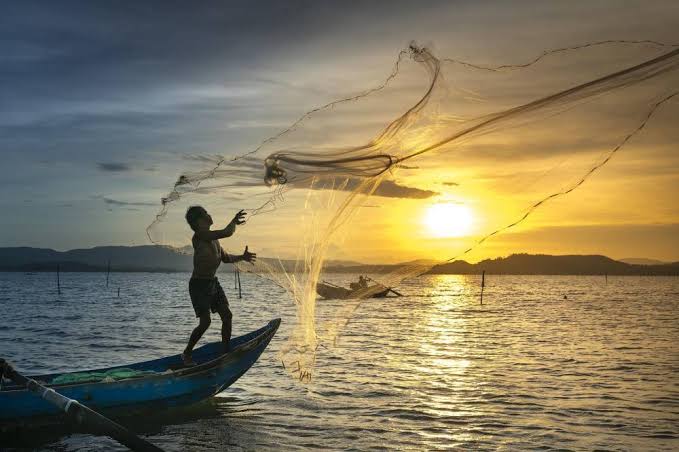
She also emphasized that the fisherfolk provide the country with good quality fish but they are the ones having compromised with fish intake.

"Ibebenta nila iyong best quality of fish, samantala, iyong mga entrails—iyong mga bituka, mga lamang loob, sometimes iyong gills at head, iyon ang itinitira nila para kainin nila (They sell the best quality of fish, while keeping the entrails—the intestines, internal organs, sometimes the gills and head—these are prevalewhat they retain for their own consumption)," Goyena said.

In addition, she said the geographically isolated or depressed areas (GIDA) have high prevalence rate of stunting among children which include fisherfolk communities in the Western Visayas particularly Panay Island, BARMM (Bangsamoro Autonomous Region in Muslim Mindanao), Zamboanga Peninsula, MIMAROPA (Oriental Mindoro, Occidental Mindoro, Romblon, Palawan), and Bicol Region.

Meanwhile, Goyena emphasized the department's call to assist fisherfolks.

"We are disseminating the result of our study to inform the policymakers," she said.

"Gusto namin maiparating sa mga kinauukulan pati na sa LGUs [Local Government Units] na bigyan ng importance 'yung kanilang fisherfolks, kung nasa coastal communities ay kailangang iprioritize iyong mga programs to improve the livelihood of our fisherfolks (We want to inform the authorities, including LGUs, the importance of giving attention to their fisherfolks. If in coastal communities, there is a need to prioritize programs aimed at improving the livelihood of our fisherfolks)," Goyena said.

Furthermore, Goyena stressed the damage of malnutrition can be "irreversible," thus, the children's health should be prioritized --- particularly in the first 1,000 days --- to avoid long-term mental developmental problems.

Related Tags

Department of Science and Technology-Food and Nutrition Research Institute FOOD INSECURITY fisherfolk
ADVERTISEMENT
.most-popular .layout-ratio{ padding-bottom: 79.13%; } @media (min-width: 768px) and (max-width: 1024px) { .widget-title { font-size: 15px !important; } }

{{ articles_filter_1561_widget.title }}

.most-popular .layout-ratio{ padding-bottom: 79.13%; } @media (min-width: 768px) and (max-width: 1024px) { .widget-title { font-size: 15px !important; } }

{{ articles_filter_1562_widget.title }}

.most-popular .layout-ratio{ padding-bottom: 79.13%; } @media (min-width: 768px) and (max-width: 1024px) { .widget-title { font-size: 15px !important; } }

{{ articles_filter_1563_widget.title }}

{{ articles_filter_1564_widget.title }}

.mb-article-details { position: relative; } .mb-article-details .article-body-preview, .mb-article-details .article-body-summary{ font-size: 17px; line-height: 30px; font-family: "Libre Caslon Text", serif; color: #000; } .mb-article-details .article-body-preview iframe , .mb-article-details .article-body-summary iframe{ width: 100%; margin: auto; } .read-more-background { background: linear-gradient(180deg, color(display-p3 1.000 1.000 1.000 / 0) 13.75%, color(display-p3 1.000 1.000 1.000 / 0.8) 30.79%, color(display-p3 1.000 1.000 1.000) 72.5%); position: absolute; height: 200px; width: 100%; bottom: 0; display: flex; justify-content: center; align-items: center; padding: 0; } .read-more-background a{ color: #000; } .read-more-btn { padding: 17px 45px; font-family: Inter; font-weight: 700; font-size: 18px; line-height: 16px; text-align: center; vertical-align: middle; border: 1px solid black; background-color: white; } .hidden { display: none; }
function initializeAllSwipers() { // Get all hidden inputs with cms_article_id document.querySelectorAll('[id^="cms_article_id_"]').forEach(function (input) { const cmsArticleId = input.value; const articleSelector = '#article-' + cmsArticleId + ' .body_images'; const swiperElement = document.querySelector(articleSelector); if (swiperElement && !swiperElement.classList.contains('swiper-initialized')) { new Swiper(articleSelector, { loop: true, pagination: false, navigation: { nextEl: '#article-' + cmsArticleId + ' .swiper-button-next', prevEl: '#article-' + cmsArticleId + ' .swiper-button-prev', }, }); } }); } setTimeout(initializeAllSwipers, 3000); const intersectionObserver = new IntersectionObserver( (entries) => { entries.forEach((entry) => { if (entry.isIntersecting) { const newUrl = entry.target.getAttribute("data-url"); if (newUrl) { history.pushState(null, null, newUrl); let article = entry.target; // Extract metadata const author = article.querySelector('.author-section').textContent.replace('By', '').trim(); const section = article.querySelector('.section-info ').textContent.replace(' ', ' '); const title = article.querySelector('.article-title h1').textContent; // Parse URL for Chartbeat path format const parsedUrl = new URL(newUrl, window.location.origin); const cleanUrl = parsedUrl.host + parsedUrl.pathname; // Update Chartbeat configuration if (typeof window._sf_async_config !== 'undefined') { window._sf_async_config.path = cleanUrl; window._sf_async_config.sections = section; window._sf_async_config.authors = author; } // Track virtual page view with Chartbeat if (typeof pSUPERFLY !== 'undefined' && typeof pSUPERFLY.virtualPage === 'function') { try { pSUPERFLY.virtualPage({ path: cleanUrl, title: title, sections: section, authors: author }); } catch (error) { console.error('ping error', error); } } // Optional: Update document title if (title && title !== document.title) { document.title = title; } } } }); }, { threshold: 0.1 } ); function showArticleBody(button) { const article = button.closest("article"); const summary = article.querySelector(".article-body-summary"); const body = article.querySelector(".article-body-preview"); const readMoreSection = article.querySelector(".read-more-background"); // Hide summary and read-more section summary.style.display = "none"; readMoreSection.style.display = "none"; // Show the full article body body.classList.remove("hidden"); } document.addEventListener("DOMContentLoaded", () => { let loadCount = 0; // Track how many times articles are loaded const offset = [1, 2, 3, 4, 5, 6, 7, 8, 9, 10]; // Offset values const currentUrl = window.location.pathname.substring(1); let isLoading = false; // Prevent multiple calls if (!currentUrl) { console.log("Current URL is invalid."); return; } const sentinel = document.getElementById("load-more-sentinel"); if (!sentinel) { console.log("Sentinel element not found."); return; } function isSentinelVisible() { const rect = sentinel.getBoundingClientRect(); return ( rect.top < window.innerHeight && rect.bottom >= 0 ); } function onScroll() { if (isLoading) return; if (isSentinelVisible()) { if (loadCount >= offset.length) { console.log("Maximum load attempts reached."); window.removeEventListener("scroll", onScroll); return; } isLoading = true; const currentOffset = offset[loadCount]; window.loadMoreItems().then(() => { let article = document.querySelector('#widget_1690 > div:nth-last-of-type(2) article'); intersectionObserver.observe(article) loadCount++; }).catch(error => { console.error("Error loading more items:", error); }).finally(() => { isLoading = false; }); } } window.addEventListener("scroll", onScroll); });

Sign up by email to receive news.