

ADVERTISEMENT

Deep sea explorer says may have found Amelia Earhart's plane

Published Feb 1, 2024 01:25 am

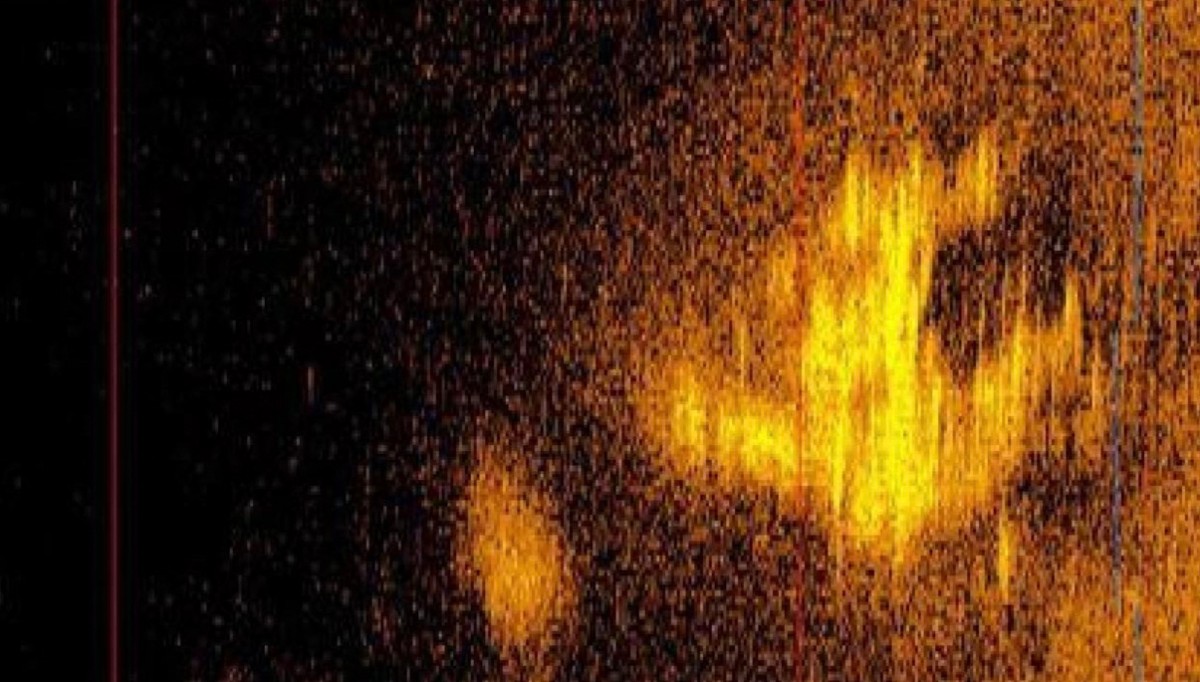
Washington, United States - A deep sea exploration company has released a sonar image they say may be the remains of the plane of Amelia Earhart, the famed American aviatrix who disappeared over the Pacific Ocean in 1937.
IMG_4365.jpeg

This handout sonar image courtesy of Deep Sea Vision released January 29, 2024, shows a a plane shaped object believed to be Amelia Earhart’s Lockheed 10-E Electra resting about 16,000 feet (4875 meters) on the Pacific ocean floor. A deep sea exploration company released a sonar image on January 29, 2024 they say may be the remains of the plane of Amelia Earhart, the famed American aviatrix who disappeared over the Pacific in 1937. Deep Sea Vision (DSV), a South Carolina-based firm, said the image was captured after an extensive search in an area of the Pacific to the west of Earhart's planned destination, remote Howland Island.
(Photo by Deep Sea Vision / AFP)

Deep Sea Vision (DSV), a South Carolina-based firm, said the image was captured after an extensive search in an area of the Pacific to the west of Earhart's planned destination, remote Howland Island.

Earhart went missing while on a pioneering round-the-world flight with navigator Fred Noonan.

Her disappearance is one of the most tantalizing mysteries in aviation lore, fascinating historians for decades and spawning books, movies and theories galore.

The prevailing belief is that Earhart, 39, and Noonan, 44, ran out of fuel and ditched their twin-engine Lockheed Electra in the Pacific near Howland Island while on one of the final legs of their epic journey.

DSV said the blurry image captured by an unmanned underwater submersible at a depth of 16,000 feet (5,000 meters) using side scan sonar "reveals contours that mirror the unique dual tails and scale of her storied aircraft."

"We always felt that she would have made every attempt to land the aircraft gently on the water, and the aircraft signature that we see in the sonar image suggests that may be the case," DSV chief executive Tony Romeo said in a statement.

DSV said the exploration team spent 90 days searching 5,200 square miles (13,500 square kilometers) of the Pacific Ocean floor, "more than all previous searches combined."

DSV said it is keeping the exact location of the find confidential for now and is planning further search efforts.

But Romeo said the discovery was made applying what is known as the "Date Line theory" first advanced in 2010 by Liz Smith, a former NASA employee.

This theory posits that Noonan forgot to turn the calendar back a day as they flew over the International Date Line, resulting in a miscalculation of his celestial star navigation and a westward navigational error of 60 miles (100 kilometers).

Earhart, who won fame in 1932 as the first woman to fly solo across the Atlantic, took off on May 20, 1937 from Oakland, California, hoping to become the first woman to fly around the world.

She and Noonan vanished on July 2, 1937 after taking off from Lae, Papua New Guinea, on a challenging 2,500-mile (4,000-kilometer) flight to refuel on Howland Island, a speck of a US territory between Australia and Hawaii.

They never made it.


Related Tags

world news
ADVERTISEMENT
.most-popular .layout-ratio{ padding-bottom: 79.13%; } @media (min-width: 768px) and (max-width: 1024px) { .widget-title { font-size: 15px !important; } }

{{ articles_filter_1561_widget.title }}

.most-popular .layout-ratio{ padding-bottom: 79.13%; } @media (min-width: 768px) and (max-width: 1024px) { .widget-title { font-size: 15px !important; } }

{{ articles_filter_1562_widget.title }}

.most-popular .layout-ratio{ padding-bottom: 79.13%; } @media (min-width: 768px) and (max-width: 1024px) { .widget-title { font-size: 15px !important; } }

{{ articles_filter_1563_widget.title }}

{{ articles_filter_1564_widget.title }}

.mb-article-details { position: relative; } .mb-article-details .article-body-preview, .mb-article-details .article-body-summary{ font-size: 17px; line-height: 30px; font-family: "Libre Caslon Text", serif; color: #000; } .mb-article-details .article-body-preview iframe , .mb-article-details .article-body-summary iframe{ width: 100%; margin: auto; } .read-more-background { background: linear-gradient(180deg, color(display-p3 1.000 1.000 1.000 / 0) 13.75%, color(display-p3 1.000 1.000 1.000 / 0.8) 30.79%, color(display-p3 1.000 1.000 1.000) 72.5%); position: absolute; height: 200px; width: 100%; bottom: 0; display: flex; justify-content: center; align-items: center; padding: 0; } .read-more-background a{ color: #000; } .read-more-btn { padding: 17px 45px; font-family: Inter; font-weight: 700; font-size: 18px; line-height: 16px; text-align: center; vertical-align: middle; border: 1px solid black; background-color: white; } .hidden { display: none; }
function initializeAllSwipers() { // Get all hidden inputs with cms_article_id document.querySelectorAll('[id^="cms_article_id_"]').forEach(function (input) { const cmsArticleId = input.value; const articleSelector = '#article-' + cmsArticleId + ' .body_images'; const swiperElement = document.querySelector(articleSelector); if (swiperElement && !swiperElement.classList.contains('swiper-initialized')) { new Swiper(articleSelector, { loop: true, pagination: false, navigation: { nextEl: '#article-' + cmsArticleId + ' .swiper-button-next', prevEl: '#article-' + cmsArticleId + ' .swiper-button-prev', }, }); } }); } setTimeout(initializeAllSwipers, 3000); const intersectionObserver = new IntersectionObserver( (entries) => { entries.forEach((entry) => { if (entry.isIntersecting) { const newUrl = entry.target.getAttribute("data-url"); if (newUrl) { history.pushState(null, null, newUrl); let article = entry.target; // Extract metadata const author = article.querySelector('.author-section').textContent.replace('By', '').trim(); const section = article.querySelector('.section-info ').textContent.replace(' ', ' '); const title = article.querySelector('.article-title h1').textContent; // Parse URL for Chartbeat path format const parsedUrl = new URL(newUrl, window.location.origin); const cleanUrl = parsedUrl.host + parsedUrl.pathname; // Update Chartbeat configuration if (typeof window._sf_async_config !== 'undefined') { window._sf_async_config.path = cleanUrl; window._sf_async_config.sections = section; window._sf_async_config.authors = author; } // Track virtual page view with Chartbeat if (typeof pSUPERFLY !== 'undefined' && typeof pSUPERFLY.virtualPage === 'function') { try { pSUPERFLY.virtualPage({ path: cleanUrl, title: title, sections: section, authors: author }); } catch (error) { console.error('ping error', error); } } // Optional: Update document title if (title && title !== document.title) { document.title = title; } } } }); }, { threshold: 0.1 } ); function showArticleBody(button) { const article = button.closest("article"); const summary = article.querySelector(".article-body-summary"); const body = article.querySelector(".article-body-preview"); const readMoreSection = article.querySelector(".read-more-background"); // Hide summary and read-more section summary.style.display = "none"; readMoreSection.style.display = "none"; // Show the full article body body.classList.remove("hidden"); } document.addEventListener("DOMContentLoaded", () => { let loadCount = 0; // Track how many times articles are loaded const offset = [1, 2, 3, 4, 5, 6, 7, 8, 9, 10]; // Offset values const currentUrl = window.location.pathname.substring(1); let isLoading = false; // Prevent multiple calls if (!currentUrl) { console.log("Current URL is invalid."); return; } const sentinel = document.getElementById("load-more-sentinel"); if (!sentinel) { console.log("Sentinel element not found."); return; } function isSentinelVisible() { const rect = sentinel.getBoundingClientRect(); return ( rect.top < window.innerHeight && rect.bottom >= 0 ); } function onScroll() { if (isLoading) return; if (isSentinelVisible()) { if (loadCount >= offset.length) { console.log("Maximum load attempts reached."); window.removeEventListener("scroll", onScroll); return; } isLoading = true; const currentOffset = offset[loadCount]; window.loadMoreItems().then(() => { let article = document.querySelector('#widget_1690 > div:nth-last-of-type(2) article'); intersectionObserver.observe(article) loadCount++; }).catch(error => { console.error("Error loading more items:", error); }).finally(() => { isLoading = false; }); } } window.addEventListener("scroll", onScroll); });

Sign up by email to receive news.