






 Philippines
National
'Wala tayong sasantuhin': Romualdez, quinta-comm vow to keep food prices down
Philippines
National
'Wala tayong sasantuhin': Romualdez, quinta-comm vow to keep food prices down
'Wala tayong sasantuhin': Romualdez, quinta-comm vow to keep food prices down


At A Glance
- The House of Representatives, through the vaunted quinta-commiittee (quinta-comm), won't hold treat anyone as sacred cows in its bid to stop the practice of price manipulation of basic goods.
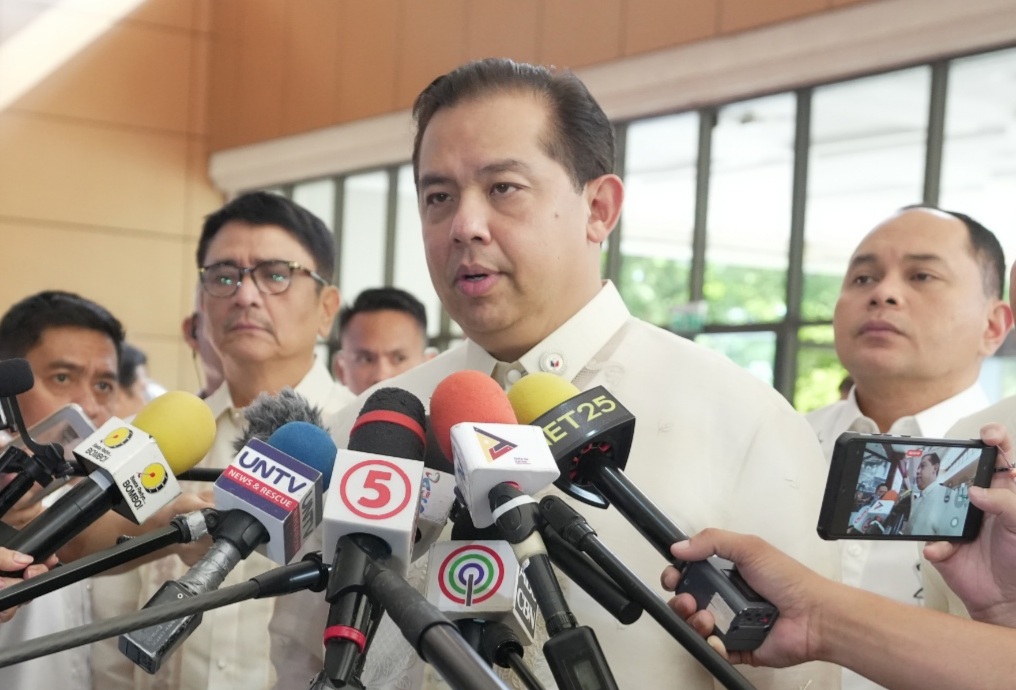 House Speaker Martin Romualdez (Speaker’s office)
The House of Representatives, through the vaunted quinta-commiittee (quinta-comm), won't hold treat anyone as sacred cows in its bid to stop the practice of price manipulation of basic goods.
Thus, said Speaker Martin Romualdez in a statement amid the slightly faster inflation recorded for the month of November.
“Wala tayong sasantuhin kung sino man yan ang nasa likod ng pagkontrol ng presyo ng bilihin…ating sasampahan ng price manipulation or smuggling,” the Leyte 1st district representative said.
(We will not treat as sacred cows whoever is behind the price control of goods...we will charge them with price manipulation or smuggling.)
“Let this be an advance warning sa mga tusong negosyante na nagpapahirap sa mga ordinaryong mamimili,” Romualdez added.
(Let this be an advance warning to unscrupulous traders who burden ordinary consumers.
The House leader earlier ordered the formation of the quinta-comm specifically to lead the investigation on the high cost of food items, particularly rice, despite the fact that the farmgate prices and even the prices in world market have gone down.
Led by its overall chairman Albay 2nd district Rep. Joey Salceda, the quinta-comm is also called the Murang Pagkain Super-committee.
“Inatasan ko ang Committee on Ways and Means, Food and Agriculture, Trade and Industry, Food Security, at Social Services na alamin kung ang mataas na presyo ng bilihin ngayon ay dikta ng monopolya o smuggling,” Romualdez said.
(I've tasked the Committees on Ways and Means, Food and Agriculture, Trade and Industry, Food Security, and Social Services to determine whether or not the prevailing high prices of goods were the result of a monopoly or smuggling.)
From 2.3 percent in October, the country’s inflation rate quickened to 2.5 percent in November.
Despite this being the second straight month of acceleration, Salceda noted some "good news".
"With the November rate in, it is all but certain that 2024 inflation will be within the 2-4 percent target of the government. This bodes well for both growth and for efforts to further reduce food prices next year," he said.
"Looking at the month-on-month inflation rate, the prices of rice and corn are on the downtrend, owing to the easing of pressures in the grains world market. That said, prices should be going down at a faster rate, considering the President’s reduction of rice tariffs, and faster decline in world prices," noted the economist.
Salceda noted that month-on-month, world prices declined by as much as 11 percent, "and given the share of imports in our total supply, at least a third of this reduction should have been translated into the market price".
"These price distortions are why the House Murang Pagkain Supercommittee takes seriously its role in reducing food prices," the Bicolano said.
"By year-end, we will also send President Marcos some preliminary policy recommendations to help bring down the cost of food for the Filipino family," Salceda said.