ADVERTISEMENT

Coins.ph powers ride-hailing platform inDrive with its own blockchain

Published Dec 6, 2024 12:31 pm
Coins x InDrive PR Banner (1) (1).png


If you recall, some of the earliest discussions about blockchain described it as a platform. It wasn’t just about cryptocurrency, though that’s what it became known for. Blockchain allows people to verify the authenticity of transactions, identities, and records, and more. It can help with data management and sharing, as well as real-time monitoring of goods and transactions, reducing instances of fraud, and increasing accountability. 

Of course, the technology behind blockchain is still developing. It is a bit overshadowed by cryptocurrency because, well, money talks, right?

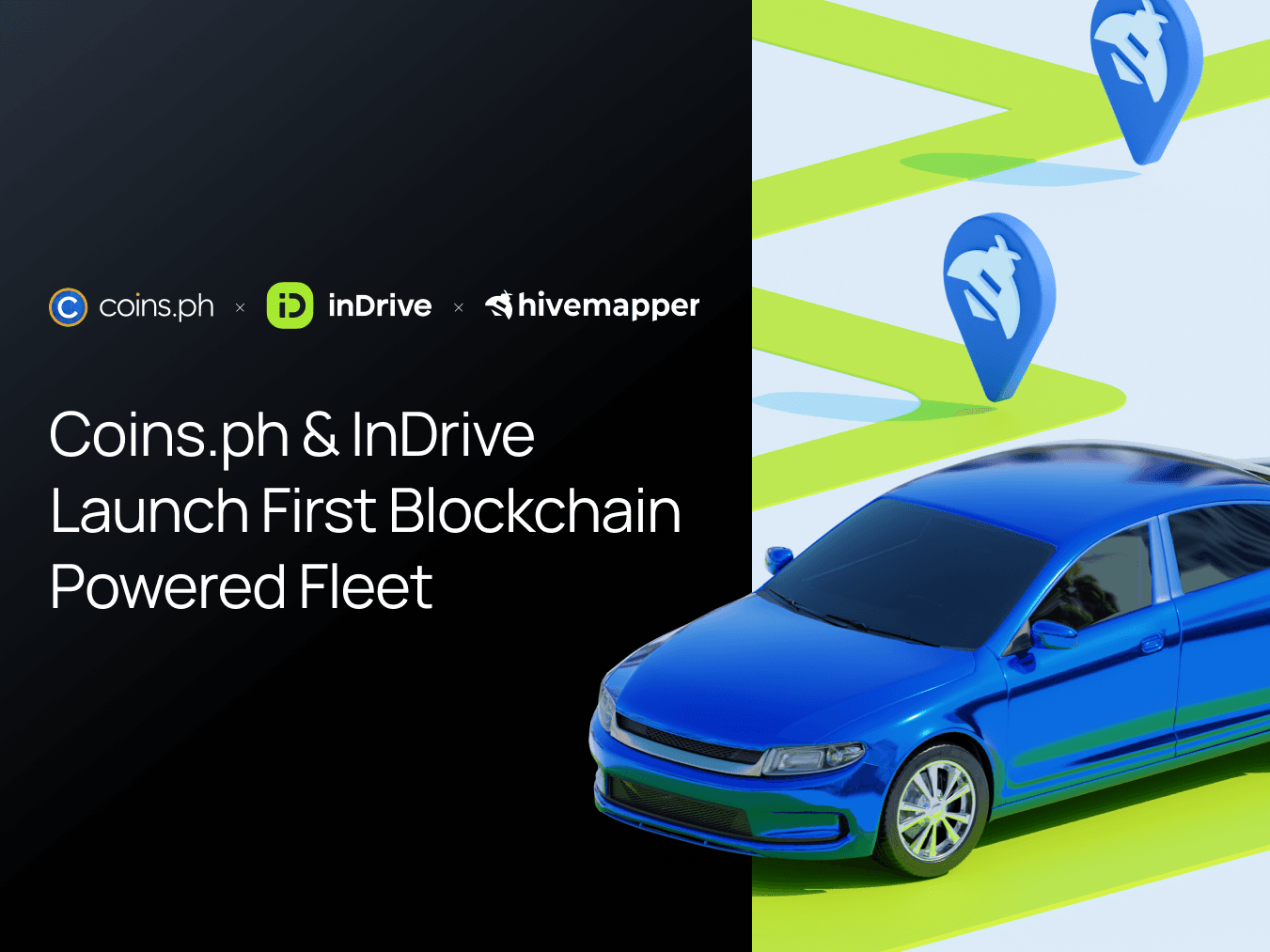
So anyway, Coins.ph has powered the ride-hailing platform inDrive with its own blockchain. According to a press release, this will allow “inDrive drivers to earn extra rewards by mapping the roads of Metro Manila.”

“At Coins.ph, we want to empower Filipinos to earn through the opportunities that crypto and web3 provide,” said Wei Zhou, CEO of Coins.ph. “With this partnership, we’re transforming how physical infrastructure is built and monetized. This exemplifies the power of blockchain to generate real-world impact and create new earning opportunities for everyday Filipinos.”

Okay, so it seems this project is still driven with crypto.  Money talks, right? 

This project uses DePIN, which stands for Decentralized Physical Infrastructure Networks. This integrates blockchain with traditional ride-hailing services, and by using Hivemapper’s mapping devices installed in participating vehicles, drivers can contribute to building an “up-to-date and decentralized map.”

This means there is no single entity controlling the map; it is constantly updated by a large network of people.  It is similar to a popular navigation app where users provide updates about traffic conditions.  However, this app relies on crowdsourcing, while inDrive drivers collect data that the platform can analyze for more detailed information.  For example, a navigation app might suggest a route with less traffic, but it could be as clogged as an artery with narrow streets and parked cars.  Not everyone would want to navigate through such a stressful situation.

“Hivemapper is the fastest growing mapping company in history for a reason. People love the idea of helping build a decentralized global map where the people that build the map, also participate in the economics of the map. Over 2 billion people and hundreds of thousands of businesses use maps each and every day. It’s a huge market and we are just getting started,” said Ariel Seidman, CEO and co-founder, Hivemapper. 

By offering real-time, hyper-accurate mapping data, it supports urban planning, traffic management, and location-based services, benefiting the broader community.

Okay, money talks. This is where Coins.ph comes in. In addition to earning income from ride-hailing, participating drivers will also earn $HONEY tokens for their contributions. These tokens can be securely stored on Coins.ph allowing riders to seamlessly manage their rewards.

“At inDrive, our mission has always been to create opportunities that empower individuals and communities. This partnership with Coins.ph and Hivemapper marks a transformative step forward for the e-hailing industry in the Philippines. By integrating blockchain technology with ride-hailing, we’re not only providing drivers with an additional rewards stream but also contributing to building vital infrastructure that benefits everyone. This collaboration is a testament to the potential of innovation to drive progress and create lasting impact,” said Sofia Guinto, head of business, Philippines, at inDrive.

ADVERTISEMENT
.most-popular .layout-ratio{ padding-bottom: 79.13%; } @media (min-width: 768px) and (max-width: 1024px) { .widget-title { font-size: 15px !important; } }

{{ articles_filter_1561_widget.title }}

.most-popular .layout-ratio{ padding-bottom: 79.13%; } @media (min-width: 768px) and (max-width: 1024px) { .widget-title { font-size: 15px !important; } }

{{ articles_filter_1562_widget.title }}

.most-popular .layout-ratio{ padding-bottom: 79.13%; } @media (min-width: 768px) and (max-width: 1024px) { .widget-title { font-size: 15px !important; } }

{{ articles_filter_1563_widget.title }}

{{ articles_filter_1564_widget.title }}

.mb-article-details { position: relative; } .mb-article-details .article-body-preview, .mb-article-details .article-body-summary{ font-size: 17px; line-height: 30px; font-family: "Libre Caslon Text", serif; color: #000; } .mb-article-details .article-body-preview iframe , .mb-article-details .article-body-summary iframe{ width: 100%; margin: auto; } .read-more-background { background: linear-gradient(180deg, color(display-p3 1.000 1.000 1.000 / 0) 13.75%, color(display-p3 1.000 1.000 1.000 / 0.8) 30.79%, color(display-p3 1.000 1.000 1.000) 72.5%); position: absolute; height: 200px; width: 100%; bottom: 0; display: flex; justify-content: center; align-items: center; padding: 0; } .read-more-background a{ color: #000; } .read-more-btn { padding: 17px 45px; font-family: Inter; font-weight: 700; font-size: 18px; line-height: 16px; text-align: center; vertical-align: middle; border: 1px solid black; background-color: white; } .hidden { display: none; }
function initializeAllSwipers() { // Get all hidden inputs with cms_article_id document.querySelectorAll('[id^="cms_article_id_"]').forEach(function (input) { const cmsArticleId = input.value; const articleSelector = '#article-' + cmsArticleId + ' .body_images'; const swiperElement = document.querySelector(articleSelector); if (swiperElement && !swiperElement.classList.contains('swiper-initialized')) { new Swiper(articleSelector, { loop: true, pagination: false, navigation: { nextEl: '#article-' + cmsArticleId + ' .swiper-button-next', prevEl: '#article-' + cmsArticleId + ' .swiper-button-prev', }, }); } }); } setTimeout(initializeAllSwipers, 3000); const intersectionObserver = new IntersectionObserver( (entries) => { entries.forEach((entry) => { if (entry.isIntersecting) { const newUrl = entry.target.getAttribute("data-url"); if (newUrl) { history.pushState(null, null, newUrl); let article = entry.target; // Extract metadata const author = article.querySelector('.author-section').textContent.replace('By', '').trim(); const section = article.querySelector('.section-info ').textContent.replace(' ', ' '); const title = article.querySelector('.article-title h1').textContent; // Parse URL for Chartbeat path format const parsedUrl = new URL(newUrl, window.location.origin); const cleanUrl = parsedUrl.host + parsedUrl.pathname; // Update Chartbeat configuration if (typeof window._sf_async_config !== 'undefined') { window._sf_async_config.path = cleanUrl; window._sf_async_config.sections = section; window._sf_async_config.authors = author; } // Track virtual page view with Chartbeat if (typeof pSUPERFLY !== 'undefined' && typeof pSUPERFLY.virtualPage === 'function') { try { pSUPERFLY.virtualPage({ path: cleanUrl, title: title, sections: section, authors: author }); } catch (error) { console.error('ping error', error); } } // Optional: Update document title if (title && title !== document.title) { document.title = title; } } } }); }, { threshold: 0.1 } ); function showArticleBody(button) { const article = button.closest("article"); const summary = article.querySelector(".article-body-summary"); const body = article.querySelector(".article-body-preview"); const readMoreSection = article.querySelector(".read-more-background"); // Hide summary and read-more section summary.style.display = "none"; readMoreSection.style.display = "none"; // Show the full article body body.classList.remove("hidden"); } document.addEventListener("DOMContentLoaded", () => { let loadCount = 0; // Track how many times articles are loaded const offset = [1, 2, 3, 4, 5, 6, 7, 8, 9, 10]; // Offset values const currentUrl = window.location.pathname.substring(1); let isLoading = false; // Prevent multiple calls if (!currentUrl) { console.log("Current URL is invalid."); return; } const sentinel = document.getElementById("load-more-sentinel"); if (!sentinel) { console.log("Sentinel element not found."); return; } function isSentinelVisible() { const rect = sentinel.getBoundingClientRect(); return ( rect.top < window.innerHeight && rect.bottom >= 0 ); } function onScroll() { if (isLoading) return; if (isSentinelVisible()) { if (loadCount >= offset.length) { console.log("Maximum load attempts reached."); window.removeEventListener("scroll", onScroll); return; } isLoading = true; const currentOffset = offset[loadCount]; window.loadMoreItems().then(() => { let article = document.querySelector('#widget_1690 > div:nth-last-of-type(2) article'); intersectionObserver.observe(article) loadCount++; }).catch(error => { console.error("Error loading more items:", error); }).finally(() => { isLoading = false; }); } } window.addEventListener("scroll", onScroll); });

Sign up by email to receive news.