

ADVERTISEMENT

Achievement unlocked: Former war-torn  Cotabato town now a first-class municipality 

Published Dec 6, 2024 06:03 am

DAVAO CITY  – The erstwhile sleepy town of Aleosan is now classified as the newest first-class municipality in Cotabato province following the declaration of the Department of Finance (DOF) pursuant to Section 6 of Republic Act (RA) No. 11964, also known as the Automatic Income Classification of Local Government Units (LGUs) Act.
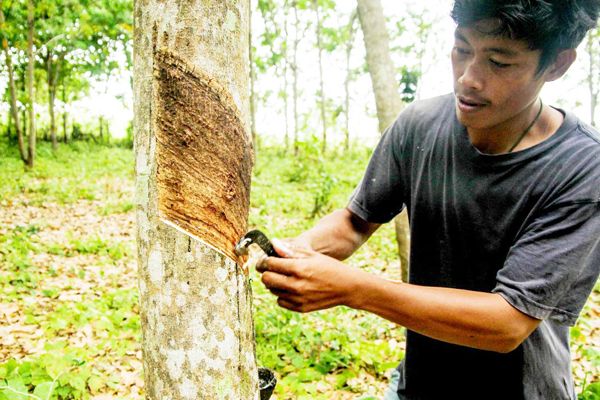
ALEOSAN RUBBER.jpg

A FARMER taps a rubber tree in Aleosan, Cotabato. (Keith Bacongco) 

In a statement on Thursday, Dec. 5, the local government said that the monumental achievement signifies the town’s continued economic advancement, sound fiscal management, and effective implementation of programs and projects aimed at improving the quality of life of its constituents. 

The reclassification from third to first-class town placed Aleosan among the top-performing municipalities in the country in terms of income generation and resource utilization, the LGU said.

Under RA 11964, municipalities shall be classified into five classes according to their income ranges and based on the average annual regular income for three fiscal years preceding a general income reclassification.

According to the Presidential Communications Office, LGUs will be classified as first-class or municipalities earning an annual average income of P200 million, second-class municipalities earning an average annual income of P160 million or more but less than P200 million, third-class, those earning P130 million or more, but less than P160 million, fourth-class, those with an annual average regular income of P90 million or more but less than P130 million, and fifth-class those with an average annual income of less than P90 million.

“This recognition means Aleosan has achieved a higher income classification, showing that the town has grown economically and is managing its resources effectively. It also reflects the hard work and dedication of the local government and the people of Aleosan,” the LGU said.  

Aleosan now has an annual income of at least P202 million. 

CABAYA.jpg

CABAYA (LGU photo)

Mayor Eduardo Cabaya attributed the success not just to his fellow government officials but also to their constituents, saying that it is a sign that their hard work, resilience, and cooperation are paying off.

“Farmers, students, businesses, and families all contributed to this success. Aleosan’s new classification status opens new opportunities for growth and development. The local government unit of Aleosan promises to use this chance to bring more progress and improve the lives of its people,” said Cabaya.

He  acknowledged the contributions of the municipal council under Vice Mayor Felimon  Cayang Jr., the department heads, national government agencies, and LGU employees. 

“The efforts to improve services and create opportunities have helped the municipality reach this new level of progress,” the mayor said.

The municipality established in 1982 is known for its abundant agricultural land, where most farmers grow coconut, banana, rubber, mango, and vegetables.

Aleosan is also a known weekend destination, particularly its UK Peak, an overlooking spot that provides the breathtaking view of the plains of Central Mindanao, especially the Ligawasan Marsh. Its rolling back roads have been a top biking routes during weekends.

Aleosan rose to become one of the bustling towns in the first district of Cotabato from being one of the conflict-affected areas due to decades of war between government and Moro rebels.  

Many of its remote barangays were once a battleground of the government forces and the Moro Islamic Liberation Front (MILF) forces. 

Amid the conflict, the local government stood up and recovered from the ashes of war that displaced thousands of civilians in over three decades of violence. 

With a population of 37,000 people, the town’s name was derived from the home of migrant settlers from Iloilo province – the towns of Alimodian, Leon, and San Miguel.

Related Tags

Cotabato Aleosan
ADVERTISEMENT
.most-popular .layout-ratio{ padding-bottom: 79.13%; } @media (min-width: 768px) and (max-width: 1024px) { .widget-title { font-size: 15px !important; } }

{{ articles_filter_1561_widget.title }}

.most-popular .layout-ratio{ padding-bottom: 79.13%; } @media (min-width: 768px) and (max-width: 1024px) { .widget-title { font-size: 15px !important; } }

{{ articles_filter_1562_widget.title }}

.most-popular .layout-ratio{ padding-bottom: 79.13%; } @media (min-width: 768px) and (max-width: 1024px) { .widget-title { font-size: 15px !important; } }

{{ articles_filter_1563_widget.title }}

{{ articles_filter_1564_widget.title }}

.mb-article-details { position: relative; } .mb-article-details .article-body-preview, .mb-article-details .article-body-summary{ font-size: 17px; line-height: 30px; font-family: "Libre Caslon Text", serif; color: #000; } .mb-article-details .article-body-preview iframe , .mb-article-details .article-body-summary iframe{ width: 100%; margin: auto; } .read-more-background { background: linear-gradient(180deg, color(display-p3 1.000 1.000 1.000 / 0) 13.75%, color(display-p3 1.000 1.000 1.000 / 0.8) 30.79%, color(display-p3 1.000 1.000 1.000) 72.5%); position: absolute; height: 200px; width: 100%; bottom: 0; display: flex; justify-content: center; align-items: center; padding: 0; } .read-more-background a{ color: #000; } .read-more-btn { padding: 17px 45px; font-family: Inter; font-weight: 700; font-size: 18px; line-height: 16px; text-align: center; vertical-align: middle; border: 1px solid black; background-color: white; } .hidden { display: none; }
function initializeAllSwipers() { // Get all hidden inputs with cms_article_id document.querySelectorAll('[id^="cms_article_id_"]').forEach(function (input) { const cmsArticleId = input.value; const articleSelector = '#article-' + cmsArticleId + ' .body_images'; const swiperElement = document.querySelector(articleSelector); if (swiperElement && !swiperElement.classList.contains('swiper-initialized')) { new Swiper(articleSelector, { loop: true, pagination: false, navigation: { nextEl: '#article-' + cmsArticleId + ' .swiper-button-next', prevEl: '#article-' + cmsArticleId + ' .swiper-button-prev', }, }); } }); } setTimeout(initializeAllSwipers, 3000); const intersectionObserver = new IntersectionObserver( (entries) => { entries.forEach((entry) => { if (entry.isIntersecting) { const newUrl = entry.target.getAttribute("data-url"); if (newUrl) { history.pushState(null, null, newUrl); let article = entry.target; // Extract metadata const author = article.querySelector('.author-section').textContent.replace('By', '').trim(); const section = article.querySelector('.section-info ').textContent.replace(' ', ' '); const title = article.querySelector('.article-title h1').textContent; // Parse URL for Chartbeat path format const parsedUrl = new URL(newUrl, window.location.origin); const cleanUrl = parsedUrl.host + parsedUrl.pathname; // Update Chartbeat configuration if (typeof window._sf_async_config !== 'undefined') { window._sf_async_config.path = cleanUrl; window._sf_async_config.sections = section; window._sf_async_config.authors = author; } // Track virtual page view with Chartbeat if (typeof pSUPERFLY !== 'undefined' && typeof pSUPERFLY.virtualPage === 'function') { try { pSUPERFLY.virtualPage({ path: cleanUrl, title: title, sections: section, authors: author }); } catch (error) { console.error('ping error', error); } } // Optional: Update document title if (title && title !== document.title) { document.title = title; } } } }); }, { threshold: 0.1 } ); function showArticleBody(button) { const article = button.closest("article"); const summary = article.querySelector(".article-body-summary"); const body = article.querySelector(".article-body-preview"); const readMoreSection = article.querySelector(".read-more-background"); // Hide summary and read-more section summary.style.display = "none"; readMoreSection.style.display = "none"; // Show the full article body body.classList.remove("hidden"); } document.addEventListener("DOMContentLoaded", () => { let loadCount = 0; // Track how many times articles are loaded const offset = [1, 2, 3, 4, 5, 6, 7, 8, 9, 10]; // Offset values const currentUrl = window.location.pathname.substring(1); let isLoading = false; // Prevent multiple calls if (!currentUrl) { console.log("Current URL is invalid."); return; } const sentinel = document.getElementById("load-more-sentinel"); if (!sentinel) { console.log("Sentinel element not found."); return; } function isSentinelVisible() { const rect = sentinel.getBoundingClientRect(); return ( rect.top < window.innerHeight && rect.bottom >= 0 ); } function onScroll() { if (isLoading) return; if (isSentinelVisible()) { if (loadCount >= offset.length) { console.log("Maximum load attempts reached."); window.removeEventListener("scroll", onScroll); return; } isLoading = true; const currentOffset = offset[loadCount]; window.loadMoreItems().then(() => { let article = document.querySelector('#widget_1690 > div:nth-last-of-type(2) article'); intersectionObserver.observe(article) loadCount++; }).catch(error => { console.error("Error loading more items:", error); }).finally(() => { isLoading = false; }); } } window.addEventListener("scroll", onScroll); });

Sign up by email to receive news.