ADVERTISEMENT

Ukraine's military intelligence says North Korean troops are suffering heavy battlefield losses

Published Dec 27, 2024 06:01 am

INTEL PHOTO.jpg

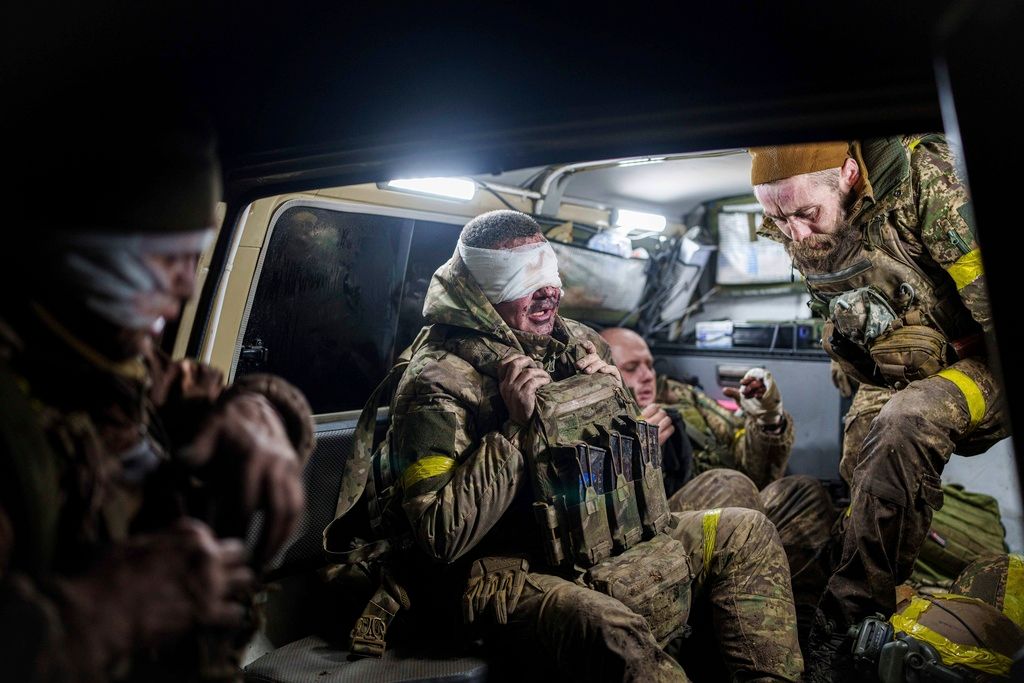
Injured Ukrainian servicemen arrive from the battlefield at Medical Service "Ulf" of the 108th Separate Battalion "Da Vinci Wolves" on Pokrovsk direction, Ukraine, Monday, Dec. 23, 2024. (AP Photo/Evgeniy Maloletka)


KYIV, Ukraine (AP) — North Korean troops are suffering heavy losses in the fighting in Russia's Kursk region and facing logistical difficulties as a result of Ukrainian attacks, Ukraine’s military intelligence said Thursday.

The intelligence agency, known under its acronym GUR, said Ukrainian strikes near Novoivanovka inflicted heavy casualties on North Korean units. It said North Korean troops also faced supply issues and even shortages of drinking water.

Ukrainian President Volodymyr Zelenskyy said earlier this week that 3,000 North Korean troops have been killed and wounded in the fighting in the Kursk region. It marked the first significant estimate by Ukraine of North Korean casualties several weeks after Kyiv announced that North Korea had sent 10,000 to 12,000 troops to Russia to help it in the almost 3-year war.

The casualty disclosure came as the Biden administration was pressing to send as much military aid as possible to Ukraine before President-elect Donald Trump takes over in January.

Ukrainian forces launched an incursion into the Kursk region in August, dealing a significant blow to Russia's prestige and forcing it to deploy some of its troops from eastern Ukraine, where they were pressing a slow-moving offensive.

The Russian army has been able to reclaim some territory in the Kursk region from Ukrainian forces, but has failed to fully dislodge them.

At the same time, Russia has sought to break Ukraine's resistance with waves of strikes with cruise missiles and drones against Ukraine's power grid and other infrastructure.

The latest attack on Christmas morning involved 78 missiles and 106 drones, striking power facilities, Ukraine’s air force said. It claimed to have intercepted 59 missiles and 54 drones and jammed 52 other drones.

On Thursday, Russia attacked Ukraine with 31 exploding drones. Twenty were shot down and another 11 didn’t reach their target due to jamming, the Ukrainian air force said.

As part of the daily barrage, Russian forces also struck a central market in Nikopol in the Dnipropetrovsk region with a drone, wounding eight people, according to local authorities.

Russian President Vladimir Putin threatened Thursday that Russia could again hit Ukraine with the new Oreshnik hypersonic ballistic missile that was first used in a Nov. 21 strike on the Ukrainian city of Dnipro.

Speaking to reporters, Putin said Russia has just a few Oreshnik missiles, but added that it wouldn't hesitate to use them on Ukraine.

“We aren't in a rush to use them, because those are powerful weapons intended for certain tasks,” he said. “But we wouldn't exclude their use today or tomorrow if necessary.”

Putin said Russia has launched serial production of the new weapon and reaffirmed a plan to deploy some of Oreshnik missiles to Russia's neighbor and ally Belarus. Belarus' authoritarian President Alexander Lukashenko told reporters Thursday that his country could host 10 or more.

Ukraine struck back with drone strikes of its own. Ukraine’s Center for Strategic Communications said the military struck a plant in Kamensk-Shakhtynsky in Russia’s southern Rostov region that produces propellant for ballistic missiles.

“This strike is part of a comprehensive campaign to weaken the capabilities of the Russian armed forces to carry out terrorist attacks against Ukrainian civilians,” it said in a statement.

Related Tags

WORLDNEWS
ADVERTISEMENT
.most-popular .layout-ratio{ padding-bottom: 79.13%; } @media (min-width: 768px) and (max-width: 1024px) { .widget-title { font-size: 15px !important; } }

{{ articles_filter_1561_widget.title }}

.most-popular .layout-ratio{ padding-bottom: 79.13%; } @media (min-width: 768px) and (max-width: 1024px) { .widget-title { font-size: 15px !important; } }

{{ articles_filter_1562_widget.title }}

.most-popular .layout-ratio{ padding-bottom: 79.13%; } @media (min-width: 768px) and (max-width: 1024px) { .widget-title { font-size: 15px !important; } }

{{ articles_filter_1563_widget.title }}

{{ articles_filter_1564_widget.title }}

.mb-article-details { position: relative; } .mb-article-details .article-body-preview, .mb-article-details .article-body-summary{ font-size: 17px; line-height: 30px; font-family: "Libre Caslon Text", serif; color: #000; } .mb-article-details .article-body-preview iframe , .mb-article-details .article-body-summary iframe{ width: 100%; margin: auto; } .read-more-background { background: linear-gradient(180deg, color(display-p3 1.000 1.000 1.000 / 0) 13.75%, color(display-p3 1.000 1.000 1.000 / 0.8) 30.79%, color(display-p3 1.000 1.000 1.000) 72.5%); position: absolute; height: 200px; width: 100%; bottom: 0; display: flex; justify-content: center; align-items: center; padding: 0; } .read-more-background a{ color: #000; } .read-more-btn { padding: 17px 45px; font-family: Inter; font-weight: 700; font-size: 18px; line-height: 16px; text-align: center; vertical-align: middle; border: 1px solid black; background-color: white; } .hidden { display: none; }
function initializeAllSwipers() { // Get all hidden inputs with cms_article_id document.querySelectorAll('[id^="cms_article_id_"]').forEach(function (input) { const cmsArticleId = input.value; const articleSelector = '#article-' + cmsArticleId + ' .body_images'; const swiperElement = document.querySelector(articleSelector); if (swiperElement && !swiperElement.classList.contains('swiper-initialized')) { new Swiper(articleSelector, { loop: true, pagination: false, navigation: { nextEl: '#article-' + cmsArticleId + ' .swiper-button-next', prevEl: '#article-' + cmsArticleId + ' .swiper-button-prev', }, }); } }); } setTimeout(initializeAllSwipers, 3000); const intersectionObserver = new IntersectionObserver( (entries) => { entries.forEach((entry) => { if (entry.isIntersecting) { const newUrl = entry.target.getAttribute("data-url"); if (newUrl) { history.pushState(null, null, newUrl); let article = entry.target; // Extract metadata const author = article.querySelector('.author-section').textContent.replace('By', '').trim(); const section = article.querySelector('.section-info ').textContent.replace(' ', ' '); const title = article.querySelector('.article-title h1').textContent; // Parse URL for Chartbeat path format const parsedUrl = new URL(newUrl, window.location.origin); const cleanUrl = parsedUrl.host + parsedUrl.pathname; // Update Chartbeat configuration if (typeof window._sf_async_config !== 'undefined') { window._sf_async_config.path = cleanUrl; window._sf_async_config.sections = section; window._sf_async_config.authors = author; } // Track virtual page view with Chartbeat if (typeof pSUPERFLY !== 'undefined' && typeof pSUPERFLY.virtualPage === 'function') { try { pSUPERFLY.virtualPage({ path: cleanUrl, title: title, sections: section, authors: author }); } catch (error) { console.error('ping error', error); } } // Optional: Update document title if (title && title !== document.title) { document.title = title; } } } }); }, { threshold: 0.1 } ); function showArticleBody(button) { const article = button.closest("article"); const summary = article.querySelector(".article-body-summary"); const body = article.querySelector(".article-body-preview"); const readMoreSection = article.querySelector(".read-more-background"); // Hide summary and read-more section summary.style.display = "none"; readMoreSection.style.display = "none"; // Show the full article body body.classList.remove("hidden"); } document.addEventListener("DOMContentLoaded", () => { let loadCount = 0; // Track how many times articles are loaded const offset = [1, 2, 3, 4, 5, 6, 7, 8, 9, 10]; // Offset values const currentUrl = window.location.pathname.substring(1); let isLoading = false; // Prevent multiple calls if (!currentUrl) { console.log("Current URL is invalid."); return; } const sentinel = document.getElementById("load-more-sentinel"); if (!sentinel) { console.log("Sentinel element not found."); return; } function isSentinelVisible() { const rect = sentinel.getBoundingClientRect(); return ( rect.top < window.innerHeight && rect.bottom >= 0 ); } function onScroll() { if (isLoading) return; if (isSentinelVisible()) { if (loadCount >= offset.length) { console.log("Maximum load attempts reached."); window.removeEventListener("scroll", onScroll); return; } isLoading = true; const currentOffset = offset[loadCount]; window.loadMoreItems().then(() => { let article = document.querySelector('#widget_1690 > div:nth-last-of-type(2) article'); intersectionObserver.observe(article) loadCount++; }).catch(error => { console.error("Error loading more items:", error); }).finally(() => { isLoading = false; }); } } window.addEventListener("scroll", onScroll); });

Sign up by email to receive news.