ADVERTISEMENT

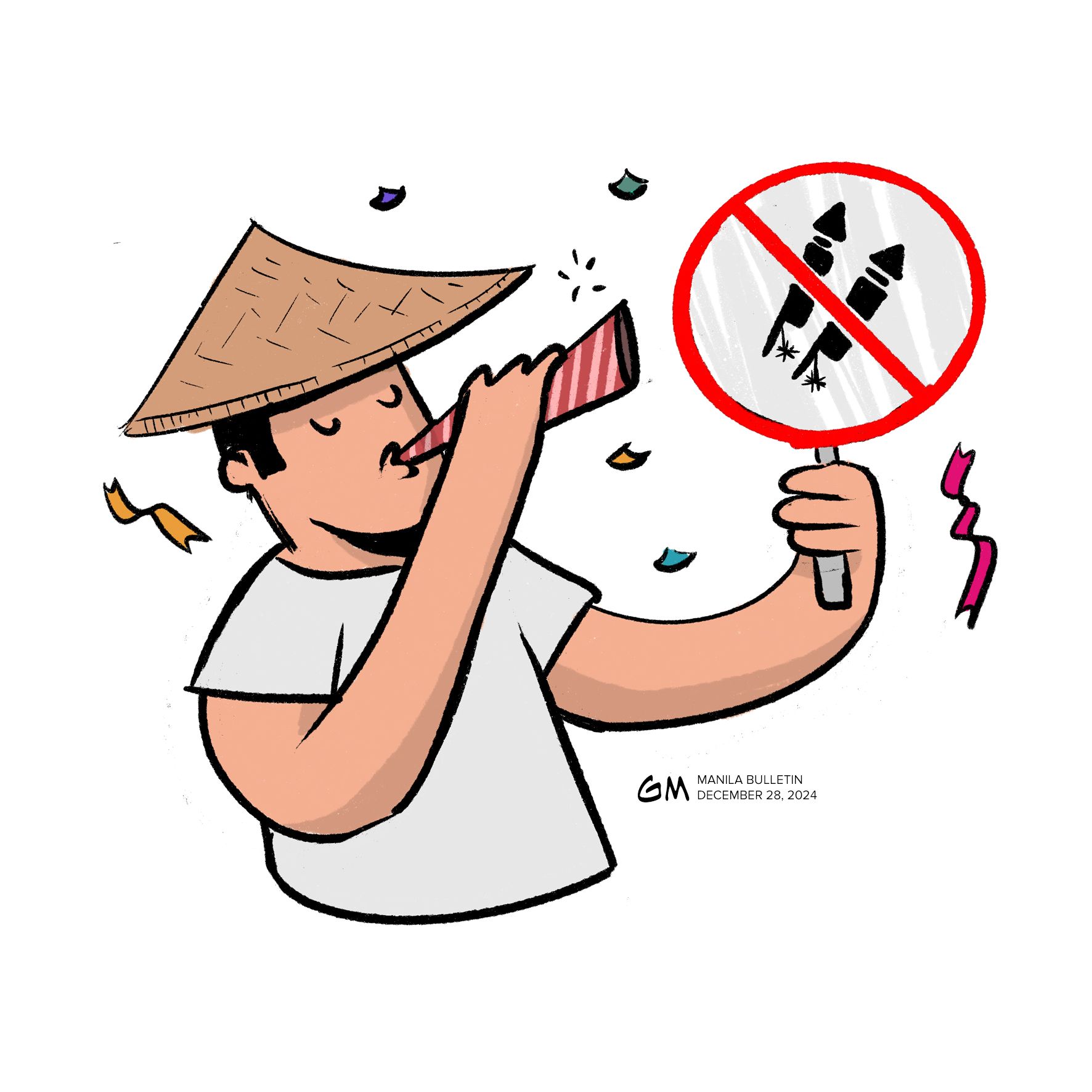
No firecrackers for a safer, healthier welcome to 2025

Published Dec 27, 2024 11:54 pm

editorial cartoon dec 28 (1).jpg

New Year’s Eve is three days away. As we prepare to welcome 2025, many rituals of customs will be included in the celebration. Families coming together, round fruits on the table, food dishes from heirloom recipes, coins and bills in the pocket, even dotted clothing.


And many will still include the burst of light and sound from firecrackers, a deeply ingrained tradition meant to drive away bad luck. Yet, this custom comes with severe consequences: injuries, property damage, and environmental harm. The Department of Health (DOH) and law enforcement agencies have repeatedly warned about these dangers, but the persistent use of firecrackers continues.


As of Dec. 26, the DOH recorded 69 firecracker-related injuries, 86 percent of which were caused by illegal firecrackers such as the notorious “boga.” Of these, 58 victims were children aged 19 and below. Last year’s figures show a similar trend, with mostly minors affected. These injuries often lead to life-altering consequences, including amputations, burns, and eye damage. The fact that many victims are children underscores the urgent need for stricter enforcement and public awareness.


Republic Act (RA) No. 7183, signed in 1992, regulates the sale, manufacture, and use of firecrackers. The law bans dangerous items such as “super lolo,” “atomic bomb,” “watusi,” and oversized firecrackers. Violators face severe penalties, including fines of up to ₱30,000, imprisonment of up to one year, and revocation of licenses and business permits for manufacturers and sellers.


Despite these measures, illegal firecrackers remain widely available. Recently, the Philippine National Police Anti-Cybercrime Group (PNP-ACG) took down 115 social media sites selling banned items. Among these were accounts in Facebook and X (formerly Twitter).


On Dec. 23, the PNP-ACG agents arrested two residents of Makati City for selling illegal firecrackers during the conduct of a buy-bust in San Fernando, Pampanga, where an agent posing as a buyer paid ₱60,000 for the items. Seized were 15 rims of “plapla,” 10 bundles of “kabase,” 27 pieces of “atomic bomb,” and 174 pieces of “small atomic bombs.”
Aside from injuries, firecrackers pose significant environmental and health risks. They release harmful pollutants that contribute to air and noise pollution, aggravating respiratory conditions and distressing animals. Firecracker debris also clogs waterways and litters streets, adding to the environmental burden.


The solution is simple yet impactful: opt for safer and sustainable alternatives. Use horns, musical instruments, or even household items like pots and pans to create noise, instead of firecrackers. Local government units (LGUs) can organize professional fireworks displays, which are better controlled and far less hazardous. Families can also bond over karaoke sessions or other creative activities to celebrate the occasion.


Public awareness campaigns play a crucial role in shifting cultural attitudes. The DOH, PNP, and media outlets should continue educating communities about the dangers of firecrackers and the benefits of safer alternatives. Parents, too, must take responsibility by supervising their children and ensuring they do not have access to dangerous items.
Welcoming the New Year should be a time of joy and hope, not a cause for hospital visits or mourning. By saying no to firecrackers, we can protect our loved ones, safeguard the environment, and foster a culture of safety and responsibility.


Let us begin 2025 with a collective commitment to making our celebrations safer and healthier.

Related Tags

Manila Bulletin
ADVERTISEMENT
.most-popular .layout-ratio{ padding-bottom: 79.13%; } @media (min-width: 768px) and (max-width: 1024px) { .widget-title { font-size: 15px !important; } }

{{ articles_filter_1561_widget.title }}

.most-popular .layout-ratio{ padding-bottom: 79.13%; } @media (min-width: 768px) and (max-width: 1024px) { .widget-title { font-size: 15px !important; } }

{{ articles_filter_1562_widget.title }}

.most-popular .layout-ratio{ padding-bottom: 79.13%; } @media (min-width: 768px) and (max-width: 1024px) { .widget-title { font-size: 15px !important; } }

{{ articles_filter_1563_widget.title }}

{{ articles_filter_1564_widget.title }}

.mb-article-details { position: relative; } .mb-article-details .article-body-preview, .mb-article-details .article-body-summary{ font-size: 17px; line-height: 30px; font-family: "Libre Caslon Text", serif; color: #000; } .mb-article-details .article-body-preview iframe , .mb-article-details .article-body-summary iframe{ width: 100%; margin: auto; } .read-more-background { background: linear-gradient(180deg, color(display-p3 1.000 1.000 1.000 / 0) 13.75%, color(display-p3 1.000 1.000 1.000 / 0.8) 30.79%, color(display-p3 1.000 1.000 1.000) 72.5%); position: absolute; height: 200px; width: 100%; bottom: 0; display: flex; justify-content: center; align-items: center; padding: 0; } .read-more-background a{ color: #000; } .read-more-btn { padding: 17px 45px; font-family: Inter; font-weight: 700; font-size: 18px; line-height: 16px; text-align: center; vertical-align: middle; border: 1px solid black; background-color: white; } .hidden { display: none; }
function initializeAllSwipers() { // Get all hidden inputs with cms_article_id document.querySelectorAll('[id^="cms_article_id_"]').forEach(function (input) { const cmsArticleId = input.value; const articleSelector = '#article-' + cmsArticleId + ' .body_images'; const swiperElement = document.querySelector(articleSelector); if (swiperElement && !swiperElement.classList.contains('swiper-initialized')) { new Swiper(articleSelector, { loop: true, pagination: false, navigation: { nextEl: '#article-' + cmsArticleId + ' .swiper-button-next', prevEl: '#article-' + cmsArticleId + ' .swiper-button-prev', }, }); } }); } setTimeout(initializeAllSwipers, 3000); const intersectionObserver = new IntersectionObserver( (entries) => { entries.forEach((entry) => { if (entry.isIntersecting) { const newUrl = entry.target.getAttribute("data-url"); if (newUrl) { history.pushState(null, null, newUrl); let article = entry.target; // Extract metadata const author = article.querySelector('.author-section').textContent.replace('By', '').trim(); const section = article.querySelector('.section-info ').textContent.replace(' ', ' '); const title = article.querySelector('.article-title h1').textContent; // Parse URL for Chartbeat path format const parsedUrl = new URL(newUrl, window.location.origin); const cleanUrl = parsedUrl.host + parsedUrl.pathname; // Update Chartbeat configuration if (typeof window._sf_async_config !== 'undefined') { window._sf_async_config.path = cleanUrl; window._sf_async_config.sections = section; window._sf_async_config.authors = author; } // Track virtual page view with Chartbeat if (typeof pSUPERFLY !== 'undefined' && typeof pSUPERFLY.virtualPage === 'function') { try { pSUPERFLY.virtualPage({ path: cleanUrl, title: title, sections: section, authors: author }); } catch (error) { console.error('ping error', error); } } // Optional: Update document title if (title && title !== document.title) { document.title = title; } } } }); }, { threshold: 0.1 } ); function showArticleBody(button) { const article = button.closest("article"); const summary = article.querySelector(".article-body-summary"); const body = article.querySelector(".article-body-preview"); const readMoreSection = article.querySelector(".read-more-background"); // Hide summary and read-more section summary.style.display = "none"; readMoreSection.style.display = "none"; // Show the full article body body.classList.remove("hidden"); } document.addEventListener("DOMContentLoaded", () => { let loadCount = 0; // Track how many times articles are loaded const offset = [1, 2, 3, 4, 5, 6, 7, 8, 9, 10]; // Offset values const currentUrl = window.location.pathname.substring(1); let isLoading = false; // Prevent multiple calls if (!currentUrl) { console.log("Current URL is invalid."); return; } const sentinel = document.getElementById("load-more-sentinel"); if (!sentinel) { console.log("Sentinel element not found."); return; } function isSentinelVisible() { const rect = sentinel.getBoundingClientRect(); return ( rect.top < window.innerHeight && rect.bottom >= 0 ); } function onScroll() { if (isLoading) return; if (isSentinelVisible()) { if (loadCount >= offset.length) { console.log("Maximum load attempts reached."); window.removeEventListener("scroll", onScroll); return; } isLoading = true; const currentOffset = offset[loadCount]; window.loadMoreItems().then(() => { let article = document.querySelector('#widget_1690 > div:nth-last-of-type(2) article'); intersectionObserver.observe(article) loadCount++; }).catch(error => { console.error("Error loading more items:", error); }).finally(() => { isLoading = false; }); } } window.addEventListener("scroll", onScroll); });

Sign up by email to receive news.