

ADVERTISEMENT

Japan Cabinet OKs record defense budget, pushes strike-back capability to deter regional threat

Published Dec 27, 2024 06:05 am

TOKYO (AP) — The Japanese Cabinet on Friday approved a record 8.7 trillion yen ($55 billion) defense budget for 2025 as Japan accelerates building up its strike-back capability with long-range cruise missiles and starts deploying Tomahawks to fortify itself against growing threats from China, North Korea and Russia.
CABINET PHOTO.jpg

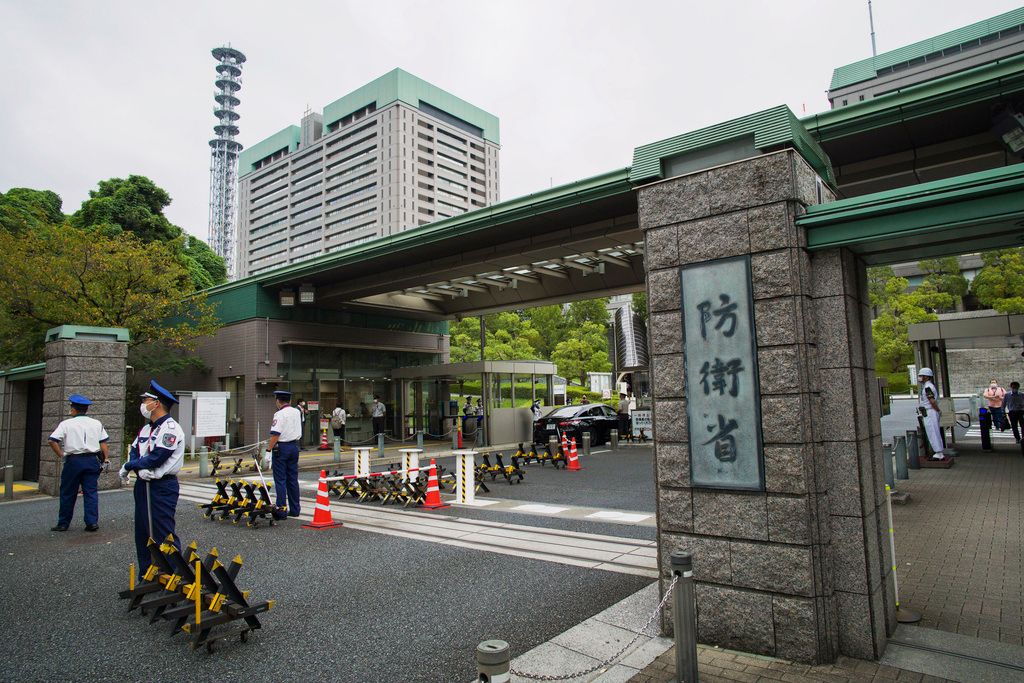
The Defense Ministry of Japan (AP Photo/Hiro Komae, File)


The Cabinet-endorsed draft defense budget marks the third year of Japan's ongoing five-year military buildup under the national security strategy adopted in 2022. The defense spending is part of the more than 115 trillion yen ($730 billion) national budget bill — also a record — that requires parliamentary approval by March to be enacted.

Japan is preparing to deploy U.S.-made Tomahawks late in the fiscal year 2025 as part of its ongoing effort to acquire strike-back capability with long-range missiles that can hit distant targets. The budget allocates 940 billion yen ($6 billion) for the so-called "standoff" defense system that also includes long-range missiles, satellite constellation and other arsenals.

The cost includes 1.8 billion yen ($11.4 million) for the purchase and addition of equipment to launch Tomahawks from an Aegis-class destroyers.

In order to reinforce its missile defense system, Japan plans to spend another 533 billion yen ($3.37 billion) that includes purchases of interceptors and a mobile reconnaissance radar to be placed on Okinawa, where more than half of about 50,000 American troops are based.

Under the defense strategy, Japan aims to eventually double its annual military spending to around 10 trillion yen ($63 billion), making it the world's No. 3 military spender after the United States and China.

As part of the military buildup, Japan is pushing to strengthen its largely domestic defense industry by participating in joint development and promoting foreign sales.

For 2025, Japan plans to spend 314.8 billion yen ($2 billion) to build three 4,800-ton new multi-purpose compact destroyers, or FFM, that require 90 crew members, less than half the crew size currently needed as a result of automation and labor-saving design — the platform Japan wants Australia to choose for their future frigates. They are upgraded Mogami-class destroyers equipped with long-range missiles, reinforced anti-submarine warfare functions and high stealth performance, officials say.

The destroyers built by the Mitsubishi Heavy Industries is one of two candidates shortlisted by Australia for its Sea 3000 frigate project and is competing against Germany's MEKO A-200 offered by Thyssenkrupp Marine Systems. Japan would jointly develop and produce frigates for the Australian Navy.

The project not only serves to further deepen cooperation between Japan and Australia but contributes to enhancing Japan's warship capabilities, Defense Minister Gen Nakatani said last month.

Japan, whose only treaty ally is the United States, has developed close ties with Australia and considers it a semi-ally as they face China's growing threat in the region.

Japan is desperate to win the deal after it lost to France in the 2016 submarine deal with Australia. Prime Minister Shigeru Ishiba's Cabinet has already approved foreign sales of Mogami-class FFM to Australia in hopes it is selected, and set up a joint panel of government and industrial officials to step up its campaign drive to Canberra.

Japan is also jointly developing a next-generation fighter jet with Britain and Italy for deployment in 2035 and allocated 108.7 billion yen ($690 million) in the budget for the project.

As the country's population continues to shrink, Japan focuses on unmanned weapons and artificial intelligence to make up for the declining number of servicemembers and allocated 111 billion yen ($703 million). Separately, the budget also government this week also adopted a plan to reinforce the "human base" by significantly improving salary, working conditions and support for career paths for the Self Defense Force to attract more applicants.


Related Tags

WORLDNEWS
ADVERTISEMENT
.most-popular .layout-ratio{ padding-bottom: 79.13%; } @media (min-width: 768px) and (max-width: 1024px) { .widget-title { font-size: 15px !important; } }

{{ articles_filter_1561_widget.title }}

.most-popular .layout-ratio{ padding-bottom: 79.13%; } @media (min-width: 768px) and (max-width: 1024px) { .widget-title { font-size: 15px !important; } }

{{ articles_filter_1562_widget.title }}

.most-popular .layout-ratio{ padding-bottom: 79.13%; } @media (min-width: 768px) and (max-width: 1024px) { .widget-title { font-size: 15px !important; } }

{{ articles_filter_1563_widget.title }}

{{ articles_filter_1564_widget.title }}

.mb-article-details { position: relative; } .mb-article-details .article-body-preview, .mb-article-details .article-body-summary{ font-size: 17px; line-height: 30px; font-family: "Libre Caslon Text", serif; color: #000; } .mb-article-details .article-body-preview iframe , .mb-article-details .article-body-summary iframe{ width: 100%; margin: auto; } .read-more-background { background: linear-gradient(180deg, color(display-p3 1.000 1.000 1.000 / 0) 13.75%, color(display-p3 1.000 1.000 1.000 / 0.8) 30.79%, color(display-p3 1.000 1.000 1.000) 72.5%); position: absolute; height: 200px; width: 100%; bottom: 0; display: flex; justify-content: center; align-items: center; padding: 0; } .read-more-background a{ color: #000; } .read-more-btn { padding: 17px 45px; font-family: Inter; font-weight: 700; font-size: 18px; line-height: 16px; text-align: center; vertical-align: middle; border: 1px solid black; background-color: white; } .hidden { display: none; }
function initializeAllSwipers() { // Get all hidden inputs with cms_article_id document.querySelectorAll('[id^="cms_article_id_"]').forEach(function (input) { const cmsArticleId = input.value; const articleSelector = '#article-' + cmsArticleId + ' .body_images'; const swiperElement = document.querySelector(articleSelector); if (swiperElement && !swiperElement.classList.contains('swiper-initialized')) { new Swiper(articleSelector, { loop: true, pagination: false, navigation: { nextEl: '#article-' + cmsArticleId + ' .swiper-button-next', prevEl: '#article-' + cmsArticleId + ' .swiper-button-prev', }, }); } }); } setTimeout(initializeAllSwipers, 3000); const intersectionObserver = new IntersectionObserver( (entries) => { entries.forEach((entry) => { if (entry.isIntersecting) { const newUrl = entry.target.getAttribute("data-url"); if (newUrl) { history.pushState(null, null, newUrl); let article = entry.target; // Extract metadata const author = article.querySelector('.author-section').textContent.replace('By', '').trim(); const section = article.querySelector('.section-info ').textContent.replace(' ', ' '); const title = article.querySelector('.article-title h1').textContent; // Parse URL for Chartbeat path format const parsedUrl = new URL(newUrl, window.location.origin); const cleanUrl = parsedUrl.host + parsedUrl.pathname; // Update Chartbeat configuration if (typeof window._sf_async_config !== 'undefined') { window._sf_async_config.path = cleanUrl; window._sf_async_config.sections = section; window._sf_async_config.authors = author; } // Track virtual page view with Chartbeat if (typeof pSUPERFLY !== 'undefined' && typeof pSUPERFLY.virtualPage === 'function') { try { pSUPERFLY.virtualPage({ path: cleanUrl, title: title, sections: section, authors: author }); } catch (error) { console.error('ping error', error); } } // Optional: Update document title if (title && title !== document.title) { document.title = title; } } } }); }, { threshold: 0.1 } ); function showArticleBody(button) { const article = button.closest("article"); const summary = article.querySelector(".article-body-summary"); const body = article.querySelector(".article-body-preview"); const readMoreSection = article.querySelector(".read-more-background"); // Hide summary and read-more section summary.style.display = "none"; readMoreSection.style.display = "none"; // Show the full article body body.classList.remove("hidden"); } document.addEventListener("DOMContentLoaded", () => { let loadCount = 0; // Track how many times articles are loaded const offset = [1, 2, 3, 4, 5, 6, 7, 8, 9, 10]; // Offset values const currentUrl = window.location.pathname.substring(1); let isLoading = false; // Prevent multiple calls if (!currentUrl) { console.log("Current URL is invalid."); return; } const sentinel = document.getElementById("load-more-sentinel"); if (!sentinel) { console.log("Sentinel element not found."); return; } function isSentinelVisible() { const rect = sentinel.getBoundingClientRect(); return ( rect.top < window.innerHeight && rect.bottom >= 0 ); } function onScroll() { if (isLoading) return; if (isSentinelVisible()) { if (loadCount >= offset.length) { console.log("Maximum load attempts reached."); window.removeEventListener("scroll", onScroll); return; } isLoading = true; const currentOffset = offset[loadCount]; window.loadMoreItems().then(() => { let article = document.querySelector('#widget_1690 > div:nth-last-of-type(2) article'); intersectionObserver.observe(article) loadCount++; }).catch(error => { console.error("Error loading more items:", error); }).finally(() => { isLoading = false; }); } } window.addEventListener("scroll", onScroll); });

Sign up by email to receive news.