ADVERTISEMENT

Invest in epidemic preparedness, future-proof healthcare systems

Published Dec 26, 2024 11:14 pm

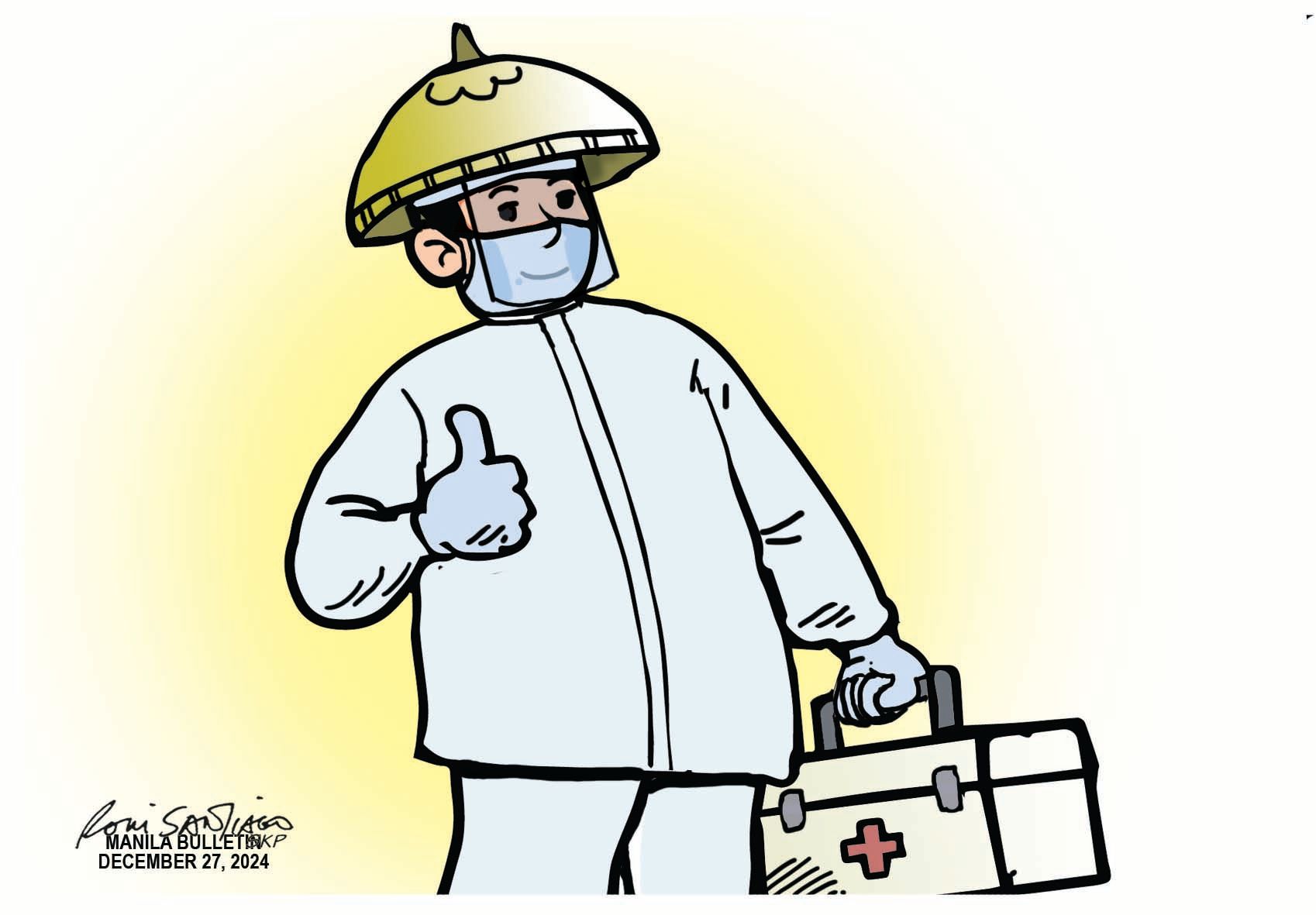
E CARTOON DEC 27, 2024.jpg


Today, Dec. 27, the International Day of Epidemic Preparedness is observed around the world.


And still fresh in our minds was the horror we experienced when the Covid-19 pandemic struck — upending lives, economies, and healthcare systems. 


For the Philippines, the health crisis illuminated longstanding vulnerabilities in our national infrastructure, leaving behind not only physical scars but also emotional and psychological ones. As we now stand at the crossroads of a post-pandemic era, one thing is clear: if we are to avoid repeating the chaos and heartbreak we faced during Covid-19, we must urgently invest in epidemic preparedness.


The Covid-19 pandemic exposed vulnerabilities and weaknesses of many countries, including the Philippines. Our public health systems were not equipped to handle a crisis of this magnitude. Hospitals were overwhelmed, contact tracing and testing were delayed, and medical professionals were left vulnerable. But perhaps the most damaging was the lack of coordination between national and local governments, which caused confusion, disarray, and a widespread erosion of trust in authorities.


The Philippines, like many countries, faced various burdens — the rise in Covid-19 cases, an economic downturn, and the erosion of mental health. These realities are still playing out in the lives of Filipinos today, making it all the more urgent for us to prepare better for the future.


The International Health Regulations (IHR) of the World Health Organization (WHO) provide a framework that aims to prevent, protect against, control, and provide a public health response to the international spread of disease. In line with this, the Philippines must adopt a whole-of-society approach to health preparedness. 


The government must take the lead in institutionalizing a robust epidemic preparedness strategy, grounded in both science and equity. Public health must be a central pillar of national policy, with funding and resources allocated not just in times of crisis, but proactively, to ensure systems are in place before the next outbreak occurs.


Investing in a stronger healthcare system is crucial. This includes expanding healthcare facilities, modernizing medical equipment, and ensuring that public health workers — many of whom showed incredible resilience during the pandemic — are given the tools, protection, and compensation they deserve. The WHO has long advocated for universal health coverage. While the Philippines already has the Universal Health Care Act of 2019, which aims to ensure all Filipinos have access to quality healthcare services, the government must ensure sufficient funding to implement the law and guarantee that every Filipino, regardless of location or income, has access to quality healthcare in times of need.


Building a national, integrated disease surveillance and response system that works in real time to monitor emerging diseases and track their spread across communities is another step. This system should also prioritize data-sharing and collaboration with regional and international health bodies like the WHO, as diseases know no borders.


On the part of the private sector, it has a vital role in ensuring epidemic preparedness, particularly in terms of innovation, investment, and collaboration with the public sector.


The Covid-19 pandemic revealed that collaboration between the government and private companies is not only possible but essential. From the swift development of vaccines to the provision of personal protective equipment (PPE) and other medical supplies, the private sector showed that it could respond rapidly to the demands of a health crisis. 


As individuals, Filipinos must recognize that epidemic preparedness is not just the responsibility of the government or the private sector — it is a collective responsibility that requires widespread participation. A well-informed population is the first line of defense against the spread of diseases. 


As we move forward, it is clear that we must learn from the painful lessons of the Covid-19 pandemic. The Philippines has the opportunity to build a more resilient healthcare system that can respond swiftly and effectively to epidemics and pandemics.


But this requires a collective commitment — a partnership among the government, the private sector, and every Filipino. It is a responsibility that we cannot afford to ignore if we want to safeguard the health and well-being of everyone and contribute to the global effort to build a safer, healthier planet for all.
 

Related Tags

EDITORIAL
ADVERTISEMENT
.most-popular .layout-ratio{ padding-bottom: 79.13%; } @media (min-width: 768px) and (max-width: 1024px) { .widget-title { font-size: 15px !important; } }

{{ articles_filter_1561_widget.title }}

.most-popular .layout-ratio{ padding-bottom: 79.13%; } @media (min-width: 768px) and (max-width: 1024px) { .widget-title { font-size: 15px !important; } }

{{ articles_filter_1562_widget.title }}

.most-popular .layout-ratio{ padding-bottom: 79.13%; } @media (min-width: 768px) and (max-width: 1024px) { .widget-title { font-size: 15px !important; } }

{{ articles_filter_1563_widget.title }}

{{ articles_filter_1564_widget.title }}

.mb-article-details { position: relative; } .mb-article-details .article-body-preview, .mb-article-details .article-body-summary{ font-size: 17px; line-height: 30px; font-family: "Libre Caslon Text", serif; color: #000; } .mb-article-details .article-body-preview iframe , .mb-article-details .article-body-summary iframe{ width: 100%; margin: auto; } .read-more-background { background: linear-gradient(180deg, color(display-p3 1.000 1.000 1.000 / 0) 13.75%, color(display-p3 1.000 1.000 1.000 / 0.8) 30.79%, color(display-p3 1.000 1.000 1.000) 72.5%); position: absolute; height: 200px; width: 100%; bottom: 0; display: flex; justify-content: center; align-items: center; padding: 0; } .read-more-background a{ color: #000; } .read-more-btn { padding: 17px 45px; font-family: Inter; font-weight: 700; font-size: 18px; line-height: 16px; text-align: center; vertical-align: middle; border: 1px solid black; background-color: white; } .hidden { display: none; }
function initializeAllSwipers() { // Get all hidden inputs with cms_article_id document.querySelectorAll('[id^="cms_article_id_"]').forEach(function (input) { const cmsArticleId = input.value; const articleSelector = '#article-' + cmsArticleId + ' .body_images'; const swiperElement = document.querySelector(articleSelector); if (swiperElement && !swiperElement.classList.contains('swiper-initialized')) { new Swiper(articleSelector, { loop: true, pagination: false, navigation: { nextEl: '#article-' + cmsArticleId + ' .swiper-button-next', prevEl: '#article-' + cmsArticleId + ' .swiper-button-prev', }, }); } }); } setTimeout(initializeAllSwipers, 3000); const intersectionObserver = new IntersectionObserver( (entries) => { entries.forEach((entry) => { if (entry.isIntersecting) { const newUrl = entry.target.getAttribute("data-url"); if (newUrl) { history.pushState(null, null, newUrl); let article = entry.target; // Extract metadata const author = article.querySelector('.author-section').textContent.replace('By', '').trim(); const section = article.querySelector('.section-info ').textContent.replace(' ', ' '); const title = article.querySelector('.article-title h1').textContent; // Parse URL for Chartbeat path format const parsedUrl = new URL(newUrl, window.location.origin); const cleanUrl = parsedUrl.host + parsedUrl.pathname; // Update Chartbeat configuration if (typeof window._sf_async_config !== 'undefined') { window._sf_async_config.path = cleanUrl; window._sf_async_config.sections = section; window._sf_async_config.authors = author; } // Track virtual page view with Chartbeat if (typeof pSUPERFLY !== 'undefined' && typeof pSUPERFLY.virtualPage === 'function') { try { pSUPERFLY.virtualPage({ path: cleanUrl, title: title, sections: section, authors: author }); } catch (error) { console.error('ping error', error); } } // Optional: Update document title if (title && title !== document.title) { document.title = title; } } } }); }, { threshold: 0.1 } ); function showArticleBody(button) { const article = button.closest("article"); const summary = article.querySelector(".article-body-summary"); const body = article.querySelector(".article-body-preview"); const readMoreSection = article.querySelector(".read-more-background"); // Hide summary and read-more section summary.style.display = "none"; readMoreSection.style.display = "none"; // Show the full article body body.classList.remove("hidden"); } document.addEventListener("DOMContentLoaded", () => { let loadCount = 0; // Track how many times articles are loaded const offset = [1, 2, 3, 4, 5, 6, 7, 8, 9, 10]; // Offset values const currentUrl = window.location.pathname.substring(1); let isLoading = false; // Prevent multiple calls if (!currentUrl) { console.log("Current URL is invalid."); return; } const sentinel = document.getElementById("load-more-sentinel"); if (!sentinel) { console.log("Sentinel element not found."); return; } function isSentinelVisible() { const rect = sentinel.getBoundingClientRect(); return ( rect.top < window.innerHeight && rect.bottom >= 0 ); } function onScroll() { if (isLoading) return; if (isSentinelVisible()) { if (loadCount >= offset.length) { console.log("Maximum load attempts reached."); window.removeEventListener("scroll", onScroll); return; } isLoading = true; const currentOffset = offset[loadCount]; window.loadMoreItems().then(() => { let article = document.querySelector('#widget_1690 > div:nth-last-of-type(2) article'); intersectionObserver.observe(article) loadCount++; }).catch(error => { console.error("Error loading more items:", error); }).finally(() => { isLoading = false; }); } } window.addEventListener("scroll", onScroll); });

Sign up by email to receive news.