

ADVERTISEMENT

Sudan's war is 'deepening and widening' a famine crisis, hunger monitoring report says

Published Dec 25, 2024 01:11 am

CAIRO (AP) — Famine is spreading in Sudan due to a war between the military and a notorious paramilitary group that has devastated the country and created the world’s largest displacement crisis, a global hunger monitoring group said Tuesday.
IMG_20241225_091326.jpg
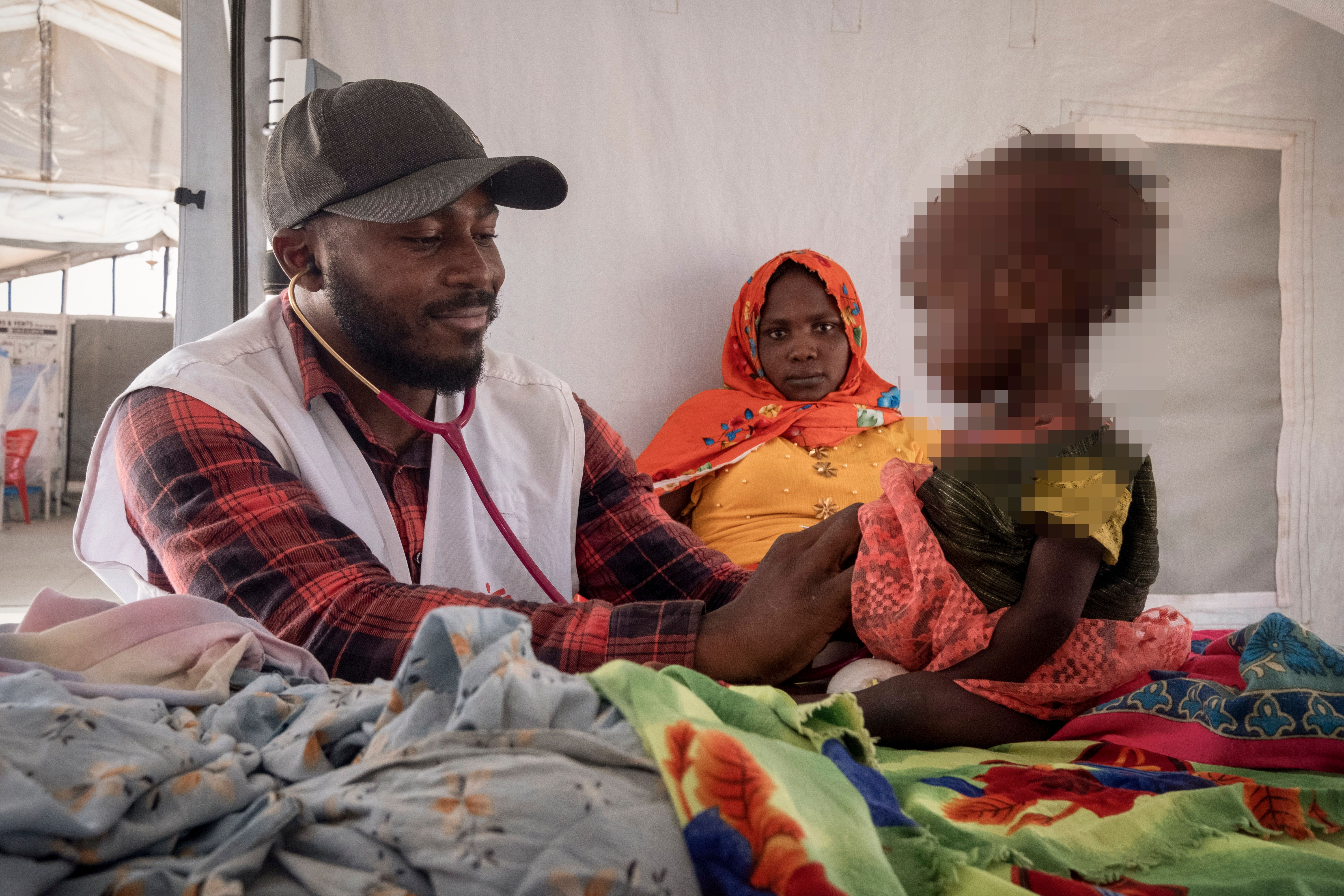
FILE - A doctor treats a Sudanese child suffering from malnutrition are treated at an MSF clinic in Metche Camp, Chad, near the Sudanese border, on April 6, 2024. (AP Photo/Patricia Simon, File)

The Integrated Food Security Phase Classification, or IPC, said it detected famine in five areas, including in Sudan’s largest displacement camp, Zamzam, in North Darfur province, where famine was found for the first time in August.

The report said the war has triggered unprecedented mass displacement and a collapsing economy. It said hostilities can result in farmers abandoning their crops, looting and stock destruction.

Along with the Zamzam camp, which has more than 400,000 people, famine was also detected in two other camps for displaced people, Abu Shouk and al-Salam in North Darfur, and the Western Nuba Mountains, the IPC report said.

Five other areas in North Darfur are projected “with reasonable evidence” to experience famine in the next six months, including el-Fasher, the provincial capital of North Darfur, it said. Seventeen areas in the Nuba Mountains and the northern and southern areas of Darfur are at risk of famine, it added.

The report also said some areas in the capital, Khartoum, and the east-central province of Gezira “may be experiencing” famine-like conditions. It said experts were unable to confirm whether famine threshold has been surpassed due to lack of data.

“It is not merely a lack of food but a profound breakdown of health, livelihoods and social structures, leaving entire communities in a state of desperation,” it said.

There is widespread hunger, with food in markets scarce and prices high. Aid groups say they struggle to reach the most vulnerable as warring parties limit access, especially in North Darfur province.

Ahead of the IPC's report, Sudan’s government said it had suspended its participation in the global monitoring system, according to a senior United Nations official with knowledge of the move.

In a letter dated Dec. 23, Agriculture Minister Abu Baker al-Beshri accused the IPC of “issuing unreliable reports that undermine Sudan’s sovereignty and dignity,” said the U.N. official, who spoke in condition of anonymity to discuss the letter.

Sudan's 20-month war has killed more than than 24,000 people and driven over 14 million people — about 30% of the population — from their homes, according to the United Nations. An estimated 3.2 million Sudanese have crossed into neighboring countries including Chad, Egypt and South Sudan.

The war began in April 2023 when tensions between its military and paramilitary Rapid Support Forces exploded into fighting in Khartoum before spreading to other areas. The conflict has been marked by atrocities including ethnically motivated killing and rape, according to the U.N. and rights groups. The International Criminal Court is investigating alleged war crimes and crimes against humanity.

Dervla Cleary, a senior emergency and rehabilitation officer at the U.N.’s Food and Agriculture Organization, said 638,000 people are experiencing famine.

“The situation in Sudan is just awful. It is unacceptable in a world like today,” she said.

The IPC report called for a ceasefire, calling it the only way to reduce the risk of famine spreading further."

Sudan is the third country where famine was declared in the past 15 years, along with South Sudan and Somalia.

The IPC comprises more than a dozen U.N. agencies, aid groups and governments that use its monitoring as a global reference for analysis of food and nutrition crises. The organization has also warned that large parts of Gaza’s Palestinian population face the threat of famine.

Related Tags

World news
ADVERTISEMENT
.most-popular .layout-ratio{ padding-bottom: 79.13%; } @media (min-width: 768px) and (max-width: 1024px) { .widget-title { font-size: 15px !important; } }

{{ articles_filter_1561_widget.title }}

.most-popular .layout-ratio{ padding-bottom: 79.13%; } @media (min-width: 768px) and (max-width: 1024px) { .widget-title { font-size: 15px !important; } }

{{ articles_filter_1562_widget.title }}

.most-popular .layout-ratio{ padding-bottom: 79.13%; } @media (min-width: 768px) and (max-width: 1024px) { .widget-title { font-size: 15px !important; } }

{{ articles_filter_1563_widget.title }}

{{ articles_filter_1564_widget.title }}

.mb-article-details { position: relative; } .mb-article-details .article-body-preview, .mb-article-details .article-body-summary{ font-size: 17px; line-height: 30px; font-family: "Libre Caslon Text", serif; color: #000; } .mb-article-details .article-body-preview iframe , .mb-article-details .article-body-summary iframe{ width: 100%; margin: auto; } .read-more-background { background: linear-gradient(180deg, color(display-p3 1.000 1.000 1.000 / 0) 13.75%, color(display-p3 1.000 1.000 1.000 / 0.8) 30.79%, color(display-p3 1.000 1.000 1.000) 72.5%); position: absolute; height: 200px; width: 100%; bottom: 0; display: flex; justify-content: center; align-items: center; padding: 0; } .read-more-background a{ color: #000; } .read-more-btn { padding: 17px 45px; font-family: Inter; font-weight: 700; font-size: 18px; line-height: 16px; text-align: center; vertical-align: middle; border: 1px solid black; background-color: white; } .hidden { display: none; }
function initializeAllSwipers() { // Get all hidden inputs with cms_article_id document.querySelectorAll('[id^="cms_article_id_"]').forEach(function (input) { const cmsArticleId = input.value; const articleSelector = '#article-' + cmsArticleId + ' .body_images'; const swiperElement = document.querySelector(articleSelector); if (swiperElement && !swiperElement.classList.contains('swiper-initialized')) { new Swiper(articleSelector, { loop: true, pagination: false, navigation: { nextEl: '#article-' + cmsArticleId + ' .swiper-button-next', prevEl: '#article-' + cmsArticleId + ' .swiper-button-prev', }, }); } }); } setTimeout(initializeAllSwipers, 3000); const intersectionObserver = new IntersectionObserver( (entries) => { entries.forEach((entry) => { if (entry.isIntersecting) { const newUrl = entry.target.getAttribute("data-url"); if (newUrl) { history.pushState(null, null, newUrl); let article = entry.target; // Extract metadata const author = article.querySelector('.author-section').textContent.replace('By', '').trim(); const section = article.querySelector('.section-info ').textContent.replace(' ', ' '); const title = article.querySelector('.article-title h1').textContent; // Parse URL for Chartbeat path format const parsedUrl = new URL(newUrl, window.location.origin); const cleanUrl = parsedUrl.host + parsedUrl.pathname; // Update Chartbeat configuration if (typeof window._sf_async_config !== 'undefined') { window._sf_async_config.path = cleanUrl; window._sf_async_config.sections = section; window._sf_async_config.authors = author; } // Track virtual page view with Chartbeat if (typeof pSUPERFLY !== 'undefined' && typeof pSUPERFLY.virtualPage === 'function') { try { pSUPERFLY.virtualPage({ path: cleanUrl, title: title, sections: section, authors: author }); } catch (error) { console.error('ping error', error); } } // Optional: Update document title if (title && title !== document.title) { document.title = title; } } } }); }, { threshold: 0.1 } ); function showArticleBody(button) { const article = button.closest("article"); const summary = article.querySelector(".article-body-summary"); const body = article.querySelector(".article-body-preview"); const readMoreSection = article.querySelector(".read-more-background"); // Hide summary and read-more section summary.style.display = "none"; readMoreSection.style.display = "none"; // Show the full article body body.classList.remove("hidden"); } document.addEventListener("DOMContentLoaded", () => { let loadCount = 0; // Track how many times articles are loaded const offset = [1, 2, 3, 4, 5, 6, 7, 8, 9, 10]; // Offset values const currentUrl = window.location.pathname.substring(1); let isLoading = false; // Prevent multiple calls if (!currentUrl) { console.log("Current URL is invalid."); return; } const sentinel = document.getElementById("load-more-sentinel"); if (!sentinel) { console.log("Sentinel element not found."); return; } function isSentinelVisible() { const rect = sentinel.getBoundingClientRect(); return ( rect.top < window.innerHeight && rect.bottom >= 0 ); } function onScroll() { if (isLoading) return; if (isSentinelVisible()) { if (loadCount >= offset.length) { console.log("Maximum load attempts reached."); window.removeEventListener("scroll", onScroll); return; } isLoading = true; const currentOffset = offset[loadCount]; window.loadMoreItems().then(() => { let article = document.querySelector('#widget_1690 > div:nth-last-of-type(2) article'); intersectionObserver.observe(article) loadCount++; }).catch(error => { console.error("Error loading more items:", error); }).finally(() => { isLoading = false; }); } } window.addEventListener("scroll", onScroll); });

Sign up by email to receive news.