

ADVERTISEMENT

International students urged to return to US campuses before Trump inauguration

Published Dec 20, 2024 12:41 pm

CONCORD, N.H. (AP) — A growing number of U.S. colleges and universities are advising international students to return to campus before President-elect Donald Trump is inaugurated, over concerns that he might impose travel bans like he did during his first administration.
AP24352741845988.jpg
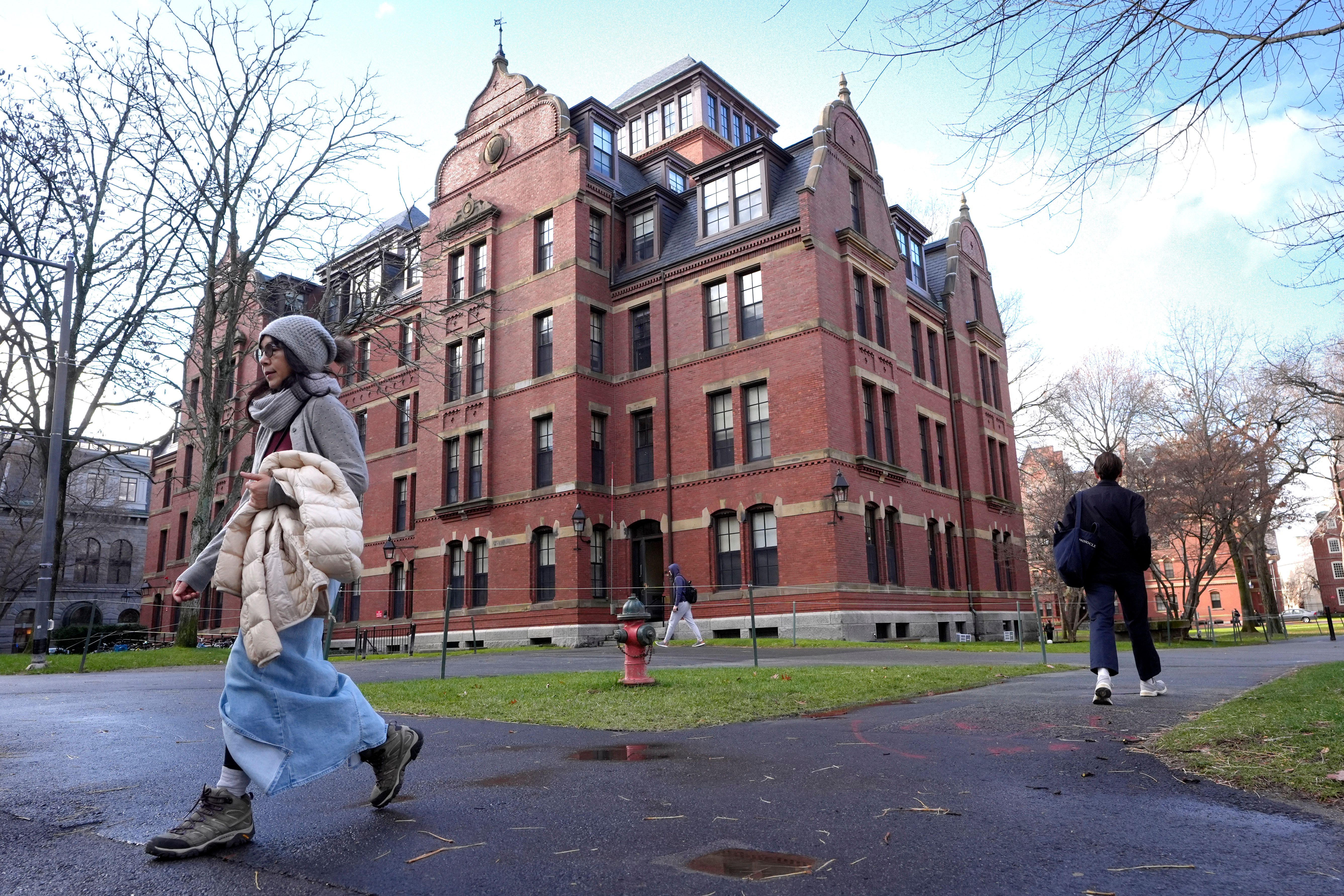
People walk between buildings, Tuesday, Dec. 17, 2024, on the campus of Harvard University in Cambridge, Mass. (AP Photo/Steven Senne)

More than a dozen schools have issued advisories, even though Trump's plans remain uncertain. At some schools, the spring semester begins before Trump will take office, so students may have to be back in class anyway. But for anyone whose ability to stay in the United States depends on an academic visa, they say it's best to reduce their risks and get back to campus before Jan. 20.

Here's a look at what Trump has said and done and how schools and students are preparing for his second term:

What did Trump do in the past?

Trump issued an executive order in January 2017 banning travel to the U.S. by citizens of seven predominantly Muslim countries — Iraq, Syria, Iran, Sudan, Libya, Somalia and Yemen. Travelers from those nations were either barred from getting on their flights or detained at U.S. airports after they landed. They included students and faculty as well as business people, tourists and visitors to friends and family.

Trump later removed some countries and added others to the list — 15 nations were affected at some point during his presidency. More than 40,000 people were ultimately refused visas because of the ban, according to the U.S. State Department. President Joe Biden rescinded the orders when he took office in 2021.

How are students being affected?

More than 1.1 million international students were enrolled in U.S. colleges and universities during the 2023-24 school year, according to Open Doors, a data project partially funded by the U.S. State Department. Students from India and China have accounted for more than half of all international students in the U.S., and about 43,800 come from the 15 countries affected by Trump's travel restrictions.

Jacky Li, a third-year environmental studies major at University of California, Berkeley, will be traveling home to China Dec. 21 and returning Jan. 16. Though he made his plans months before Berkeley officials sent the advisory, he said worry is growing among international students.

"There's a fear that this kind of restriction will enlarge into a wider community, considering the geopolitical tensions nowadays around the world, so the fear is definitely there," said Li, who urged Trump to support, rather than thwart, important academic research.

"If the U.S. is really a champion of academic freedom, what you should do is not restrict this kind of communications between different countries of the world," he said.

What might Trump do now?

Trump's transition team did not respond to questions on the topic this week, but in the past he has said he'll revive the travel ban and expand it, pledging new "ideological screening" for non-U.S. citizens to bar "dangerous lunatics, haters, bigots and maniacs."

"We aren't bringing in anyone from Gaza, Syria, Somalia, Yemen or Libya or anywhere else that threatens our security," Trump said at an October 2023 campaign event in Iowa.

Trump also vowed to "revoke the student visas of radical anti-American and anti-Semitic foreigners at our colleges and universities" in response to campus protests.

What are schools telling students?

School officials have advised international students heading home for winter break to return before Inauguration Day and to prepare for possible delays at immigration control.

The list includes Ivy League universities such as Harvard and Brown, Boston schools such as Northeastern University and the Massachusetts Institute of Technology, and other schools around the country, from Johns Hopkins University to the University of Southern California. Some offer classes that begin the day after Inauguration Day.

Cornell University told its students that a travel ban involving the 13 nations Trump previously targeted "is likely to go into effect soon after inauguration," and that new countries could be added to the list, particularly China and India. It advised students, faculty and staff from those countries to return to campus before the semester starts Jan. 21.

Other schools didn't go so far as to say a ban is likely but instead advised students to plan ahead and prepare for delays.


Related Tags

World news
ADVERTISEMENT
.most-popular .layout-ratio{ padding-bottom: 79.13%; } @media (min-width: 768px) and (max-width: 1024px) { .widget-title { font-size: 15px !important; } }

{{ articles_filter_1561_widget.title }}

.most-popular .layout-ratio{ padding-bottom: 79.13%; } @media (min-width: 768px) and (max-width: 1024px) { .widget-title { font-size: 15px !important; } }

{{ articles_filter_1562_widget.title }}

.most-popular .layout-ratio{ padding-bottom: 79.13%; } @media (min-width: 768px) and (max-width: 1024px) { .widget-title { font-size: 15px !important; } }

{{ articles_filter_1563_widget.title }}

{{ articles_filter_1564_widget.title }}

.mb-article-details { position: relative; } .mb-article-details .article-body-preview, .mb-article-details .article-body-summary{ font-size: 17px; line-height: 30px; font-family: "Libre Caslon Text", serif; color: #000; } .mb-article-details .article-body-preview iframe , .mb-article-details .article-body-summary iframe{ width: 100%; margin: auto; } .read-more-background { background: linear-gradient(180deg, color(display-p3 1.000 1.000 1.000 / 0) 13.75%, color(display-p3 1.000 1.000 1.000 / 0.8) 30.79%, color(display-p3 1.000 1.000 1.000) 72.5%); position: absolute; height: 200px; width: 100%; bottom: 0; display: flex; justify-content: center; align-items: center; padding: 0; } .read-more-background a{ color: #000; } .read-more-btn { padding: 17px 45px; font-family: Inter; font-weight: 700; font-size: 18px; line-height: 16px; text-align: center; vertical-align: middle; border: 1px solid black; background-color: white; } .hidden { display: none; }
function initializeAllSwipers() { // Get all hidden inputs with cms_article_id document.querySelectorAll('[id^="cms_article_id_"]').forEach(function (input) { const cmsArticleId = input.value; const articleSelector = '#article-' + cmsArticleId + ' .body_images'; const swiperElement = document.querySelector(articleSelector); if (swiperElement && !swiperElement.classList.contains('swiper-initialized')) { new Swiper(articleSelector, { loop: true, pagination: false, navigation: { nextEl: '#article-' + cmsArticleId + ' .swiper-button-next', prevEl: '#article-' + cmsArticleId + ' .swiper-button-prev', }, }); } }); } setTimeout(initializeAllSwipers, 3000); const intersectionObserver = new IntersectionObserver( (entries) => { entries.forEach((entry) => { if (entry.isIntersecting) { const newUrl = entry.target.getAttribute("data-url"); if (newUrl) { history.pushState(null, null, newUrl); let article = entry.target; // Extract metadata const author = article.querySelector('.author-section').textContent.replace('By', '').trim(); const section = article.querySelector('.section-info ').textContent.replace(' ', ' '); const title = article.querySelector('.article-title h1').textContent; // Parse URL for Chartbeat path format const parsedUrl = new URL(newUrl, window.location.origin); const cleanUrl = parsedUrl.host + parsedUrl.pathname; // Update Chartbeat configuration if (typeof window._sf_async_config !== 'undefined') { window._sf_async_config.path = cleanUrl; window._sf_async_config.sections = section; window._sf_async_config.authors = author; } // Track virtual page view with Chartbeat if (typeof pSUPERFLY !== 'undefined' && typeof pSUPERFLY.virtualPage === 'function') { try { pSUPERFLY.virtualPage({ path: cleanUrl, title: title, sections: section, authors: author }); } catch (error) { console.error('ping error', error); } } // Optional: Update document title if (title && title !== document.title) { document.title = title; } } } }); }, { threshold: 0.1 } ); function showArticleBody(button) { const article = button.closest("article"); const summary = article.querySelector(".article-body-summary"); const body = article.querySelector(".article-body-preview"); const readMoreSection = article.querySelector(".read-more-background"); // Hide summary and read-more section summary.style.display = "none"; readMoreSection.style.display = "none"; // Show the full article body body.classList.remove("hidden"); } document.addEventListener("DOMContentLoaded", () => { let loadCount = 0; // Track how many times articles are loaded const offset = [1, 2, 3, 4, 5, 6, 7, 8, 9, 10]; // Offset values const currentUrl = window.location.pathname.substring(1); let isLoading = false; // Prevent multiple calls if (!currentUrl) { console.log("Current URL is invalid."); return; } const sentinel = document.getElementById("load-more-sentinel"); if (!sentinel) { console.log("Sentinel element not found."); return; } function isSentinelVisible() { const rect = sentinel.getBoundingClientRect(); return ( rect.top < window.innerHeight && rect.bottom >= 0 ); } function onScroll() { if (isLoading) return; if (isSentinelVisible()) { if (loadCount >= offset.length) { console.log("Maximum load attempts reached."); window.removeEventListener("scroll", onScroll); return; } isLoading = true; const currentOffset = offset[loadCount]; window.loadMoreItems().then(() => { let article = document.querySelector('#widget_1690 > div:nth-last-of-type(2) article'); intersectionObserver.observe(article) loadCount++; }).catch(error => { console.error("Error loading more items:", error); }).finally(() => { isLoading = false; }); } } window.addEventListener("scroll", onScroll); });

Sign up by email to receive news.