ADVERTISEMENT

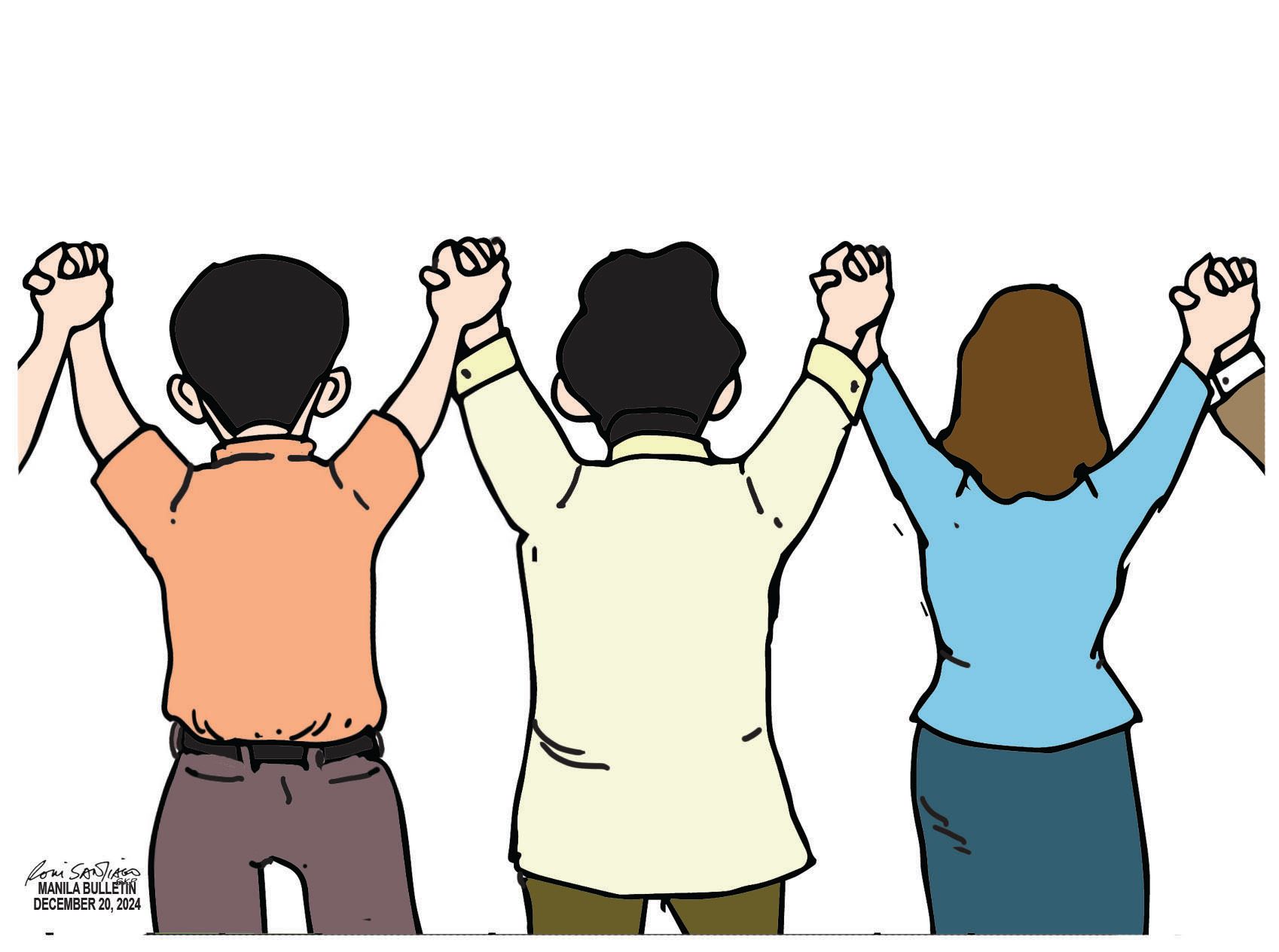
Solidarity: A force that binds, a foundation of a better future

Published Dec 19, 2024 04:54 pm

E CARTOON DEC 20, 2024_2.jpg


The United Nations (UN), in 2005, declared December 20 each year as International Human Solidarity Day to reflect on the importance of unity and collective action. The observance is a reminder that solidarity is a crucial force that binds families, communities, and nations, guiding everyone toward a more just and compassionate world. 


This year, as we navigate an increasingly polarized world, the theme of solidarity has never been more urgent, particularly in the context of the country’s current political noise. The nation, like many others, finds itself divided along ideological, economic, and social lines, but the call to solidarity challenges us to look beyond our differences, and embrace our shared humanity.


Solidarity, as defined by the UN, is the foundation of human rights, the cornerstone of development, and a force capable of lifting entire societies out of poverty and inequality. It is an acknowledgment that the challenges facing one are the challenges facing all, and that the pursuit of justice is only meaningful when it is pursued together.


In this spirit, solidarity goes beyond mere charity or goodwill. It is a shared commitment to standing with those who are vulnerable, marginalized, or oppressed. Solidarity asks us to extend our empathy not only to those within our immediate circles but also to strangers across borders, regardless of race, religion, or nationality. It is a global ethos that underscores the interconnectedness of humanity and calls for collective action in the face of crises that transcend national boundaries.


At its core, solidarity begins at the smallest, most intimate level — the family, the first community in which we learn to share, to care for one another, and to nurture the bonds that define our sense of belonging. As we grow, we learn that the solidarity we offer to family members is not limited to blood relations but can extend to those within our broader community.


In the Philippines, where family is often seen as the primary unit of social and emotional support, solidarity within the family is not just a moral duty; it is a survival mechanism. Filipino families often endure hardships together — whether it’s financial struggle, loss, or personal challenges — yet they come out stronger by supporting one another. This model of familial solidarity is a reflection of a deeper cultural value: the belief that no one should be left behind, and that collective effort leads to greater resilience.


However, in the wake of rising political tensions in the country, solidarity at the national level seems increasingly elusive. The nation finds itself divided by deep political rifts, with partisan interests often trumping national unity. Political discourse is marked by polarization, distrust, and tribalistic loyalties that pit citizens against one another, threatening the very fabric of national cohesion.


The rhetoric of “us versus them” has become a toxic force, fracturing the sense of common purpose that once united Filipinos in the face of adversity. The political landscape has become a battlefield of ideologies, leaving many citizens feeling alienated from one another and disconnected from the ideals of democracy, justice, and human dignity. As politicians bicker and jockey for power, ordinary Filipinos suffer the consequences — worsening poverty, escalating inequality, and a growing sense of hopelessness.


Yet, despite these divisions, there is still hope. We must reclaim the values that bind us together: empathy, compassion, and a commitment to social justice. The principles of solidarity, once nurtured in the home, can be extended to the broader society if we choose to act. But this requires intentional effort.


As the country grapples with its political challenges, let us remember that the road to healing and progress begins with solidarity — not as a fleeting ideal, but as a way of life that transcends political ambitions and divisions of the moment.


Now, let us stand together, in our families, in our communities, and as a nation, for a better future.
 

Related Tags

EDITORIAL
ADVERTISEMENT
.most-popular .layout-ratio{ padding-bottom: 79.13%; } @media (min-width: 768px) and (max-width: 1024px) { .widget-title { font-size: 15px !important; } }

{{ articles_filter_1561_widget.title }}

.most-popular .layout-ratio{ padding-bottom: 79.13%; } @media (min-width: 768px) and (max-width: 1024px) { .widget-title { font-size: 15px !important; } }

{{ articles_filter_1562_widget.title }}

.most-popular .layout-ratio{ padding-bottom: 79.13%; } @media (min-width: 768px) and (max-width: 1024px) { .widget-title { font-size: 15px !important; } }

{{ articles_filter_1563_widget.title }}

{{ articles_filter_1564_widget.title }}

.mb-article-details { position: relative; } .mb-article-details .article-body-preview, .mb-article-details .article-body-summary{ font-size: 17px; line-height: 30px; font-family: "Libre Caslon Text", serif; color: #000; } .mb-article-details .article-body-preview iframe , .mb-article-details .article-body-summary iframe{ width: 100%; margin: auto; } .read-more-background { background: linear-gradient(180deg, color(display-p3 1.000 1.000 1.000 / 0) 13.75%, color(display-p3 1.000 1.000 1.000 / 0.8) 30.79%, color(display-p3 1.000 1.000 1.000) 72.5%); position: absolute; height: 200px; width: 100%; bottom: 0; display: flex; justify-content: center; align-items: center; padding: 0; } .read-more-background a{ color: #000; } .read-more-btn { padding: 17px 45px; font-family: Inter; font-weight: 700; font-size: 18px; line-height: 16px; text-align: center; vertical-align: middle; border: 1px solid black; background-color: white; } .hidden { display: none; }
function initializeAllSwipers() { // Get all hidden inputs with cms_article_id document.querySelectorAll('[id^="cms_article_id_"]').forEach(function (input) { const cmsArticleId = input.value; const articleSelector = '#article-' + cmsArticleId + ' .body_images'; const swiperElement = document.querySelector(articleSelector); if (swiperElement && !swiperElement.classList.contains('swiper-initialized')) { new Swiper(articleSelector, { loop: true, pagination: false, navigation: { nextEl: '#article-' + cmsArticleId + ' .swiper-button-next', prevEl: '#article-' + cmsArticleId + ' .swiper-button-prev', }, }); } }); } setTimeout(initializeAllSwipers, 3000); const intersectionObserver = new IntersectionObserver( (entries) => { entries.forEach((entry) => { if (entry.isIntersecting) { const newUrl = entry.target.getAttribute("data-url"); if (newUrl) { history.pushState(null, null, newUrl); let article = entry.target; // Extract metadata const author = article.querySelector('.author-section').textContent.replace('By', '').trim(); const section = article.querySelector('.section-info ').textContent.replace(' ', ' '); const title = article.querySelector('.article-title h1').textContent; // Parse URL for Chartbeat path format const parsedUrl = new URL(newUrl, window.location.origin); const cleanUrl = parsedUrl.host + parsedUrl.pathname; // Update Chartbeat configuration if (typeof window._sf_async_config !== 'undefined') { window._sf_async_config.path = cleanUrl; window._sf_async_config.sections = section; window._sf_async_config.authors = author; } // Track virtual page view with Chartbeat if (typeof pSUPERFLY !== 'undefined' && typeof pSUPERFLY.virtualPage === 'function') { try { pSUPERFLY.virtualPage({ path: cleanUrl, title: title, sections: section, authors: author }); } catch (error) { console.error('ping error', error); } } // Optional: Update document title if (title && title !== document.title) { document.title = title; } } } }); }, { threshold: 0.1 } ); function showArticleBody(button) { const article = button.closest("article"); const summary = article.querySelector(".article-body-summary"); const body = article.querySelector(".article-body-preview"); const readMoreSection = article.querySelector(".read-more-background"); // Hide summary and read-more section summary.style.display = "none"; readMoreSection.style.display = "none"; // Show the full article body body.classList.remove("hidden"); } document.addEventListener("DOMContentLoaded", () => { let loadCount = 0; // Track how many times articles are loaded const offset = [1, 2, 3, 4, 5, 6, 7, 8, 9, 10]; // Offset values const currentUrl = window.location.pathname.substring(1); let isLoading = false; // Prevent multiple calls if (!currentUrl) { console.log("Current URL is invalid."); return; } const sentinel = document.getElementById("load-more-sentinel"); if (!sentinel) { console.log("Sentinel element not found."); return; } function isSentinelVisible() { const rect = sentinel.getBoundingClientRect(); return ( rect.top < window.innerHeight && rect.bottom >= 0 ); } function onScroll() { if (isLoading) return; if (isSentinelVisible()) { if (loadCount >= offset.length) { console.log("Maximum load attempts reached."); window.removeEventListener("scroll", onScroll); return; } isLoading = true; const currentOffset = offset[loadCount]; window.loadMoreItems().then(() => { let article = document.querySelector('#widget_1690 > div:nth-last-of-type(2) article'); intersectionObserver.observe(article) loadCount++; }).catch(error => { console.error("Error loading more items:", error); }).finally(() => { isLoading = false; }); } } window.addEventListener("scroll", onScroll); });

Sign up by email to receive news.