

ADVERTISEMENT

P10,500 soldiers' monthly subsistence allowance funded in 2025 budget--Libanan

Published Dec 19, 2024 03:29 am

At A Glance

  • House Minority Leader 4Ps Party-list Rep. Marcelino "Nonoy" Libanan says the country's soldiers can expect an allocation of P17 billion to cover their P10,500 monthly subsistence allowance under the 2025 national budget.
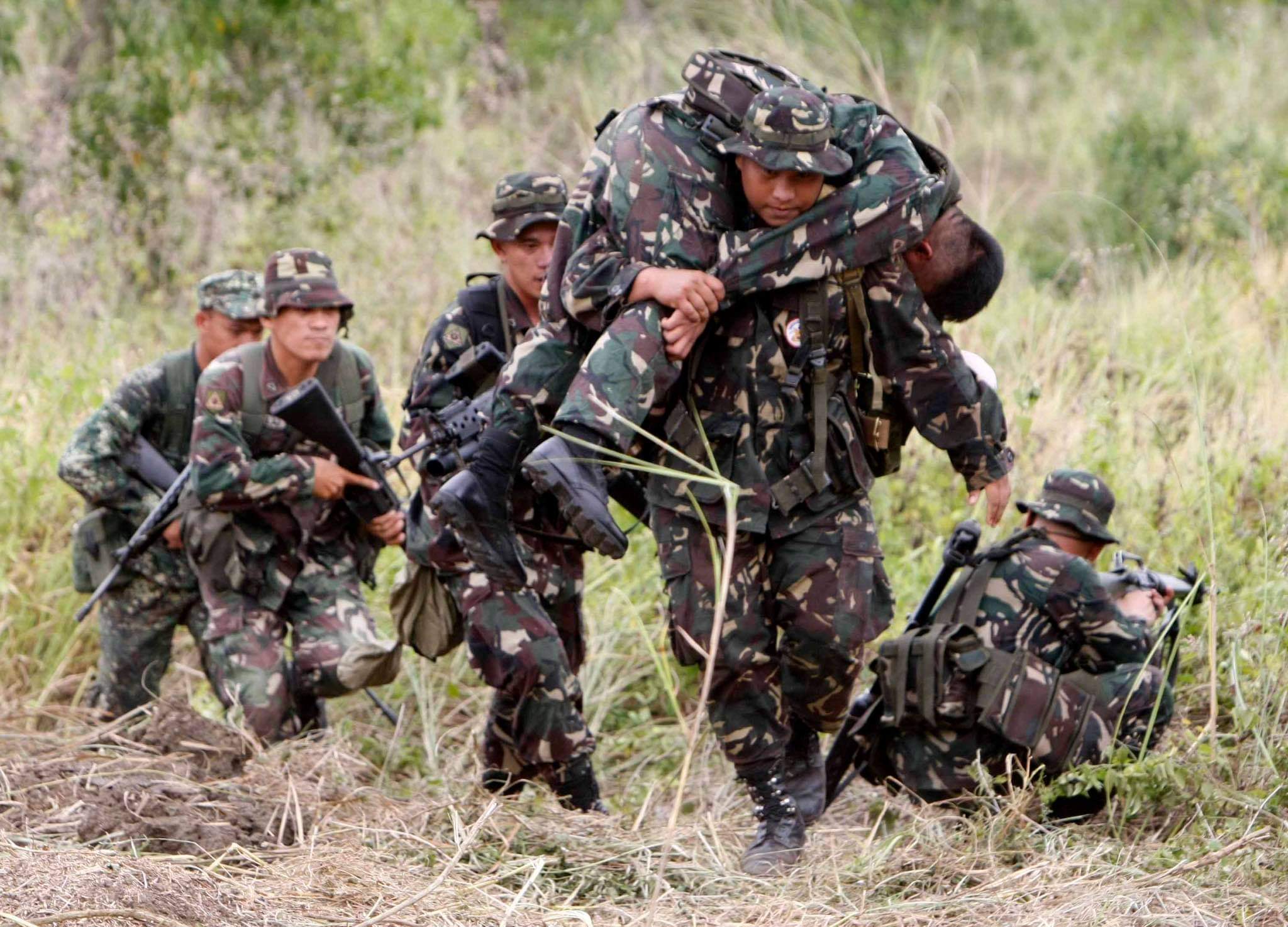
received_556032582031016.jpeg(Mark Balmores / MANILA BULLETIN)

House Minority Leader 4Ps Party-list Rep. Marcelino "Nonoy” Libanan says the country’s soldiers can expect an allocation of P17 billion to cover their P10,500 monthly subsistence allowance under the 2025 national budget.

Libanan highlighted this ahead of the 89th founding anniversary of the 165,000-strong Armed Forces of the Philippines (AFP) on Dec. 21.

“Both the House and the Senate, largely through the efforts of Speaker Martin Romualdez, have agreed to provide a 133 percent increase in the daily subsistence allowance for our soldiers – from P150 to P350 – to further improve their welfare. The allowance is now equal to P10,500 monthly,” Libanan said in a statement.

“We are aggressively investing in the well-being of our soldiers, who are at the core of our national defense, even as we spend an average of P30 billion every year to upgrade the military’s hardware and systems under the revised AFP modernization program,” he added.

Libanan was part of the Bicameral Conference Committee that reconciled the House and Senate versions of the P6.352-trillion General Appropriations Bill (GAB) for 2025.

The AFP has a total of 165,423 military personnel: 114,576 in the Philippine Army; 27,930 in the Philippine Navy (including the Philippine Marines); and 22,917 in the Philippine Air Force, according to figures from the staffing summary in the 2025 National Expenditure Program (NEP).

The NEP, which emanates from Malacañang, serves as the precursor to the GAB. The 2025 outlay is awaiting President Marcos' signature.

In addition to the subsistence allowance, which is primarily intended for food/meal expenses, military personnel also receive common allowances for economic relief, clothing/uniforms, laundry, quarters, and other stipends as part of their remuneration.

The military’s “common-to-all” compensation package also includes longevity pay, mid-year bonuses, year-end bonuses, cash gifts, productivity enhancement incentives, and performance-based bonuses.

Certain groups of soldiers receive additional compensation, such as hazardous/hazard duty pay, hardship allowances, and combat duty pay, among other rewards.

Related Tags

Subsistence allowance marcelino nonoy libanan AFP
ADVERTISEMENT
.most-popular .layout-ratio{ padding-bottom: 79.13%; } @media (min-width: 768px) and (max-width: 1024px) { .widget-title { font-size: 15px !important; } }

{{ articles_filter_1561_widget.title }}

.most-popular .layout-ratio{ padding-bottom: 79.13%; } @media (min-width: 768px) and (max-width: 1024px) { .widget-title { font-size: 15px !important; } }

{{ articles_filter_1562_widget.title }}

.most-popular .layout-ratio{ padding-bottom: 79.13%; } @media (min-width: 768px) and (max-width: 1024px) { .widget-title { font-size: 15px !important; } }

{{ articles_filter_1563_widget.title }}

{{ articles_filter_1564_widget.title }}

.mb-article-details { position: relative; } .mb-article-details .article-body-preview, .mb-article-details .article-body-summary{ font-size: 17px; line-height: 30px; font-family: "Libre Caslon Text", serif; color: #000; } .mb-article-details .article-body-preview iframe , .mb-article-details .article-body-summary iframe{ width: 100%; margin: auto; } .read-more-background { background: linear-gradient(180deg, color(display-p3 1.000 1.000 1.000 / 0) 13.75%, color(display-p3 1.000 1.000 1.000 / 0.8) 30.79%, color(display-p3 1.000 1.000 1.000) 72.5%); position: absolute; height: 200px; width: 100%; bottom: 0; display: flex; justify-content: center; align-items: center; padding: 0; } .read-more-background a{ color: #000; } .read-more-btn { padding: 17px 45px; font-family: Inter; font-weight: 700; font-size: 18px; line-height: 16px; text-align: center; vertical-align: middle; border: 1px solid black; background-color: white; } .hidden { display: none; }
function initializeAllSwipers() { // Get all hidden inputs with cms_article_id document.querySelectorAll('[id^="cms_article_id_"]').forEach(function (input) { const cmsArticleId = input.value; const articleSelector = '#article-' + cmsArticleId + ' .body_images'; const swiperElement = document.querySelector(articleSelector); if (swiperElement && !swiperElement.classList.contains('swiper-initialized')) { new Swiper(articleSelector, { loop: true, pagination: false, navigation: { nextEl: '#article-' + cmsArticleId + ' .swiper-button-next', prevEl: '#article-' + cmsArticleId + ' .swiper-button-prev', }, }); } }); } setTimeout(initializeAllSwipers, 3000); const intersectionObserver = new IntersectionObserver( (entries) => { entries.forEach((entry) => { if (entry.isIntersecting) { const newUrl = entry.target.getAttribute("data-url"); if (newUrl) { history.pushState(null, null, newUrl); let article = entry.target; // Extract metadata const author = article.querySelector('.author-section').textContent.replace('By', '').trim(); const section = article.querySelector('.section-info ').textContent.replace(' ', ' '); const title = article.querySelector('.article-title h1').textContent; // Parse URL for Chartbeat path format const parsedUrl = new URL(newUrl, window.location.origin); const cleanUrl = parsedUrl.host + parsedUrl.pathname; // Update Chartbeat configuration if (typeof window._sf_async_config !== 'undefined') { window._sf_async_config.path = cleanUrl; window._sf_async_config.sections = section; window._sf_async_config.authors = author; } // Track virtual page view with Chartbeat if (typeof pSUPERFLY !== 'undefined' && typeof pSUPERFLY.virtualPage === 'function') { try { pSUPERFLY.virtualPage({ path: cleanUrl, title: title, sections: section, authors: author }); } catch (error) { console.error('ping error', error); } } // Optional: Update document title if (title && title !== document.title) { document.title = title; } } } }); }, { threshold: 0.1 } ); function showArticleBody(button) { const article = button.closest("article"); const summary = article.querySelector(".article-body-summary"); const body = article.querySelector(".article-body-preview"); const readMoreSection = article.querySelector(".read-more-background"); // Hide summary and read-more section summary.style.display = "none"; readMoreSection.style.display = "none"; // Show the full article body body.classList.remove("hidden"); } document.addEventListener("DOMContentLoaded", () => { let loadCount = 0; // Track how many times articles are loaded const offset = [1, 2, 3, 4, 5, 6, 7, 8, 9, 10]; // Offset values const currentUrl = window.location.pathname.substring(1); let isLoading = false; // Prevent multiple calls if (!currentUrl) { console.log("Current URL is invalid."); return; } const sentinel = document.getElementById("load-more-sentinel"); if (!sentinel) { console.log("Sentinel element not found."); return; } function isSentinelVisible() { const rect = sentinel.getBoundingClientRect(); return ( rect.top < window.innerHeight && rect.bottom >= 0 ); } function onScroll() { if (isLoading) return; if (isSentinelVisible()) { if (loadCount >= offset.length) { console.log("Maximum load attempts reached."); window.removeEventListener("scroll", onScroll); return; } isLoading = true; const currentOffset = offset[loadCount]; window.loadMoreItems().then(() => { let article = document.querySelector('#widget_1690 > div:nth-last-of-type(2) article'); intersectionObserver.observe(article) loadCount++; }).catch(error => { console.error("Error loading more items:", error); }).finally(() => { isLoading = false; }); } } window.addEventListener("scroll", onScroll); });

Sign up by email to receive news.