






 Philippines
National
Suarez incensed as DA exec admits importing firms don't get checked amid rice monopoly concerns
Philippines
National
Suarez incensed as DA exec admits importing firms don't get checked amid rice monopoly concerns
Suarez incensed as DA exec admits importing firms don't get checked amid rice monopoly concerns


At A Glance
- A serious omission by the Department of Agriculture's (DA) Bureau of Plant Industry (BPI) caused House Deputy Speaker Quezon 2nd district Rep. David "Jay-jay" Suarez to blow his top during the quinta-commiittee's (quinta-comm) hearing Tuesday, Dec. 10.
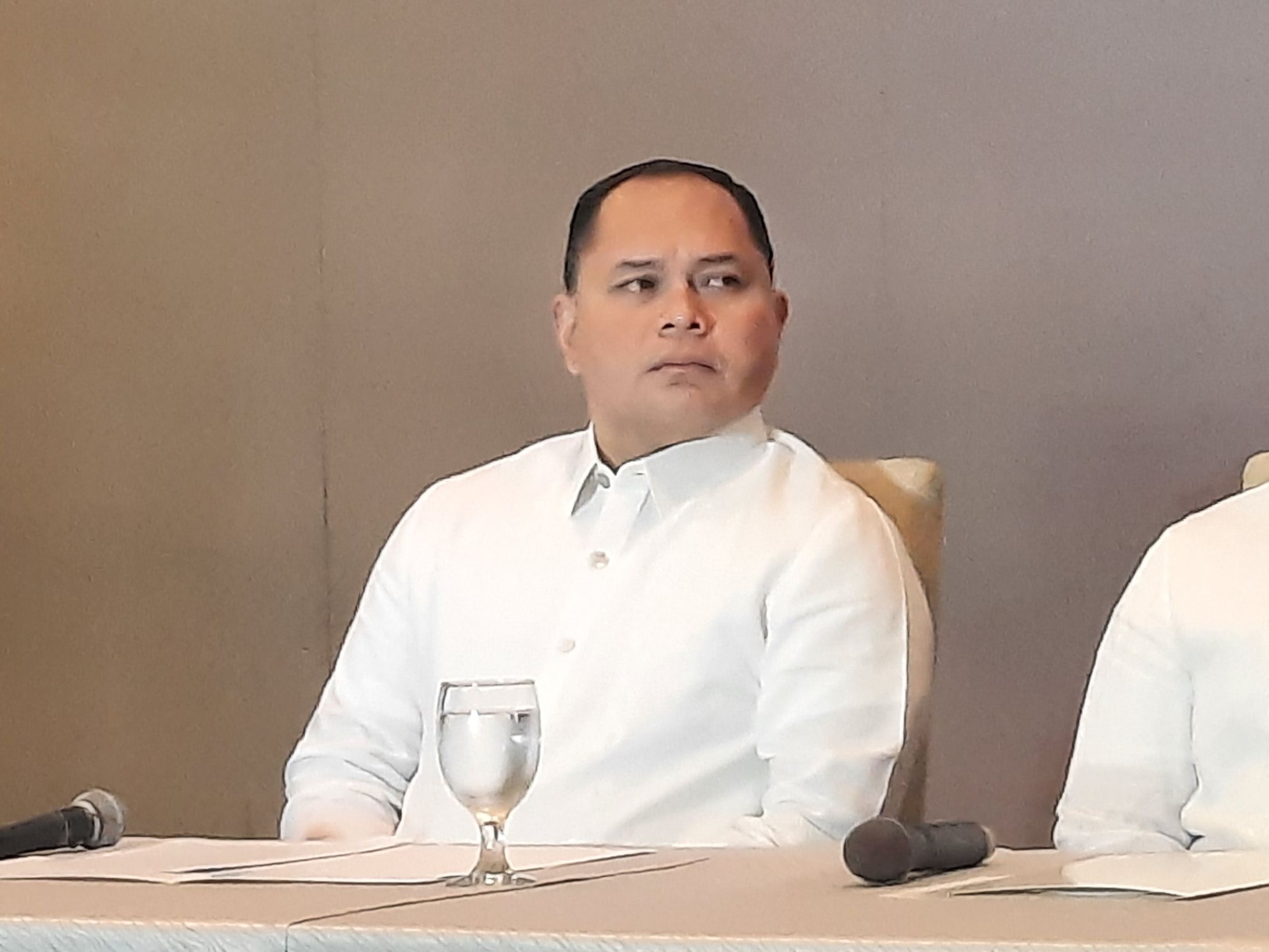 Quezon 2nd district Rep. David "Jay-jay" Suarez (Ellson Quismorio/ MANILA BULLETIN)
A serious omission by the Department of Agriculture's (DA) Bureau of Plant Industry (BPI) caused House Deputy Speaker Quezon 2nd district Rep. David “Jay-jay” Suarez to blow his top during the quinta-commiittee's (quinta-comm) hearing Tuesday, Dec. 10.
Scolded by Suarez was BPI Director Gerald Glenn Panganiban, who admitted during the hearing that the bureau failed exercised due diligence in issuing permits to rice importing companies.
It appeared that the two top rice importers in the country had the same owner--something that pointed to a possible monopoly on the commodity considered as Filipinos' staple food.
"Ito ba lahat binibigyan ng permit ng BPI, lahat ba ito dumadaan sa iyo? (Does BPI check all the conpanies that it gives permits to?)" Suarez asked Panganiban, who answered in the affirmative.
The high-ranking solon then sought clarification from Panganiban regarding the overlap in the ownership of the two top rice importers.
“Hindi mo ba napansin kung sino yung mga nabanggit na kumpanya ni Cong. [Nicanor] Briones eh base sa mga listahan ng mga pagmamay-ari eh iisa lang ‘yung dalawang top rice importer natin?” Suarez asked.
(Didn't you notice in the list of companies read by Cong. Nicanor Briones that our two top rice importers have the same owner?)
Like a pupil caught in school without his homework, Panganiban admitted that the BPI had not verified the ownership structures of these companies. “Hindi po, hindi namin napa-checked (No, we didnt have it checked),” he nervously said.
In a raised voice, Suarez replied: “Bakit hindi niyo na tsinek? Hindi pwedeng ngayon i-review iyan eh tapos na ang nangyari tapos ngayon nIyo gagawin ang trabaho niyo. Dapat nung nag-a-apply pa lang sila tsinek, niyo na kaagad."
(Why didn't you have it checked? You can't conduct a review now because it's already done. What happened is, it's already done and it's only now that you want to do your job. You should have checked while they were still applying for permits.)
Suarez--the roadshow manager of the House "Young Guns" bloc--underscored the importance of due diligence as he raised concerns about the potential for market manipulation if only a few individuals control multiple rice importing firms.
“Malay niyo, iyang top five na yan tatatlo lang pala ang may-ari then sasabihin niyo sa amin ngayon niyo lang gagawin yung trabaho. Hindi pwede iyon,” said the irate Quezon solon.
(What if the top five importers were owned by only three people, then you'll tell us that you'll do your job only now)
Also known as the Murang Pagkain Super-committee, the quinta-comm discussed on Tuesday the reasons why rice prices remained costly despite President Marcos' issuance of Executive Order (EO) No. 62, which cut the import tariff rate on the staple from 35 percent to just 15 percent effective last July.
It was these high prices of rice--ranging anywhere from P40 per kilo to over P50 per kilo--that caused solons like Suarez to have a short fuse, since they knew that it was struggle for many to have even one square meal a day.
Panganiban attempted to qualify his answer to Suarez: “Since corporation po ito sir, we are checking po kung sino nga yung mga may-ari (Since this is a corporation sir, we are checking on who are the owners)."
However, Suarez dismissed the BPI official's explanation, and insisted that such action should have been conducted before permits were issued.
The discovery has raised broader questions about the transparency and accountability of the rice importation process.
Tax payments to provide clue on profiteering
In response to alleged profiteering, Albay 2nd district Rep. Joey Salceda, overall chairman of the quad-committee, asked the Bureau of Internal Revenue (BIR) to look into the filings and tax payments of top rice importers.
"Congress cannot request tax filings. They are protected by Section 270 of the Tax Code. But the BIR can verify their own assessments and records. These top importers are importing in the billions. So, their tax payments should reflect that,” Salceda said.
He adds that a charge of tax evasion would then allow the Anti Money Laundering Council to look into top importers’ transactions, “as tax evasion is a predicate offense that would allow AMLC to look deeper".
The Bicolano noted during the hearing that “around the time of the President’s rice price ceiling, the gap between landed import price and domestic retail price was just P3 per kilo. Now it has swelled to P20 per kilo, even as farmgate price also went down.”
“This is just short of being supernatural. There is clearly pricing abuse— we just need to pinpoint at which stage," an exasperated Salceda said.
What's next?
For the next public hearing, the quinta-comm overall chairman said they will be calling in the big retailers and big retailers wholesalers. "Much of the profiteering seems to be in that sector, as well," he said.
Salceda also pointed out that there seems to be signs of hoarding in the market.
“Rice inventory is up 24 percent year on year. We have consistently breached all import projections of the USDA. And some importers are delaying withdrawal of imports from our ports.
“These are signs of both speculation and possibly hoarding. They could be speculating that the lower import tariffs will be reverted to previous levels," he said.