

ADVERTISEMENT

Group sees more human rights violations vs Indigenous Peoples

Published Dec 10, 2024 12:14 pm

DAVAO CITY – An Indigenous Peoples (IPs) rights advocacy group is seeing an increase in human rights violations against IPs across the country in the coming years amid the global boom on mining and development of renewable energy projects.
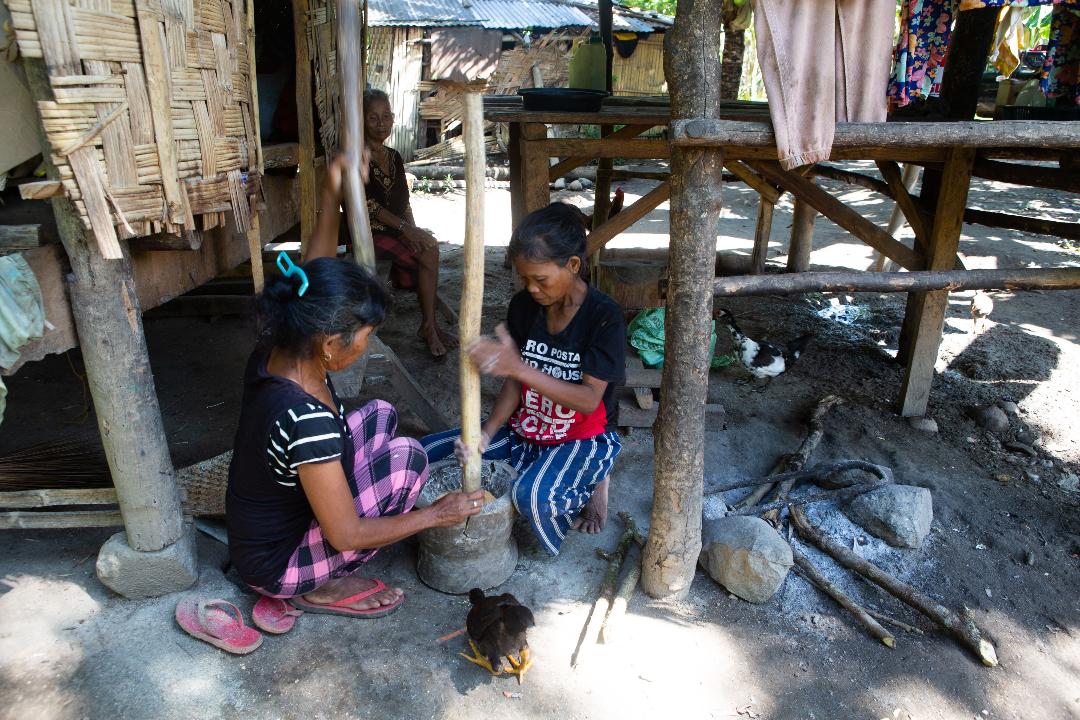
CORN POUND.jpg

INDIGENOUS women pound corn using a traditional method in the hinterlands of Ampatuan, Maguindanao. (Keith Bacongco)

In a report released for the 76th celebration of the Universal Declaration of Human Rights on Tuesday, Dec. 10, the Legal Rights and Natural Resources Center (LRC) pointed out that the global push for energy transition and climate solutions will have an adverse effect on indigenous communities.

“Industries capitalizing on the ‘transition boom’ are increasingly targeting IP territories for resource extraction. About 56 percent of the government’s designated Competitive Renewable Energy Zones (CREZ) will potentially overlap with indigenous territories,” the report said.

“Virtually all the cases we monitored in this report involved conflicts with ancestral domains, with over 55 percent involving active violations of the Free, Prior, and Informed Consent (FPIC) process, which is enshrined in the Indigenous Peoples Rights Act,” said Leon Dulce, LRC campaigns support and linkages coordinator.

Dulce added that as the Marcos administration wants to fast-track many of these projects through policies, it could also undermine the FPIC process and other mechanisms for indigenous public participation.

“Among these include railroaded revisions to the FPIC guidelines, in particular cutting short FPIC for energy projects, and proposed new FPIC protocols for forest carbon credits,” he said.

The LRC said that conflicts over ancestral domains and indigenous territories remain central to the existential crises confronting indigenous cultural communities and indigenous peoples.

“Currently, only one in every four listed Certificates of Ancestral Domain Titles (CADTs) have received full approval. The remaining 78 percent are still pending in the land registration process, effectively denying these territories the legal protections they require.”

The LRC pointed out that one of the factors that has contributed to the delay is the impasse on the joint administrative order for tenurial instruments, which further aggravates the conflicts over land claims.

As the government continues to implement development projects in indigenous territories, it has adversely affected the tribal communities, pushing them to the fringes.

The group also revealed that at least 237,931 IPs have been affected by at least 73 recorded human rights violations linked to land conflict in their territories in 2024.

The LRC pointed out that there is a staggering 428 percent increase compared to the previous two-year period.

The report, which is dubbed as the 2024 State of Indigenous People’s Address Report, the group noted that the reported increase was mostly due to conflicts over ancestral domains.

It added that the increase on alleged human rights violations against the tribes only goes to show the continuing lack of recognition and respect IPs struggle on their rights to their territories.

The LRC appealed to the government to reverse its fast-tracking policy for energy transition projects. “Instead prioritize the processing of CADTs and safeguarding FPIC rights and procedures, which can protect Indigenous territories and the environmentally critical landscapes ensconced in them.”

Related Tags

Indigenous People
ADVERTISEMENT
.most-popular .layout-ratio{ padding-bottom: 79.13%; } @media (min-width: 768px) and (max-width: 1024px) { .widget-title { font-size: 15px !important; } }

{{ articles_filter_1561_widget.title }}

.most-popular .layout-ratio{ padding-bottom: 79.13%; } @media (min-width: 768px) and (max-width: 1024px) { .widget-title { font-size: 15px !important; } }

{{ articles_filter_1562_widget.title }}

.most-popular .layout-ratio{ padding-bottom: 79.13%; } @media (min-width: 768px) and (max-width: 1024px) { .widget-title { font-size: 15px !important; } }

{{ articles_filter_1563_widget.title }}

{{ articles_filter_1564_widget.title }}

.mb-article-details { position: relative; } .mb-article-details .article-body-preview, .mb-article-details .article-body-summary{ font-size: 17px; line-height: 30px; font-family: "Libre Caslon Text", serif; color: #000; } .mb-article-details .article-body-preview iframe , .mb-article-details .article-body-summary iframe{ width: 100%; margin: auto; } .read-more-background { background: linear-gradient(180deg, color(display-p3 1.000 1.000 1.000 / 0) 13.75%, color(display-p3 1.000 1.000 1.000 / 0.8) 30.79%, color(display-p3 1.000 1.000 1.000) 72.5%); position: absolute; height: 200px; width: 100%; bottom: 0; display: flex; justify-content: center; align-items: center; padding: 0; } .read-more-background a{ color: #000; } .read-more-btn { padding: 17px 45px; font-family: Inter; font-weight: 700; font-size: 18px; line-height: 16px; text-align: center; vertical-align: middle; border: 1px solid black; background-color: white; } .hidden { display: none; }
function initializeAllSwipers() { // Get all hidden inputs with cms_article_id document.querySelectorAll('[id^="cms_article_id_"]').forEach(function (input) { const cmsArticleId = input.value; const articleSelector = '#article-' + cmsArticleId + ' .body_images'; const swiperElement = document.querySelector(articleSelector); if (swiperElement && !swiperElement.classList.contains('swiper-initialized')) { new Swiper(articleSelector, { loop: true, pagination: false, navigation: { nextEl: '#article-' + cmsArticleId + ' .swiper-button-next', prevEl: '#article-' + cmsArticleId + ' .swiper-button-prev', }, }); } }); } setTimeout(initializeAllSwipers, 3000); const intersectionObserver = new IntersectionObserver( (entries) => { entries.forEach((entry) => { if (entry.isIntersecting) { const newUrl = entry.target.getAttribute("data-url"); if (newUrl) { history.pushState(null, null, newUrl); let article = entry.target; // Extract metadata const author = article.querySelector('.author-section').textContent.replace('By', '').trim(); const section = article.querySelector('.section-info ').textContent.replace(' ', ' '); const title = article.querySelector('.article-title h1').textContent; // Parse URL for Chartbeat path format const parsedUrl = new URL(newUrl, window.location.origin); const cleanUrl = parsedUrl.host + parsedUrl.pathname; // Update Chartbeat configuration if (typeof window._sf_async_config !== 'undefined') { window._sf_async_config.path = cleanUrl; window._sf_async_config.sections = section; window._sf_async_config.authors = author; } // Track virtual page view with Chartbeat if (typeof pSUPERFLY !== 'undefined' && typeof pSUPERFLY.virtualPage === 'function') { try { pSUPERFLY.virtualPage({ path: cleanUrl, title: title, sections: section, authors: author }); } catch (error) { console.error('ping error', error); } } // Optional: Update document title if (title && title !== document.title) { document.title = title; } } } }); }, { threshold: 0.1 } ); function showArticleBody(button) { const article = button.closest("article"); const summary = article.querySelector(".article-body-summary"); const body = article.querySelector(".article-body-preview"); const readMoreSection = article.querySelector(".read-more-background"); // Hide summary and read-more section summary.style.display = "none"; readMoreSection.style.display = "none"; // Show the full article body body.classList.remove("hidden"); } document.addEventListener("DOMContentLoaded", () => { let loadCount = 0; // Track how many times articles are loaded const offset = [1, 2, 3, 4, 5, 6, 7, 8, 9, 10]; // Offset values const currentUrl = window.location.pathname.substring(1); let isLoading = false; // Prevent multiple calls if (!currentUrl) { console.log("Current URL is invalid."); return; } const sentinel = document.getElementById("load-more-sentinel"); if (!sentinel) { console.log("Sentinel element not found."); return; } function isSentinelVisible() { const rect = sentinel.getBoundingClientRect(); return ( rect.top < window.innerHeight && rect.bottom >= 0 ); } function onScroll() { if (isLoading) return; if (isSentinelVisible()) { if (loadCount >= offset.length) { console.log("Maximum load attempts reached."); window.removeEventListener("scroll", onScroll); return; } isLoading = true; const currentOffset = offset[loadCount]; window.loadMoreItems().then(() => { let article = document.querySelector('#widget_1690 > div:nth-last-of-type(2) article'); intersectionObserver.observe(article) loadCount++; }).catch(error => { console.error("Error loading more items:", error); }).finally(() => { isLoading = false; }); } } window.addEventListener("scroll", onScroll); });

Sign up by email to receive news.