







Not just Bonifacio: Tejeros saw more conflict than what we know
By Dom Galeon


(Part I)
Whenever one talks about the political birth of a nation, one inevitably mentions the people behind it. More often than not, instead of talking about a nation’s mother who gave birth to it, we end up with forefathers. Whether that’s a reflection of historical misogyny, a question of terminologies, or perhaps something else entirely, the fact is nations have more political forefathers than birth mothers.
That year, 1897, was a crucial one. A revolutionary government was put up in March 1897, after an election held at a hacienda in Tejeros. For many, this was a defining moment in the history of the revolution—when the two councils of the Katipunan in Cavite merged into one. This, supposedly, was a development towards unity. Yet, this much celebrated episode in the history of the revolution that began in 1896 reveals much more than just a united struggle for independence.
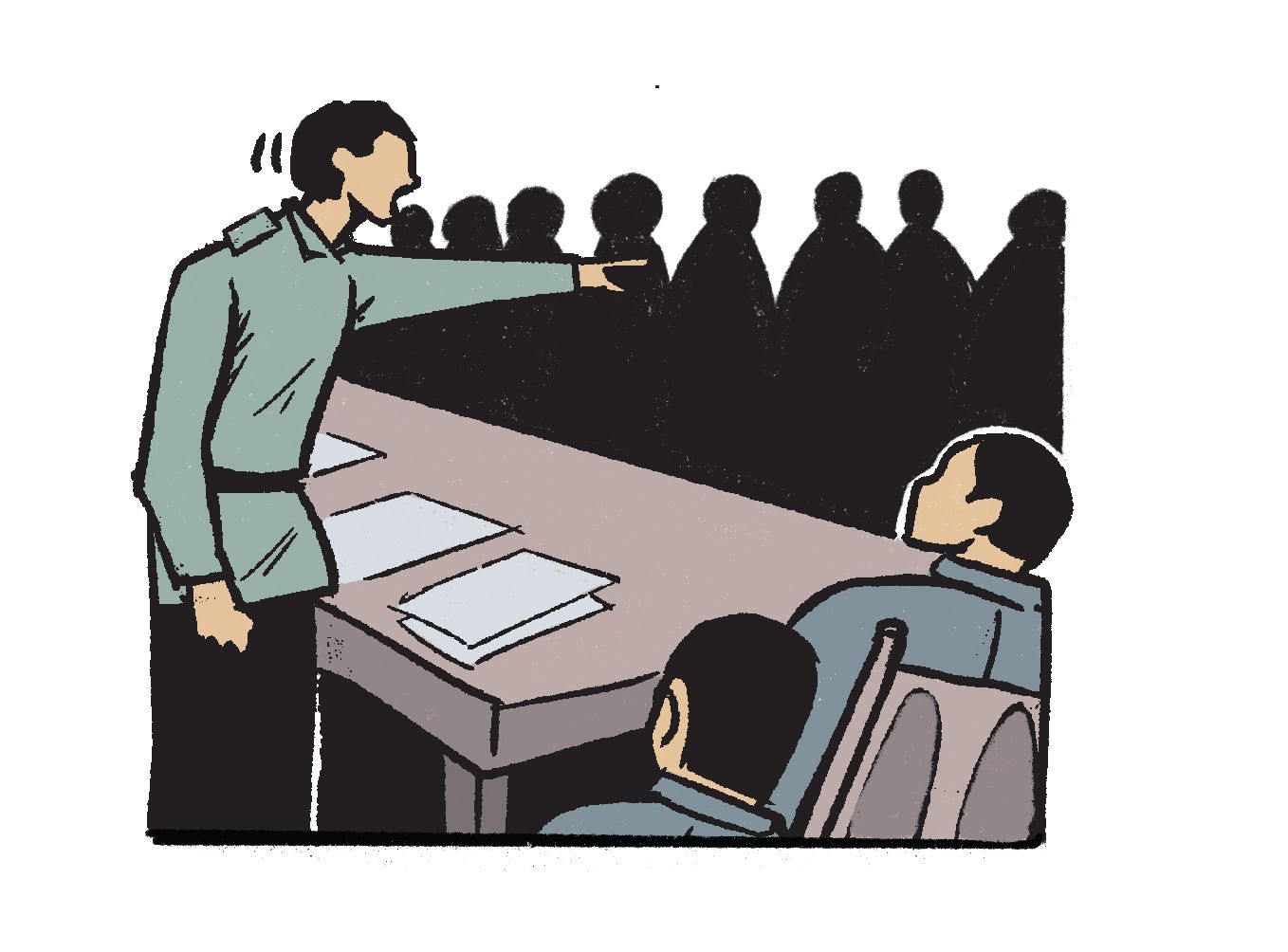
Perhaps the most famous conflict that happened at the Tejeros Convention is the one between Andres Bonifacio and Daniel Tirona. Many historians have already discussed the drama between the two, but examining other primary sources reveal that there were many other conflicts or heated arguments that happened during the assembly. Let’s talk about these other instances here. Keep in mind, though, that we’re looking at the different versions of the Tejeros Convention as told by various primary sources.
Protests
According to the account by a certain Telesforo Canseco, an employee of the Dominicans who used to run the hacienda, written sometime in October 1897, there were two disturbances that took place during the assembly. Unlike in the more popular accounts of Artemio Ricarte and Santiago Alvarez, both of which were written many years after Tejeros, Canseco’s recount what happened at the assembly not as a one-day but as a three-day affair.
The first disturbance supposedly occurred on the first day, when Emilio Aguinaldo was elected president. Several of those present—specifically Mariano Alvarez (head of the Magdiwang council), Ariston Villanueva, and Bonifacio — “protestaron de la elección,” contested the results.
On the second day, the second conflict happened, Canseco said. When the voting was finally done through ballots, Aguinaldo still won as president, followed by the election of Mariano Trias as vice-president, and Emiliano Riego de Dios as minister of war. It was here that another clash erupted, this time between Villanueva and Daniel Tirona, who both served as ministers of war for the Magdiwang and the Magdaló, respectively.
Now that there was only one revolutionary government, they no longer held their posts.
According to Canseco, it would seem that this was the cause of their argument. The two blamed one another for losing their previous positions, and the argument must have been rather heated, for each of them supposedly “echando mano a los revolveres,” wrote Canseco. They reached for their revolvers. Nothing came of it, fortunately, because they were stopped by the others present, and the elections had to be postponed for a third day.
Civil War brews
A second primary source that mentioned a conflict during the Tejeros Convention was Carlos Ronquillo. A member of the Magdaló council, Ronquillo served as secretary to Aguinaldo and was among those exiled with him to Hong Kong after the Pact of Biak-na-Bato. It was there, in 1898, when Ronquillo wrote his memoirs of the Revolution, which he titled ‘Ilang Talata tungkol sa Paghihimagsik nang 1896-1897’.
According to his version, the Tejeros Convention also happened over a series of several days. The conflict he recorded involved almost the same set of people Canseco mentioned. The older Alvarez, Villanueva, Bonifacio, and Diego Mojica,
Ronquillo wrote, did not agree with what was decided at the first meeting, which was to elect officers for a unified revolutionary government. To show their disagreement, they walked out of the meeting, while everyone else was busy talking about what to do.
Yet even there, tensions remained high. According to Ronquillo, the following day, when the assembly had moved to Tanza, more rumors came. Alvarez and Villanueva, it seemed, were preparing troops to storm the assembly to prevent it from holding a session.
The panicked townspeople were comforted by Jacinto Pulido, president of Tanza, assuring them that his troops were stationed around the meeting place in order to quell any possible threat. In like manner, Santiago Rillo, the representative from Batangas, assured those present that the 7,000 Batagueños scattered around Magdiwang territory could fight any threat from Alvarez and Villanueva. Reassured, the assembly continued. Fortunately, the potential conflict—which was nothing short of a mini civil war between the revolutionists (our forefathers!)—did not happen.
More conflict
Moving on to a third primary source that narrated disturbances during the assembly, this time written by Antonio Montenegro, a Manileño who came to Cavite and became a member of the Magdaló council. In 1934, Montenegro wrote his account of what happened in Tejeros, which is excerpted in Isagani Medina’s introduction to the 1996 reprint of Ronquillo’s memoirs. This excerpted portion showed two instances of conflict among the participants in the Tejeros Convention.
According to Montenegro, the assembly also took at least two days. On the first day, Aguinaldo was elected president, and others were also put in the other posts. But there was a conflict during the election of the secretary of interior. Montenegro did not elaborate on the details of this confusion, though, except that it seemed to have been about misunderstandings between the Magdiwang and the Magdaló. The first day, according to Montenegro, ended with much confusion on both sides.
The following day, when the assembly reconvened, it was greeted with another conflict. The events of the previous day were discussed, and those present were divided into two groups: those who were in favor of accepting the results of the previous day’s elections, and those who were against it.
Montenegro found himself in the middle of it all. He was in favor of keeping the previous day’s results, noting that there was only a problem with the election for secretary of interior and not for the other positions. Montenegro’s statement angered Villanueva, and his son Andres, and the Supremo Bonifacio.
At the height of the confusion and conflict, the assembly was divided into two: those who were in favor of Montenegro (those from Imus and also those who were under Trias), and those who were against him. It would have almost exploded into a gunfight, had Jose Rizal’s supposed wife, Jospehine Bracken, and his younger sister Trining not come to stop these men. They took Montenegro out of the assembly and put him in a room where, he noted, the two women gave him water to drink. Then, according to Montenegro’s account, it would seem that they continued the meeting after all the fuss.
A rough start
What these sources show is that, contrary to what has been popularized in history lessons, the Tejeros Convention saw not just an angry Bonifacio but a whole lot of angry revolutionists.
If these primary sources are to be believed, the foundations of our first serious attempts at actual freedom seem to be more unstable than we believe. With such a rocky start, it is not surprising that whatever freedom the revolutionists of 1897 achieved was shortlived.
(A version of this article was published in the June 2018 issue of the Philippine Panorama.)