

ADVERTISEMENT

US offers ASEAN members help to protect their sovereignty

Published Nov 26, 2024 05:26 am

The United States has offered members of the Association of Southeast Asian Nations (ASEAN) its help to bolster their domain awareness to address cases of illegal intrusions and coercion.

According to the US Defense Department, securing domain awareness is a foundational aspect of supporting its Southeast Asian allies' sovereignty.

And there are four aspects Washington will do it—in air, maritime, cyberspace and information environment.

In its defense vision statement for a "prosperous and secure Southeast Asia," the Defense Department said the US will continue its ongoing efforts to improve the capability of Southeast Asian partners to detect and identify activities within their sovereign airspace, their exclusive economic zones (EEZs), and their Air Defense Identification Zones.
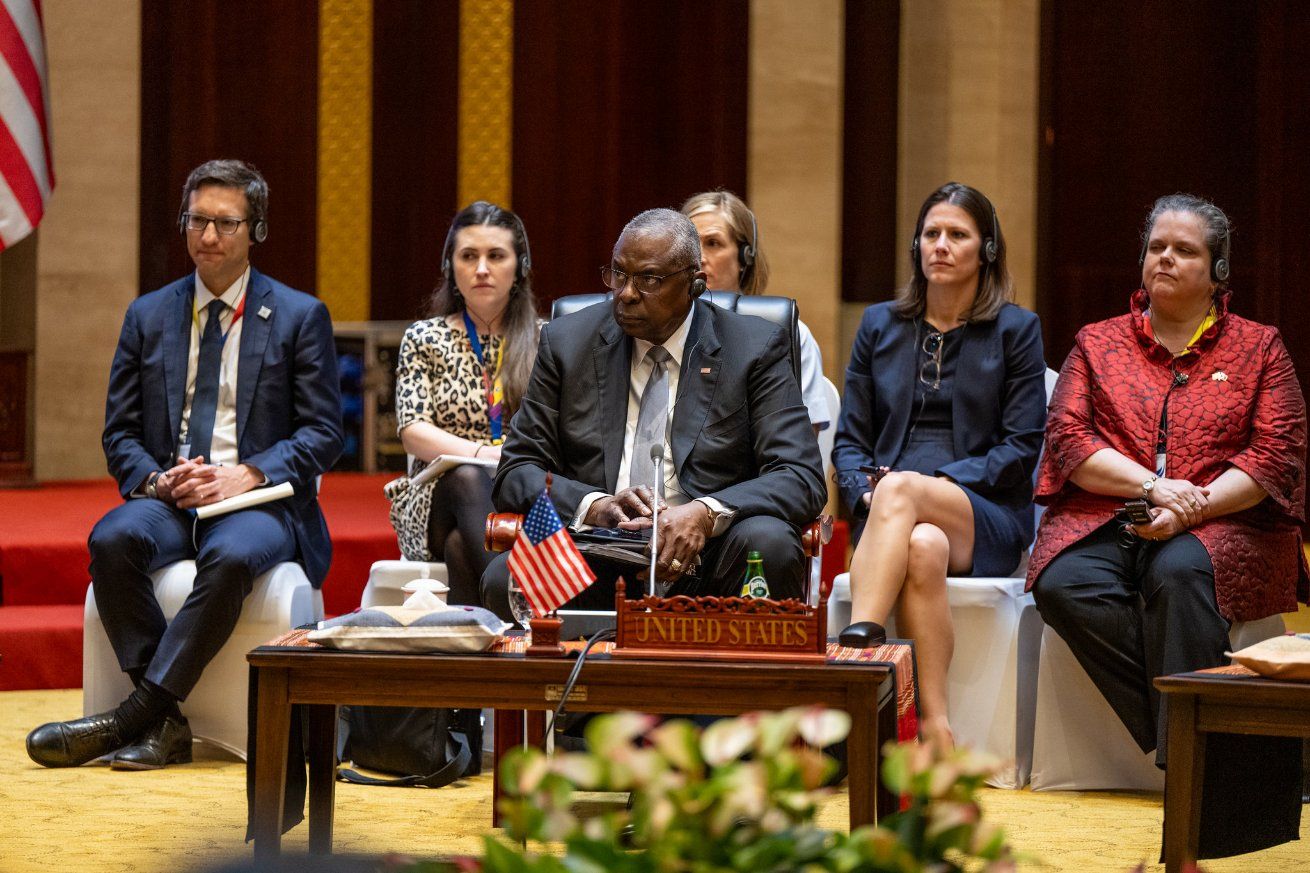
Gc8hQ7ZaAAMQAmc.jpeg
Photo from US Defense Secretary Lloyd Austin's X page

Relevant information that will be gathered will then be fused within their government information systems as the US will encourage them to exercise their sovereign authorities, commitments to international agreements, and their ability to share the information regionally.

"The United States' vision for defense capacity building reflects the history of US investment in the Indo-Pacific's regional security architecture, which has supported the sovereignty, self-determination, and defense capabilities of Southeast Asian countries," it said.

The Defense Department also said the US will enhance engagement with the ASEAN Defense Ministers' Meeting (ADMM) Cybersecurity and Information Centre of Excellence (ACICE) in Singapore through programs, including table-top exercises, to identify capacity gaps in regional response to cyber threats and training courses for cyber security professionals.

​"The United States aims to support a Southeast Asian region free of coercion where safety, security, sovereignty, self-determination, and prosperity are shepherded by ASEAN centrality​," the US Defense Department said in taking the steps.

​"U​S' defense cooperation with Southeast Asian allies and partners, centered on ASEAN and its member states, seeks to empower the region through practical cooperation on building capabilities, exchanging expertise, ensuring free trade, and bolstering sovereignty, all underscored with collaboration and mutual respect​," it added.

The US, according to the department, will also enhance maritime capacity building programs, focusing on using commercially available technologies to expand maritime domain awareness, continuous presence, and scientific research through unmanned systems complemented by artificial intelligence and machine learning tools to maximize awareness.

"Experts on maritime domain awareness will identify opportunities to support regional cooperation and synergies in this area, enabling Southeast Asian partners to protect their maritime territories more effectively under international law," the department said.

On top of the annual bilateral and multilateral military exercises the US has with Southeast Asian countries, Washington will also convene a second ASEAN-US maritime exercise in 2025.

"We will also work to develop targeted capabilities through US participation in the ADMM-Plus Expert Working Groups and related training exercise," it said.

"Finally, we will work to expand the cooperation of Southeast Asian allies and partners through multilateral exercises and activities, building interoperability and relationships that promote resilience and peace," it added.

Related Tags

Association of Southeast Asian Nations exclusive economic zone (EEZ) UNITED STATES GOVERNMENT Indo-Pacific Region
ADVERTISEMENT
.most-popular .layout-ratio{ padding-bottom: 79.13%; } @media (min-width: 768px) and (max-width: 1024px) { .widget-title { font-size: 15px !important; } }

{{ articles_filter_1561_widget.title }}

.most-popular .layout-ratio{ padding-bottom: 79.13%; } @media (min-width: 768px) and (max-width: 1024px) { .widget-title { font-size: 15px !important; } }

{{ articles_filter_1562_widget.title }}

.most-popular .layout-ratio{ padding-bottom: 79.13%; } @media (min-width: 768px) and (max-width: 1024px) { .widget-title { font-size: 15px !important; } }

{{ articles_filter_1563_widget.title }}

{{ articles_filter_1564_widget.title }}

.mb-article-details { position: relative; } .mb-article-details .article-body-preview, .mb-article-details .article-body-summary{ font-size: 17px; line-height: 30px; font-family: "Libre Caslon Text", serif; color: #000; } .mb-article-details .article-body-preview iframe , .mb-article-details .article-body-summary iframe{ width: 100%; margin: auto; } .read-more-background { background: linear-gradient(180deg, color(display-p3 1.000 1.000 1.000 / 0) 13.75%, color(display-p3 1.000 1.000 1.000 / 0.8) 30.79%, color(display-p3 1.000 1.000 1.000) 72.5%); position: absolute; height: 200px; width: 100%; bottom: 0; display: flex; justify-content: center; align-items: center; padding: 0; } .read-more-background a{ color: #000; } .read-more-btn { padding: 17px 45px; font-family: Inter; font-weight: 700; font-size: 18px; line-height: 16px; text-align: center; vertical-align: middle; border: 1px solid black; background-color: white; } .hidden { display: none; }
function initializeAllSwipers() { // Get all hidden inputs with cms_article_id document.querySelectorAll('[id^="cms_article_id_"]').forEach(function (input) { const cmsArticleId = input.value; const articleSelector = '#article-' + cmsArticleId + ' .body_images'; const swiperElement = document.querySelector(articleSelector); if (swiperElement && !swiperElement.classList.contains('swiper-initialized')) { new Swiper(articleSelector, { loop: true, pagination: false, navigation: { nextEl: '#article-' + cmsArticleId + ' .swiper-button-next', prevEl: '#article-' + cmsArticleId + ' .swiper-button-prev', }, }); } }); } setTimeout(initializeAllSwipers, 3000); const intersectionObserver = new IntersectionObserver( (entries) => { entries.forEach((entry) => { if (entry.isIntersecting) { const newUrl = entry.target.getAttribute("data-url"); if (newUrl) { history.pushState(null, null, newUrl); let article = entry.target; // Extract metadata const author = article.querySelector('.author-section').textContent.replace('By', '').trim(); const section = article.querySelector('.section-info ').textContent.replace(' ', ' '); const title = article.querySelector('.article-title h1').textContent; // Parse URL for Chartbeat path format const parsedUrl = new URL(newUrl, window.location.origin); const cleanUrl = parsedUrl.host + parsedUrl.pathname; // Update Chartbeat configuration if (typeof window._sf_async_config !== 'undefined') { window._sf_async_config.path = cleanUrl; window._sf_async_config.sections = section; window._sf_async_config.authors = author; } // Track virtual page view with Chartbeat if (typeof pSUPERFLY !== 'undefined' && typeof pSUPERFLY.virtualPage === 'function') { try { pSUPERFLY.virtualPage({ path: cleanUrl, title: title, sections: section, authors: author }); } catch (error) { console.error('ping error', error); } } // Optional: Update document title if (title && title !== document.title) { document.title = title; } } } }); }, { threshold: 0.1 } ); function showArticleBody(button) { const article = button.closest("article"); const summary = article.querySelector(".article-body-summary"); const body = article.querySelector(".article-body-preview"); const readMoreSection = article.querySelector(".read-more-background"); // Hide summary and read-more section summary.style.display = "none"; readMoreSection.style.display = "none"; // Show the full article body body.classList.remove("hidden"); } document.addEventListener("DOMContentLoaded", () => { let loadCount = 0; // Track how many times articles are loaded const offset = [1, 2, 3, 4, 5, 6, 7, 8, 9, 10]; // Offset values const currentUrl = window.location.pathname.substring(1); let isLoading = false; // Prevent multiple calls if (!currentUrl) { console.log("Current URL is invalid."); return; } const sentinel = document.getElementById("load-more-sentinel"); if (!sentinel) { console.log("Sentinel element not found."); return; } function isSentinelVisible() { const rect = sentinel.getBoundingClientRect(); return ( rect.top < window.innerHeight && rect.bottom >= 0 ); } function onScroll() { if (isLoading) return; if (isSentinelVisible()) { if (loadCount >= offset.length) { console.log("Maximum load attempts reached."); window.removeEventListener("scroll", onScroll); return; } isLoading = true; const currentOffset = offset[loadCount]; window.loadMoreItems().then(() => { let article = document.querySelector('#widget_1690 > div:nth-last-of-type(2) article'); intersectionObserver.observe(article) loadCount++; }).catch(error => { console.error("Error loading more items:", error); }).finally(() => { isLoading = false; }); } } window.addEventListener("scroll", onScroll); });

Sign up by email to receive news.