

ADVERTISEMENT

Spain to grant residency, work permits to hundreds of thousands of migrants in the country illegally

Published Nov 21, 2024 12:02 am

MADRID (AP) — Spain will grant residency and work permits to about 300,000 migrants living in the country illegally each year for the next three years, the country's migration minister said Wednesday.
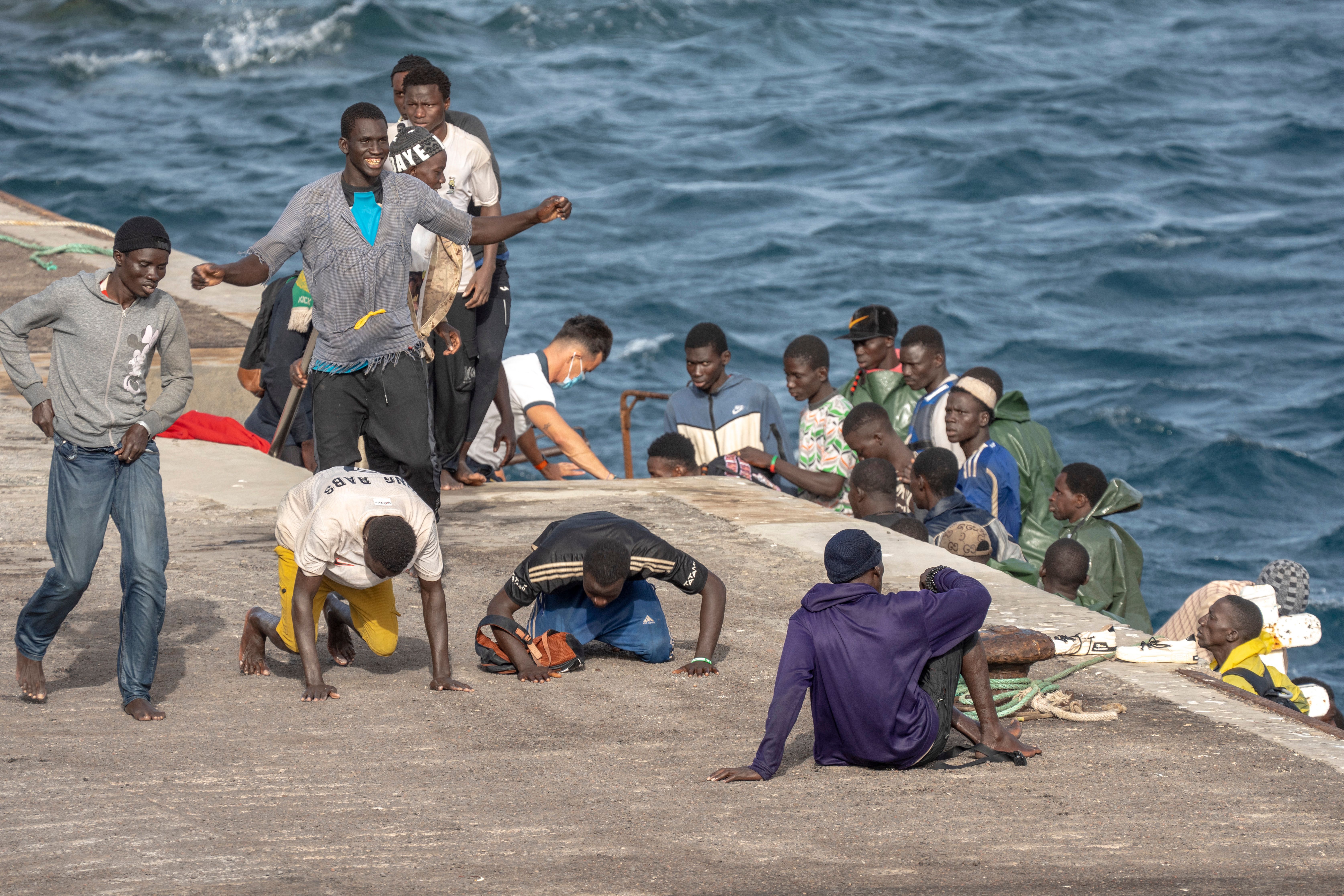
AP24325511458135.jpg

FILE - Migrants react as they arrive at the port in La Restinga on the Canary island of El Hierro, Spain, on, Aug. 19, 2024. (AP Photo/Maria Ximena, File)


The policy will take effect next May and aims to expand the country's aging workforce. Spain has remained largely open to receiving migrants even as other European nations seek to tighten their borders to illegal crossings and asylum seekers.

Spain needs around 250,000 registered foreign workers a year to maintain its welfare state, Migration Minister Elma Saiz said in an interview on Wednesday. She contended that the legalization policy is not aimed solely at “cultural wealth and respect for human rights, it’s also prosperity.”

“Today, we can say Spain is a better country,” Saiz told national broadcaster Radio Nacional de España.

Spain's Prime Minister Pedro Sánchez has often described his government's migration policies as a means to combat the country's low birthrate.

The new policy, approved Tuesday by Sánchez's leftist minority coalition government, simplifies administrative procedures for short and long-term visas and provides migrants with additional labor protections. It extends a visa previously offered to job-seekers for three months to one year.

In August, Sánchez visited three West African nations in an effort to address irregular migration to Spain’s Canary Islands.

The archipelago off the coast of Africa is seen by many as a step toward continental Europe with young men from Mali, Senegal, Mauritania and elsewhere embarking on dangerous sea voyages there seeking better job opportunities abroad or fleeing violence and political instability at home.

By mid-November, some 54,000 migrants had reached Spain this year by sea or land, according to the country's Interior Ministry. The exact number of foreigners living in Spain illegally is not clear.

Many such migrants make a living in Spain's underground economy as fruit pickers, caretakers, delivery drivers, or other low-paid but essential jobs often passed over by Spaniards.

Without legal protections, they can be vulnerable to exploitation and abuse. Saiz said the new policy would help prevent such abuse and "serve to combat mafias, fraud and the violation of rights."

Spain's economy is among the fastest-growing in the European Union this year, boosted in part by a strong rebound in tourism after the pandemic.

In 2023, Spain issued 1.3 million visas to foreigners, according to the government.

Related Tags

WORLDNEWS
ADVERTISEMENT
.most-popular .layout-ratio{ padding-bottom: 79.13%; } @media (min-width: 768px) and (max-width: 1024px) { .widget-title { font-size: 15px !important; } }

{{ articles_filter_1561_widget.title }}

.most-popular .layout-ratio{ padding-bottom: 79.13%; } @media (min-width: 768px) and (max-width: 1024px) { .widget-title { font-size: 15px !important; } }

{{ articles_filter_1562_widget.title }}

.most-popular .layout-ratio{ padding-bottom: 79.13%; } @media (min-width: 768px) and (max-width: 1024px) { .widget-title { font-size: 15px !important; } }

{{ articles_filter_1563_widget.title }}

{{ articles_filter_1564_widget.title }}

.mb-article-details { position: relative; } .mb-article-details .article-body-preview, .mb-article-details .article-body-summary{ font-size: 17px; line-height: 30px; font-family: "Libre Caslon Text", serif; color: #000; } .mb-article-details .article-body-preview iframe , .mb-article-details .article-body-summary iframe{ width: 100%; margin: auto; } .read-more-background { background: linear-gradient(180deg, color(display-p3 1.000 1.000 1.000 / 0) 13.75%, color(display-p3 1.000 1.000 1.000 / 0.8) 30.79%, color(display-p3 1.000 1.000 1.000) 72.5%); position: absolute; height: 200px; width: 100%; bottom: 0; display: flex; justify-content: center; align-items: center; padding: 0; } .read-more-background a{ color: #000; } .read-more-btn { padding: 17px 45px; font-family: Inter; font-weight: 700; font-size: 18px; line-height: 16px; text-align: center; vertical-align: middle; border: 1px solid black; background-color: white; } .hidden { display: none; }
function initializeAllSwipers() { // Get all hidden inputs with cms_article_id document.querySelectorAll('[id^="cms_article_id_"]').forEach(function (input) { const cmsArticleId = input.value; const articleSelector = '#article-' + cmsArticleId + ' .body_images'; const swiperElement = document.querySelector(articleSelector); if (swiperElement && !swiperElement.classList.contains('swiper-initialized')) { new Swiper(articleSelector, { loop: true, pagination: false, navigation: { nextEl: '#article-' + cmsArticleId + ' .swiper-button-next', prevEl: '#article-' + cmsArticleId + ' .swiper-button-prev', }, }); } }); } setTimeout(initializeAllSwipers, 3000); const intersectionObserver = new IntersectionObserver( (entries) => { entries.forEach((entry) => { if (entry.isIntersecting) { const newUrl = entry.target.getAttribute("data-url"); if (newUrl) { history.pushState(null, null, newUrl); let article = entry.target; // Extract metadata const author = article.querySelector('.author-section').textContent.replace('By', '').trim(); const section = article.querySelector('.section-info ').textContent.replace(' ', ' '); const title = article.querySelector('.article-title h1').textContent; // Parse URL for Chartbeat path format const parsedUrl = new URL(newUrl, window.location.origin); const cleanUrl = parsedUrl.host + parsedUrl.pathname; // Update Chartbeat configuration if (typeof window._sf_async_config !== 'undefined') { window._sf_async_config.path = cleanUrl; window._sf_async_config.sections = section; window._sf_async_config.authors = author; } // Track virtual page view with Chartbeat if (typeof pSUPERFLY !== 'undefined' && typeof pSUPERFLY.virtualPage === 'function') { try { pSUPERFLY.virtualPage({ path: cleanUrl, title: title, sections: section, authors: author }); } catch (error) { console.error('ping error', error); } } // Optional: Update document title if (title && title !== document.title) { document.title = title; } } } }); }, { threshold: 0.1 } ); function showArticleBody(button) { const article = button.closest("article"); const summary = article.querySelector(".article-body-summary"); const body = article.querySelector(".article-body-preview"); const readMoreSection = article.querySelector(".read-more-background"); // Hide summary and read-more section summary.style.display = "none"; readMoreSection.style.display = "none"; // Show the full article body body.classList.remove("hidden"); } document.addEventListener("DOMContentLoaded", () => { let loadCount = 0; // Track how many times articles are loaded const offset = [1, 2, 3, 4, 5, 6, 7, 8, 9, 10]; // Offset values const currentUrl = window.location.pathname.substring(1); let isLoading = false; // Prevent multiple calls if (!currentUrl) { console.log("Current URL is invalid."); return; } const sentinel = document.getElementById("load-more-sentinel"); if (!sentinel) { console.log("Sentinel element not found."); return; } function isSentinelVisible() { const rect = sentinel.getBoundingClientRect(); return ( rect.top < window.innerHeight && rect.bottom >= 0 ); } function onScroll() { if (isLoading) return; if (isSentinelVisible()) { if (loadCount >= offset.length) { console.log("Maximum load attempts reached."); window.removeEventListener("scroll", onScroll); return; } isLoading = true; const currentOffset = offset[loadCount]; window.loadMoreItems().then(() => { let article = document.querySelector('#widget_1690 > div:nth-last-of-type(2) article'); intersectionObserver.observe(article) loadCount++; }).catch(error => { console.error("Error loading more items:", error); }).finally(() => { isLoading = false; }); } } window.addEventListener("scroll", onScroll); });

Sign up by email to receive news.