ADVERTISEMENT

Amid Earth's heat records, scientists report another bump upward in annual carbon emissions

Published Nov 13, 2024 01:07 am

CARBON PHOTO.jpg

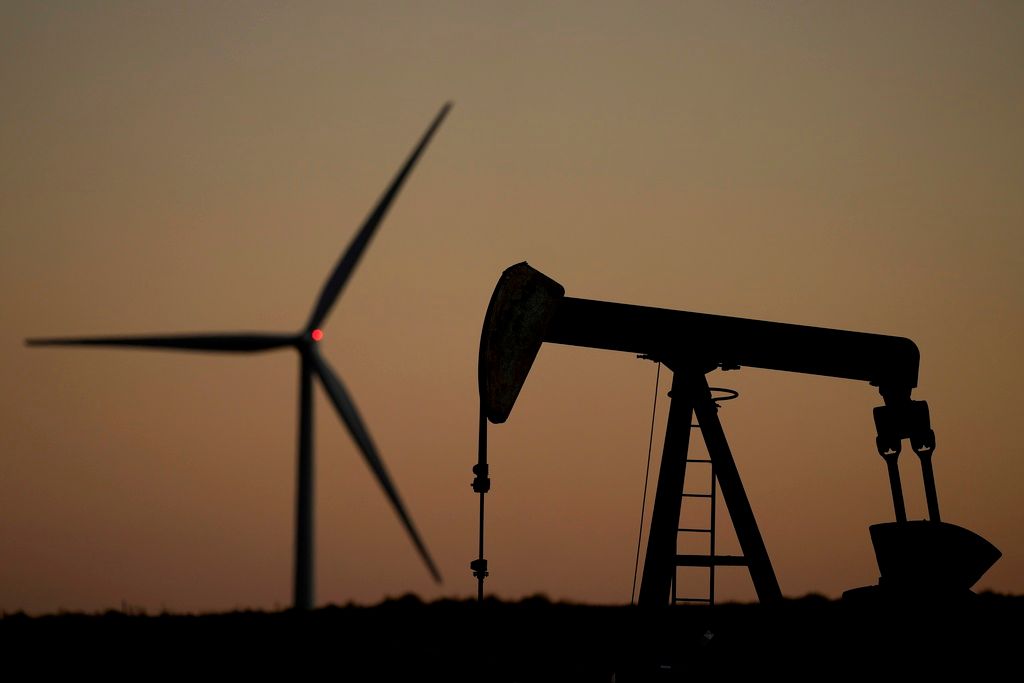
A pumpjack operates in the foreground while a wind turbine at the Buckeye Wind Energy wind farm rises in the distance, Monday, Sept. 30, 2024, near Hays, Kan. (AP Photo/Charlie Riedel)


BAKU, Azerbaijan (AP) — Even as Earth sets new heat records, humanity this year is pumping 330 million tons (300 million metric tons) more carbon dioxide into the air by burning fossil fuels than it did last year.

This year the world is on track to put 41.2 billion tons (37.4 billion metric tons) of the main heat-trapping gas into the atmosphere. It’s a 0.8% increase from 2023, according to Global Carbon Project, a group of scientists who track emissions. Several United Nations reports say the globe must cut emissions by 42% by 2030 to possibly limit warming to an internationally agreed-upon threshold.

This year's pollution increase isn't quite as large as last year's 1.4% jump, scientists said while presenting the data at the United Nations climate talks in Azerbaijan.

If the world continues burning fossil fuels at today's level, it has six years before passing 1.5 degrees Celsius (2.7 Fahrenheit) above pre-industrial levels, the limit agreed to at the 2015 climate talks in Paris, said study co-author Stephen Sitch. The Earth is already at 1.3 degrees Celsius (2.3 Fahrenheit), according to the United Nations.

“We clearly are not doing enough on a global scale to reduce emissions. It’s as simple as that,” said study co-author Mike O'Sullivan, a University of Exeter climate scientist. "We need to massively increase ambition and actually just think outside the box of how we can change things, not be so tied to fossil fuel interests.''

Scientists used reported emissions from rich countries and oil industry data, O’Sullivan said. The 2024 figure includes projections for the last couple months or so. The Global Carbon Project team released figures for the four biggest carbon emitters — China, the United States, India and Europe. It also produced more detailed and final figures for about 200 countries for 2023.

The continued rise in carbon emissions is mostly from the developing world and China. Many analysts had been hoping that China — by far the world's biggest annual carbon polluting nation with 32% of the emissions — would have peaked its carbon dioxide emissions by now. Instead China's emissions rose 0.2% from 2023, with coal pollution up 0.3%, Global Carbon Project calculated. But it could drop to zero in the next two months and is “basically flat,” O'Sullivan said.

That's nothing close to the increase in India, which at 8% of the globe's carbon pollution is third-largest carbon emitter. India's carbon pollution jumped 4.6% in 2024, the scientists said.

Carbon emissions dropped in both the United States and the European Union. They fell 0.6% in the U.S. mostly from reduced coal, oil and cement use. The U.S. was responsible for 13% of the globe's carbon dioxide in 2024. Historically, it's responsible for 21% of the world's emissions since 1950, a figure that matters since the gas persists in the atmosphere for centuries.

Twenty-two nations have shown steady decreases in emissions, O'Sullivan said, singling out the United States as one of those. The biggest emission drops from 2014 to 2023 were in the United States, Japan, Germany, the United Kingdom and Ukraine.

Europe, which accounts for 7% of the world's carbon pollution, saw its carbon dioxide output drop 3.8% from last year — driven by a big cut in coal emissions.

Global carbon emissions are well more than double what they were 50 years ago and 50% than they were in 1999. Emissions have gone up about 6% in the past decade.

“This is a needed reminder of the urgency with which we need to address the cause of the climate crisis," said PowerShift Africa founder Mohamed Adow, who wasn't part of the study. “The problem is the fossil fuel industry is kicking and screaming for us to slow down and to keep them in business for longer. That’s why they poured money into Donald Trump’s election campaign.”

Carbon dioxide from humanity's burning of coal, oil and natural gas amounts to 2.6 million pounds (nearly 1.2 million kilograms) of the heat-trapping gas every second.

Total carbon emissions — which include fossil fuel pollution and land use changes such as deforestation — are basically flat because land emissions are declining, the scientists said. That’s an important and encouraging milestone amid bad news, said University of Pennsylvania climate scientist Michael Mann.

Related Tags

WORLDNEWS
ADVERTISEMENT
.most-popular .layout-ratio{ padding-bottom: 79.13%; } @media (min-width: 768px) and (max-width: 1024px) { .widget-title { font-size: 15px !important; } }

{{ articles_filter_1561_widget.title }}

.most-popular .layout-ratio{ padding-bottom: 79.13%; } @media (min-width: 768px) and (max-width: 1024px) { .widget-title { font-size: 15px !important; } }

{{ articles_filter_1562_widget.title }}

.most-popular .layout-ratio{ padding-bottom: 79.13%; } @media (min-width: 768px) and (max-width: 1024px) { .widget-title { font-size: 15px !important; } }

{{ articles_filter_1563_widget.title }}

{{ articles_filter_1564_widget.title }}

.mb-article-details { position: relative; } .mb-article-details .article-body-preview, .mb-article-details .article-body-summary{ font-size: 17px; line-height: 30px; font-family: "Libre Caslon Text", serif; color: #000; } .mb-article-details .article-body-preview iframe , .mb-article-details .article-body-summary iframe{ width: 100%; margin: auto; } .read-more-background { background: linear-gradient(180deg, color(display-p3 1.000 1.000 1.000 / 0) 13.75%, color(display-p3 1.000 1.000 1.000 / 0.8) 30.79%, color(display-p3 1.000 1.000 1.000) 72.5%); position: absolute; height: 200px; width: 100%; bottom: 0; display: flex; justify-content: center; align-items: center; padding: 0; } .read-more-background a{ color: #000; } .read-more-btn { padding: 17px 45px; font-family: Inter; font-weight: 700; font-size: 18px; line-height: 16px; text-align: center; vertical-align: middle; border: 1px solid black; background-color: white; } .hidden { display: none; }
function initializeAllSwipers() { // Get all hidden inputs with cms_article_id document.querySelectorAll('[id^="cms_article_id_"]').forEach(function (input) { const cmsArticleId = input.value; const articleSelector = '#article-' + cmsArticleId + ' .body_images'; const swiperElement = document.querySelector(articleSelector); if (swiperElement && !swiperElement.classList.contains('swiper-initialized')) { new Swiper(articleSelector, { loop: true, pagination: false, navigation: { nextEl: '#article-' + cmsArticleId + ' .swiper-button-next', prevEl: '#article-' + cmsArticleId + ' .swiper-button-prev', }, }); } }); } setTimeout(initializeAllSwipers, 3000); const intersectionObserver = new IntersectionObserver( (entries) => { entries.forEach((entry) => { if (entry.isIntersecting) { const newUrl = entry.target.getAttribute("data-url"); if (newUrl) { history.pushState(null, null, newUrl); let article = entry.target; // Extract metadata const author = article.querySelector('.author-section').textContent.replace('By', '').trim(); const section = article.querySelector('.section-info ').textContent.replace(' ', ' '); const title = article.querySelector('.article-title h1').textContent; // Parse URL for Chartbeat path format const parsedUrl = new URL(newUrl, window.location.origin); const cleanUrl = parsedUrl.host + parsedUrl.pathname; // Update Chartbeat configuration if (typeof window._sf_async_config !== 'undefined') { window._sf_async_config.path = cleanUrl; window._sf_async_config.sections = section; window._sf_async_config.authors = author; } // Track virtual page view with Chartbeat if (typeof pSUPERFLY !== 'undefined' && typeof pSUPERFLY.virtualPage === 'function') { try { pSUPERFLY.virtualPage({ path: cleanUrl, title: title, sections: section, authors: author }); } catch (error) { console.error('ping error', error); } } // Optional: Update document title if (title && title !== document.title) { document.title = title; } } } }); }, { threshold: 0.1 } ); function showArticleBody(button) { const article = button.closest("article"); const summary = article.querySelector(".article-body-summary"); const body = article.querySelector(".article-body-preview"); const readMoreSection = article.querySelector(".read-more-background"); // Hide summary and read-more section summary.style.display = "none"; readMoreSection.style.display = "none"; // Show the full article body body.classList.remove("hidden"); } document.addEventListener("DOMContentLoaded", () => { let loadCount = 0; // Track how many times articles are loaded const offset = [1, 2, 3, 4, 5, 6, 7, 8, 9, 10]; // Offset values const currentUrl = window.location.pathname.substring(1); let isLoading = false; // Prevent multiple calls if (!currentUrl) { console.log("Current URL is invalid."); return; } const sentinel = document.getElementById("load-more-sentinel"); if (!sentinel) { console.log("Sentinel element not found."); return; } function isSentinelVisible() { const rect = sentinel.getBoundingClientRect(); return ( rect.top < window.innerHeight && rect.bottom >= 0 ); } function onScroll() { if (isLoading) return; if (isSentinelVisible()) { if (loadCount >= offset.length) { console.log("Maximum load attempts reached."); window.removeEventListener("scroll", onScroll); return; } isLoading = true; const currentOffset = offset[loadCount]; window.loadMoreItems().then(() => { let article = document.querySelector('#widget_1690 > div:nth-last-of-type(2) article'); intersectionObserver.observe(article) loadCount++; }).catch(error => { console.error("Error loading more items:", error); }).finally(() => { isLoading = false; }); } } window.addEventListener("scroll", onScroll); });

Sign up by email to receive news.