ADVERTISEMENT

New maritime security laws fortify PH sovereignty in WPS, territorial waters

Published Nov 11, 2024 04:08 pm

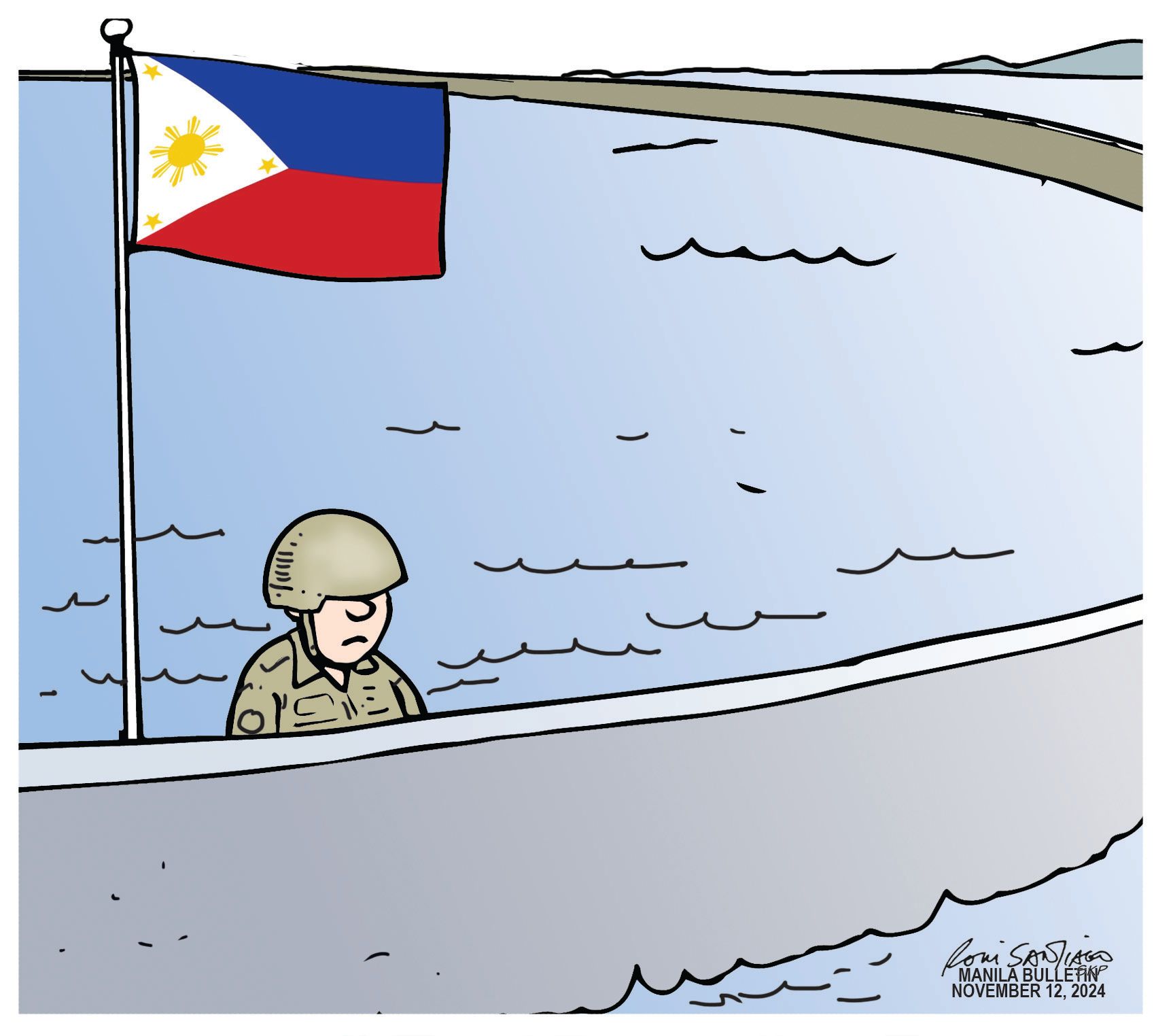
E CARTOON NOV 12, 2024.jpg

The simultaneous enactment of Republic Acts (RA) 12064 and 12065 – after these were signed into law by President Marcos last week – reaffirms the country’s adherence to the archipelagic doctrine and fortifies the nation’s maritime security and sovereignty. Principally authored by Sen. Francis Tolentino, these laws not only reinforce the Philippines’ territorial claims in the West Philippine Sea but also align the country’s legal framework with international law, particularly the United Nations Convention on the Law of the Sea (UNCLOS) and the 2016 arbitral ruling.


Under UNCLOS, the archipelagic doctrine allows the Philippines to define its territorial waters based on straight baselines drawn around the outermost islands of the archipelago, effectively protecting the nation’s maritime zones from encroachment. By enacting RA 12064 and RA 12065, the Philippines has solidified this principle in national law, ensuring that its maritime boundaries are consistent with international standards and the ruling of the Permanent Court of Arbitration (PCA) in 2016.


This doctrine is especially critical in light of continuing tensions in the South China Sea. While the 2016 arbitral ruling invalidated China’s expansive “nine-dash line,” the issue of maritime boundaries in the region has remained contentious. The new laws not only protect Philippine sovereignty over its exclusive economic zone (EEZ) but also enhance the country’s legal standing in future international discussions and disputes.


The importance of these laws extends beyond immediate territorial disputes. They lay a firm foundation for the Philippines’ long-term maritime security. As global geopolitical dynamics shift, the Philippines must ensure its maritime sovereignty is not only recognized but protected. These laws provide a legal framework for the country to assert its rights over vital maritime resources, including fisheries, oil, and natural gas, which are increasingly important as the region’s strategic value grows.


As the country strengthens its position within the context of UNCLOS, it is better equipped to engage in regional security cooperation, fostering stronger ties with allies and partners who share similar interests in maintaining peace and stability in the South China Sea. Amid continuing threats posed by a strong adversary, leading Philippine allies have demonstrated their firm support. The United States, Japan, Australia, India, France and South Korea have been promptly issuing statements of support, conducting joint patrols, and manifesting unalloyed solidarity.


While RA 12064 and RA 12065 represent an important legal victory, much work remains in terms of enforcement and regional diplomacy. The Philippines must continue to strengthen its maritime capabilities and work with ASEAN and other international bodies to ensure that the principles of UNCLOS are upheld. Additionally, the country must actively engage in dialogues with neighboring states, including China, to peacefully resolve disputes through diplomatic and legal means.


The passage of RA 12064 and RA 12065 is a pivotal moment for the Philippines in asserting its maritime sovereignty and reinforcing its commitment to the rule of international law. These laws are not just legal instruments – they are vital to the country’s long-term security, both in terms of territorial integrity and strategic influence in the region. By aligning national policy with international law, the Philippines is taking a significant step toward safeguarding its maritime future.

Related Tags

EDITORIAL
ADVERTISEMENT
.most-popular .layout-ratio{ padding-bottom: 79.13%; } @media (min-width: 768px) and (max-width: 1024px) { .widget-title { font-size: 15px !important; } }

{{ articles_filter_1561_widget.title }}

.most-popular .layout-ratio{ padding-bottom: 79.13%; } @media (min-width: 768px) and (max-width: 1024px) { .widget-title { font-size: 15px !important; } }

{{ articles_filter_1562_widget.title }}

.most-popular .layout-ratio{ padding-bottom: 79.13%; } @media (min-width: 768px) and (max-width: 1024px) { .widget-title { font-size: 15px !important; } }

{{ articles_filter_1563_widget.title }}

{{ articles_filter_1564_widget.title }}

.mb-article-details { position: relative; } .mb-article-details .article-body-preview, .mb-article-details .article-body-summary{ font-size: 17px; line-height: 30px; font-family: "Libre Caslon Text", serif; color: #000; } .mb-article-details .article-body-preview iframe , .mb-article-details .article-body-summary iframe{ width: 100%; margin: auto; } .read-more-background { background: linear-gradient(180deg, color(display-p3 1.000 1.000 1.000 / 0) 13.75%, color(display-p3 1.000 1.000 1.000 / 0.8) 30.79%, color(display-p3 1.000 1.000 1.000) 72.5%); position: absolute; height: 200px; width: 100%; bottom: 0; display: flex; justify-content: center; align-items: center; padding: 0; } .read-more-background a{ color: #000; } .read-more-btn { padding: 17px 45px; font-family: Inter; font-weight: 700; font-size: 18px; line-height: 16px; text-align: center; vertical-align: middle; border: 1px solid black; background-color: white; } .hidden { display: none; }
function initializeAllSwipers() { // Get all hidden inputs with cms_article_id document.querySelectorAll('[id^="cms_article_id_"]').forEach(function (input) { const cmsArticleId = input.value; const articleSelector = '#article-' + cmsArticleId + ' .body_images'; const swiperElement = document.querySelector(articleSelector); if (swiperElement && !swiperElement.classList.contains('swiper-initialized')) { new Swiper(articleSelector, { loop: true, pagination: false, navigation: { nextEl: '#article-' + cmsArticleId + ' .swiper-button-next', prevEl: '#article-' + cmsArticleId + ' .swiper-button-prev', }, }); } }); } setTimeout(initializeAllSwipers, 3000); const intersectionObserver = new IntersectionObserver( (entries) => { entries.forEach((entry) => { if (entry.isIntersecting) { const newUrl = entry.target.getAttribute("data-url"); if (newUrl) { history.pushState(null, null, newUrl); let article = entry.target; // Extract metadata const author = article.querySelector('.author-section').textContent.replace('By', '').trim(); const section = article.querySelector('.section-info ').textContent.replace(' ', ' '); const title = article.querySelector('.article-title h1').textContent; // Parse URL for Chartbeat path format const parsedUrl = new URL(newUrl, window.location.origin); const cleanUrl = parsedUrl.host + parsedUrl.pathname; // Update Chartbeat configuration if (typeof window._sf_async_config !== 'undefined') { window._sf_async_config.path = cleanUrl; window._sf_async_config.sections = section; window._sf_async_config.authors = author; } // Track virtual page view with Chartbeat if (typeof pSUPERFLY !== 'undefined' && typeof pSUPERFLY.virtualPage === 'function') { try { pSUPERFLY.virtualPage({ path: cleanUrl, title: title, sections: section, authors: author }); } catch (error) { console.error('ping error', error); } } // Optional: Update document title if (title && title !== document.title) { document.title = title; } } } }); }, { threshold: 0.1 } ); function showArticleBody(button) { const article = button.closest("article"); const summary = article.querySelector(".article-body-summary"); const body = article.querySelector(".article-body-preview"); const readMoreSection = article.querySelector(".read-more-background"); // Hide summary and read-more section summary.style.display = "none"; readMoreSection.style.display = "none"; // Show the full article body body.classList.remove("hidden"); } document.addEventListener("DOMContentLoaded", () => { let loadCount = 0; // Track how many times articles are loaded const offset = [1, 2, 3, 4, 5, 6, 7, 8, 9, 10]; // Offset values const currentUrl = window.location.pathname.substring(1); let isLoading = false; // Prevent multiple calls if (!currentUrl) { console.log("Current URL is invalid."); return; } const sentinel = document.getElementById("load-more-sentinel"); if (!sentinel) { console.log("Sentinel element not found."); return; } function isSentinelVisible() { const rect = sentinel.getBoundingClientRect(); return ( rect.top < window.innerHeight && rect.bottom >= 0 ); } function onScroll() { if (isLoading) return; if (isSentinelVisible()) { if (loadCount >= offset.length) { console.log("Maximum load attempts reached."); window.removeEventListener("scroll", onScroll); return; } isLoading = true; const currentOffset = offset[loadCount]; window.loadMoreItems().then(() => { let article = document.querySelector('#widget_1690 > div:nth-last-of-type(2) article'); intersectionObserver.observe(article) loadCount++; }).catch(error => { console.error("Error loading more items:", error); }).finally(() => { isLoading = false; }); } } window.addEventListener("scroll", onScroll); });

Sign up by email to receive news.