ADVERTISEMENT

AFP executes amphibious assault, counter-landing drills in Palawan

Published Nov 11, 2024 08:52 am
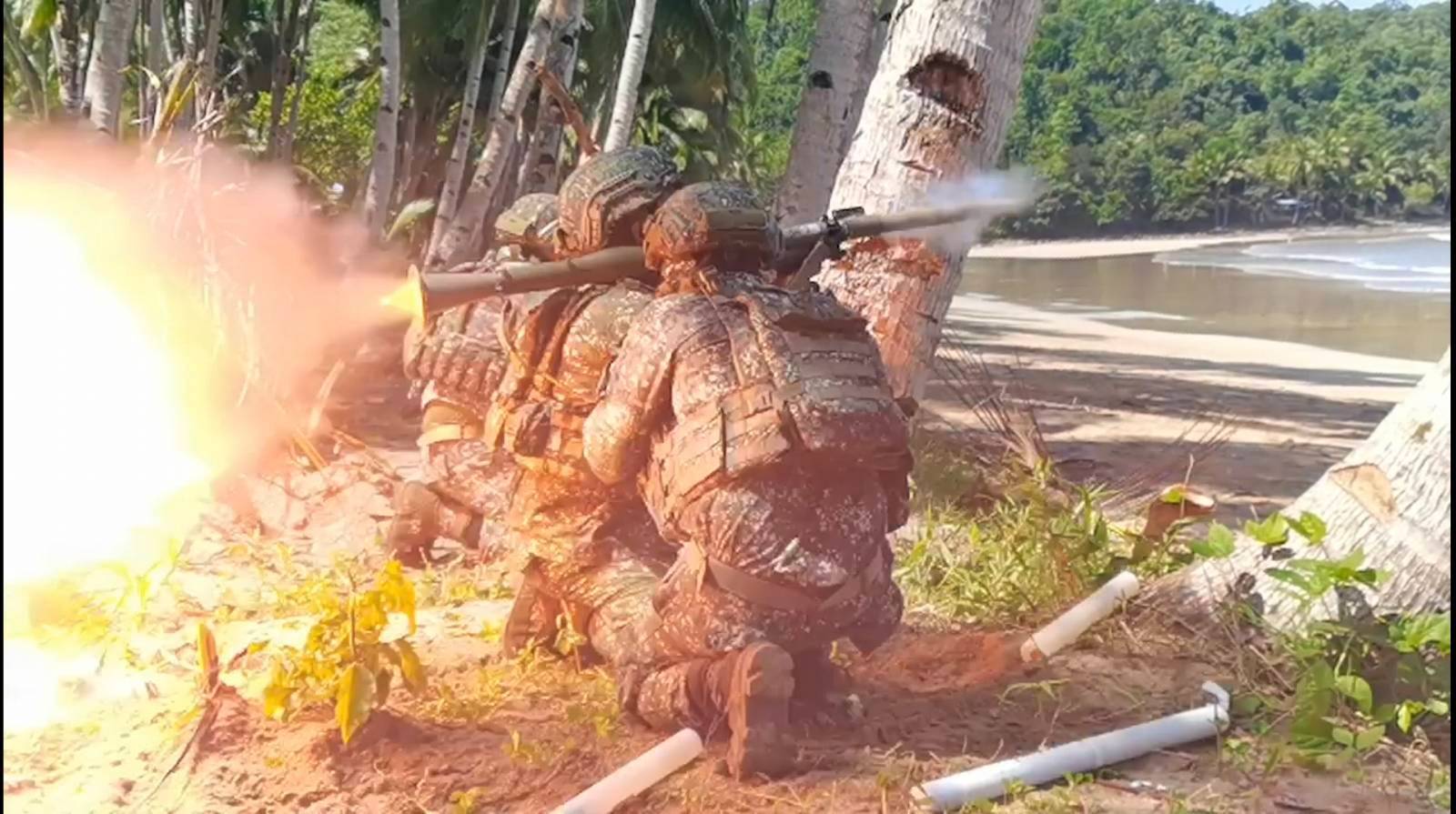
AJEX DAGIT PA.jpg
Armed Forces of the Philippines (AFP) personnel carry out a live-fire demonstration as part of the AFP Joint Exercise (AJEX) DAGIT-PA in Aborlan, Palawan from Nov. 9 to 10, 2024. (Photo: AFP)

The Armed Forces of the Philippines (AFP) said Monday, Nov. 11, that it has conducted a series of amphibious assault and counter-landing operations as part of the AFP Joint Exercise (AJEX) “DAGIT-PA” in Aborlan, Palawan.

Personnel of the Philippine Marine Corps' (PMC) 3rd Marine Brigade combined forces with troops from the Philippine Army, (PA), Philippine Air Force (PAF), and Philippine Navy (PN) to carry out the drills, according to Captain Marissa Meriel, spokesperson of the 3rd Marine Brigade.

The exercises held from Nov. 9 to 10 featured breaching operations and live-fire demonstrations from artillery, armored vehicles, squad rocket launcher light (SRLLs), heavy and light machine guns, and small arms.

It also included air support from the A-29 Super Tucano, showcasing the AFP’s integrated air and ground capabilities.

“The primary objective of the exercise was to focus on improving the interoperability and overall capability development of AFP units, ensuring they can operate seamlessly across joint and combined domains,” Meriel said.
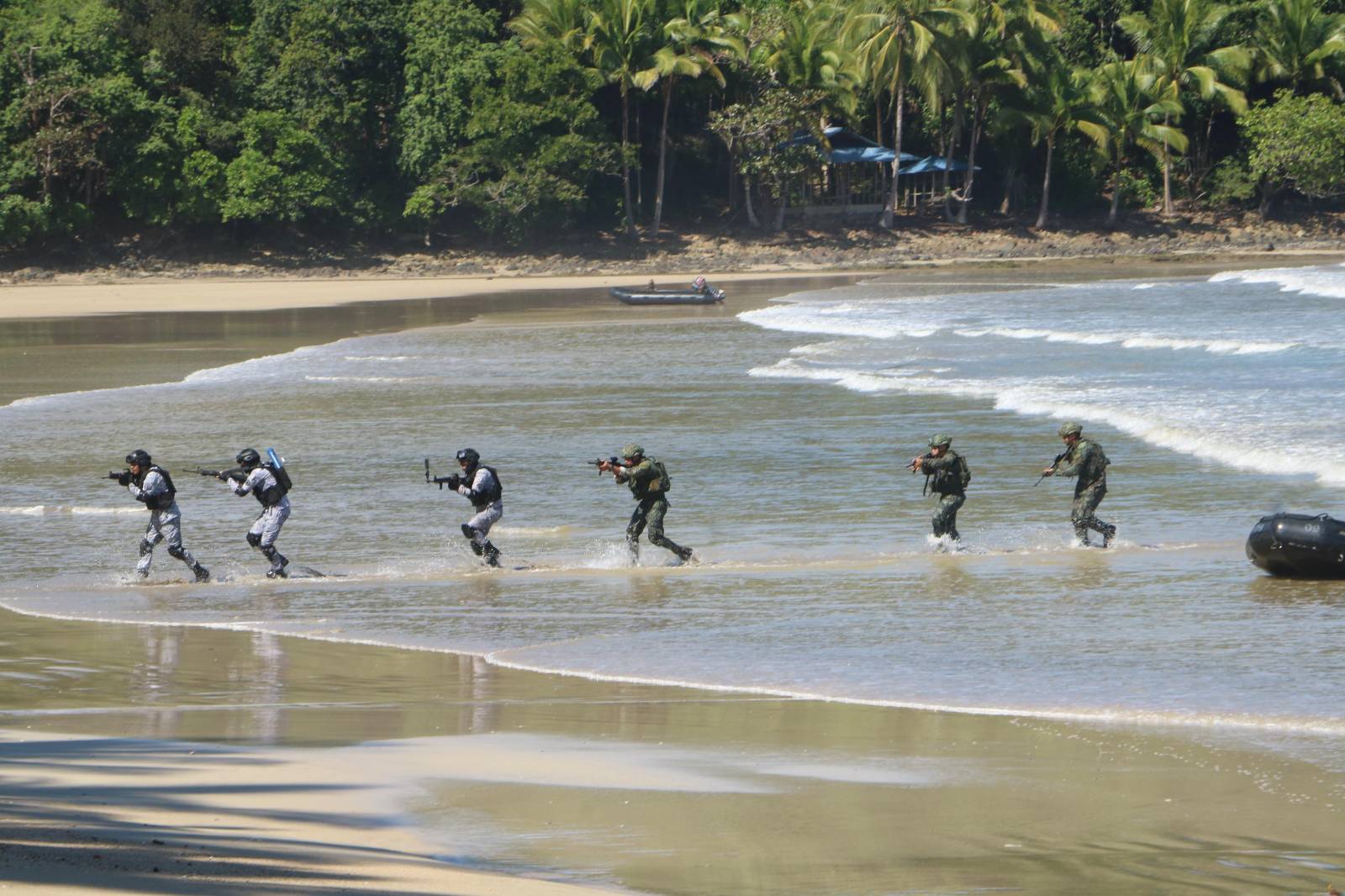
AJEX DAGIT PA 2.jpg
Armed Forces of the Philippines (AFP) personnel carry out breaching operations exercise as part of the AFP Joint Exercise (AJEX) DAGIT-PA in Aborlan, Palawan from Nov. 9 to 10, 2024. (Photo: AFP)

The exercise was among the highlight of the ongoing AJEX DAGIT-PA, the eight iteration of the AFP’s unilateral training program involving its major service units. More than 3,000 troops from the Army, Navy and Air Force are training together for this exercise.

Meriel highlighted the importance of the AJEX DAGIT-PA, saying it plays a critical role in strengthening the AFP’s external and territorial defense posture in support of the operationalization of defense strategies such as the Comprehensive Archipelagic Defense Concept (CADC).

The CADC seeks to develop the military’s capability to protect and secure the entire Philippine territory and exclusive economic zone (EEZ), and ensure that all the bounties of the natural resources within them will be freely reaped by the Filipinos.

“Through these exercises, the AFP improves its capabilities and integrates systems for joint maritime and air domain operations, further enhancing national security and defense readiness,” Meriel said.

Related Tags

Armed Forces of the Philippines AJEX DAGIT-PA
ADVERTISEMENT
.most-popular .layout-ratio{ padding-bottom: 79.13%; } @media (min-width: 768px) and (max-width: 1024px) { .widget-title { font-size: 15px !important; } }

{{ articles_filter_1561_widget.title }}

.most-popular .layout-ratio{ padding-bottom: 79.13%; } @media (min-width: 768px) and (max-width: 1024px) { .widget-title { font-size: 15px !important; } }

{{ articles_filter_1562_widget.title }}

.most-popular .layout-ratio{ padding-bottom: 79.13%; } @media (min-width: 768px) and (max-width: 1024px) { .widget-title { font-size: 15px !important; } }

{{ articles_filter_1563_widget.title }}

{{ articles_filter_1564_widget.title }}

.mb-article-details { position: relative; } .mb-article-details .article-body-preview, .mb-article-details .article-body-summary{ font-size: 17px; line-height: 30px; font-family: "Libre Caslon Text", serif; color: #000; } .mb-article-details .article-body-preview iframe , .mb-article-details .article-body-summary iframe{ width: 100%; margin: auto; } .read-more-background { background: linear-gradient(180deg, color(display-p3 1.000 1.000 1.000 / 0) 13.75%, color(display-p3 1.000 1.000 1.000 / 0.8) 30.79%, color(display-p3 1.000 1.000 1.000) 72.5%); position: absolute; height: 200px; width: 100%; bottom: 0; display: flex; justify-content: center; align-items: center; padding: 0; } .read-more-background a{ color: #000; } .read-more-btn { padding: 17px 45px; font-family: Inter; font-weight: 700; font-size: 18px; line-height: 16px; text-align: center; vertical-align: middle; border: 1px solid black; background-color: white; } .hidden { display: none; }
function initializeAllSwipers() { // Get all hidden inputs with cms_article_id document.querySelectorAll('[id^="cms_article_id_"]').forEach(function (input) { const cmsArticleId = input.value; const articleSelector = '#article-' + cmsArticleId + ' .body_images'; const swiperElement = document.querySelector(articleSelector); if (swiperElement && !swiperElement.classList.contains('swiper-initialized')) { new Swiper(articleSelector, { loop: true, pagination: false, navigation: { nextEl: '#article-' + cmsArticleId + ' .swiper-button-next', prevEl: '#article-' + cmsArticleId + ' .swiper-button-prev', }, }); } }); } setTimeout(initializeAllSwipers, 3000); const intersectionObserver = new IntersectionObserver( (entries) => { entries.forEach((entry) => { if (entry.isIntersecting) { const newUrl = entry.target.getAttribute("data-url"); if (newUrl) { history.pushState(null, null, newUrl); let article = entry.target; // Extract metadata const author = article.querySelector('.author-section').textContent.replace('By', '').trim(); const section = article.querySelector('.section-info ').textContent.replace(' ', ' '); const title = article.querySelector('.article-title h1').textContent; // Parse URL for Chartbeat path format const parsedUrl = new URL(newUrl, window.location.origin); const cleanUrl = parsedUrl.host + parsedUrl.pathname; // Update Chartbeat configuration if (typeof window._sf_async_config !== 'undefined') { window._sf_async_config.path = cleanUrl; window._sf_async_config.sections = section; window._sf_async_config.authors = author; } // Track virtual page view with Chartbeat if (typeof pSUPERFLY !== 'undefined' && typeof pSUPERFLY.virtualPage === 'function') { try { pSUPERFLY.virtualPage({ path: cleanUrl, title: title, sections: section, authors: author }); } catch (error) { console.error('ping error', error); } } // Optional: Update document title if (title && title !== document.title) { document.title = title; } } } }); }, { threshold: 0.1 } ); function showArticleBody(button) { const article = button.closest("article"); const summary = article.querySelector(".article-body-summary"); const body = article.querySelector(".article-body-preview"); const readMoreSection = article.querySelector(".read-more-background"); // Hide summary and read-more section summary.style.display = "none"; readMoreSection.style.display = "none"; // Show the full article body body.classList.remove("hidden"); } document.addEventListener("DOMContentLoaded", () => { let loadCount = 0; // Track how many times articles are loaded const offset = [1, 2, 3, 4, 5, 6, 7, 8, 9, 10]; // Offset values const currentUrl = window.location.pathname.substring(1); let isLoading = false; // Prevent multiple calls if (!currentUrl) { console.log("Current URL is invalid."); return; } const sentinel = document.getElementById("load-more-sentinel"); if (!sentinel) { console.log("Sentinel element not found."); return; } function isSentinelVisible() { const rect = sentinel.getBoundingClientRect(); return ( rect.top < window.innerHeight && rect.bottom >= 0 ); } function onScroll() { if (isLoading) return; if (isSentinelVisible()) { if (loadCount >= offset.length) { console.log("Maximum load attempts reached."); window.removeEventListener("scroll", onScroll); return; } isLoading = true; const currentOffset = offset[loadCount]; window.loadMoreItems().then(() => { let article = document.querySelector('#widget_1690 > div:nth-last-of-type(2) article'); intersectionObserver.observe(article) loadCount++; }).catch(error => { console.error("Error loading more items:", error); }).finally(() => { isLoading = false; }); } } window.addEventListener("scroll", onScroll); });

Sign up by email to receive news.