ADVERTISEMENT

DSWD introduces program to enhance mental well-being through animal-assisted therapy

Published Oct 6, 2024 09:10 am
IMG_4384.jpeg
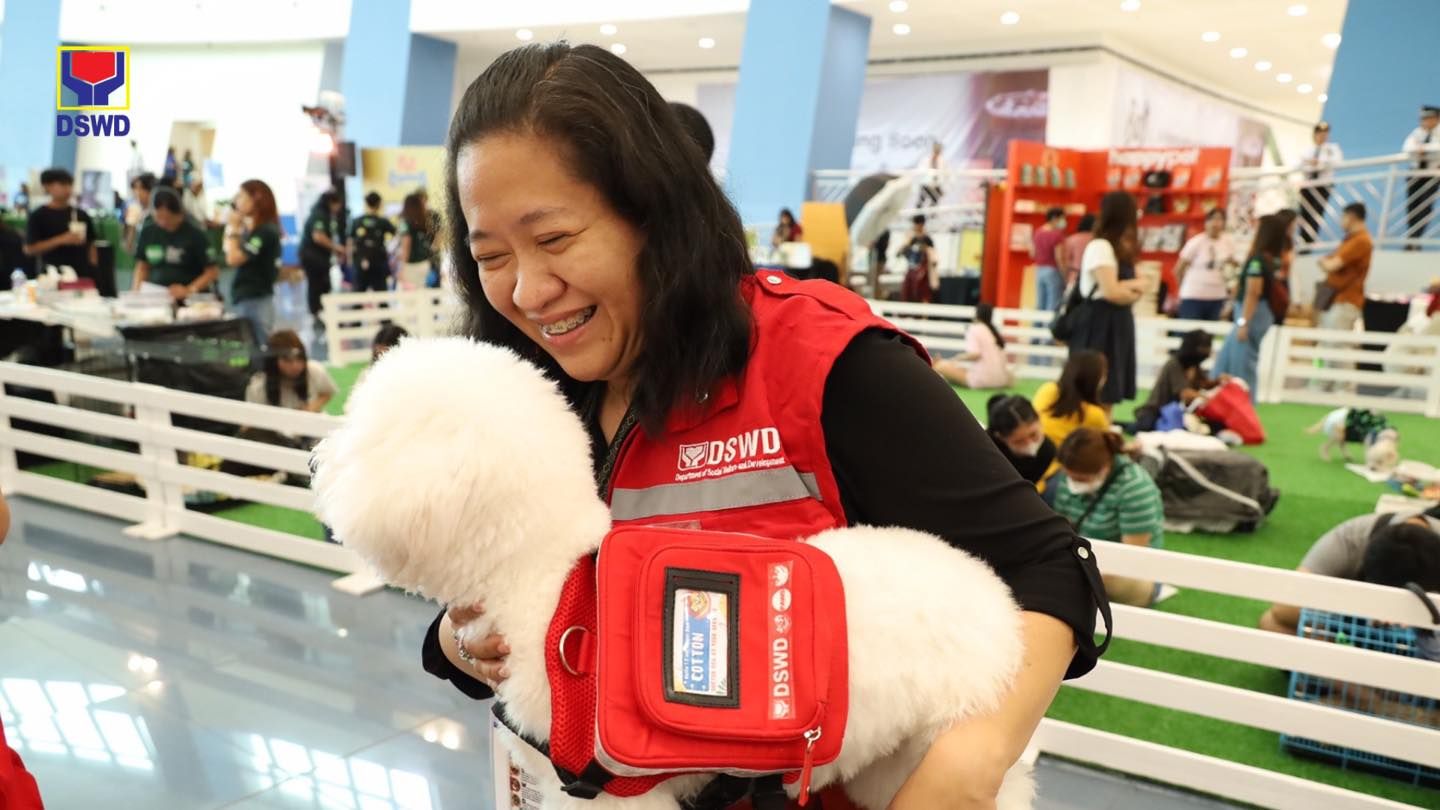
A Department of Social Welfare and Development (DSWD) worker holds a “doctor dog” at the launch of the Angel Pets program on Oct. 6, 2024 at the Music Hall, Mall of Asia. This initiative, in partnership with the Philippine Animal Welfare Society (PAWS), showcases the power of animal-assisted therapy in promoting mental well-being and support for individuals in DSWD residential care facilities. (Photo courtesy of DSWD)

The Department of Social Welfare and Development (DSWD) hopes to transform lives with its new pet companionship program, by bringing the comforting presence of animals into residential care facilities.

DSWD on Sunday, Oct. 6 unveiled the “Angel Pets” program, an innovative initiative focused on improving the psychological well-being of individuals, particularly children and women, in DSWD residential care facilities through animal-assisted therapy.

Secretary Rex Gatchalian emphasized that the Angel Pets program, in partnership with the Philippine Animal Welfare Society’s (PAWS) Dr. Dog program, aims to enrich the lives of those in residential care facilities by integrating positive and enjoyable interactions with animals as part of therapeutic and supportive practices.

Gatchalian and PAWS Executive Director Anna Cabrera formalized the program implementation with a memorandum of agreement (MOA).

“First, like PAWS, DSWD wants to create a better place for all of us, whether you are a two-legged individual or a four-legged fellow. Second, we always believe that, like PAWS, DSWD fights for those who cannot speak for themselves” Gatchalian said.

“Many individuals in our care have faced exploitation and trauma. We believe that by partnering with PAWS, we can create more positive outcomes for those we serve,” he said.

Under the MOA, the Angel Pets program will be piloted at the Marillac Hills-National Training School for Girls—a center that provides residential care and rehabilitation to minor girls seven to 17 years old, who are survivors of sexual abuse, human trafficking, and children in conflict with the law.

The Sanctuary Center in Muntinlupa City is a 24-hour residential care facility, that serves as a place of refuge and home for abandoned, neglected, and unattached adult women with improved psycho-social disability, ages 18 and above.

Gatchalian said DSWD's team, including psychometricians, social workers, and houseparents, addresses the emotional challenges faced by residents. However, the Angel Pets program is a cutting-edge initiative because it incorporates “doctor dogs” to provide therapy for individuals in residential care facilities.

He cited studies that prove the therapeutic benefits of animal interactions and expressed his anticipation for documenting these effects within DSWD facilities.

“There are so many anecdotal stories of how pets can calm us down and how therapeutic it is to have pets. But nobody has actually documented it in long-term research in the Philippines. Hopefully, this research can help us better understand how pets can actually heal, not only those undergoing severe trauma but also help us in managing work-life balance,” Gatchalian said.

The Angel Pets program includes a set of animal-assisted interventions focused on improving the individual's psychological well-being through interaction with volunteer “doctor dogs.”

DSWD operates 76 facilities that support abused and neglected women, children, senior citizens, and persons with disabilities, offering various psychosocial interventions tailored to their needs.

Related Tags

DSWD
ADVERTISEMENT
.most-popular .layout-ratio{ padding-bottom: 79.13%; } @media (min-width: 768px) and (max-width: 1024px) { .widget-title { font-size: 15px !important; } }

{{ articles_filter_1561_widget.title }}

.most-popular .layout-ratio{ padding-bottom: 79.13%; } @media (min-width: 768px) and (max-width: 1024px) { .widget-title { font-size: 15px !important; } }

{{ articles_filter_1562_widget.title }}

.most-popular .layout-ratio{ padding-bottom: 79.13%; } @media (min-width: 768px) and (max-width: 1024px) { .widget-title { font-size: 15px !important; } }

{{ articles_filter_1563_widget.title }}

{{ articles_filter_1564_widget.title }}

.mb-article-details { position: relative; } .mb-article-details .article-body-preview, .mb-article-details .article-body-summary{ font-size: 17px; line-height: 30px; font-family: "Libre Caslon Text", serif; color: #000; } .mb-article-details .article-body-preview iframe , .mb-article-details .article-body-summary iframe{ width: 100%; margin: auto; } .read-more-background { background: linear-gradient(180deg, color(display-p3 1.000 1.000 1.000 / 0) 13.75%, color(display-p3 1.000 1.000 1.000 / 0.8) 30.79%, color(display-p3 1.000 1.000 1.000) 72.5%); position: absolute; height: 200px; width: 100%; bottom: 0; display: flex; justify-content: center; align-items: center; padding: 0; } .read-more-background a{ color: #000; } .read-more-btn { padding: 17px 45px; font-family: Inter; font-weight: 700; font-size: 18px; line-height: 16px; text-align: center; vertical-align: middle; border: 1px solid black; background-color: white; } .hidden { display: none; }
function initializeAllSwipers() { // Get all hidden inputs with cms_article_id document.querySelectorAll('[id^="cms_article_id_"]').forEach(function (input) { const cmsArticleId = input.value; const articleSelector = '#article-' + cmsArticleId + ' .body_images'; const swiperElement = document.querySelector(articleSelector); if (swiperElement && !swiperElement.classList.contains('swiper-initialized')) { new Swiper(articleSelector, { loop: true, pagination: false, navigation: { nextEl: '#article-' + cmsArticleId + ' .swiper-button-next', prevEl: '#article-' + cmsArticleId + ' .swiper-button-prev', }, }); } }); } setTimeout(initializeAllSwipers, 3000); const intersectionObserver = new IntersectionObserver( (entries) => { entries.forEach((entry) => { if (entry.isIntersecting) { const newUrl = entry.target.getAttribute("data-url"); if (newUrl) { history.pushState(null, null, newUrl); let article = entry.target; // Extract metadata const author = article.querySelector('.author-section').textContent.replace('By', '').trim(); const section = article.querySelector('.section-info ').textContent.replace(' ', ' '); const title = article.querySelector('.article-title h1').textContent; // Parse URL for Chartbeat path format const parsedUrl = new URL(newUrl, window.location.origin); const cleanUrl = parsedUrl.host + parsedUrl.pathname; // Update Chartbeat configuration if (typeof window._sf_async_config !== 'undefined') { window._sf_async_config.path = cleanUrl; window._sf_async_config.sections = section; window._sf_async_config.authors = author; } // Track virtual page view with Chartbeat if (typeof pSUPERFLY !== 'undefined' && typeof pSUPERFLY.virtualPage === 'function') { try { pSUPERFLY.virtualPage({ path: cleanUrl, title: title, sections: section, authors: author }); } catch (error) { console.error('ping error', error); } } // Optional: Update document title if (title && title !== document.title) { document.title = title; } } } }); }, { threshold: 0.1 } ); function showArticleBody(button) { const article = button.closest("article"); const summary = article.querySelector(".article-body-summary"); const body = article.querySelector(".article-body-preview"); const readMoreSection = article.querySelector(".read-more-background"); // Hide summary and read-more section summary.style.display = "none"; readMoreSection.style.display = "none"; // Show the full article body body.classList.remove("hidden"); } document.addEventListener("DOMContentLoaded", () => { let loadCount = 0; // Track how many times articles are loaded const offset = [1, 2, 3, 4, 5, 6, 7, 8, 9, 10]; // Offset values const currentUrl = window.location.pathname.substring(1); let isLoading = false; // Prevent multiple calls if (!currentUrl) { console.log("Current URL is invalid."); return; } const sentinel = document.getElementById("load-more-sentinel"); if (!sentinel) { console.log("Sentinel element not found."); return; } function isSentinelVisible() { const rect = sentinel.getBoundingClientRect(); return ( rect.top < window.innerHeight && rect.bottom >= 0 ); } function onScroll() { if (isLoading) return; if (isSentinelVisible()) { if (loadCount >= offset.length) { console.log("Maximum load attempts reached."); window.removeEventListener("scroll", onScroll); return; } isLoading = true; const currentOffset = offset[loadCount]; window.loadMoreItems().then(() => { let article = document.querySelector('#widget_1690 > div:nth-last-of-type(2) article'); intersectionObserver.observe(article) loadCount++; }).catch(error => { console.error("Error loading more items:", error); }).finally(() => { isLoading = false; }); } } window.addEventListener("scroll", onScroll); });

Sign up by email to receive news.