ADVERTISEMENT

Rwanda's Marburg fever deaths rise to 11 as its source is being investigated

Published Oct 4, 2024 03:36 am

MARBURG PHOTO.jpg

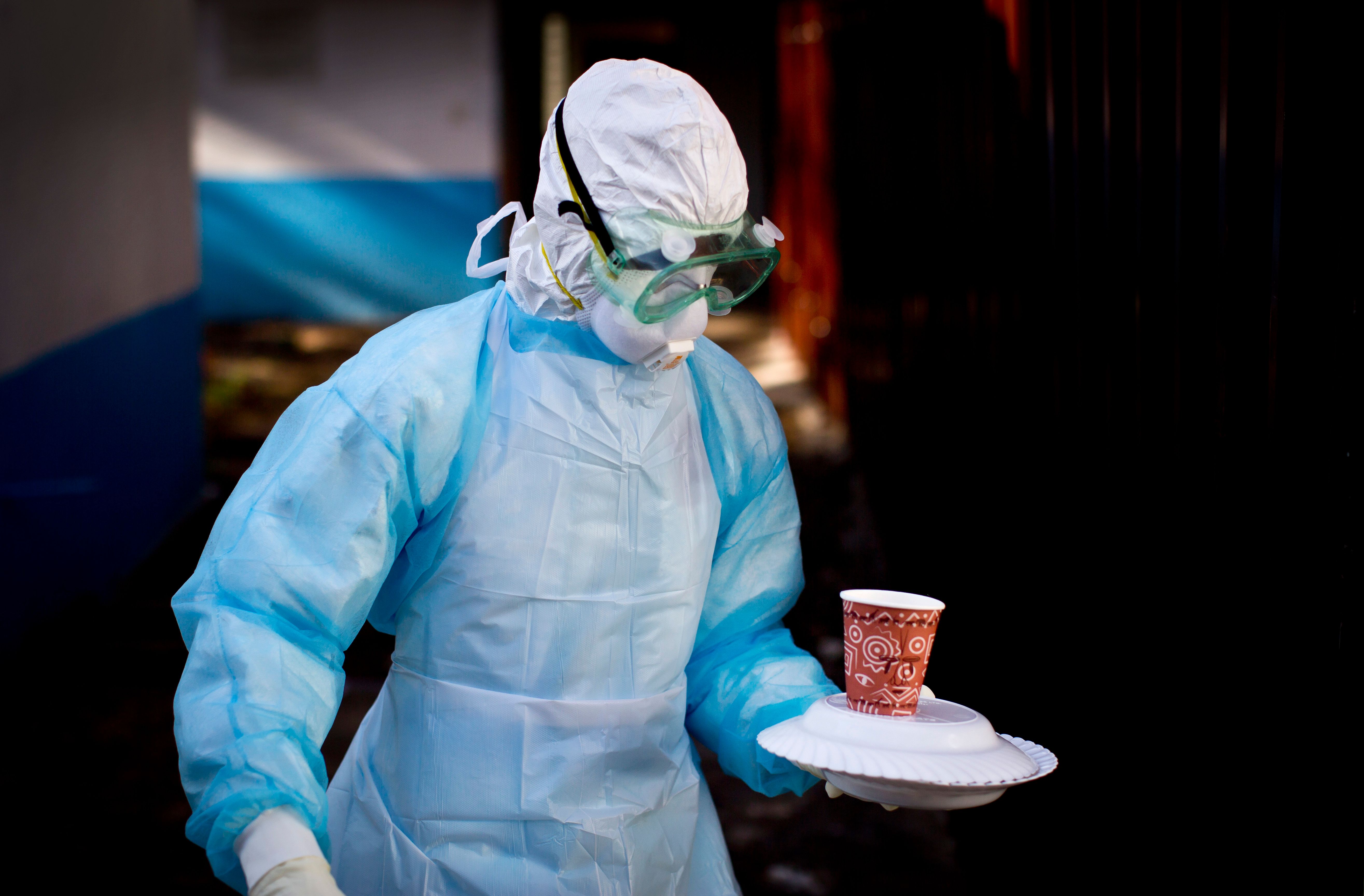
In this Oct. 8, 2014 photo, a medical worker from the Infection Prevention and Control unit wearing full protective equipment carries a meal to an isolation tent housing a man being quarantined after coming into contact in Uganda with a carrier of the Marburg Virus, at the Kenyatta National Hospital in Nairobi, Kenya. (AP Photo/Ben Curtis, File)

KIGALI, Rwanda (AP) — Marburg hemorrhagic fever has killed 11 people in Rwanda, health authorities said Thursday, as the East African country searches for the source of an outbreak first traced among patients in health facilities.

There are 36 confirmed cases of the disease that manifests like Ebola, with 25 of them in isolation, according to the Rwandan government's latest update.

Rwanda declared the outbreak on Sept. 27 and reported six deaths a day later. Authorities said at the time that the first cases had been found among patients in health facilities and that an investigation was underway "to determine the origin of the infection."

The source remains unclear, raising contagion fears in the small central African nation. Isolating patients and their contacts is key to stopping the spread of viral hemorrhagic fevers like Marburg.

The World Health Organization has warned that cases in Kigali, the Rwandan capital, pose a risk of international spread because the city has an international airport and is connected by road to other cities in East Africa.

"WHO assesses the risk of this outbreak as very high at the national level, high at the regional level and low at the global level," WHO Director-General Tedros Adhanom Ghebreyesus said at a regular briefing on Thursday, referring to the Marburg outbreak in Rwanda.

Testifying to growing international concern about the outbreak, two people were isolated in the northern German city of Hamburg after returning from Rwanda, where they had been in a medical facility with Marburg virus patients, the European Center for Disease Prevention and Control said in a statement on Thursday.

Both tested negative for the virus, the ECDC statement said.

German media reports said that concern about the virus led authorities to cordon off two tracks at a railway station where the two people had arrived. One was a young medical student who had felt symptoms of the disease and contacted doctors from the train.

In Rwanda, most of the affected people are health care workers across six out of 30 districts in Rwanda. Some patients live in districts bordering Congo, Burundi, Uganda and Tanzania, according to WHO.

At least 300 people who came into contact with those confirmed to have Marburg have been identified, and an unspecified number of them are in isolation facilities, according to Rwandan health authorities.

Rwandan Health Minister Sabin Nsanzimana said Thursday that the clinical trials for vaccination would start "within days" but failed to clarify which type of vaccine will be used.

He told journalists at an Africa Centers for Disease Control and Prevention briefing that Rwanda is screening everyone who presents fever, head and body ache symptoms and has so far tested 2,000 people with 5,000 more test kits expected to arrive in the country.

Like Ebola, the Marburg virus is believed to originate in fruit bats and spreads between people through close contact with the bodily fluids of infected individuals or with surfaces, such as contaminated bed sheets. Without treatment, Marburg can be fatal in up to 88% of people who fall ill with the disease.

Related Tags

WORLDNEWS MARBURG VIRUS DISEASE
ADVERTISEMENT
.most-popular .layout-ratio{ padding-bottom: 79.13%; } @media (min-width: 768px) and (max-width: 1024px) { .widget-title { font-size: 15px !important; } }

{{ articles_filter_1561_widget.title }}

.most-popular .layout-ratio{ padding-bottom: 79.13%; } @media (min-width: 768px) and (max-width: 1024px) { .widget-title { font-size: 15px !important; } }

{{ articles_filter_1562_widget.title }}

.most-popular .layout-ratio{ padding-bottom: 79.13%; } @media (min-width: 768px) and (max-width: 1024px) { .widget-title { font-size: 15px !important; } }

{{ articles_filter_1563_widget.title }}

{{ articles_filter_1564_widget.title }}

.mb-article-details { position: relative; } .mb-article-details .article-body-preview, .mb-article-details .article-body-summary{ font-size: 17px; line-height: 30px; font-family: "Libre Caslon Text", serif; color: #000; } .mb-article-details .article-body-preview iframe , .mb-article-details .article-body-summary iframe{ width: 100%; margin: auto; } .read-more-background { background: linear-gradient(180deg, color(display-p3 1.000 1.000 1.000 / 0) 13.75%, color(display-p3 1.000 1.000 1.000 / 0.8) 30.79%, color(display-p3 1.000 1.000 1.000) 72.5%); position: absolute; height: 200px; width: 100%; bottom: 0; display: flex; justify-content: center; align-items: center; padding: 0; } .read-more-background a{ color: #000; } .read-more-btn { padding: 17px 45px; font-family: Inter; font-weight: 700; font-size: 18px; line-height: 16px; text-align: center; vertical-align: middle; border: 1px solid black; background-color: white; } .hidden { display: none; }
function initializeAllSwipers() { // Get all hidden inputs with cms_article_id document.querySelectorAll('[id^="cms_article_id_"]').forEach(function (input) { const cmsArticleId = input.value; const articleSelector = '#article-' + cmsArticleId + ' .body_images'; const swiperElement = document.querySelector(articleSelector); if (swiperElement && !swiperElement.classList.contains('swiper-initialized')) { new Swiper(articleSelector, { loop: true, pagination: false, navigation: { nextEl: '#article-' + cmsArticleId + ' .swiper-button-next', prevEl: '#article-' + cmsArticleId + ' .swiper-button-prev', }, }); } }); } setTimeout(initializeAllSwipers, 3000); const intersectionObserver = new IntersectionObserver( (entries) => { entries.forEach((entry) => { if (entry.isIntersecting) { const newUrl = entry.target.getAttribute("data-url"); if (newUrl) { history.pushState(null, null, newUrl); let article = entry.target; // Extract metadata const author = article.querySelector('.author-section').textContent.replace('By', '').trim(); const section = article.querySelector('.section-info ').textContent.replace(' ', ' '); const title = article.querySelector('.article-title h1').textContent; // Parse URL for Chartbeat path format const parsedUrl = new URL(newUrl, window.location.origin); const cleanUrl = parsedUrl.host + parsedUrl.pathname; // Update Chartbeat configuration if (typeof window._sf_async_config !== 'undefined') { window._sf_async_config.path = cleanUrl; window._sf_async_config.sections = section; window._sf_async_config.authors = author; } // Track virtual page view with Chartbeat if (typeof pSUPERFLY !== 'undefined' && typeof pSUPERFLY.virtualPage === 'function') { try { pSUPERFLY.virtualPage({ path: cleanUrl, title: title, sections: section, authors: author }); } catch (error) { console.error('ping error', error); } } // Optional: Update document title if (title && title !== document.title) { document.title = title; } } } }); }, { threshold: 0.1 } ); function showArticleBody(button) { const article = button.closest("article"); const summary = article.querySelector(".article-body-summary"); const body = article.querySelector(".article-body-preview"); const readMoreSection = article.querySelector(".read-more-background"); // Hide summary and read-more section summary.style.display = "none"; readMoreSection.style.display = "none"; // Show the full article body body.classList.remove("hidden"); } document.addEventListener("DOMContentLoaded", () => { let loadCount = 0; // Track how many times articles are loaded const offset = [1, 2, 3, 4, 5, 6, 7, 8, 9, 10]; // Offset values const currentUrl = window.location.pathname.substring(1); let isLoading = false; // Prevent multiple calls if (!currentUrl) { console.log("Current URL is invalid."); return; } const sentinel = document.getElementById("load-more-sentinel"); if (!sentinel) { console.log("Sentinel element not found."); return; } function isSentinelVisible() { const rect = sentinel.getBoundingClientRect(); return ( rect.top < window.innerHeight && rect.bottom >= 0 ); } function onScroll() { if (isLoading) return; if (isSentinelVisible()) { if (loadCount >= offset.length) { console.log("Maximum load attempts reached."); window.removeEventListener("scroll", onScroll); return; } isLoading = true; const currentOffset = offset[loadCount]; window.loadMoreItems().then(() => { let article = document.querySelector('#widget_1690 > div:nth-last-of-type(2) article'); intersectionObserver.observe(article) loadCount++; }).catch(error => { console.error("Error loading more items:", error); }).finally(() => { isLoading = false; }); } } window.addEventListener("scroll", onScroll); });

Sign up by email to receive news.