ADVERTISEMENT

Amazon's amazing fulfillment centers: The small town that never sleeps

Published Oct 31, 2024 03:31 am

SEATTLE, Washington — Did you ever wonder how your order at Amazon gets processed?

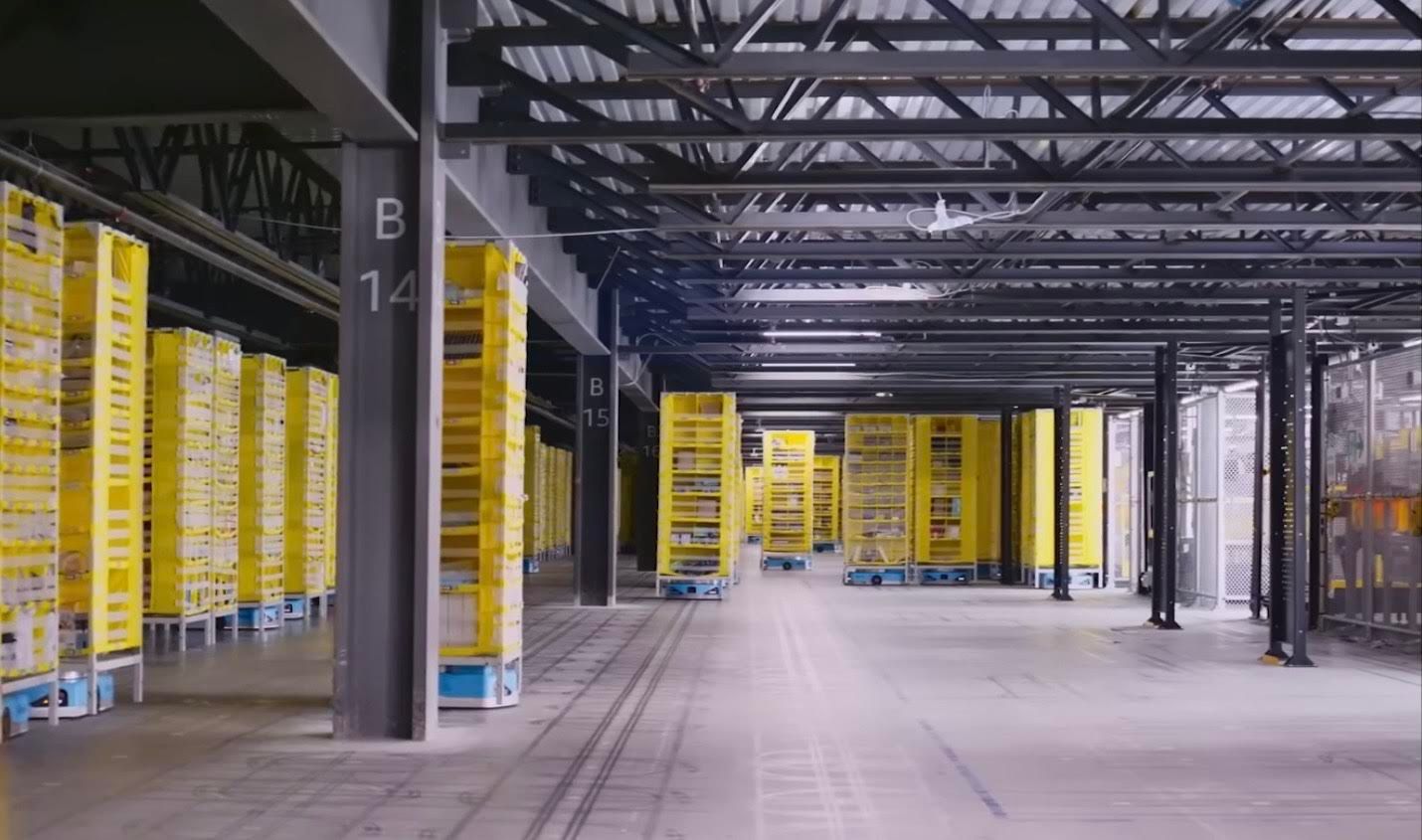
With 750,000 robots across its whole network called pods and around 3,000 people of different nationalities (including Filipinos) working alongside them, orders are processed from around the world with the speed and accuracy of the robots and the care and diligence of the human workforce.
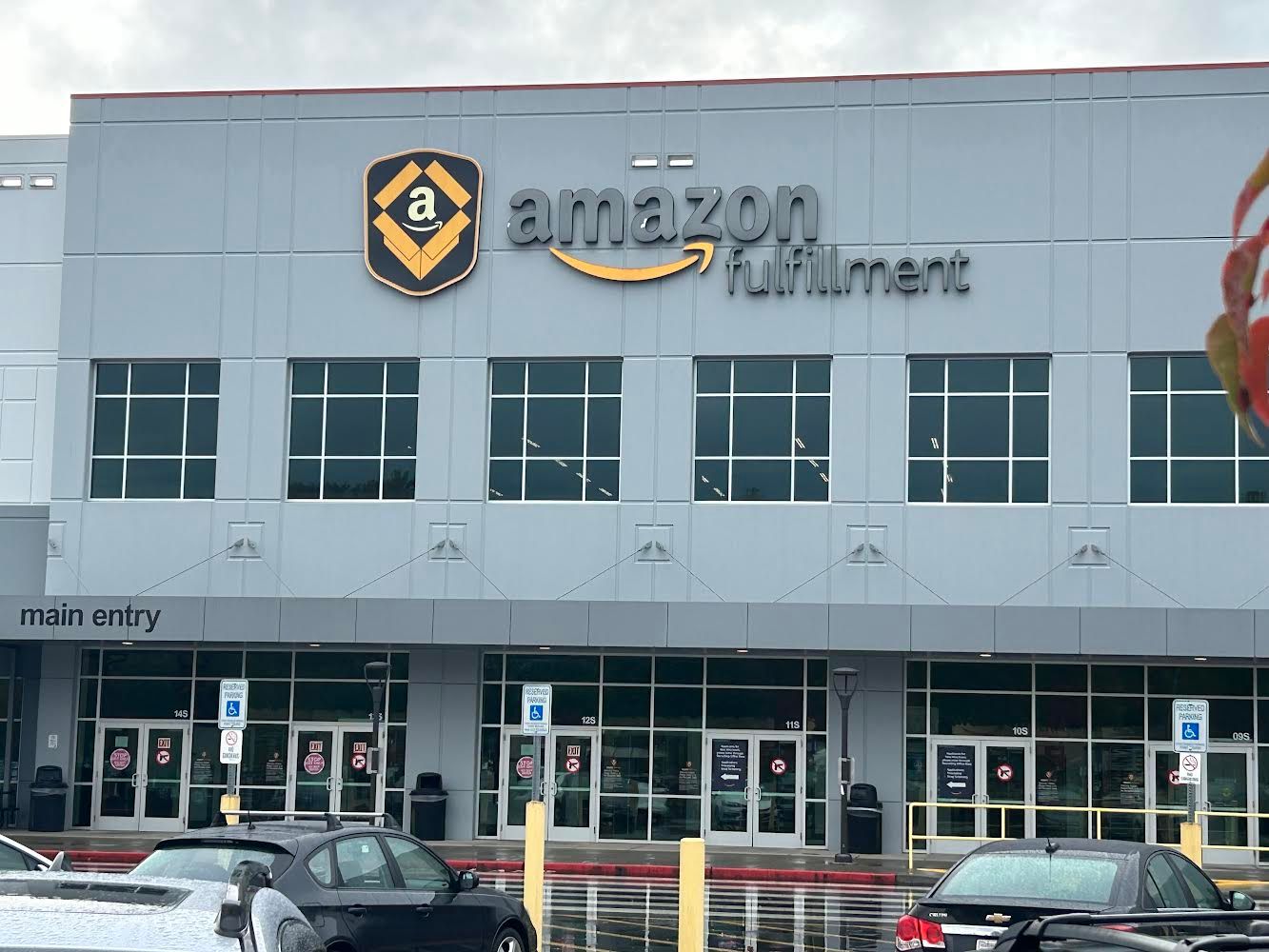
IMG_6413.jpeg
A fulfillment center in Kent, Washington

The system churns and hums in a “small town that never sleeps.”

But Amazon’s fulfillment center in Kent, Washington, is no small town. Seven football fields can actually fit inside the center.
IMG_6412.jpeg
Some of the 750,000 pods inside an Amazon fulfillment center

Amazon’s foray into robotics in 2012 was fueled by its desire to reduce the risk of injury to its workers.

Covid-19 restrictions starting in the year 2020 forced a global business paradigm shift towards the digital economy and brought surging sales to Amazon and made its centers busier than most.

Step-by-step

After an order is placed, the robotic shelves bring the product to the picker who then brings it to the heart of the facility where it is sorted.

The item is then sent down the chute to the SLAM (Scan, Label, Apply, and Manifest) station where it is boxed for shipment.

A machine custom-makes boxes for every item and sealed with biodegradable glue to reduce the company’s carbon footprint. 

Items in yellow and grey totes run around the fulfillment center to fulfill the delivery to their country of destination within 24 hours.

On average, Amazon fulfills around 300,000 to 500,000 orders per day. In 2022, over a million orders were placed and delivered on a single day, a pandemic-induced phenomenon that saw online sales soaring to unprecedented levels. 
IMG_6417.jpeg
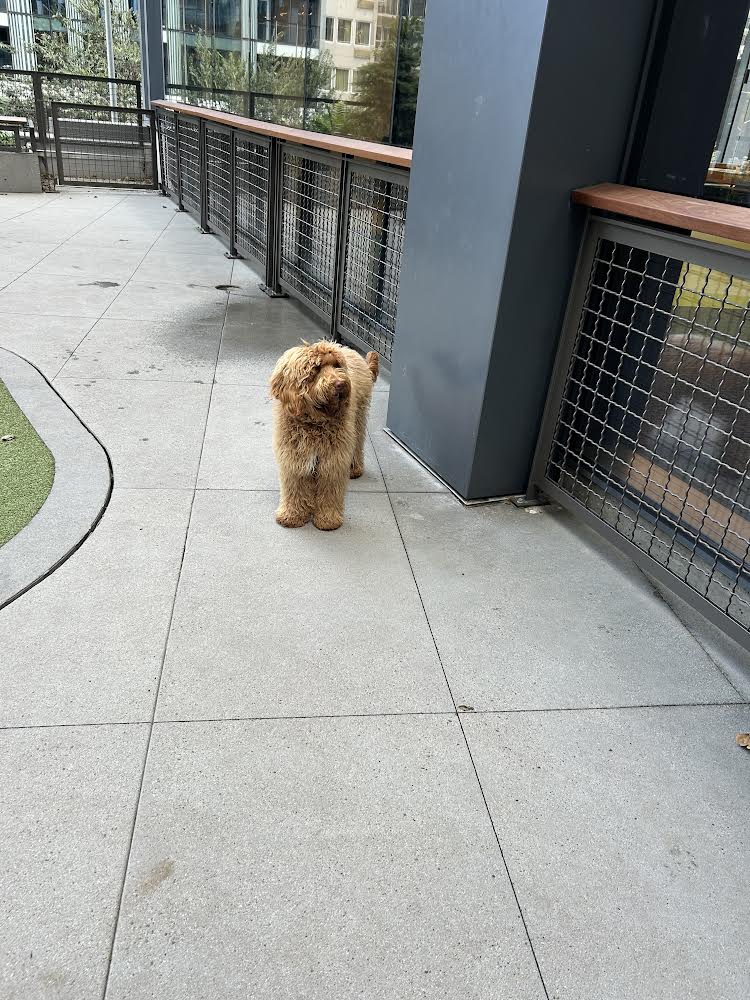
Penny, one of the 10,000 dogs that were registered to “go to work” at Amazon

Over 50 percent of the products that are sold at Amazon comes from its third party sellers, as well as from Micro, Small, and Medium Enterprises.

A unique feature at the fulfillment center is the Pink Phone Zone where Amazon workers can go to pick up emergency calls from their families.

The Spheres

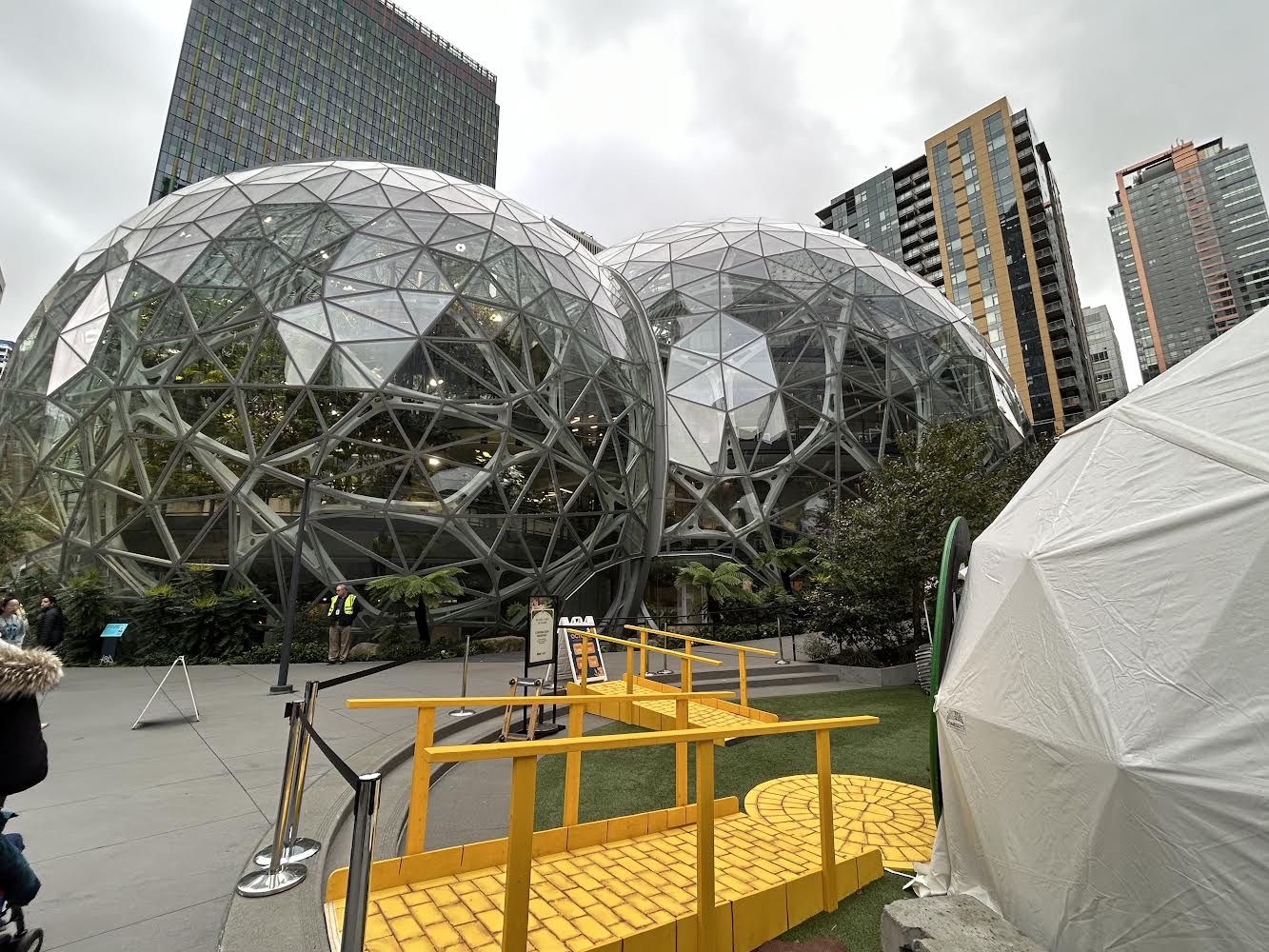
Journalists from Southeast Asia (including this writer) who were invited by the US State Department were also given a tour of Amazon’s headquarters in downtown Seattle which boasts of over 40 buildings and installations, and its three observatories called The Spheres.
IMG_6414.jpeg
The Spheres
IMG_6419.jpeg
Journos at The Spheres
IMG_6415.jpeg
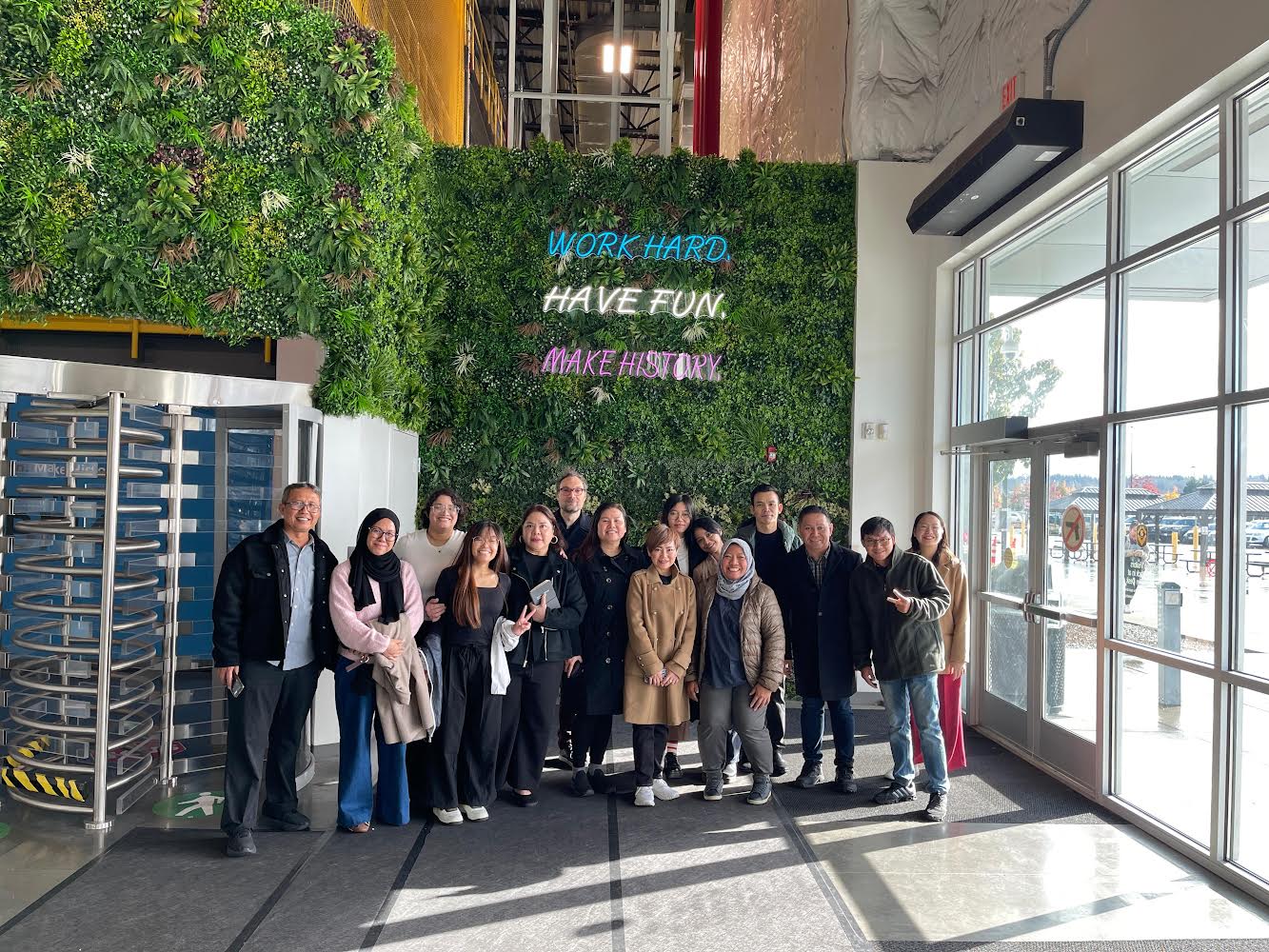
ASEAN journalists

The Spheres was opened in 2018 by then Amazon CEO Jeff Bezos using an Alexa voice command.

There are over 40,000 plant species from over 30 countries, including the Amazon rainforest, inside the spheres.

The Spheres, aside from being a lounge and workspace to its 55,000 employees in the greater area, is also where over 10,000 dogs are registered to go to work with their fur parents and get treats from the Seattle Barkery. 
IMG_6418.jpeg
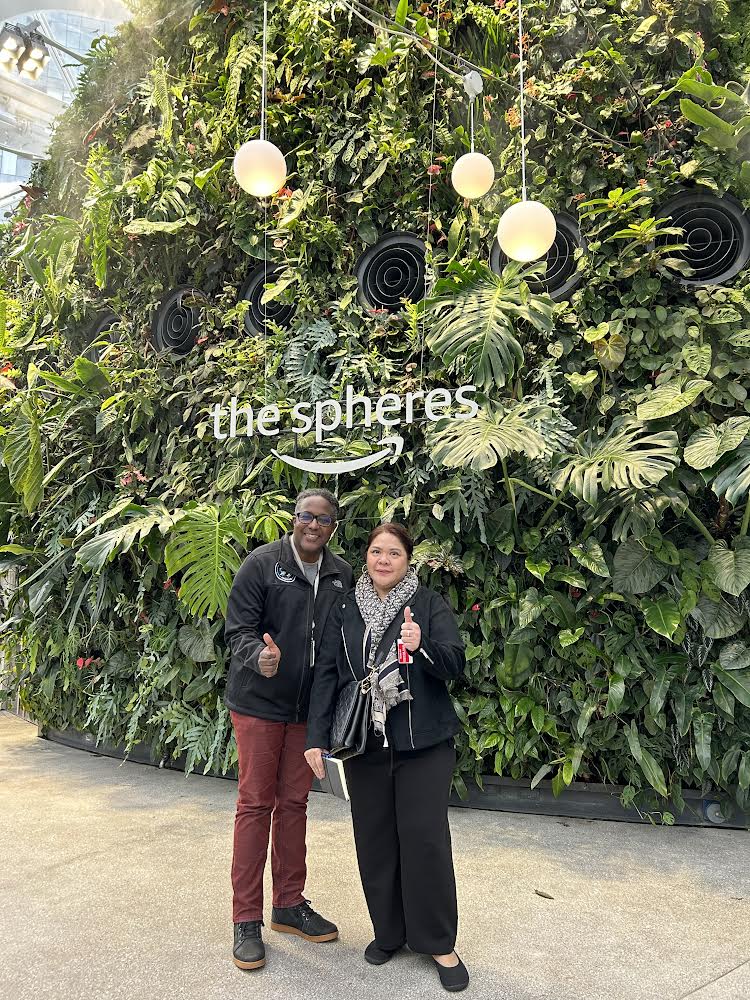
At The Spheres with Amazon’s Cedric
IMG_6416.jpeg
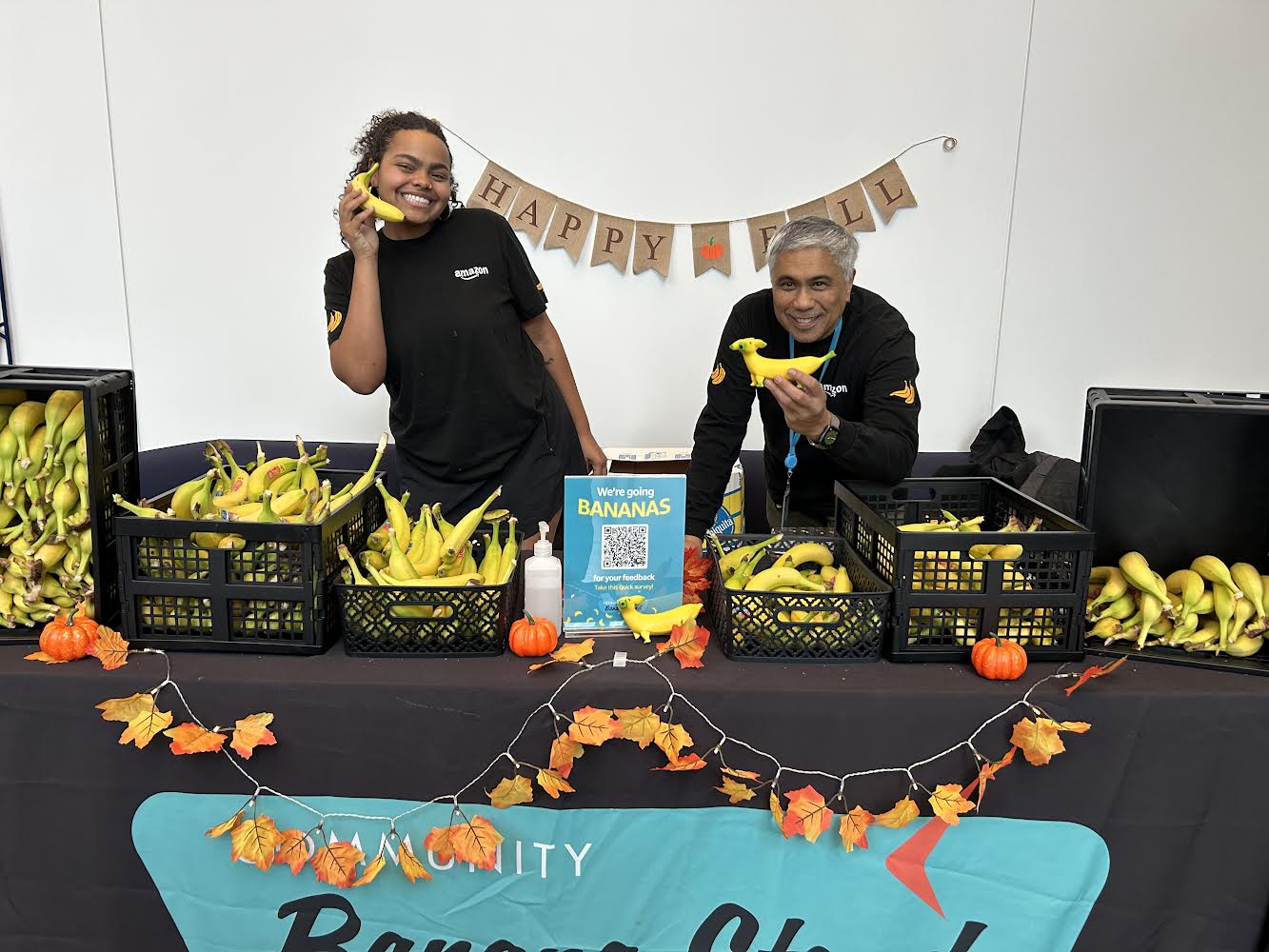
Amazon gives away free bananas every day to its workers and members of the community
IMG_6420.jpeg
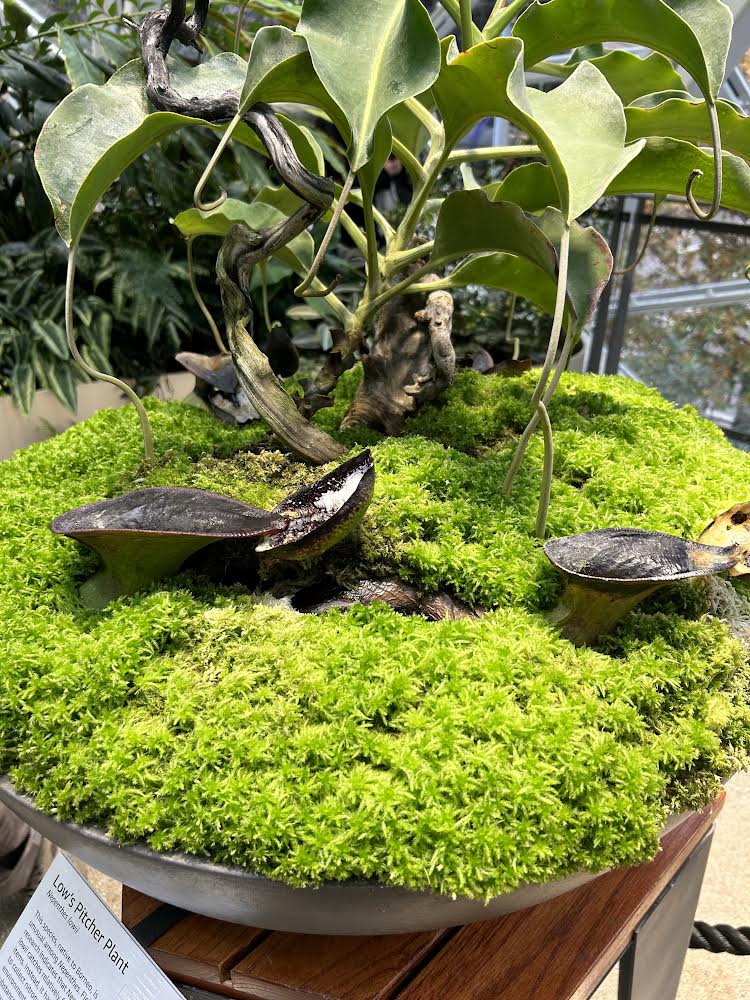
A pitcher plant 

The US State Department, together with the US Mission to ASEAN, and the East-West Center, organized a group of journalists from the Association of Southeast Asian Nations for a coverage tour in Seattle and Washington, D.C. from October 26, to November 7, 2024.
 

ADVERTISEMENT
.most-popular .layout-ratio{ padding-bottom: 79.13%; } @media (min-width: 768px) and (max-width: 1024px) { .widget-title { font-size: 15px !important; } }

{{ articles_filter_1561_widget.title }}

.most-popular .layout-ratio{ padding-bottom: 79.13%; } @media (min-width: 768px) and (max-width: 1024px) { .widget-title { font-size: 15px !important; } }

{{ articles_filter_1562_widget.title }}

.most-popular .layout-ratio{ padding-bottom: 79.13%; } @media (min-width: 768px) and (max-width: 1024px) { .widget-title { font-size: 15px !important; } }

{{ articles_filter_1563_widget.title }}

{{ articles_filter_1564_widget.title }}

.mb-article-details { position: relative; } .mb-article-details .article-body-preview, .mb-article-details .article-body-summary{ font-size: 17px; line-height: 30px; font-family: "Libre Caslon Text", serif; color: #000; } .mb-article-details .article-body-preview iframe , .mb-article-details .article-body-summary iframe{ width: 100%; margin: auto; } .read-more-background { background: linear-gradient(180deg, color(display-p3 1.000 1.000 1.000 / 0) 13.75%, color(display-p3 1.000 1.000 1.000 / 0.8) 30.79%, color(display-p3 1.000 1.000 1.000) 72.5%); position: absolute; height: 200px; width: 100%; bottom: 0; display: flex; justify-content: center; align-items: center; padding: 0; } .read-more-background a{ color: #000; } .read-more-btn { padding: 17px 45px; font-family: Inter; font-weight: 700; font-size: 18px; line-height: 16px; text-align: center; vertical-align: middle; border: 1px solid black; background-color: white; } .hidden { display: none; }
function initializeAllSwipers() { // Get all hidden inputs with cms_article_id document.querySelectorAll('[id^="cms_article_id_"]').forEach(function (input) { const cmsArticleId = input.value; const articleSelector = '#article-' + cmsArticleId + ' .body_images'; const swiperElement = document.querySelector(articleSelector); if (swiperElement && !swiperElement.classList.contains('swiper-initialized')) { new Swiper(articleSelector, { loop: true, pagination: false, navigation: { nextEl: '#article-' + cmsArticleId + ' .swiper-button-next', prevEl: '#article-' + cmsArticleId + ' .swiper-button-prev', }, }); } }); } setTimeout(initializeAllSwipers, 3000); const intersectionObserver = new IntersectionObserver( (entries) => { entries.forEach((entry) => { if (entry.isIntersecting) { const newUrl = entry.target.getAttribute("data-url"); if (newUrl) { history.pushState(null, null, newUrl); let article = entry.target; // Extract metadata const author = article.querySelector('.author-section').textContent.replace('By', '').trim(); const section = article.querySelector('.section-info ').textContent.replace(' ', ' '); const title = article.querySelector('.article-title h1').textContent; // Parse URL for Chartbeat path format const parsedUrl = new URL(newUrl, window.location.origin); const cleanUrl = parsedUrl.host + parsedUrl.pathname; // Update Chartbeat configuration if (typeof window._sf_async_config !== 'undefined') { window._sf_async_config.path = cleanUrl; window._sf_async_config.sections = section; window._sf_async_config.authors = author; } // Track virtual page view with Chartbeat if (typeof pSUPERFLY !== 'undefined' && typeof pSUPERFLY.virtualPage === 'function') { try { pSUPERFLY.virtualPage({ path: cleanUrl, title: title, sections: section, authors: author }); } catch (error) { console.error('ping error', error); } } // Optional: Update document title if (title && title !== document.title) { document.title = title; } } } }); }, { threshold: 0.1 } ); function showArticleBody(button) { const article = button.closest("article"); const summary = article.querySelector(".article-body-summary"); const body = article.querySelector(".article-body-preview"); const readMoreSection = article.querySelector(".read-more-background"); // Hide summary and read-more section summary.style.display = "none"; readMoreSection.style.display = "none"; // Show the full article body body.classList.remove("hidden"); } document.addEventListener("DOMContentLoaded", () => { let loadCount = 0; // Track how many times articles are loaded const offset = [1, 2, 3, 4, 5, 6, 7, 8, 9, 10]; // Offset values const currentUrl = window.location.pathname.substring(1); let isLoading = false; // Prevent multiple calls if (!currentUrl) { console.log("Current URL is invalid."); return; } const sentinel = document.getElementById("load-more-sentinel"); if (!sentinel) { console.log("Sentinel element not found."); return; } function isSentinelVisible() { const rect = sentinel.getBoundingClientRect(); return ( rect.top < window.innerHeight && rect.bottom >= 0 ); } function onScroll() { if (isLoading) return; if (isSentinelVisible()) { if (loadCount >= offset.length) { console.log("Maximum load attempts reached."); window.removeEventListener("scroll", onScroll); return; } isLoading = true; const currentOffset = offset[loadCount]; window.loadMoreItems().then(() => { let article = document.querySelector('#widget_1690 > div:nth-last-of-type(2) article'); intersectionObserver.observe(article) loadCount++; }).catch(error => { console.error("Error loading more items:", error); }).finally(() => { isLoading = false; }); } } window.addEventListener("scroll", onScroll); });

Sign up by email to receive news.