ADVERTISEMENT

2.5M to 5M individuals at risk due to Super Typhoon 'Leon' – OCD

Bicol may be hit by Leon's trough; re-flooding is expected

Published Oct 30, 2024 07:30 am
leon.jpg
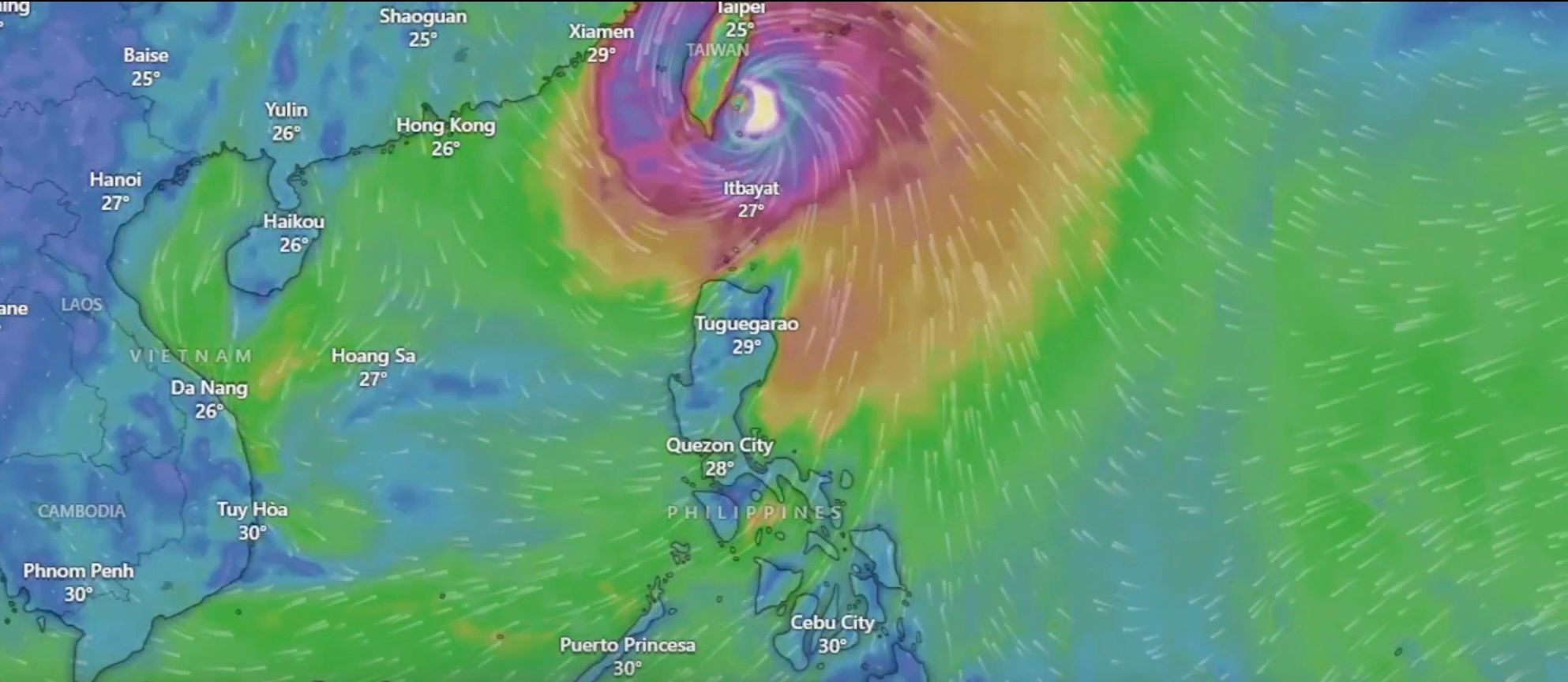
The center of the eye of Super Typhoon "Leon" is estimated based on all available data at 310 km east of Calayan, Cagayan as of 2 p.m. of Oct. 30, 2024. (Courtesy of Office of Civil Defense)

Around 2.5 million to five million individuals may be affected by Super Typhoon “Leon” which is moving closer to Batanes, the Office of Civil Defense (OCD) said on Wednesday, Oct. 30.

OCD spokesperson Director Edgar Posadas said that the “rainband” of Leon may affect Northern Luzon, particularly Batanes where Tropical Cyclone Wind Signal Number 4 is currently hoisted. 

A rainband is a curved band of clouds and thunderstorms that trail away from the eye of the typhoon in a spiral fashion.

However, Posadas noted that Leon’s “trough” – an extension of the typhoon’s wind which brings rain showers – may also affect parts of Luzon, Visayas and Mindanao including Central Luzon (Region 3), Calabarzon (Region 4A), Mimaropa (Region 4B), Bicol Region (Region 5) which is still reeling from the effects of Tropical Storm “Kristine”, Western Visayas (Region 6), Eastern Visayas (Region 8), Zamboanga Peninsula (Region 9), Northern Mindanao (Region 10), and Bangsamoro Autonomous Region in Muslim Mindanao (BARMM).

“Leon has turned into a super typhoon and it is near or under its peak intensity during its closest point of approach to Batanes. It seems that we are not yet stuck to hoisting the Tropical Cyclone Warning Signal No. 4, we might raise Signal No. 5. A landfall over Batanes is also not ruled out for now,” he said in a press briefing at the National Disaster Risk Reduction and Management (NDRRM) Operations Center in Camp Aguinaldo, Quezon City.

“Based on the predictive analysis of the Department of Social Welfare and Development (DSWD), the number of people that may be affected is around 2.5 million to five million individuals,” he added.

Nonetheless, the OCD spokesman said that there are “more than enough” food packs for the projected number of individuals that might be affected by the bad weather.

“The required number of family food packs to serve the projected affected population is 505,076. We have more than enough supplies as we have pre-positioned 1.533 million family food packs,” Posadas said.

‘Undas’ situation

Meanwhile, the OCD advised the public to plan their trips to the provinces well since the current super typhoon may bring rains on November 1, All Saints’ Day; and November 2, All Souls’ Day.

“It is possible that Leon may leave the country on Saturday but just the same, let us all plan our trips to the provinces. It may still be rainy,” Posadas shared.

The public is also urged to exercise caution and vigilance as Leon may cause a possible overflow of streams and creeks which may result to flooding.

“Areas recently affected by floods especially by Kristine [are] at high risk of re-flooding, raising serious health concerns,” Posadas stressed.

Limited access to clean water and poor sanitation in evacuation centers also increase the risk of diseases such as leptospirosis, diarrhea, dengue and other vector and water-borne diseases, he stated.

Further, rough seas in all seaboards of the country are also expected, so he urged local government units and concerned government agencies to implement suspension of sea travels or other voyages for the safety of the people.

The OCD is also monitoring the effects of Leon to the activities of active volcanoes, particularly Mayon, Taal and Kanlaon.

“We have to consider the effects of gusty winds, significant rains, persistent flooding, flashflood, landslides, rough sea conditions, storm surges, diseases and possibility of lahar flows,” Posadas said.

Related Tags

NDRRMC Office of Civil Defense KristinePH LeonPH
ADVERTISEMENT
.most-popular .layout-ratio{ padding-bottom: 79.13%; } @media (min-width: 768px) and (max-width: 1024px) { .widget-title { font-size: 15px !important; } }

{{ articles_filter_1561_widget.title }}

.most-popular .layout-ratio{ padding-bottom: 79.13%; } @media (min-width: 768px) and (max-width: 1024px) { .widget-title { font-size: 15px !important; } }

{{ articles_filter_1562_widget.title }}

.most-popular .layout-ratio{ padding-bottom: 79.13%; } @media (min-width: 768px) and (max-width: 1024px) { .widget-title { font-size: 15px !important; } }

{{ articles_filter_1563_widget.title }}

{{ articles_filter_1564_widget.title }}

.mb-article-details { position: relative; } .mb-article-details .article-body-preview, .mb-article-details .article-body-summary{ font-size: 17px; line-height: 30px; font-family: "Libre Caslon Text", serif; color: #000; } .mb-article-details .article-body-preview iframe , .mb-article-details .article-body-summary iframe{ width: 100%; margin: auto; } .read-more-background { background: linear-gradient(180deg, color(display-p3 1.000 1.000 1.000 / 0) 13.75%, color(display-p3 1.000 1.000 1.000 / 0.8) 30.79%, color(display-p3 1.000 1.000 1.000) 72.5%); position: absolute; height: 200px; width: 100%; bottom: 0; display: flex; justify-content: center; align-items: center; padding: 0; } .read-more-background a{ color: #000; } .read-more-btn { padding: 17px 45px; font-family: Inter; font-weight: 700; font-size: 18px; line-height: 16px; text-align: center; vertical-align: middle; border: 1px solid black; background-color: white; } .hidden { display: none; }
function initializeAllSwipers() { // Get all hidden inputs with cms_article_id document.querySelectorAll('[id^="cms_article_id_"]').forEach(function (input) { const cmsArticleId = input.value; const articleSelector = '#article-' + cmsArticleId + ' .body_images'; const swiperElement = document.querySelector(articleSelector); if (swiperElement && !swiperElement.classList.contains('swiper-initialized')) { new Swiper(articleSelector, { loop: true, pagination: false, navigation: { nextEl: '#article-' + cmsArticleId + ' .swiper-button-next', prevEl: '#article-' + cmsArticleId + ' .swiper-button-prev', }, }); } }); } setTimeout(initializeAllSwipers, 3000); const intersectionObserver = new IntersectionObserver( (entries) => { entries.forEach((entry) => { if (entry.isIntersecting) { const newUrl = entry.target.getAttribute("data-url"); if (newUrl) { history.pushState(null, null, newUrl); let article = entry.target; // Extract metadata const author = article.querySelector('.author-section').textContent.replace('By', '').trim(); const section = article.querySelector('.section-info ').textContent.replace(' ', ' '); const title = article.querySelector('.article-title h1').textContent; // Parse URL for Chartbeat path format const parsedUrl = new URL(newUrl, window.location.origin); const cleanUrl = parsedUrl.host + parsedUrl.pathname; // Update Chartbeat configuration if (typeof window._sf_async_config !== 'undefined') { window._sf_async_config.path = cleanUrl; window._sf_async_config.sections = section; window._sf_async_config.authors = author; } // Track virtual page view with Chartbeat if (typeof pSUPERFLY !== 'undefined' && typeof pSUPERFLY.virtualPage === 'function') { try { pSUPERFLY.virtualPage({ path: cleanUrl, title: title, sections: section, authors: author }); } catch (error) { console.error('ping error', error); } } // Optional: Update document title if (title && title !== document.title) { document.title = title; } } } }); }, { threshold: 0.1 } ); function showArticleBody(button) { const article = button.closest("article"); const summary = article.querySelector(".article-body-summary"); const body = article.querySelector(".article-body-preview"); const readMoreSection = article.querySelector(".read-more-background"); // Hide summary and read-more section summary.style.display = "none"; readMoreSection.style.display = "none"; // Show the full article body body.classList.remove("hidden"); } document.addEventListener("DOMContentLoaded", () => { let loadCount = 0; // Track how many times articles are loaded const offset = [1, 2, 3, 4, 5, 6, 7, 8, 9, 10]; // Offset values const currentUrl = window.location.pathname.substring(1); let isLoading = false; // Prevent multiple calls if (!currentUrl) { console.log("Current URL is invalid."); return; } const sentinel = document.getElementById("load-more-sentinel"); if (!sentinel) { console.log("Sentinel element not found."); return; } function isSentinelVisible() { const rect = sentinel.getBoundingClientRect(); return ( rect.top < window.innerHeight && rect.bottom >= 0 ); } function onScroll() { if (isLoading) return; if (isSentinelVisible()) { if (loadCount >= offset.length) { console.log("Maximum load attempts reached."); window.removeEventListener("scroll", onScroll); return; } isLoading = true; const currentOffset = offset[loadCount]; window.loadMoreItems().then(() => { let article = document.querySelector('#widget_1690 > div:nth-last-of-type(2) article'); intersectionObserver.observe(article) loadCount++; }).catch(error => { console.error("Error loading more items:", error); }).finally(() => { isLoading = false; }); } } window.addEventListener("scroll", onScroll); });

Sign up by email to receive news.