







PH is doing better in anti-hunger campaign—Marcos


The Philippines is "doing better" in addressing food poverty, President Marcos said as he cited the drop in the number of food poor families in the country.
“We are doing a better job of feeding people who need it,” Marcos said during a sectoral meeting in Malacañan Palace on Tuesday, Oct. 29.
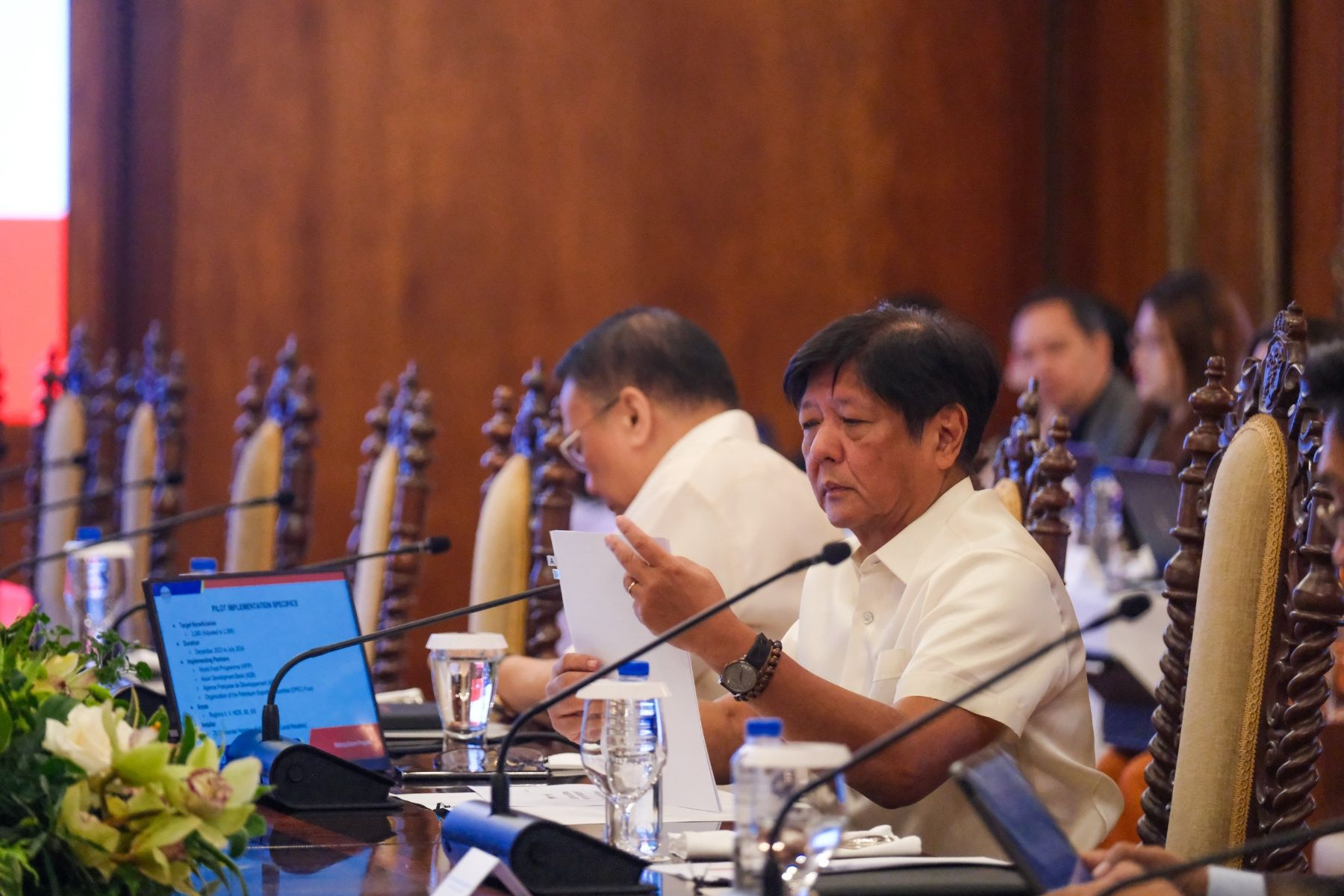
The President made the statement as the Department of Social Welfare and Development (DSWD) bared that the number of food poor families slid by 300,000 last year from one million families with the implementation of the government’s Food Stamp Program (FSP).
DSWD Secretary Rex Gatchalian told Marcos that the number of food poor families went down to 700,000 from one million families at the time the FSP was designed.
“When we designed this (FSP), it was at one million. So, dahil bumaba na po siya (because it went down) we have leg room doon sa area na yun (in that area),” Gatchalian said during the meeting.
The data are based on the files released by the Philippine Statistics Authority (PSA) in 2023, showing the drop in the number of food poor families to 700,000 last year from one million families in 2021.
The FSP was established through Executive Order No. 44, s. 2023 as a flagship program of the national government through the DSWD to address involuntary hunger experienced by low income households in the country.
Piloted from December 2023 to July 2024, covering 2,366 households, it provides eligible households with P3,000 worth of food credits monthly through an Electronic Benefit Transfer (EBT) card, which the beneficiaries use to purchase select food items at Kadiwa stalls and authorized retail stores.
As of Oct. 16, the program has 182,771 verified beneficiaries of whom 89,772 households have redeemed their food.
The planned expansion will cover an additional 300,000 household beneficiaries in 2025 and another 400,000 in 2026 in 10 regions and 22 provinces. The goal is to support one million food-poor households by 2027.