

ADVERTISEMENT

In Ecuador, power-dependent patients wait in anguish as the government imposes hours-long blackouts

Published Oct 27, 2024 12:32 am

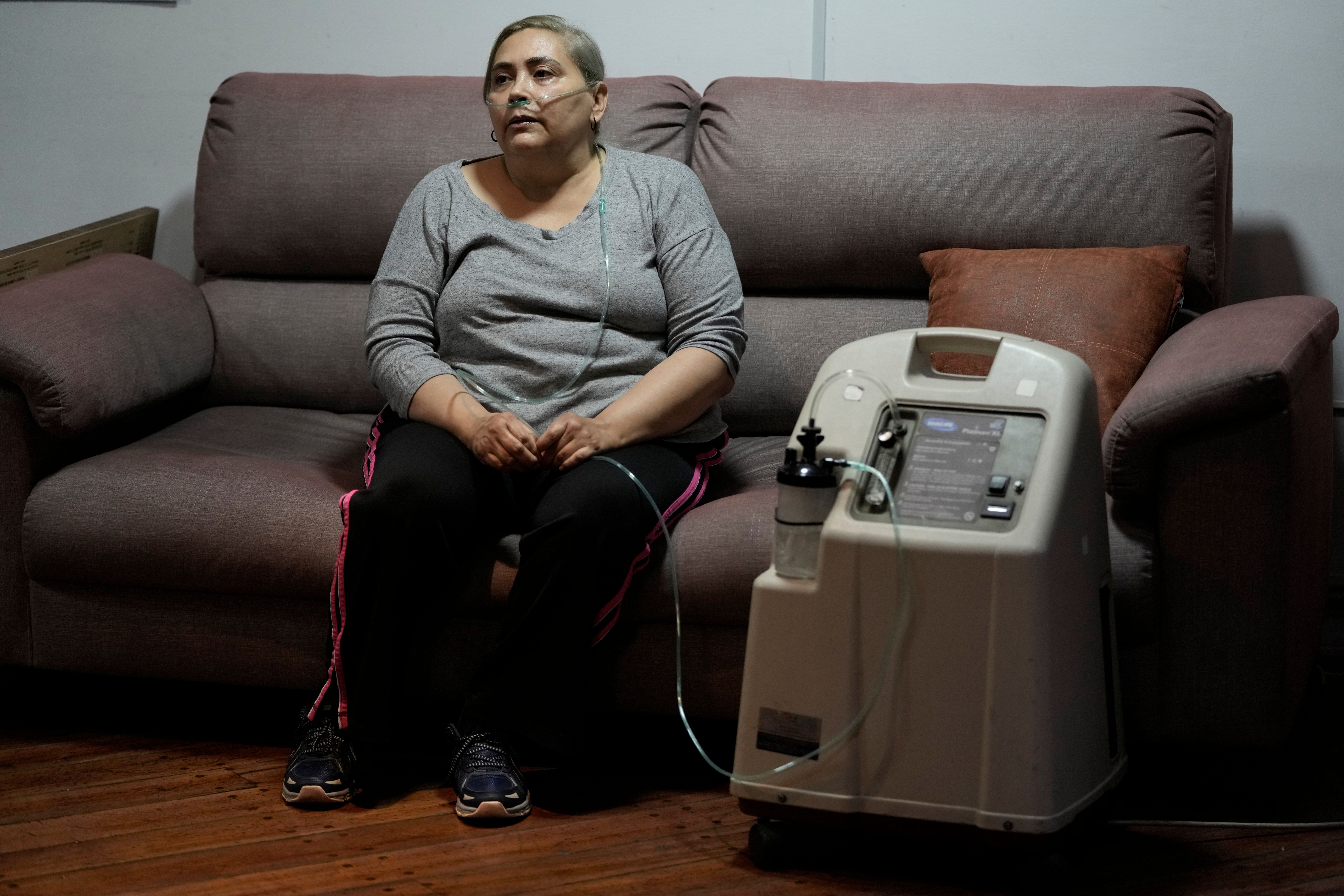
QUITO, Ecuador (AP) — The first time the electricity went off at night, Linda Vidal went into panic mode. For more than a year, the 52-year-old Ecuadorian woman suffering from Hodgkin lymphoma and a chronic respiratory disease has relied on an electricity-powered oxygen concentrator to breathe properly.
AP24299064109776.jpg
Cancer patient Linda Vidal, who relies on an electricity-powered oxygen concentrator to breathe properly, sits for an interview to talk about her physical and mental health amid the electricity cuts of up to 14 hours a day to deal with a severe drought, in Quito, Ecuador, Thursday, Oct. 24, 2024. (AP Photo/Dolores Ochoa)

Despite her condition, she is one of an estimated 1,000 power-dependent patients in Ecuador who spend hours in anguish as the government imposes electricity cuts of up to 14 hours a day to deal with a severe drought.

Like other South American countries, Ecuador has faced a prolonged dry season that has hindered hydroelectric generation, which represents 72% of the national electricity production.

When it's time for the power to go off, Vidal must sit still without fidgeting, in anguish. for as long as her device is off in order to be able to breathe.

"For me, having a supply of energy is extremely important," said Vidal, who lives with her younger sister in the capital, Quito. "I depend entirely on my oxygen concentrator, and I am always worried about whether we are going to have power cuts or not so that I can live."

According to the Ecuadorian Foundation Youth Against Cancer, there are about 1,000 patients suffering from respiratory problems in the country who require the same mechanical assistance as Vidal.

"Their life is at risk. It depends on elements that are basic rights like electricity or water," said Gustavo Dávila, the foundation's director.

The foundation says that changing a device like Linda's for one that works with batteries would cost more than $3,000, which is unfeasible given Vidal and her sister's modest income.

"The biggest risk I face is that by not being able to breathe I will not get enough oxygen to the brain and will suffer a stroke," she said.

Sitting in an armchair with her inseparable concentrator, which while connected emits a constant sound, pumps water and sends oxygen through a tube, she recounts how the recent power cuts have made her and her sister go through a nightmare.

They are orphans, single and share a home in the north center of the capital where extensive rationing is divided into two scheduled outages each day: from 7 a.m. until 2 p.m. and from 5 p.m. until midnight.

Rationing "is causing anxiety, anguish, fear of dying and could even trigger a panic attack that can produce tachycardia because the sufferer feels an imminent danger of death," said psychologist Verónica Chávez, who has spent a decade working with patients at the Youth Against Cancer Foundation.

Ecuador began establishing an electricity rationing system of up to 10 hours a day in some cities since mid-September, but the power cut hours announced Thursday are the most extreme so far.

The drought affecting several countries in South America has been linked to the El Nino weather phenomenon.


Related Tags

world news
ADVERTISEMENT
.most-popular .layout-ratio{ padding-bottom: 79.13%; } @media (min-width: 768px) and (max-width: 1024px) { .widget-title { font-size: 15px !important; } }

{{ articles_filter_1561_widget.title }}

.most-popular .layout-ratio{ padding-bottom: 79.13%; } @media (min-width: 768px) and (max-width: 1024px) { .widget-title { font-size: 15px !important; } }

{{ articles_filter_1562_widget.title }}

.most-popular .layout-ratio{ padding-bottom: 79.13%; } @media (min-width: 768px) and (max-width: 1024px) { .widget-title { font-size: 15px !important; } }

{{ articles_filter_1563_widget.title }}

{{ articles_filter_1564_widget.title }}

.mb-article-details { position: relative; } .mb-article-details .article-body-preview, .mb-article-details .article-body-summary{ font-size: 17px; line-height: 30px; font-family: "Libre Caslon Text", serif; color: #000; } .mb-article-details .article-body-preview iframe , .mb-article-details .article-body-summary iframe{ width: 100%; margin: auto; } .read-more-background { background: linear-gradient(180deg, color(display-p3 1.000 1.000 1.000 / 0) 13.75%, color(display-p3 1.000 1.000 1.000 / 0.8) 30.79%, color(display-p3 1.000 1.000 1.000) 72.5%); position: absolute; height: 200px; width: 100%; bottom: 0; display: flex; justify-content: center; align-items: center; padding: 0; } .read-more-background a{ color: #000; } .read-more-btn { padding: 17px 45px; font-family: Inter; font-weight: 700; font-size: 18px; line-height: 16px; text-align: center; vertical-align: middle; border: 1px solid black; background-color: white; } .hidden { display: none; }
function initializeAllSwipers() { // Get all hidden inputs with cms_article_id document.querySelectorAll('[id^="cms_article_id_"]').forEach(function (input) { const cmsArticleId = input.value; const articleSelector = '#article-' + cmsArticleId + ' .body_images'; const swiperElement = document.querySelector(articleSelector); if (swiperElement && !swiperElement.classList.contains('swiper-initialized')) { new Swiper(articleSelector, { loop: true, pagination: false, navigation: { nextEl: '#article-' + cmsArticleId + ' .swiper-button-next', prevEl: '#article-' + cmsArticleId + ' .swiper-button-prev', }, }); } }); } setTimeout(initializeAllSwipers, 3000); const intersectionObserver = new IntersectionObserver( (entries) => { entries.forEach((entry) => { if (entry.isIntersecting) { const newUrl = entry.target.getAttribute("data-url"); if (newUrl) { history.pushState(null, null, newUrl); let article = entry.target; // Extract metadata const author = article.querySelector('.author-section').textContent.replace('By', '').trim(); const section = article.querySelector('.section-info ').textContent.replace(' ', ' '); const title = article.querySelector('.article-title h1').textContent; // Parse URL for Chartbeat path format const parsedUrl = new URL(newUrl, window.location.origin); const cleanUrl = parsedUrl.host + parsedUrl.pathname; // Update Chartbeat configuration if (typeof window._sf_async_config !== 'undefined') { window._sf_async_config.path = cleanUrl; window._sf_async_config.sections = section; window._sf_async_config.authors = author; } // Track virtual page view with Chartbeat if (typeof pSUPERFLY !== 'undefined' && typeof pSUPERFLY.virtualPage === 'function') { try { pSUPERFLY.virtualPage({ path: cleanUrl, title: title, sections: section, authors: author }); } catch (error) { console.error('ping error', error); } } // Optional: Update document title if (title && title !== document.title) { document.title = title; } } } }); }, { threshold: 0.1 } ); function showArticleBody(button) { const article = button.closest("article"); const summary = article.querySelector(".article-body-summary"); const body = article.querySelector(".article-body-preview"); const readMoreSection = article.querySelector(".read-more-background"); // Hide summary and read-more section summary.style.display = "none"; readMoreSection.style.display = "none"; // Show the full article body body.classList.remove("hidden"); } document.addEventListener("DOMContentLoaded", () => { let loadCount = 0; // Track how many times articles are loaded const offset = [1, 2, 3, 4, 5, 6, 7, 8, 9, 10]; // Offset values const currentUrl = window.location.pathname.substring(1); let isLoading = false; // Prevent multiple calls if (!currentUrl) { console.log("Current URL is invalid."); return; } const sentinel = document.getElementById("load-more-sentinel"); if (!sentinel) { console.log("Sentinel element not found."); return; } function isSentinelVisible() { const rect = sentinel.getBoundingClientRect(); return ( rect.top < window.innerHeight && rect.bottom >= 0 ); } function onScroll() { if (isLoading) return; if (isSentinelVisible()) { if (loadCount >= offset.length) { console.log("Maximum load attempts reached."); window.removeEventListener("scroll", onScroll); return; } isLoading = true; const currentOffset = offset[loadCount]; window.loadMoreItems().then(() => { let article = document.querySelector('#widget_1690 > div:nth-last-of-type(2) article'); intersectionObserver.observe(article) loadCount++; }).catch(error => { console.error("Error loading more items:", error); }).finally(() => { isLoading = false; }); } } window.addEventListener("scroll", onScroll); });

Sign up by email to receive news.