ADVERTISEMENT

Disaster plans activated; waiting for 'Kristine' to exit

Published Oct 24, 2024 12:08 am

E CARTOON OCT 24, 2024.jpg

As we write this, tropical cyclone wind signals have been raised in many parts of the country, and the heavy rains have turned from intermittent to continuous over Metro Manila since the evening of Tuesday, Oct. 22.

Tropical cyclone Kristine, which the Philippine Atmospheric, Geophysical, and Astronomical Services Administration (PAGASA) had tracked since last week as it hovered outside the Philippine Area of Responsibility (PAR), has now become a tropical storm.

Twenty-six areas have been placed under tropical cyclone wind Signal No. 2 and 33 areas under Signal No. 1 as Tropical Storm “Kristine” (international name “Trami”) approached Luzon on Wednesday, Oct. 23, PAGASA said.

Kristine has maximum sustained winds of 85 kilometers per hour (kph) near the center and gusts reaching up to 105 kph. The storm’s center was located 310 kilometers east of Baler, Aurora, and is expected to move west-northwestward at 15 kph, the Oct. 23 morning report said.

Classes have been suspended in many areas that will be affected, some since Oct. 21. On Oct. 22, the Office of Civil Defense (OCD) had placed under a red alert several regions and activated the Charlie Protocol, the highest level of emergency preparedness. Days ago, most regions had activated their emergency preparedness and response protocols, and sent directives to the members of the regional and local disaster risk reduction and management councils, “prepositioning resources, and ensuring the readiness of funds, search, rescue, and retrieval teams, as well as emergency telecommunications equipment.”

Government agencies have responded to the threat of a tropical storm, activating established disaster preparedness systems.

For early disaster warning, the Lloyd’s Register Foundation World Risk Poll conducted in 2023 showed that Southeast Asia also ranks high — 74 percent of adults. In the Philippines, 98 percent of adults had received at least one disaster warning from the social media, local government, radio/TV/newspaper, or community organization. The global average is 70 percent.

It is expected that in the private sector, households have a disaster plan and at least a go bag in the premises. The same report said the Philippines has the highest percentage of households having a disaster preparedness plan.

“The top four countries worldwide where the highest proportion of households have a disaster plan are all in Southeast Asia: the Philippines (84 percent), Vietnam (83 percent), Cambodia (82 percent), and Thailand (67 percent).”

It defines disaster preparedness to include “household planning and feelings of being able to protect oneself, which is vitally important in building resilience against natural hazards.”

The report also noted that “globally, no other country ranks higher than the Philippines (87 percent) for experiencing a disaster within the past five years.”

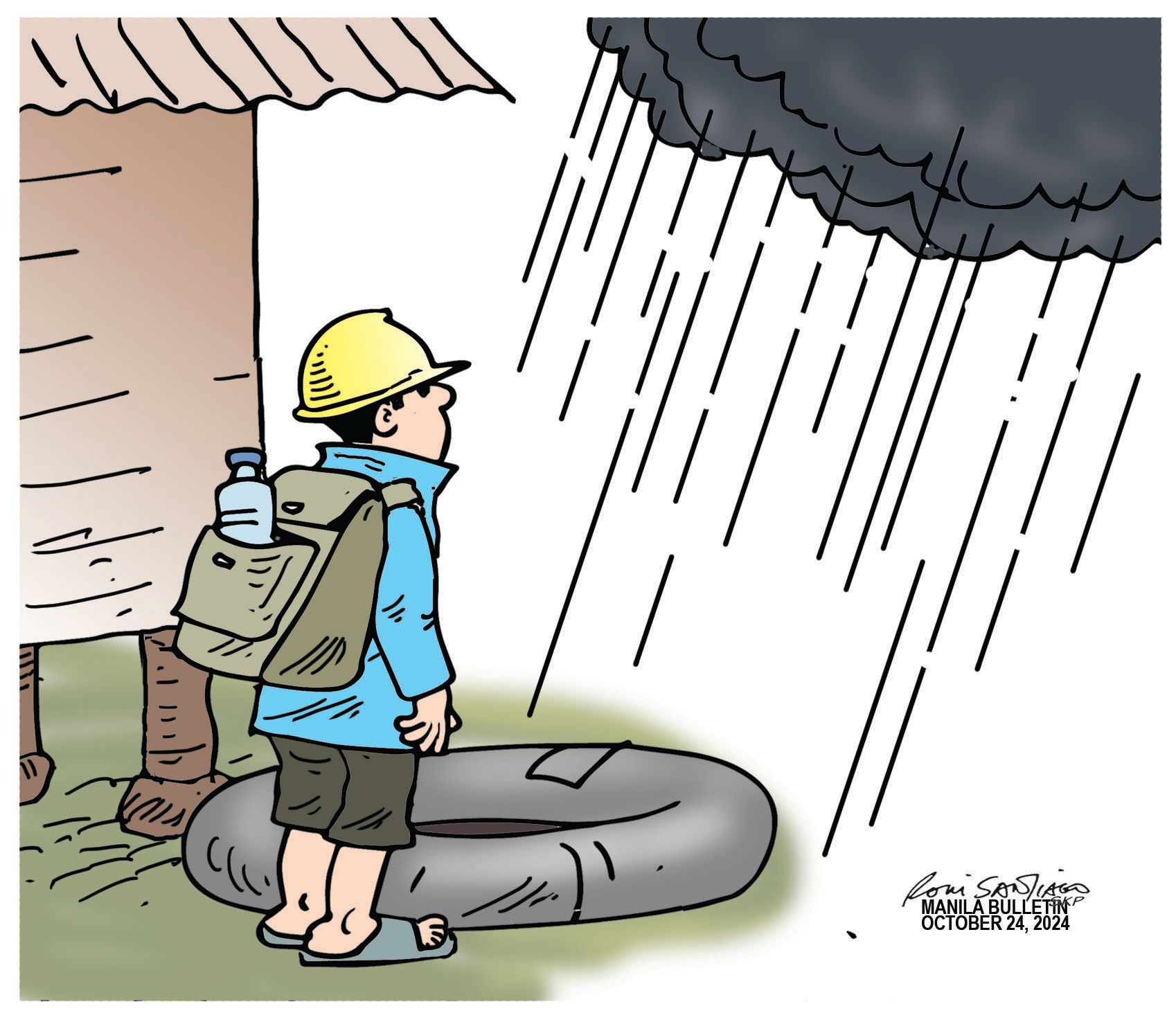
The high rate of households with a disaster plan shows how the education campaigns have encouraged behavior toward discussing and adopting a plan among family members. This starts with the presence of a go bag in the household, a pack which includes essential items for survival when a typhoon, flood or other types of disaster strikes and causes the closure of roads.

When a poll reports the presence of a go bag in 100 percent of Filipino households, then we know that disaster preparedness has become part of Filipino life. This should be everybody’s concern as our country is located on the Pacific Ring of Fire and the typhoon belt with an average of 20 typhoons visiting us each year.

Related Tags

Roni Santiago Tropical Storm Kristine
ADVERTISEMENT
.most-popular .layout-ratio{ padding-bottom: 79.13%; } @media (min-width: 768px) and (max-width: 1024px) { .widget-title { font-size: 15px !important; } }

{{ articles_filter_1561_widget.title }}

.most-popular .layout-ratio{ padding-bottom: 79.13%; } @media (min-width: 768px) and (max-width: 1024px) { .widget-title { font-size: 15px !important; } }

{{ articles_filter_1562_widget.title }}

.most-popular .layout-ratio{ padding-bottom: 79.13%; } @media (min-width: 768px) and (max-width: 1024px) { .widget-title { font-size: 15px !important; } }

{{ articles_filter_1563_widget.title }}

{{ articles_filter_1564_widget.title }}

.mb-article-details { position: relative; } .mb-article-details .article-body-preview, .mb-article-details .article-body-summary{ font-size: 17px; line-height: 30px; font-family: "Libre Caslon Text", serif; color: #000; } .mb-article-details .article-body-preview iframe , .mb-article-details .article-body-summary iframe{ width: 100%; margin: auto; } .read-more-background { background: linear-gradient(180deg, color(display-p3 1.000 1.000 1.000 / 0) 13.75%, color(display-p3 1.000 1.000 1.000 / 0.8) 30.79%, color(display-p3 1.000 1.000 1.000) 72.5%); position: absolute; height: 200px; width: 100%; bottom: 0; display: flex; justify-content: center; align-items: center; padding: 0; } .read-more-background a{ color: #000; } .read-more-btn { padding: 17px 45px; font-family: Inter; font-weight: 700; font-size: 18px; line-height: 16px; text-align: center; vertical-align: middle; border: 1px solid black; background-color: white; } .hidden { display: none; }
function initializeAllSwipers() { // Get all hidden inputs with cms_article_id document.querySelectorAll('[id^="cms_article_id_"]').forEach(function (input) { const cmsArticleId = input.value; const articleSelector = '#article-' + cmsArticleId + ' .body_images'; const swiperElement = document.querySelector(articleSelector); if (swiperElement && !swiperElement.classList.contains('swiper-initialized')) { new Swiper(articleSelector, { loop: true, pagination: false, navigation: { nextEl: '#article-' + cmsArticleId + ' .swiper-button-next', prevEl: '#article-' + cmsArticleId + ' .swiper-button-prev', }, }); } }); } setTimeout(initializeAllSwipers, 3000); const intersectionObserver = new IntersectionObserver( (entries) => { entries.forEach((entry) => { if (entry.isIntersecting) { const newUrl = entry.target.getAttribute("data-url"); if (newUrl) { history.pushState(null, null, newUrl); let article = entry.target; // Extract metadata const author = article.querySelector('.author-section').textContent.replace('By', '').trim(); const section = article.querySelector('.section-info ').textContent.replace(' ', ' '); const title = article.querySelector('.article-title h1').textContent; // Parse URL for Chartbeat path format const parsedUrl = new URL(newUrl, window.location.origin); const cleanUrl = parsedUrl.host + parsedUrl.pathname; // Update Chartbeat configuration if (typeof window._sf_async_config !== 'undefined') { window._sf_async_config.path = cleanUrl; window._sf_async_config.sections = section; window._sf_async_config.authors = author; } // Track virtual page view with Chartbeat if (typeof pSUPERFLY !== 'undefined' && typeof pSUPERFLY.virtualPage === 'function') { try { pSUPERFLY.virtualPage({ path: cleanUrl, title: title, sections: section, authors: author }); } catch (error) { console.error('ping error', error); } } // Optional: Update document title if (title && title !== document.title) { document.title = title; } } } }); }, { threshold: 0.1 } ); function showArticleBody(button) { const article = button.closest("article"); const summary = article.querySelector(".article-body-summary"); const body = article.querySelector(".article-body-preview"); const readMoreSection = article.querySelector(".read-more-background"); // Hide summary and read-more section summary.style.display = "none"; readMoreSection.style.display = "none"; // Show the full article body body.classList.remove("hidden"); } document.addEventListener("DOMContentLoaded", () => { let loadCount = 0; // Track how many times articles are loaded const offset = [1, 2, 3, 4, 5, 6, 7, 8, 9, 10]; // Offset values const currentUrl = window.location.pathname.substring(1); let isLoading = false; // Prevent multiple calls if (!currentUrl) { console.log("Current URL is invalid."); return; } const sentinel = document.getElementById("load-more-sentinel"); if (!sentinel) { console.log("Sentinel element not found."); return; } function isSentinelVisible() { const rect = sentinel.getBoundingClientRect(); return ( rect.top < window.innerHeight && rect.bottom >= 0 ); } function onScroll() { if (isLoading) return; if (isSentinelVisible()) { if (loadCount >= offset.length) { console.log("Maximum load attempts reached."); window.removeEventListener("scroll", onScroll); return; } isLoading = true; const currentOffset = offset[loadCount]; window.loadMoreItems().then(() => { let article = document.querySelector('#widget_1690 > div:nth-last-of-type(2) article'); intersectionObserver.observe(article) loadCount++; }).catch(error => { console.error("Error loading more items:", error); }).finally(() => { isLoading = false; }); } } window.addEventListener("scroll", onScroll); });

Sign up by email to receive news.