

ADVERTISEMENT

Colorado funeral home owners accused of stashing dead bodies plead guilty to federal fraud charges

Published Oct 24, 2024 11:16 pm

DENVER (AP) — Colorado funeral home owners accused of cheating customers and misspending nearly $900,000 in pandemic relief funds, all while allegedly storing 190 decaying bodies in a building and sending grieving families fake ashes, pleaded guilty Thursday to federal fraud charges centered around defrauding clients.
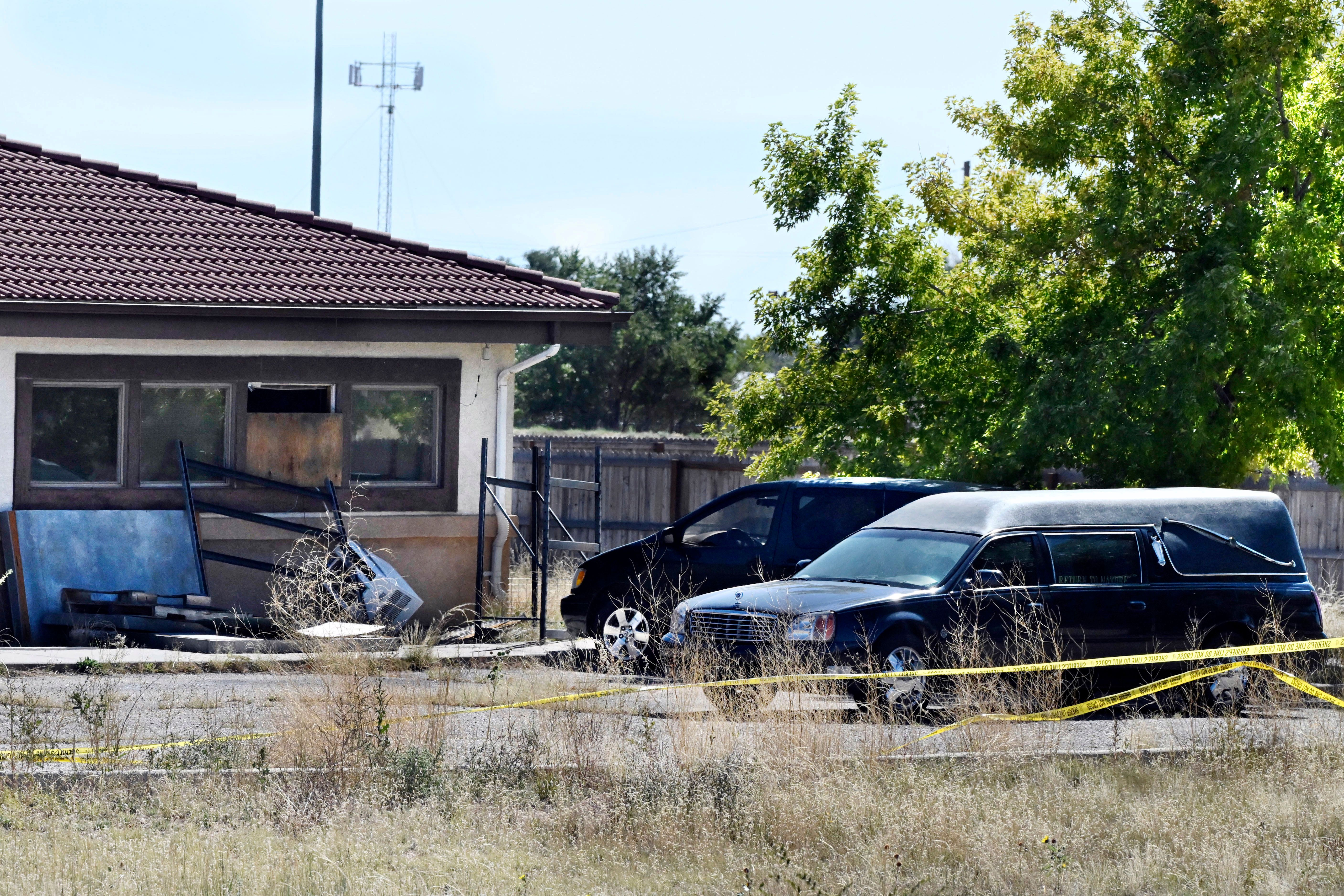
AP24297781691043.jpg

FILE - A hearse and debris can be seen at the rear of the Return to Nature Funeral Home, Oct. 5, 2023, in Penrose, Colo. (Jerilee Bennett/The Gazette via AP, File)


Jon and Carie Hallford each pleaded guilty to one count of conspiracy to commit wire fraud. The plea agreement, which stipulates that prosecutors will not request over 15 years imprisonment, still has to be approved by the judge.

The owners of Return to Nature Funeral Home, about an hour’s drive south of Denver, had each been charged with 14 other federal offenses related to defrauding the U.S. government and the funeral home’s customers, which would be dismissed under the plea agreement. More than 200 criminal counts are already pending against them in Colorado state court, including for corpse abuse and forgery.

Assistant U.S. Attorney Tim Neff said after the hearing that the plea agreement includes both Hallfords admitting to COVID-19 fraud and committing fraud against customers, which will play a role in sentencing.

The Hallfords used the pandemic aid and customers’ payments to buy a GMC Yukon and Infiniti that together were worth over $120,000, laser body sculpting, trips to California, Florida and Las Vegas, $31,000 in cryptocurrency and luxury items at stores like Gucci and Tiffany & Co., according to court documents.

Jon Hallford is being represented by the federal public defender's office, which does not comment on cases. Carie Hallford’s lawyer declined to comment Thursday. Neither Hallford spoke in court aside from answering questions.

The 190 corpses were discovered in 2023 in a bug-infested building owned by Return to Nature in Penrose, a small town southwest of Colorado Springs. The Hallfords allegedly stashed bodies as far back as 2019, at times stacking them on top of each other, and in two cases buried the wrong body, according to court documents.

Elisabeth Ostly thought that surely her father’s body wasn’t part of the discovery. Then law enforcement arrived on her doorstep.

Ostly handed over what she had thought for almost a year were her fathers’ ashes. It hit the reset button on her grieving process. In therapy, Ostly now works on “how to be at peace. How to not be furious, how to not let rage just live in my every moment,” she said outside the courtroom Thursday, holding a photo of her father and wiping tears from her eyes.

An investigation by The Associated Press found that the Hallfords likely sent fake ashes and fabricated cremation records to families who did business with them. Court documents allege that the dust inside some of the bags was dry concrete, not the cremated remains of lost loved ones.

The discovery devastated relatives of the deceased, who began learning that their family members' remains weren't in the ashes that they ceremonially spread or held tight but were still languishing in a building. The stories prompted Colorado lawmakers to patch the state's lax funeral home regulations in 2024, requiring routine inspections of facilities and licensing for funeral home roles.

Crystina Page, whose son’s body was left languishing in the funeral home building after his death in 2019, spoke in court Thursday, saying she understood the plea deal was as close to justice as she was going to get, but that it “only scratches the surface of the atrocities they committed.”

Page then described the condition of her son's body by the time she learned he was included in the grim discovery.

“He had lost 60% of his bodyweight laying at the bottom of a pile of bodies," she said to the judge. "Rats and maggots ate his face.”

Related Tags

WORLDNEWS
ADVERTISEMENT
.most-popular .layout-ratio{ padding-bottom: 79.13%; } @media (min-width: 768px) and (max-width: 1024px) { .widget-title { font-size: 15px !important; } }

{{ articles_filter_1561_widget.title }}

.most-popular .layout-ratio{ padding-bottom: 79.13%; } @media (min-width: 768px) and (max-width: 1024px) { .widget-title { font-size: 15px !important; } }

{{ articles_filter_1562_widget.title }}

.most-popular .layout-ratio{ padding-bottom: 79.13%; } @media (min-width: 768px) and (max-width: 1024px) { .widget-title { font-size: 15px !important; } }

{{ articles_filter_1563_widget.title }}

{{ articles_filter_1564_widget.title }}

.mb-article-details { position: relative; } .mb-article-details .article-body-preview, .mb-article-details .article-body-summary{ font-size: 17px; line-height: 30px; font-family: "Libre Caslon Text", serif; color: #000; } .mb-article-details .article-body-preview iframe , .mb-article-details .article-body-summary iframe{ width: 100%; margin: auto; } .read-more-background { background: linear-gradient(180deg, color(display-p3 1.000 1.000 1.000 / 0) 13.75%, color(display-p3 1.000 1.000 1.000 / 0.8) 30.79%, color(display-p3 1.000 1.000 1.000) 72.5%); position: absolute; height: 200px; width: 100%; bottom: 0; display: flex; justify-content: center; align-items: center; padding: 0; } .read-more-background a{ color: #000; } .read-more-btn { padding: 17px 45px; font-family: Inter; font-weight: 700; font-size: 18px; line-height: 16px; text-align: center; vertical-align: middle; border: 1px solid black; background-color: white; } .hidden { display: none; }
function initializeAllSwipers() { // Get all hidden inputs with cms_article_id document.querySelectorAll('[id^="cms_article_id_"]').forEach(function (input) { const cmsArticleId = input.value; const articleSelector = '#article-' + cmsArticleId + ' .body_images'; const swiperElement = document.querySelector(articleSelector); if (swiperElement && !swiperElement.classList.contains('swiper-initialized')) { new Swiper(articleSelector, { loop: true, pagination: false, navigation: { nextEl: '#article-' + cmsArticleId + ' .swiper-button-next', prevEl: '#article-' + cmsArticleId + ' .swiper-button-prev', }, }); } }); } setTimeout(initializeAllSwipers, 3000); const intersectionObserver = new IntersectionObserver( (entries) => { entries.forEach((entry) => { if (entry.isIntersecting) { const newUrl = entry.target.getAttribute("data-url"); if (newUrl) { history.pushState(null, null, newUrl); let article = entry.target; // Extract metadata const author = article.querySelector('.author-section').textContent.replace('By', '').trim(); const section = article.querySelector('.section-info ').textContent.replace(' ', ' '); const title = article.querySelector('.article-title h1').textContent; // Parse URL for Chartbeat path format const parsedUrl = new URL(newUrl, window.location.origin); const cleanUrl = parsedUrl.host + parsedUrl.pathname; // Update Chartbeat configuration if (typeof window._sf_async_config !== 'undefined') { window._sf_async_config.path = cleanUrl; window._sf_async_config.sections = section; window._sf_async_config.authors = author; } // Track virtual page view with Chartbeat if (typeof pSUPERFLY !== 'undefined' && typeof pSUPERFLY.virtualPage === 'function') { try { pSUPERFLY.virtualPage({ path: cleanUrl, title: title, sections: section, authors: author }); } catch (error) { console.error('ping error', error); } } // Optional: Update document title if (title && title !== document.title) { document.title = title; } } } }); }, { threshold: 0.1 } ); function showArticleBody(button) { const article = button.closest("article"); const summary = article.querySelector(".article-body-summary"); const body = article.querySelector(".article-body-preview"); const readMoreSection = article.querySelector(".read-more-background"); // Hide summary and read-more section summary.style.display = "none"; readMoreSection.style.display = "none"; // Show the full article body body.classList.remove("hidden"); } document.addEventListener("DOMContentLoaded", () => { let loadCount = 0; // Track how many times articles are loaded const offset = [1, 2, 3, 4, 5, 6, 7, 8, 9, 10]; // Offset values const currentUrl = window.location.pathname.substring(1); let isLoading = false; // Prevent multiple calls if (!currentUrl) { console.log("Current URL is invalid."); return; } const sentinel = document.getElementById("load-more-sentinel"); if (!sentinel) { console.log("Sentinel element not found."); return; } function isSentinelVisible() { const rect = sentinel.getBoundingClientRect(); return ( rect.top < window.innerHeight && rect.bottom >= 0 ); } function onScroll() { if (isLoading) return; if (isSentinelVisible()) { if (loadCount >= offset.length) { console.log("Maximum load attempts reached."); window.removeEventListener("scroll", onScroll); return; } isLoading = true; const currentOffset = offset[loadCount]; window.loadMoreItems().then(() => { let article = document.querySelector('#widget_1690 > div:nth-last-of-type(2) article'); intersectionObserver.observe(article) loadCount++; }).catch(error => { console.error("Error loading more items:", error); }).finally(() => { isLoading = false; }); } } window.addEventListener("scroll", onScroll); });

Sign up by email to receive news.