






 World
Sirens sound across Tel Aviv as projectiles are intercepted near Blinken's hotel
World
Sirens sound across Tel Aviv as projectiles are intercepted near Blinken's hotel
Sirens sound across Tel Aviv as projectiles are intercepted near Blinken's hotel


At A Glance
- Israel said that one of its airstrikes outside Beirut earlier this month killed a Hezbollah official widely expected to replace the militant group's longtime leader, who was killed by an Israeli airstrike last month.
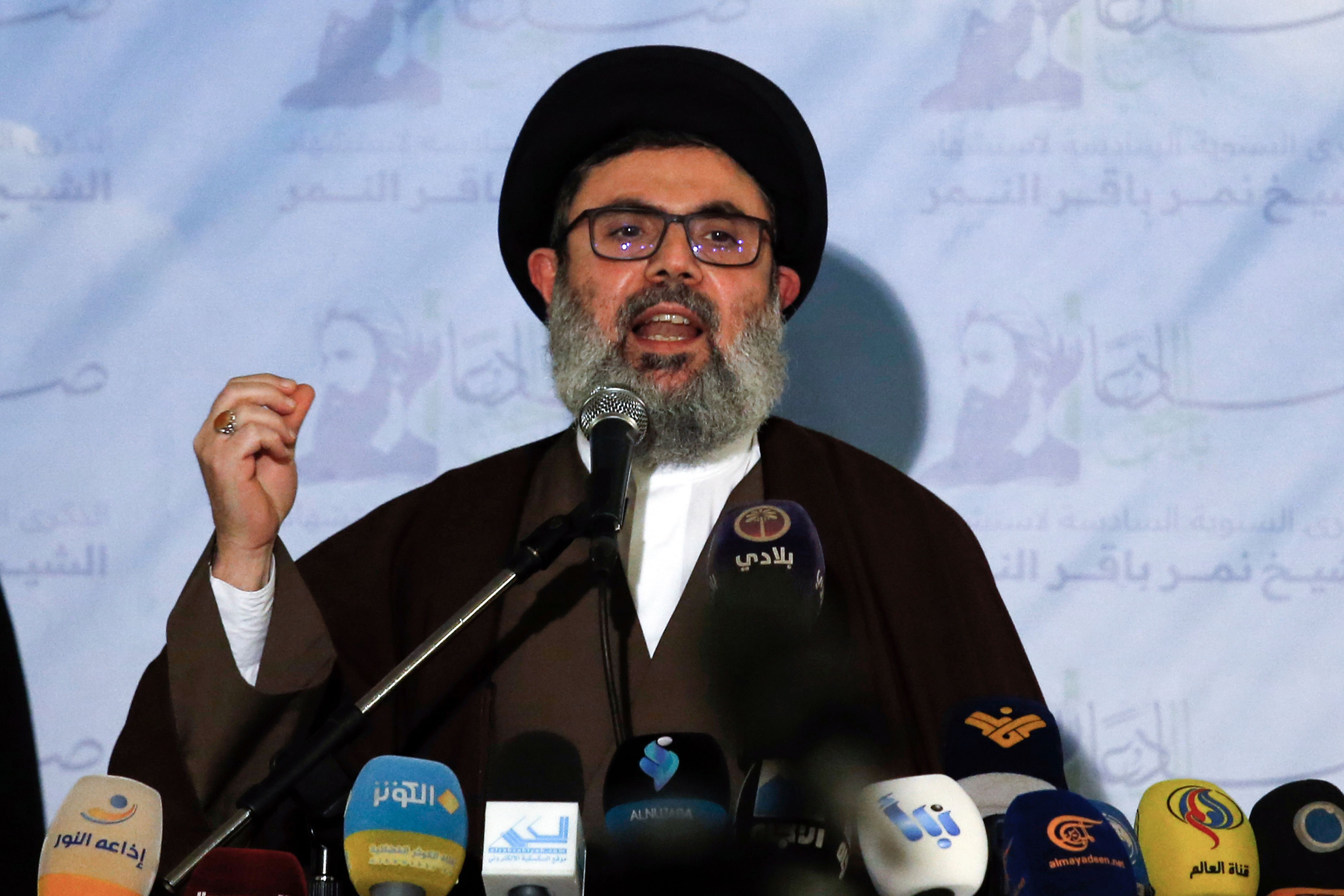
Senior Hezbollah leader Hashem Safieddine speaks during a news conference in the southern Beirut suburb of Dahiyeh, Lebanon, on Jan. 12, 2022. (AP Photo/Bilal Hussein, File)
TEL AVIV, Israel — Air raid sirens echoed across Tel Aviv on Wednesday as U.S. Secretary of State Antony Blinken prepared to depart from his hotel to the airport.
The Israeli military said it intercepted two projectiles fired from Lebanon. There were no immediate reports of casualties or damage.
Smoke, apparently from one of the interceptions, could be seen in the sky above the hotel where Blinken was staying.
He is on his 11th visit to the region since the outbreak of the war between Israel and Hamas in Gaza, hoping to renew cease-fire efforts after the killing of top Hamas leader Yahya Sinwar.
Blinken said Israel needs to pursue an “enduring strategic success” after its recent tactical victories against Hamas, urging it to seek a deal to end the war and bring back dozens of hostages before leaving for Saudi Arabia, as part of his 11th visit to the region since the start of the Israel-Hamas war.
Hezbollah’s next leader killed
Israel said Tuesday that one of its airstrikes outside Beirut earlier this month killed a Hezbollah official widely expected to replace the militant group's longtime leader, who was killed by an Israeli airstrike last month.
There was no immediate confirmation from Hezbollah about the fate of Hashem Safieddine, a powerful cleric who was expected to succeed Hassan Nasrallah, one of the group's founders.
Safieddine was killed in early October in a strike that also killed 25 other Hezbollah leaders, according to Israel, whose airstrikes in southern Lebanon in recent months have killed many of Hezbollah's top leaders, leaving the group in disarray.
Last week, Israel killed the top leader of Hamas, Yahya Sinwar, during a battle in Gaza.
Blinken said Tuesday that leaders should "capitalize" on Sinwar's death as an opportunity to end the war in Gaza and secure the release of hostages taken as part of the deadly Hamas attack that started the war. Blinken also stressed the need for Israel to do more to help increase the flow of humanitarian aid to Palestinians.
Prime Minister Benjamin Netanyahu's office called his meeting with Blinken, which lasted more than two hours, "friendly and productive."
The Beirut suburb where Safieddine was killed was pummeled by a series of fresh airstrikes on Tuesday, including one that leveled a building Israel said housed Hezbollah facilities. The collapse sent smoke and debris flying into the air a few hundred meters (yards) from where a spokesperson for Hezbollah had just briefed journalists about a weekend drone attack that damaged Netanyahu's house.
Tuesday's airstrikes came 40 minutes after Israel issued an evacuation warning for two buildings in the area that it said were used by Hezbollah. The Hezbollah press conference nearby was cut short, and an Associated Press photographer captured an image of a missile heading towards the building moments before it was destroyed. There were no immediate reports of casualties.
Hezbollah's chief spokesman, Mohammed Afif, said the group was behind the Saturday drone attack on Netanyahu's home in the coastal town of Caesarea. Israel has said neither the prime minister nor his wife was home at the time of the attack.
Blinken's meetings with Netanyahu and other Israeli leaders was part of his 11th visit to the region since the outbreak of the Israel-Hamas war. He landed hours after Hezbollah launched a barrage of rockets into central Israel, setting off air raid sirens in populated areas and at its international airport, but causing no apparent damage or injuries.
Hospitals in Lebanon fear being targeted by Israel
An Israeli airstrike late Monday in Beirut destroyed several buildings across the street from the country's largest public hospital, killing 18 people and wounding at least 60 others. The Israeli military said it struck a Hezbollah target, without elaborating, and said that it hadn't targeted the hospital itself.
AP reporters visited the Rafik Hariri University Hospital on Tuesday. They saw broken windows in the hospital's pharmacy and dialysis center, which was full of patients at the time.
Staff at another Beirut hospital feared it would be targeted after Israel alleged that Hezbollah had stashed hundreds of millions of dollars in cash and gold in its basement, without providing evidence.
The director of the Sahel General Hospital denied the allegations and invited journalists to visit the hospital and its two underground floors on Tuesday. AP reporters saw no sign of militants or anything out of the ordinary.
The few remaining patients had been evacuated after the Israeli military's announcement the night before.
"We have been living in terror for the last 24 hours," hospital director Mazen Alame said. "There is nothing under the hospital."
Many in Lebanon fear Israel could target its hospitals in the same way it has raided medical facilities across Gaza. The Israeli military has accused Hamas and other militants of using hospitals for military purposes, allegations denied by medical staff.
Lebanon's Health Ministry said Tuesday that 63 people have been killed over the past 24 hours, raising the death toll over the past year of conflict between Israel and Hezbollah to 2,546. Three Israeli soldiers were killed on Tuesday, one in Gaza, one in Lebanon, and one in a rocket attack in northern Israel, according to the military.
Blinken trying to restart efforts to reach a cease-fire in Gaza
During his meeting with Netanyahu and other Israeli leaders, Blinken underscored the need for a dramatic increase in the amount of humanitarian aid reaching Gaza, according to U.S. State Department spokesman Matthew Miller. The need for more aid in Gaza is something Blinken and U.S. Defense Secretary Lloyd Austin made clear in a letter to Israeli officials last week.
Miller said Blinken also stressed the importance of ending the fighting between Israel and Hezbollah, which escalated earlier this month when Israel launched a ground invasion of southern Lebanon.
The United States, Egypt and Qatar have brokered months of talks between Israel and Hamas, trying to strike a deal in which the militants would release dozens of hostages in return for an end to the war, a lasting cease-fire and the release of Palestinian prisoners.
But both Israel and Hamas accused each other of making new and unacceptable demands over the summer, and the talks ground to a halt in August. Hamas says its demands haven't changed following the killing of Sinwar.
Israel said it launched its ground invasion of Lebanon to try to stop near daily rocket attacks from Hezbollah since the start of the war in Gaza. Israel has said it plans to strike Iran — which backs both Hamas and Hezbollah — in response to its ballistic missile attack on Israel earlier this month.
War rages in Lebanon and northern Gaza
The U.S. has also tried to broker a cease-fire between Israel and Hezbollah, but those efforts fell apart as tensions spiked last month with a series of Israeli strikes that killed Nasrallah and most of his senior commanders.
Israel has carried out waves of heavy airstrikes across southern Beirut and the country's south and east, areas where Hezbollah has a strong presence. Hezbollah has fired thousands of rockets, missiles and drones into Israel over the past year, including some that have reached the country's populous center.
Oct. 7, 2023, Hamas-led militants killed around 1,200 people in Israel, mostly civilians, and took another 250 hostage. Around 100 of the captives are still held in Gaza, a third of whom are believed to be dead.
Israel's retaliatory offensive has killed more than 42,000 Palestinians in Gaza and wounded tens of thousands, according to local health authorities, who don't say how many were combatants but say more than half were women and children. It has also caused major devastation across the territory and displaced around 90% of its population of 2.3 million.